
Aluminium Sheet Market Outlook: Size, Share, Trends, Growth Analysis, Competitive Landscape & Forecast, 2026-2033

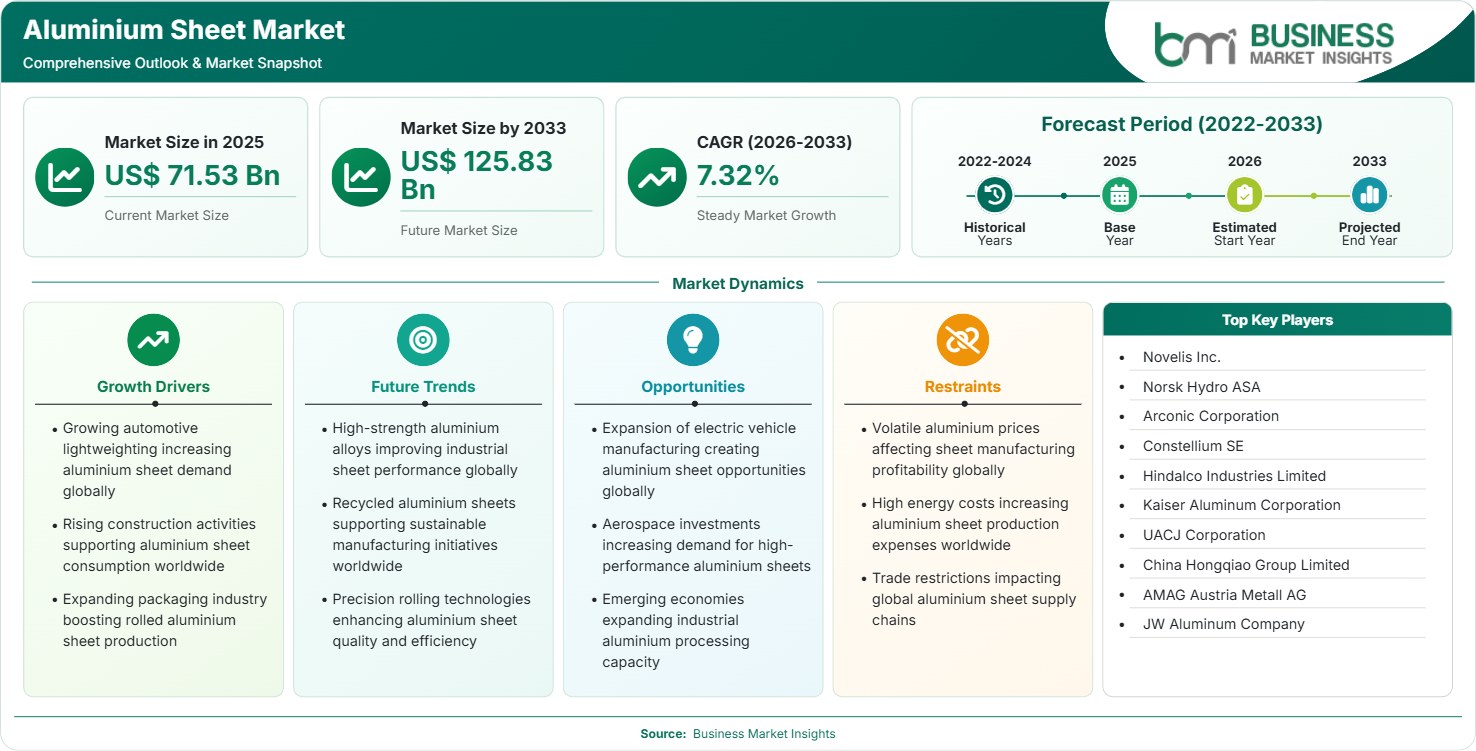
The Aluminium Sheet Market size was valued at US$ 71.53 billion in 2025 and is projected to reach US$ 125.83 billion by 2033, growing at a CAGR of 7.32% during 2026–2033, driven by lightweight material adoption, expanding construction activities, increasing packaging demand, and growing electric vehicle manufacturing worldwide.

Report Coverage
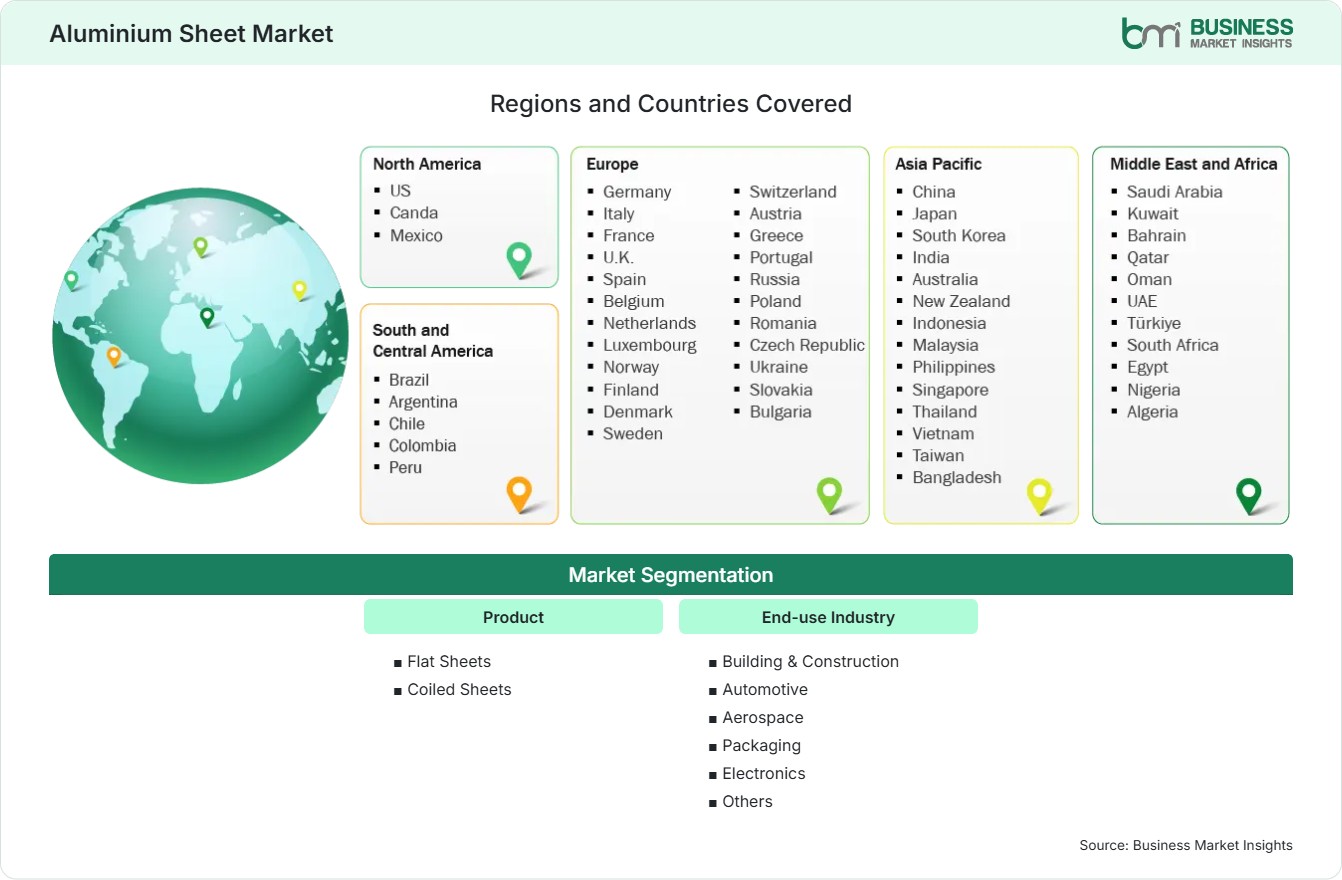
  • Product: Flat Sheets, Coiled Sheets
  • End-use Industry: Building & Construction, Automotive, Aerospace, Packaging, Electronics, Others
US$ 71.53 Bn Market size in 2025
US$ 125.83 Bn Market Size by 2033
7.32% CAGR, 2026 - 2033
2026-2033 Forecast Period

01 AI Overview

Aluminium Sheet Market Summary

  • North America Region: North America holds 24%–27% share in 2025 and is projected to grow at a CAGR of 6.90%–7.30% during 2026–2033, supported by automotive lightweighting, aerospace manufacturing, and infrastructure modernization. The US market is projected to expand at a CAGR of 7.00%–7.40%, driven by increasing demand from transportation, packaging, and industrial manufacturing sectors.
  • Fastest Growing Region: Asia Pacific accounts for 45%–48% share in 2025 and is forecast to grow at a CAGR of 7.90%–8.40% during 2026–2033, supported by industrial expansion, construction growth, automotive manufacturing, and packaging production.
  • Leading Segment: Flat Sheets account for 61%–64% share in 2025 and are expected to grow at a CAGR of 7.30%–7.70%, supported by extensive applications across construction, transportation, and industrial manufacturing.
  • High Growth Segment: Automotive is projected to register a CAGR of 8.20%–8.70%, driven by vehicle lightweighting, electric mobility expansion, and increasing fuel-efficiency requirements.
  • Key Market Opportunity: Electric vehicle manufacturing, aerospace modernization, sustainable aluminium processing, and industrial capacity expansion continue creating attractive long-term opportunities for aluminium sheet manufacturers worldwide.
  • Major Market Players: Novelis Inc., Norsk Hydro ASA, Arconic Corporation, Constellium SE, Hindalco Industries Limited, Kaiser Aluminum Corporation, UACJ Corporation, China Hongqiao Group Limited, AMAG Austria Metall AG, JW Aluminum Company
02 Strategic Insights

Aluminium Sheet Market: Strategic Insights

Aluminium Sheet Market Strategic Framework
FREE PDF
Request your free sample
Request free sample
03 Stakeholder View

Key Takeaways

  • The market value chain integrates bauxite suppliers, aluminium producers, rolling mills, processors, distributors, and end-use manufacturers to support global industrial demand.
  • Flat sheets remain the dominant product category, while automotive applications offer the strongest long-term growth opportunity because of increasing lightweight vehicle production.
  • Product innovation continues focusing on advanced alloys, high-strength materials, recycled aluminium, and precision rolling technologies that improve performance across demanding industrial applications.
  • Asia Pacific presents the strongest investment potential through expanding industrial manufacturing, construction activities, and automotive production supported by large-scale infrastructure development.
  • Capacity expansion, recycling investments, technological modernization, and strategic partnerships continue strengthening competitiveness among global aluminium sheet manufacturers.
04 Geographic Outlook

Aluminium Sheet Market Regional Highlights

North America Aluminium Sheet Market

North America accounts for 24%–27% share in 2025 and is projected to grow at a CAGR of 6.90%–7.30% during 2026–2033. Demand remains supported by automotive lightweighting, aerospace production, and modern construction activities. The Aluminium Sheet Market share continues benefiting from rising investments in sustainable aluminium processing, advanced rolling technologies, and domestic manufacturing expansion to strengthen supply chain resilience across transportation and industrial sectors.

  • The US leads regional demand through strong automotive, aerospace, packaging, and construction industries requiring high-performance aluminium sheets.
  • Canada continues expanding aluminium production and downstream processing supported by renewable energy availability and sustainable manufacturing initiatives.
  • Automotive manufacturers increasingly adopt lightweight aluminium materials to improve vehicle efficiency and reduce emissions.
  • Recycling investments continue strengthening regional circular economy practices while improving raw material availability.

US Aluminium Sheet Market

The US represents 83%–86% of the North American market in 2025 and is projected to expand at a CAGR of 7.00%–7.40% during 2026–2033. Increasing domestic manufacturing, infrastructure investments, and transportation modernization continue supporting aluminium sheet consumption. Strong demand from packaging, construction, and electric vehicle manufacturing further accelerates market development.

  • Infrastructure modernization projects continue increasing demand for durable aluminium construction materials.
  • Automotive manufacturers expand lightweight material adoption across passenger and commercial vehicles.
  • Packaging producers increasingly utilize recyclable aluminium sheets for sustainable product packaging.
  • Industrial investments strengthen domestic rolling and aluminium processing capabilities.

Europe Aluminium Sheet Market

Europe accounts for 22%–25% share in 2025 and is expected to grow at a CAGR of 7.10%–7.50% during 2026–2033. Germany, France, Italy, and the UK remain major consumers because of automotive manufacturing, aerospace production, and sustainability initiatives. Germany leads regional demand, while Eastern Europe records stronger growth through expanding industrial manufacturing and infrastructure investments.

  • Germany remains the largest market through strong automotive and industrial manufacturing activities.
  • France continues increasing aerospace production requiring advanced aluminium sheet materials.
  • Sustainability regulations encourage greater aluminium recycling and low-carbon manufacturing investments.
  • Packaging manufacturers increasingly adopt recyclable aluminium materials across consumer products.

Asia Pacific Aluminium Sheet Market

Asia Pacific holds 45%–48% share in 2025 and is forecast to grow at a CAGR of 7.90%–8.40% during 2026–2033. China, India, Japan, and South Korea continue driving regional expansion through construction, transportation, packaging, and industrial manufacturing. Rising investments in electric vehicles and downstream aluminium processing continue strengthening long-term demand.

  • China remains the largest regional market through extensive aluminium production and industrial manufacturing capacity.
  • India is the fastest-growing country because of expanding infrastructure development and automotive manufacturing investments.
  • Japan continues supporting advanced aluminium applications across transportation and electronics industries.
  • South Korea expands aluminium demand through automotive exports and industrial modernization.
  • Regional investments continue strengthening aluminium recycling and value-added processing capabilities.

Rest of World Aluminium Sheet Market

Rest of World represents 7%–9% share in 2025 and is projected to expand at a CAGR of 7.20%–7.60% during 2026–2033. Latin America benefits from industrial development and packaging demand, while the Middle East and Africa strengthen aluminium processing capacity through infrastructure and manufacturing investments. Brazil, Saudi Arabia, and the UAE remain important emerging markets.

  • Brazil continues expanding industrial manufacturing and aluminium consumption across transportation sectors.
  • Saudi Arabia increases downstream aluminium processing supported by industrial diversification initiatives.
  • UAE strengthens aluminium exports and value-added manufacturing investments.
  • Packaging demand continues supporting aluminium sheet consumption across consumer industries.
  • Infrastructure development encourages broader adoption of aluminium construction materials.
Global Market Geography
FREE PDF
Request your free sample
Request free sample
05 Segment Analysis

Aluminium Sheet Market Segmentation

Product

The Product segment defines the Aluminium Sheet Market scope by supplying rolled aluminium materials for transportation, construction, packaging, and industrial manufacturing applications. The segment accounted for 100% of the market in 2025 and is projected to grow at a CAGR of 7.32% during 2026–2033. Continuous improvements in rolling technologies, alloy development, and recycling capabilities are supporting wider adoption across multiple industries.

  • Flat Sheets: Flat Sheets represent the leading product category because they offer excellent strength, corrosion resistance, and versatility across construction, automotive, aerospace, and packaging applications.
  • Coiled Sheets: Coiled Sheets continue gaining demand through automated manufacturing processes, efficient transportation, flexible fabrication, and high-volume industrial production requirements.

End-Use Industry

The End-Use Industry segment accounted for 100% of the market in 2025 and is projected to expand at a CAGR of 7.32% during 2026–2033. The Aluminium Sheet Market trends increasingly reflect growing adoption of lightweight, recyclable, and high-performance materials across multiple industrial sectors seeking improved operational efficiency and sustainability.

  • Building & Construction: Building & Construction remains a major application because aluminium sheets provide durability, corrosion resistance, architectural flexibility, and low maintenance requirements.
  • Automotive: Automotive is the fastest-growing application as manufacturers increasingly replace heavier materials with lightweight aluminium to improve efficiency and support electric vehicle development.
  • Aerospace: Aerospace manufacturers utilize high-performance aluminium sheets for structural components requiring lightweight properties, strength, and long-term corrosion resistance.
  • Packaging: Packaging companies increasingly adopt aluminium sheets for recyclable food, beverage, pharmaceutical, and consumer product packaging applications.
  • Electronics: Electronics manufacturers utilize aluminium sheets for enclosures, heat dissipation components, and precision industrial applications requiring lightweight conductive materials.
  • Others: Other industries continue adopting aluminium sheets across machinery, renewable energy, transportation equipment, and specialized manufacturing applications.
06 Market Forces

Aluminium Sheet Market Dynamics

Key Market Drivers

Growing automotive lightweighting increasing aluminium sheet demand globally

Automotive manufacturers continue replacing conventional steel components with lightweight aluminium materials to improve fuel efficiency, reduce vehicle emissions, and extend electric vehicle driving range. Aluminium sheets provide an optimal combination of strength, corrosion resistance, and recyclability while supporting advanced vehicle designs. Increasing regulatory pressure to improve vehicle efficiency further accelerates adoption across passenger and commercial vehicles. Aluminium Sheet Market growth continues benefiting from expanding lightweight mobility initiatives, while market trends increasingly emphasize sustainable material development, advanced aluminium alloys, and higher recycled content for automotive manufacturing.

Rising construction activities supporting aluminium sheet consumption worldwide

The rapid process of urbanization, commercial developments, and infrastructure developments continues to promote the use of aluminum sheets in the construction industry. Aluminum is being widely used in building projects due to its high resistance to corrosion and durability along with aesthetic beauty. Modern architectural designs along with green building concepts further promote the use of aluminum sheets. Governments around the world are investing in residential buildings, commercial buildings, airports, railway stations, and other forms of infrastructure. These factors create a continuous demand for light weight and durable construction materials. The weight to strength ratio of aluminum sheets makes them easier to transport, install and bear load as compared to other traditional building materials. They are resistant to environmental effects and require low maintenance making them suitable for long-term use on exteriors under different climatic conditions. Increasing trend of prefabricated construction methods and energy efficient building design is further increasing the use of aluminum sheets. The advancements in coating techniques, anodized finishes and fabrication of aluminum sheets enhance the performance of the sheets and allow architects more flexibility in designing.

Expanding packaging industry boosting rolled aluminium sheet production

An increase in the consumption of packaged food, beverages, pharmaceuticals, and personal care products is driving the market for recyclable aluminum packaging materials. There is an ongoing effort in the industry to expand rolled aluminum production by the manufacturers in order to achieve sustainability goals and enhance product protection, shelf life, and packaging performance. Increased consumer preference for sustainable packaging is expected to drive market growth in the long run. An increase in online commerce, organized retail, and the consumption of convenient foods is driving the demand for durable, lightweight, and high barrier packaging solutions. The rolled aluminum sheets are being extensively used in the manufacture of beverage cans, food containers, pharmaceutical blister packs, and cosmetic packaging since they offer great protection against moisture, oxygen, light, and contamination. Increased regulations to reduce plastic waste are driving manufacturers to use recyclable aluminum packaging. The development in rolling technology and lightweight packaging is helping in increasing the manufacturing efficiency and reducing material consumption. Increase in recycling facilities and aluminum recovery rate is supporting circular economy objectives and decreasing the environmental impact of the product.

Key Market Opportunities

Expansion of electric vehicle manufacturing creating aluminium sheet opportunities globally

Global expansion of electric vehicle manufacturing continues creating substantial opportunities for aluminium sheet producers. Lightweight materials improve battery efficiency, extend vehicle range, and reduce overall vehicle weight, making aluminium an essential material for future mobility. Aluminium Sheet Market Forecasts indicate sustained investment opportunities as electric vehicle production expands across developed and emerging automotive manufacturing regions.

Aerospace investments increasing demand for high-performance aluminium sheets

Rising manufacturing of aircraft, their modernization, and defense aerospace sector investment have been continuously contributing to rising demand for aluminum sheets with enhanced properties. Manufacturers need aluminum alloys that can deliver outstanding properties of being light yet possessing high durability and corrosion resistance. Innovations in aluminum manufacturing processes also support production of specialized alloys.

Emerging economies expanding industrial aluminium processing capacity

Investments in downstream aluminium processes and aluminum rolling plants are being made by developing nations in order to enhance their domestic industrial base. Increasing levels of industrialization, infrastructural development, and production aimed for exports are motivating further investments in the aluminium industry.

Market Restraints and Challenges

Volatile aluminium prices affecting sheet manufacturing profitability globally

Factor: Aluminium prices fluctuate because of changes in raw material availability, energy markets, international trade conditions, and global demand patterns. Impact: Volatility in prices increases production uncertainties, lowers manufacturing profits, and makes procurement planning difficult for sheet manufacturers. There have been continuous improvements in recycling and supply chain management, but the main problem is still the volatility of prices.

High energy costs increasing aluminium sheet production expenses worldwide

Factor: Aluminium rolling and processing require substantial electricity and thermal energy throughout manufacturing operations. Impact: The increase in cost of energy increases the cost of production, affects the operating margin of producers in high-cost areas. The producers still invest in renewable energy, energy efficiency and process improvement in order to cut down on operating costs.

07 Company Analysis

Competitive Landscape

The Aluminium Sheet Market analysis is highly competitive, with global aluminium producers focusing on capacity expansion, advanced rolling technologies, recycled aluminium production, and high-performance alloy development. Companies continue investing in sustainable manufacturing, downstream processing, and strategic partnerships to strengthen their presence across automotive, aerospace, packaging, construction, and industrial applications.

Company Name

Overview

Products and Services relevant to this market

Novelis Inc.

Novelis Inc. is a leading producer of rolled aluminium products serving transportation, packaging, construction, and industrial markets globally.

Provides flat rolled aluminium sheets, coils, automotive aluminium products, beverage can materials, and recycling solutions.

Norsk Hydro ASA

Norsk Hydro ASA is an integrated aluminium company with operations spanning primary production, rolling, recycling, and downstream manufacturing.

Offers aluminium sheets, coils, building systems, automotive materials, and recycled aluminium products.

Arconic Corporation

Arconic Corporation develops advanced aluminium products for transportation, aerospace, construction, and industrial applications.

Supplies rolled aluminium sheets, architectural products, industrial aluminium solutions, and engineered materials.

Constellium SE

Constellium SE manufactures high-performance aluminium products for automotive, aerospace, packaging, and industrial customers worldwide.

Provides aluminium sheets, plates, coils, structural materials, and advanced aluminium alloy solutions.

Hindalco Industries Limited

Hindalco Industries Limited is a global aluminium producer with integrated rolling and downstream manufacturing operations.

Offers rolled aluminium sheets, coils, packaging materials, automotive aluminium products, and industrial solutions.

Kaiser Aluminum Corporation

Kaiser Aluminum Corporation manufactures specialized aluminium products for aerospace, automotive, and industrial markets.

Supplies aerospace aluminium sheets, automotive products, industrial rolled aluminium, and engineered alloys.

UACJ Corporation

UACJ Corporation specializes in rolled aluminium products supporting transportation, electronics, packaging, and industrial sectors.

Provides aluminium sheets, coils, automotive materials, heat exchanger products, and precision rolled solutions.

China Hongqiao Group Limited

China Hongqiao Group Limited is one of the world's largest integrated aluminium manufacturers.

Produces primary aluminium, rolled aluminium sheets, industrial aluminium materials, and downstream processing products.

AMAG Austria Metall AG

AMAG Austria Metall AG develops premium aluminium rolled products for transportation, aerospace, and industrial manufacturing.

Offers aluminium sheets, plates, coils, aerospace alloys, and precision rolled aluminium products.

JW Aluminum Company

JW Aluminum Company manufactures flat rolled aluminium products for building, transportation, packaging, and industrial applications.

Supplies flat aluminium sheets, coils, construction materials, packaging products, and industrial aluminium solutions.

10 Trust & Transparency

Research Methodology

The market analysis combines proprietary research with secondary data from government agencies, company disclosures, regulatory filings, industry databases and expert interviews. Market estimates are validated through data triangulation, cross-market benchmarking and analyst review.

View Full Research Methodology

11 Questions Answered

Frequently Asked Questions

What does the market report include?

The Aluminium Sheet Market Report provides comprehensive insights into market size, segmentation, regional analysis, competitive landscape, growth opportunities, industry trends, and future market outlook.

Why is aluminium sheet widely used across industries?

Aluminium sheets offer lightweight properties, corrosion resistance, recyclability, high strength-to-weight ratio, excellent formability, and long service life, making them suitable for diverse industrial applications.

Which end-use industry is growing the fastest?

Automotive is the fastest-growing end-use industry because manufacturers increasingly adopt lightweight aluminium sheets to improve vehicle efficiency and support electric vehicle production.

Which region dominates the market?

Asia Pacific leads the market because of its strong aluminium production capacity, rapid industrialization, expanding construction activities, automotive manufacturing, and growing packaging industry.

What is driving the Aluminium Sheet Market?

Growing automotive lightweighting, increasing construction activities, expanding packaging production, and rising demand for recyclable materials are driving global market growth.

Access the Full Aluminium Sheet Market Report

Get segment-level forecasts, regional estimates, competitive benchmarking, company profiles and downloadable Excel datasets.

Access the full Aluminium Sheet Market Report
350 pages PDF & Excel | 2026-08-12