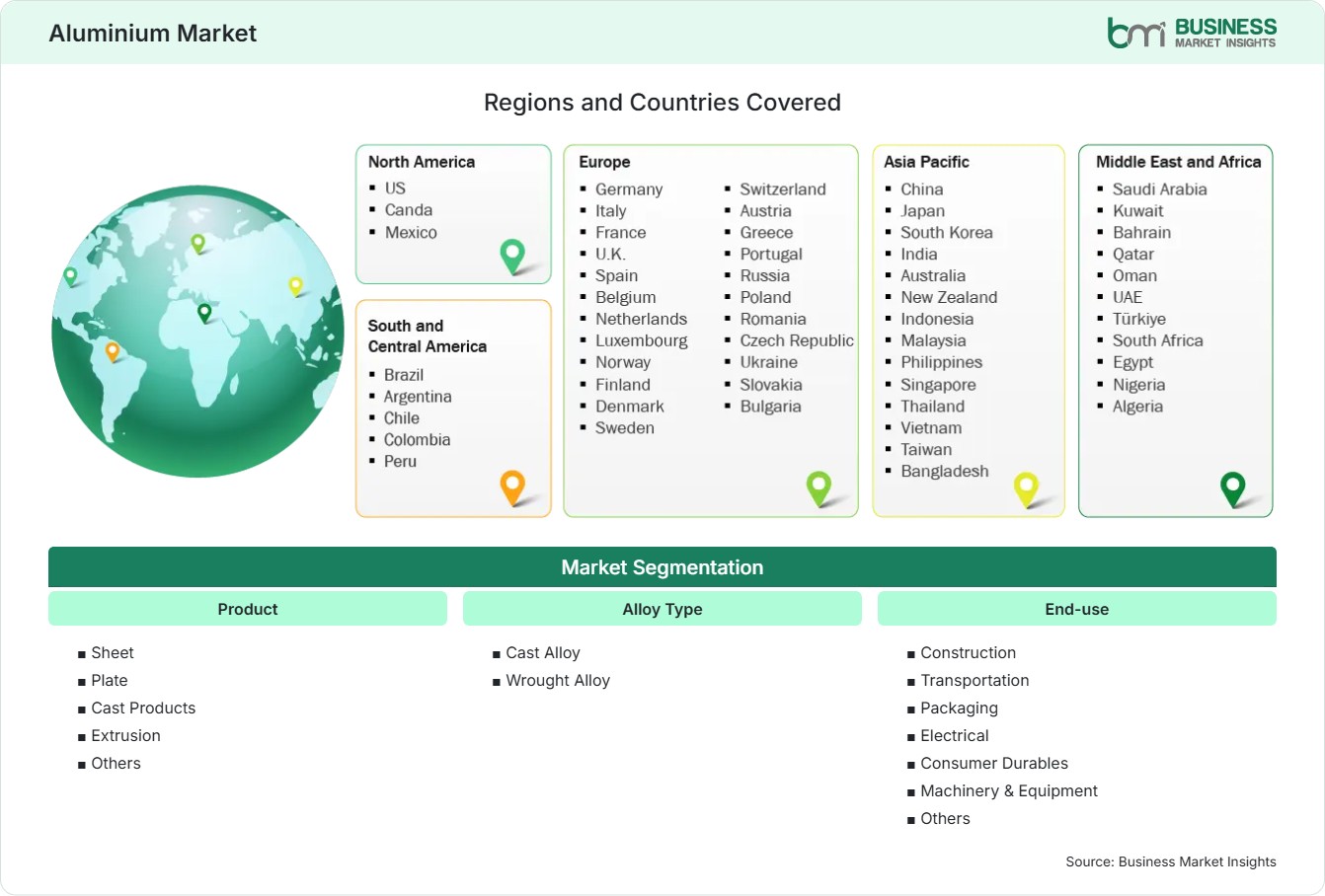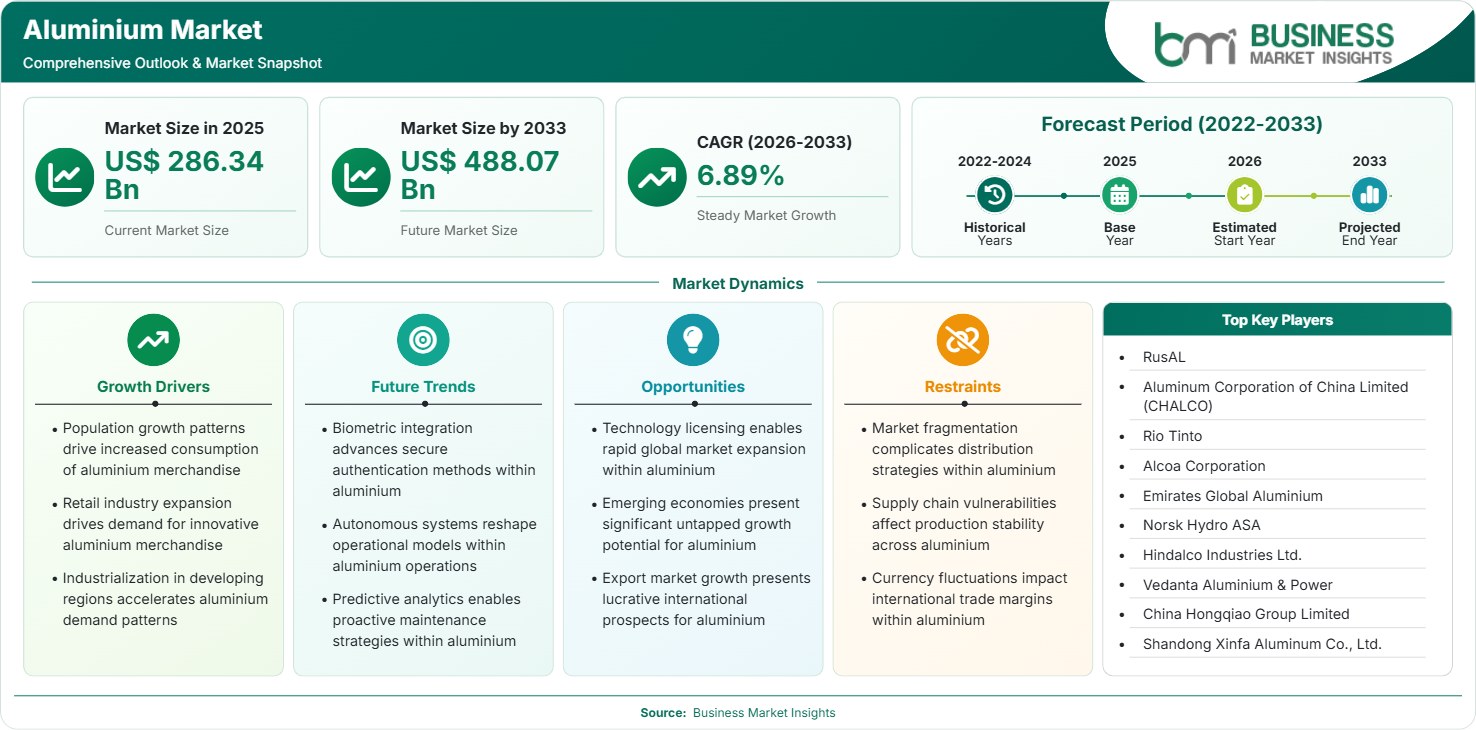
Aluminium Market Regional Highlights
North America Aluminium Market
North America accounted for a 22%–26% share in 2025 and is projected to grow at a CAGR of 6.20%–6.70% during 2026–2033. The region benefits from automotive lightweighting, aerospace demand, construction activities, and investments in sustainable aluminium production. The Aluminium Market share in North America is supported by established manufacturing infrastructure and increasing recycled material adoption across industries.
- Automotive manufacturers are increasing aluminium utilization for electric vehicles, battery structures, and lightweight components to improve performance and efficiency standards.
- Recycling initiatives are expanding across the region as companies prioritize lower-carbon production methods and resource efficiency.
- Aerospace applications continue supporting demand through advanced alloy requirements for aircraft structures and components.
- Infrastructure modernization programs are creating additional consumption opportunities for aluminium-based construction materials.
US Aluminium Market
The US represented a 18%–22% share in 2025 and is estimated to register a CAGR of 6.30%–6.80% between 2026–2033. Domestic manufacturing recovery, electric vehicle investments, and renewable energy projects are shaping demand patterns. The country remains a critical contributor due to advanced processing capabilities, aerospace applications, and growing emphasis on secure aluminium supply chains.
- Electric vehicle production growth is increasing demand for aluminium sheets, extrusions, and structural components across automotive manufacturing facilities.
- Aerospace industries are driving alloy innovation through requirements for lightweight, corrosion-resistant, and high-performance materials.
- Renewable energy installations are increasing aluminium consumption in solar mounting systems and power transmission applications.
Europe Aluminium Market
Europe held a 20%–24% share in 2025 and is forecast to expand at a CAGR of 5.80%–6.40% from 2026–2033. The region focuses on sustainable aluminium production, recycling systems, and industrial decarbonization. Germany, Norway, and France remain important markets, supported by automotive manufacturing, renewable energy initiatives, and environmental regulations promoting low-emission materials.
- Germany supports aluminium demand through automotive manufacturing, industrial machinery production, and advanced engineering applications.
- Norway benefits from renewable-powered aluminium production and investments in low-carbon smelting technologies.
- France is expanding aluminium usage through aerospace manufacturing and sustainable infrastructure projects.
- European recycling programs are improving circular aluminium supply chains and reducing dependence on primary production.
Asia Pacific Aluminium Market
Asia Pacific dominated with a 45%–50% share in 2025 and is expected to achieve a CAGR of 7.10%–7.60% during 2026–2033. The region benefits from construction expansion, industrialization, transportation growth, and manufacturing investments. China, India, and Southeast Asian economies remain key contributors due to infrastructure development and increasing downstream aluminium processing capabilities.
- China continues leading aluminium production through large-scale smelting capacity, industrial demand, and technology modernization initiatives.
- India is experiencing increased aluminium consumption from construction, transportation, renewable energy, and electrical infrastructure projects.
- Southeast Asian countries are attracting investments in aluminium processing facilities due to manufacturing expansion.
- Regional automotive growth is increasing demand for lightweight aluminium components and advanced alloys.
Rest of World Aluminium Market
Rest of World accounted for a 8%–12% share in 2025 and is projected to grow at a CAGR of 5.50%–6.10% during 2026–2033. South and Central America, along with Middle East and Africa markets, are supported by mining activities, industrial expansion, construction projects, and energy infrastructure development. The Aluminium Market share across these regions is strengthened by resource availability and downstream manufacturing investments.
South and Central America are benefiting from expanding mining operations, export opportunities, and growing demand from construction and transportation sectors. Brazil remains a key producer with established aluminium processing capabilities and renewable energy advantages. Middle East and Africa markets are developing through smelting investments, infrastructure projects, and industrial diversification strategies. Countries including the UAE and Saudi Arabia are strengthening aluminium production through technology upgrades and capacity expansion initiatives.
- Brazil supports regional aluminium growth through bauxite resources, refining capabilities, and increasing demand from domestic manufacturing sectors.
- The UAE is expanding aluminium production through energy-efficient smelting facilities and downstream industrial development programs.
- Middle Eastern countries are investing in aluminium value chains to support economic diversification beyond traditional energy sectors.
- African markets are developing aluminium opportunities through mining resources, infrastructure projects, and industrialization initiatives.