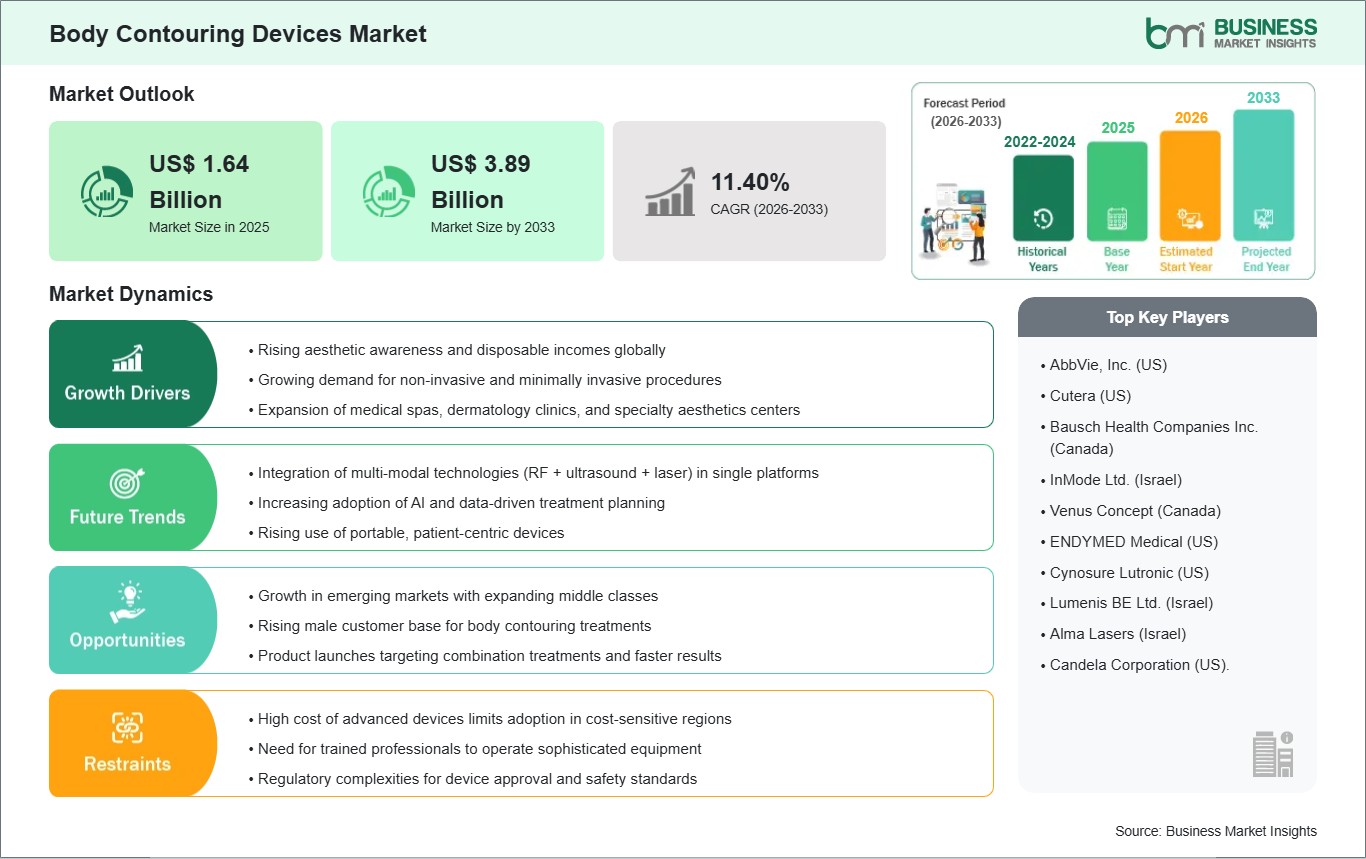
The Body Contouring Devices market size is expected to reach US$ 3.89 billion by 2033 from US$ 1.64 billion in 2025. The market is estimated to record a CAGR of 11.40% from 2026 to 2033
Body Contouring Devices play a critical role in the aesthetic and cosmetic treatment landscape globally, offering non-invasive and minimally invasive solutions for body shaping and fat reduction. They are essential for applications such as fat reduction, skin tightening, cellulite treatment, and body sculpting across aesthetic clinics, medical spas, and hospitals. Body contouring devices have several advantages, including reduced recovery time, lower procedural risk, and the ability to deliver targeted treatment with minimal disruption to daily activities. Increasing aesthetic awareness, rising disposable incomes, and the growing demand for non-surgical cosmetic procedures are fueling the market. Additionally, innovations in energy-based technologies, device automation, and treatment personalization are enhancing procedural efficiency and clinical outcomes.
However, several challenges can restrain market growth, such as high device costs, stringent regulatory requirements, and the need for skilled professionals to operate advanced systems. The industry is also sensitive to economic fluctuations and disruptions such as changes in healthcare spending or temporary clinic closures. Despite these hurdles, the market holds significant opportunities driven by rising demand for non-invasive aesthetic treatments, expanding medical tourism in developing countries, and increased adoption of technologically advanced body contouring solutions. Investment in research and development, along with a growing focus on safe, effective, and patient-centric treatments, is also expected to open new avenues for market expansion.

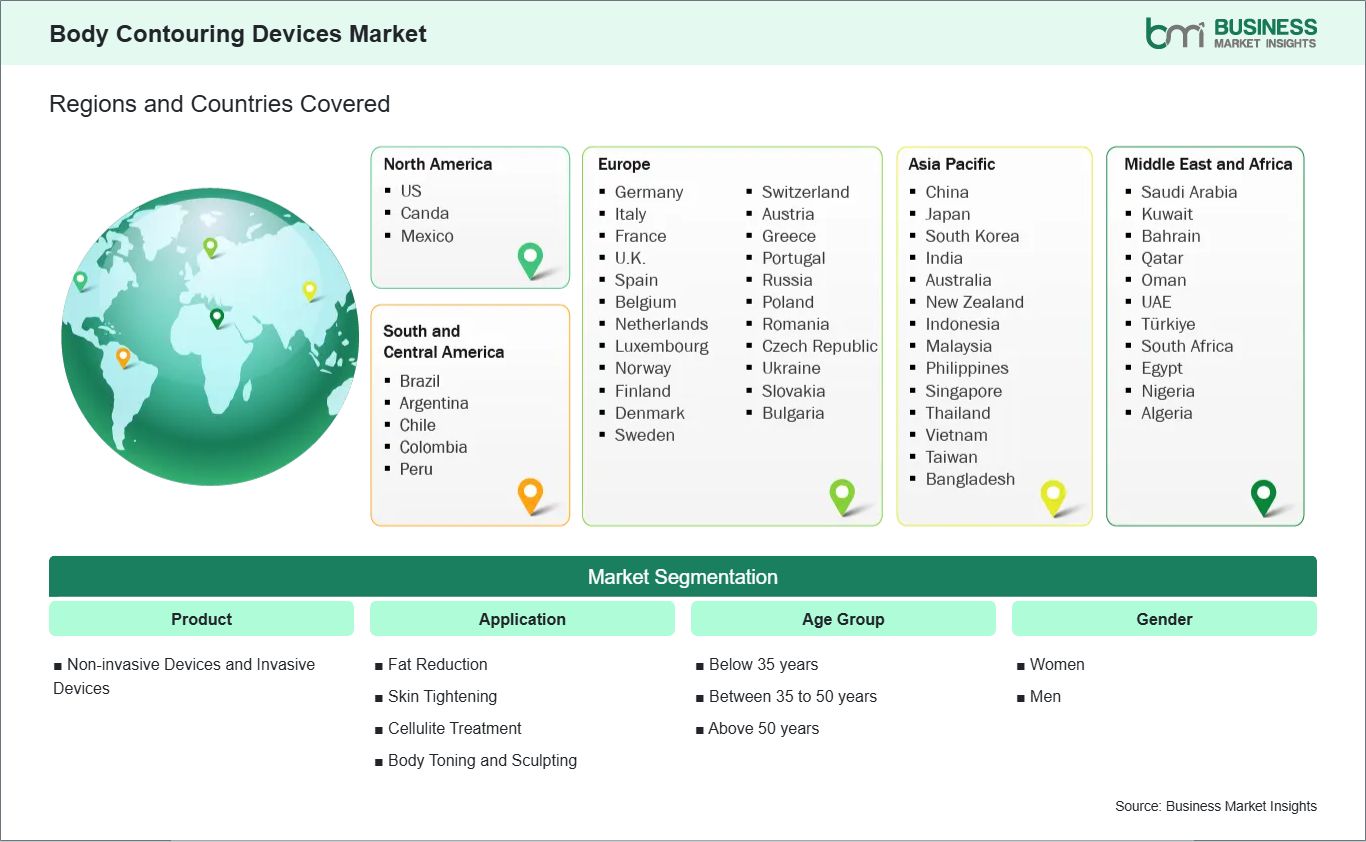
Key segments that contributed to the derivation of the Body Contouring Devices market analysis are Product, Application, Age Group, Gender, End User.
The rapid growth in demand for non-invasive and minimally invasive cosmetic procedures has emerged as a pivotal factor positively driving the body contouring devices market. With increasing aesthetic awareness, social media influence, and a growing focus on physical appearance and wellness, consumers now prefer treatments that offer visible results with minimal downtime and lower risk, making body contouring devices a critical component of modern aesthetic care.
For instance, rising adoption of non-surgical procedures such as fat reduction, skin tightening, and body sculpting is supported by growing urban populations, higher disposable incomes, and improved access to aesthetic clinics. The growth is associated with the increasing demand for procedures addressing localized fat deposits, cellulite reduction, post-pregnancy body shaping, and age-related skin laxity. This robust expansion in aesthetic treatments directly supports the growth of the body contouring devices market, as the need for safe, efficient, and clinically effective solutions continues to increase to meet patient expectations and evolving lifestyle trends worldwide.
Major aesthetic service providers, medical spas, and specialty clinics have not only expanded their service offerings but have also significantly influenced treatment models by adopting advanced energy-based technologies. Body contouring devices, known for their precision, safety, and ability to deliver consistent outcomes, are uniquely positioned to meet these evolving patient demands. Unlike invasive surgical procedures, these devices enable targeted treatment of specific body areas with reduced recovery time, which is essential for consumers seeking convenience and rapid results.
Technological Advancements in Aesthetic Devices
The ongoing advancements in aesthetic device technologies have become a powerful driver of growth in the body contouring devices market. As innovation in energy-based systems such as radiofrequency, cryolipolysis, high-intensity focused ultrasound, and laser-based therapies continues, healthcare providers are increasingly reliant on advanced devices that deliver improved efficacy, safety, and patient comfort. Body contouring devices, with their ability to provide controlled, customizable treatments, have emerged as a crucial enabler of modern aesthetic practice.
In recent years, technological improvements such as real-time treatment monitoring, enhanced applicator designs, and integrated software platforms have expanded treatment capabilities and improved clinical outcomes. These advancements have opened new opportunities across both developed and emerging markets, encouraging wider adoption among clinics and practitioners. High-demand procedures such as fat reduction, skin tightening, and body sculpting benefit significantly from these innovations, as they allow practitioners to address multiple aesthetic concerns with a single device platform.
Moreover, aesthetic service providers continue to diversify their offerings to remain competitive in a rapidly evolving cosmetic landscape. This shift often involves the adoption of advanced body contouring solutions that can support personalized, outcome-driven treatment plans. As clinics respond to increasing consumer demand for effective, non-surgical aesthetic solutions and flexible treatment options, the demand for technologically advanced body contouring devices is expected to grow steadily

By Product, the Body Contouring Devices market is bifurcated into non-invasive devices and invasive devices. The non-invasive devices segment dominated the market in 2025. Non-invasive devices dominate due to minimal downtime, lower procedural risk, growing patient preference for non-surgical treatments, wider clinic adoption, repeat usage, faster recovery, and strong technological advancements improving outcomes globally.
By Application, the market is divided into fat reduction, skin tightening, cellulite treatment, body toning and sculpting. The fat reduction segment held the largest share of the market in 2025. Fat reduction dominates as rising obesity rates, lifestyle disorders, and aesthetic awareness drive demand for targeted fat loss, delivering visible results quickly, making it the most sought-after body contouring application.
By Age Group, the market is segmented into below 35 years, between 35 to 50 years, above 50 years. The between 35 to 50 years segment held the largest share of the market in 2025. Individuals aged 35 to 50 dominate due to higher disposable incomes, greater body image concerns, post-pregnancy or age-related changes, and strong willingness to invest in effective, non-invasive aesthetic treatments regularly.
By Gender, the market is bifurcated into women and men. The women segment held the largest share of the market in 2025. Women dominate the market owing to higher aesthetic awareness, greater social acceptance of cosmetic procedures, increased spending on personal appearance, and stronger demand for body shaping and skin tightening solutions.
By end user, the market is segmented into specialty clinics, medical spas and beauty centers. The specialty clinics segment held the largest share of the market in 2025. Specialty clinics dominate due to availability of advanced technologies, skilled practitioners, specialized aesthetic focus, higher procedure volumes, patient trust, and ability to offer customized body contouring treatments efficiently and consistently.
| Report Attribute | Details |
|---|---|
| Market size in 2025 | US$ 1.64 Billion |
| Market Size by 2033 | US$ 3.89 Billion |
| Global CAGR (2026 - 2033) | 11.40% |
| Historical Data | 2022-2024 |
| Forecast period | 2026-2033 |
| Segments Covered | By Product
|
|
Regions and Countries Covered
| |
| North America | US, Canada, Mexico |
| Europe | Belgium, Austria, Finland, Denmark, Greece, Poland, Romania, Russia, Ukraine, Czech Republic, Slovakia, Bulgaria, Italy, Luxembourg, Germany, Switzerland, France, Netherlands, Norway, Portugal, Spain, Sweden, United Kingdom |
| Asia-Pacific | Australia, China, India, Japan, South Korea, Indonesia, Malaysia, Philippines, Singapore, Thailand, Vietnam, Bangladesh, New Zealand, Taiwan |
| South and Central America | Brazil, Argentina, Peru, Chile, Colombia |
| Middle East and Africa | Bahrain, Kuwait, Oman, Qatar, Saudi Arabia, United Arab Emirates, Turkiye, South Africa, Egypt, Algeria, Nigeria |
| Market leaders and key company profiles |
|
The "Body Contouring Devices Market Size and Forecast (2022 - 2033)" report provides a detailed analysis of the market covering below areas:
The geographical scope of the Body Contouring Devices market report is divided into five regions: North America, Asia Pacific, Europe, Middle East & Africa, and South & Central America. The Body Contouring Devices market in Asia Pacific is expected to grow significantly during the forecast period.
The Asia-Pacific Body Contouring Devices market is segmented into China, Japan, South Korea, India, Australia, New Zealand, Indonesia, Malaysia, the Philippines, Singapore, Thailand, Vietnam, Taiwan, Bangladesh, and the Rest of Asia. The Asia-Pacific body contouring devices market is experiencing robust growth, driven by increasing aesthetic awareness, rising disposable incomes, and the growing preference for non-invasive and minimally invasive cosmetic procedures. Major economies like China and India are leading the way, fueled by expanding urban populations, growing medical tourism, and increased investments in aesthetic clinics and medical spas.
The region is also witnessing increased adoption of advanced aesthetic technologies, including radiofrequency, cryolipolysis, high-intensity focused ultrasound, and laser-based systems particularly relevant for applications such as fat reduction and skin tightening. Expansion of aesthetic service infrastructure, alongside the entry of international device manufacturers and local players, is enhancing treatment accessibility and affordability. Additionally, the surge in demand for non-surgical cosmetic procedures, coupled with the growing influence of social media and beauty standards, is positioning Asia-Pacific as a key growth hub in the global body contouring devices market. The rise of healthcare investments and improving regulatory frameworks across major countries further solidifies the region’s strong market position

The Body Contouring Devices market is evaluated by gathering qualitative and quantitative data post primary and secondary research, which includes important corporate publications, association data, and databases. A few of the key developments in the Body Contouring Devices market are:
The Body Contouring Devices Market is valued at US$ 1.64 Billion in 2025, it is projected to reach US$ 3.89 Billion by 2033.
As per our report Body Contouring Devices Market, the market size is valued at US$ 1.64 Billion in 2025, projecting it to reach US$ 3.89 Billion by 2033. This translates to a CAGR of approximately 11.40% during the forecast period.
The Body Contouring Devices Market report typically cover these key segments-
The historic period, base year, and forecast period can vary slightly depending on the specific market research report. However, for the Body Contouring Devices Market report:
The Body Contouring Devices Market is populated by several key players, each contributing to its growth and innovation. Some of the major players include:
The Body Contouring Devices Market report is valuable for diverse stakeholders, including:
Essentially, anyone involved in or considering involvement in the Body Contouring Devices Market value chain can benefit from the information contained in a comprehensive market report.
Please tell us your area of interest
(Market Segments/ Regions and Countries/ Companies)