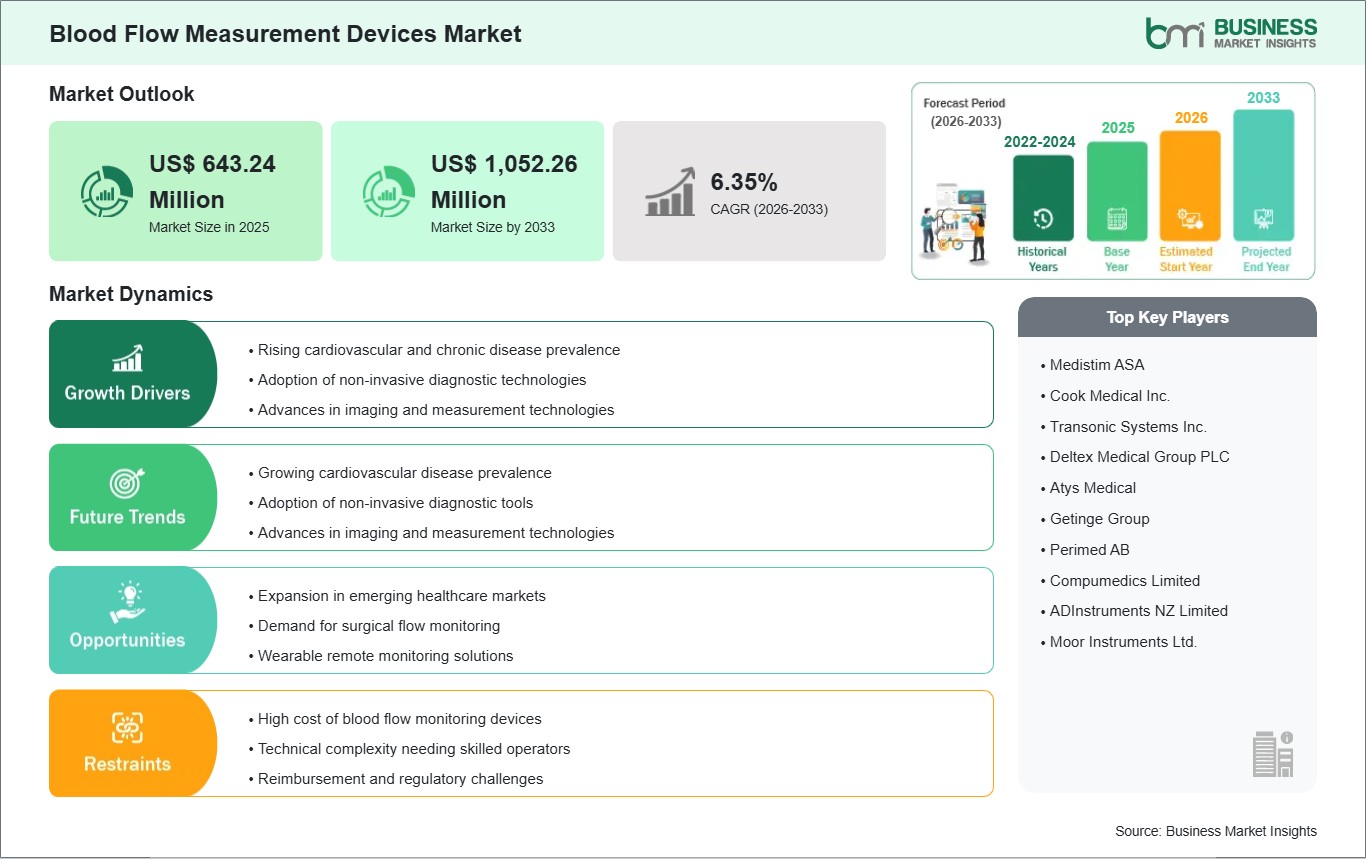
The Blood Flow Measurement Devices Market size is expected to reach US$ 1,052.26 Million by 2033 from US$ 643.24 Million in 2025. The market is estimated to record a CAGR of 6.35% from 2026 to 2033.
The global market for blood flow measurement devices is expected to witness continued growth because of the increasing prevalence of diseases related to the cardiovascular system, as well as other illnesses such as diabetes and peripheral vascular disease. Having reliable measurements of blood flow can accurately diagnose, monitor, and manage these diseases, increasing the demand for blood flow measurement technologies. Non-invasive measurement technologies, such as Doppler ultrasound and laser Doppler flowmetry, dominate the blood flow measurement device market due to their ease of use in many clinical and outpatient settings, as well as their patient-friendly nature. Newer generations of measurement devices are being developed to improve diagnostic accuracy and expand their use into new areas, such as intraoperative and remote monitoring, through technological advances, including miniaturization, improved imaging resolution, and integration with artificial intelligence.
North America is currently the largest blood flow measurement devices market by market share, due to having an advanced healthcare infrastructure, a high incidence of diseases and early adoption of innovative medical devices.
Europe is the second largest blood flow measurement devices market, while the Asia-Pacific region is anticipated to experience rapid growth in the future through increased investment in healthcare, a growing number of individuals diagnosed with chronic diseases, and an increase in the overall use of medical devices. Additionally, the ongoing trend of adopting portable devices and point-of-care testing as well as increased utilization of telemedicine will generate new business opportunities within the blood flow measurement device market for businesses interested in new innovations and emerging sub-market segments. Overall, this market is forecasted to exhibit strong positive growth due to clinical demand, technological innovation and expanding healthcare access across the globe.

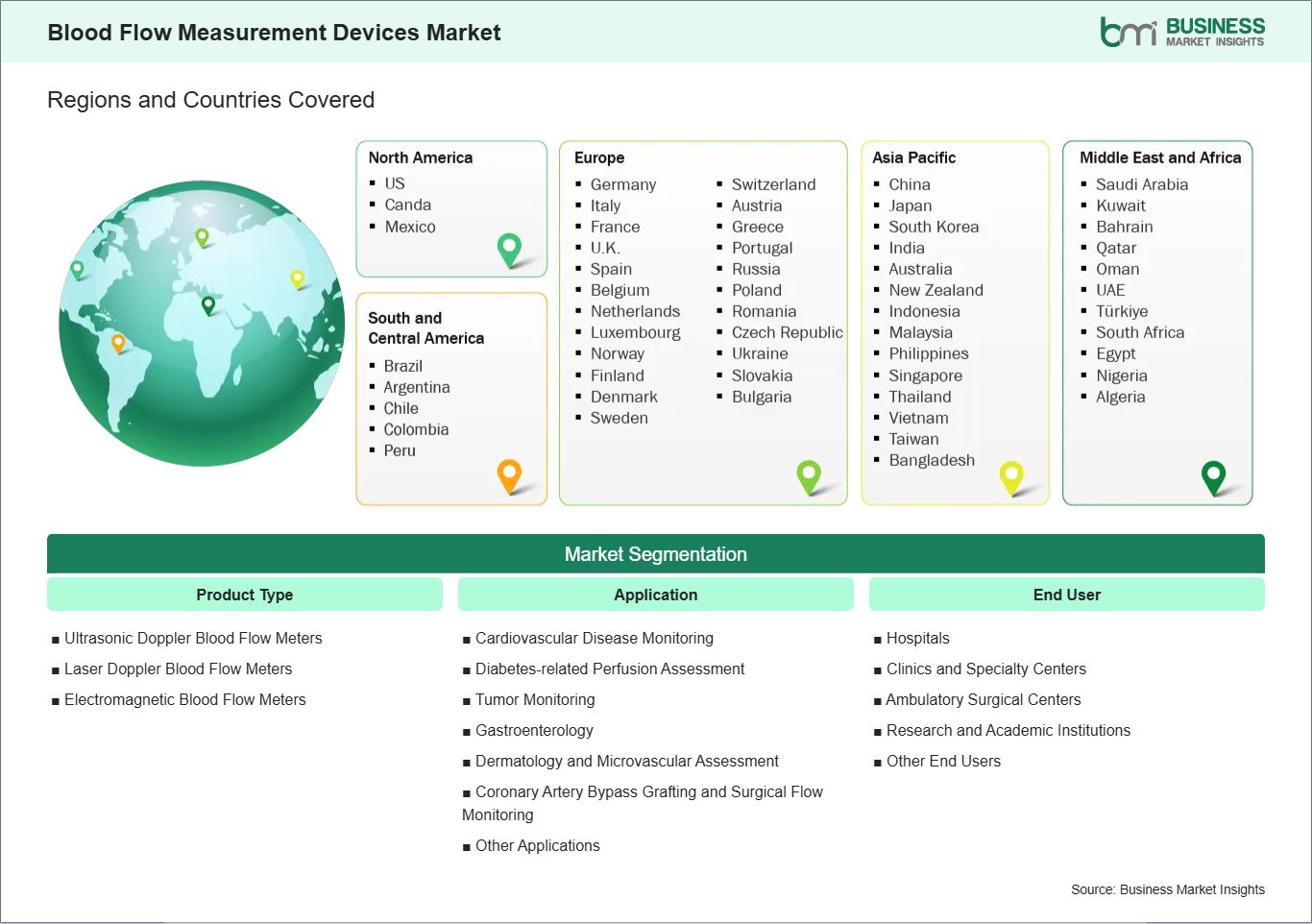
Key segments that contributed to the derivation of the Blood Flow Measurement Devices market analysis are product type, application and end user.
One of the main reasons the blood flow measurement device market is growing is that the number of people around the world who have cardiovascular diseases (CVD), diabetes, and associated chronic illnesses is increasing very quickly. Cardiovascular diseases still account for the largest percentage of deaths in the world, which means there is a huge amount of demand for accurate and timely diagnosis and monitoring equipment. Blood flow measurement devices are used to diagnose vascular abnormalities, assess for peripheral artery disease, and monitor the complications of diabetes, such as microvascular and macrovascular damage. Furthermore, as a result of the increase in lifestyle-related risk factors, such as obesity, hypertension, and inactivity, the number of patients who need to be monitored continuously is also rising. Assessing blood flow early and accurately helps physicians develop treatment plans specific to each patient, avoid severe complications from insufficient blood flow, and provide better overall care. In addition, the growing number of elderly people worldwide are at an increased risk for circulatory disorders, which will increase the need for reliable blood flow diagnostics.
Furthermore, because of their more favorable patient experience and greater efficiency than traditional methods of measuring blood flow, non-invasive and real-time blood flow measurement techniques are being used by health care providers more and more; as a result, hospitals, specialty clinics, and diagnostic centers are investing in highly advanced equipment to improve their ability to provide quality care. Overall, the need for these technologies for a wide range of clinical reasons, and increased efforts to raise awareness and improve screening processes are continually increasing demand for blood flow measurement technologies, thereby serving as a primary driver of the growth of this market.
The rapid growth of health care systems, an increasing number of chronic disease cases in developing countries and increasing interest in remote and point-of-care monitoring tools, provide opportunities to market blood flow measurement tools. There is improved access to health care in developing countries such as APAC, LATAM and ME, which is attributed to government investments in the health care system, increased disposable incomes and increased health insurance penetration. The expansion of health care services in both rural and urban locations will lead to an increase in access to blood flow measurement tools. The trends of telemedicine and remote monitoring were accelerated by the COVID-19 pandemic. This necessitates the use of portable, simple-to-use devices for continuous vascular health assessment outside of the clinic. Clinicians using wearable and handheld blood flow measurement tools are able to access real-time information to help them manage the care of patients with chronic diseases without needing to see them in person, thereby reducing the number of hospital visits and expenses associated with health care services.
Adding AI technology and connectivity into these devices will improve the diagnostic capability of the health care provider and allow them to create personalized treatment plans for the patient. Manufacturers developing low-cost, easy-to-use and connected blood flow measurement devices for the emerging market are well situated to take advantage of this opportunity for growth in the next decade due to their willingness to work collaboratively, manufacture locally and work within FDA regulations.

By product type, the blood flow measurement devices market is segmented into ultrasonic doppler blood flow meters, laser doppler blood flow meters, electromagnetic blood flow meters. The ultrasonic doppler blood flow meters segment dominated the market in 2025. Their dominance is largely driven by non-invasive nature, accuracy, and widespread use in various clinical applications.
By application, the blood flow measurement devices market is segmented into cardiovascular disease monitoring, diabetes-related perfusion assessment, tumor monitoring, gastroenterology, dermatology and microvascular assessment, coronary artery bypass grafting (CABG) and surgical flow monitoring, others. The cardiovascular disease monitoring segment dominated the market in 2025. Their dominance is largely driven by the high prevalence of cardiovascular conditions requiring continuous blood flow assessment.
By end user, the market is segmented into hospitals, clinics and specialty centers, ambulatory surgical centers, research and academic institutions, others. The hospitals segment held the largest share of the market in 2025. This growth is supported by their advanced infrastructure, high patient volumes, and need for comprehensive diagnostic capabilities.
| Report Attribute | Details |
|---|---|
| Market size in 2025 | US$ 643.24 Million |
| Market Size by 2033 | US$ 1,052.26 Million |
| Global CAGR (2026 - 2033) | 6.35% |
| Historical Data | 2022-2024 |
| Forecast period | 2026-2033 |
| Segments Covered | By Product Type
|
|
Regions and Countries Covered
| |
| North America | US, Canada, Mexico |
| Europe | Belgium, Austria, Finland, Denmark, Greece, Poland, Romania, Russia, Ukraine, Czech Republic, Slovakia, Bulgaria, Italy, Luxembourg, Germany, Switzerland, France, Netherlands, Norway, Portugal, Spain, Sweden, United Kingdom |
| Asia-Pacific | Australia, China, India, Japan, South Korea, Indonesia, Malaysia, Philippines, Singapore, Thailand, Vietnam, Bangladesh, New Zealand, Taiwan |
| South and Central America | Brazil, Argentina, Peru, Chile, Colombia |
| Middle East and Africa | Bahrain, Kuwait, Oman, Qatar, Saudi Arabia, United Arab Emirates, Turkiye, South Africa, Egypt, Algeria, Nigeria |
| Market leaders and key company profiles |
|
The "Blood Flow Measurement Devices Market Size and Forecast (2022–2033)" report provides a detailed analysis of the market covering below areas:
The geographical scope of the Blood Flow Measurement Devices market report is divided into five regions: North America, Asia Pacific, Europe, Middle East & Africa, and South & Central America. The Blood Flow Measurement Devices market in Asia Pacific is expected to grow significantly during the forecast period.
The Asia-Pacific Blood Flow Measurement Devices market is segmented into China, Japan, South Korea, India, Australia, New Zealand, Indonesia, Malaysia, the Philippines, Singapore, Thailand, Vietnam, Taiwan, Bangladesh, and the Rest of Asia. The Asia Pacific blood flow measurement device market has a lot of potential for rapid growth. Many factors are driving growth in this market, including the increasing prevalence of cardiovascular disease, diabetes, and other chronic diseases in the region. China, India, Japan and South Korea are all experiencing increases in patients that need accurate and timely vascular assessments. In addition, the increasing expansion of healthcare infrastructure, increased government spending on healthcare, and increasing awareness of advanced diagnostic technologies are helping to spur the adoption of blood flow measurement devices in both urban and rural healthcare facilities.
As more surgical procedures are performed, especially those related to CABG and vascular surgery, this will increase demand for intraoperative blood flow establishment devices. The growth of the middle class in the region and improved insurance coverage will also create access to more advanced diagnostic tools (blood flow measurement devices) for hospitals and specialist clinics. New trends such as telemedicine and remote patient monitoring will lead the way for more use of handheld, wearable, and other technologies to monitor blood flow measurement. Global device manufacturers are collaborating with local healthcare provider's and regulatory reforms are improving market access and encouraging innovation. With all of these factors at play, the Asia Pacific region is one of the fastest growing blood flow measurement device markets in the world due to new inventions, improvements in healthcare access, and demographic changes associated with increased levels of technology in blood flow measurement.

The Blood Flow Measurement Devices market is evaluated by gathering qualitative and quantitative data post primary and secondary research, which includes important corporate publications, association data, and databases. A few of the key developments in the blood flow measurement devices market are:
The Blood Flow Measurement Devices Market is valued at US$ 643.24 Million in 2025, it is projected to reach US$ 1,052.26 Million by 2033.
As per our report Blood Flow Measurement Devices Market, the market size is valued at US$ 643.24 Million in 2025, projecting it to reach US$ 1,052.26 Million by 2033. This translates to a CAGR of approximately 6.35% during the forecast period.
The Blood Flow Measurement Devices Market report typically cover these key segments-
The historic period, base year, and forecast period can vary slightly depending on the specific market research report. However, for the Blood Flow Measurement Devices Market report:
The Blood Flow Measurement Devices Market is populated by several key players, each contributing to its growth and innovation. Some of the major players include:
The Blood Flow Measurement Devices Market report is valuable for diverse stakeholders, including:
Essentially, anyone involved in or considering involvement in the Blood Flow Measurement Devices Market value chain can benefit from the information contained in a comprehensive market report.
Please tell us your area of interest
(Market Segments/ Regions and Countries/ Companies)