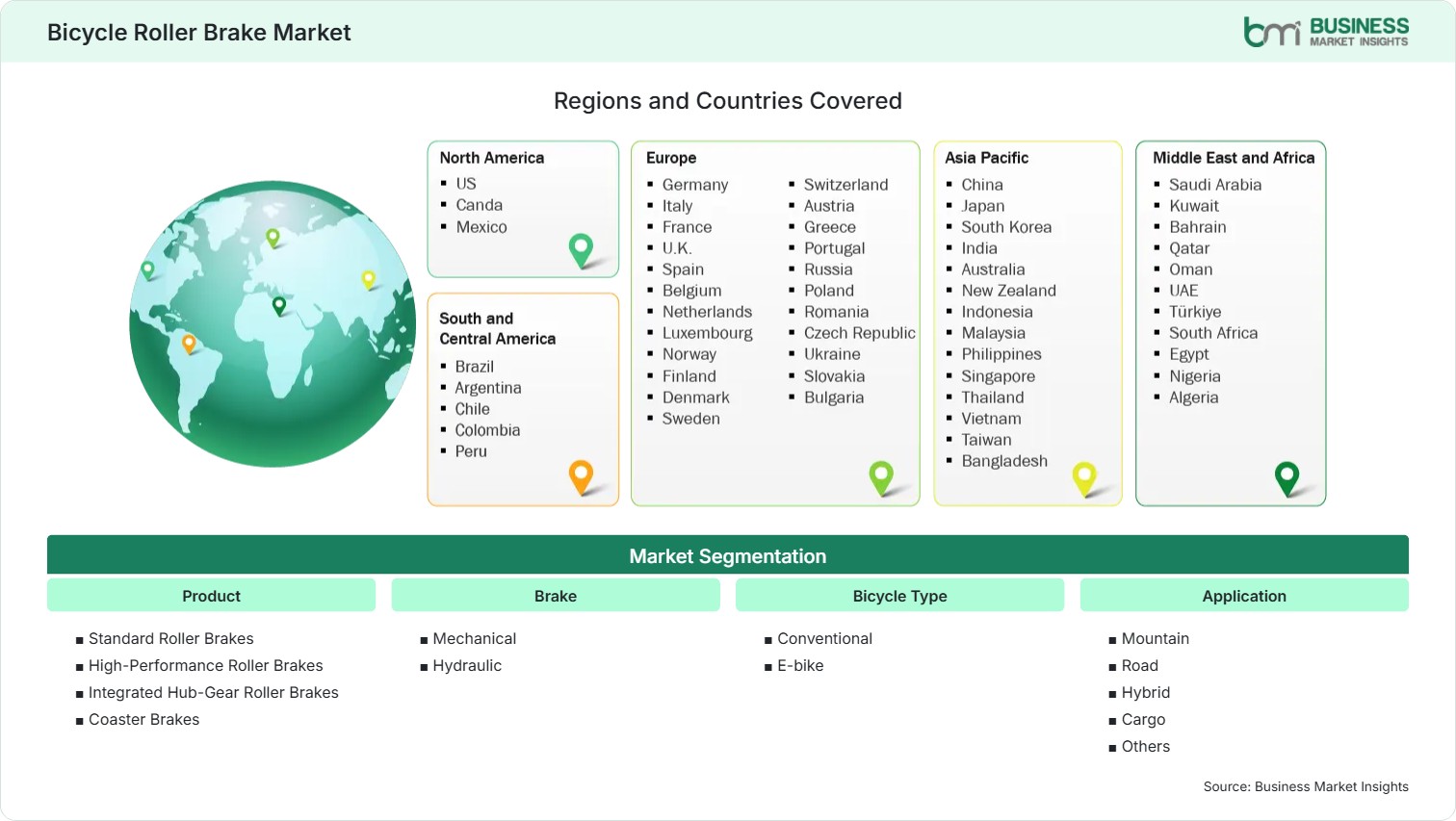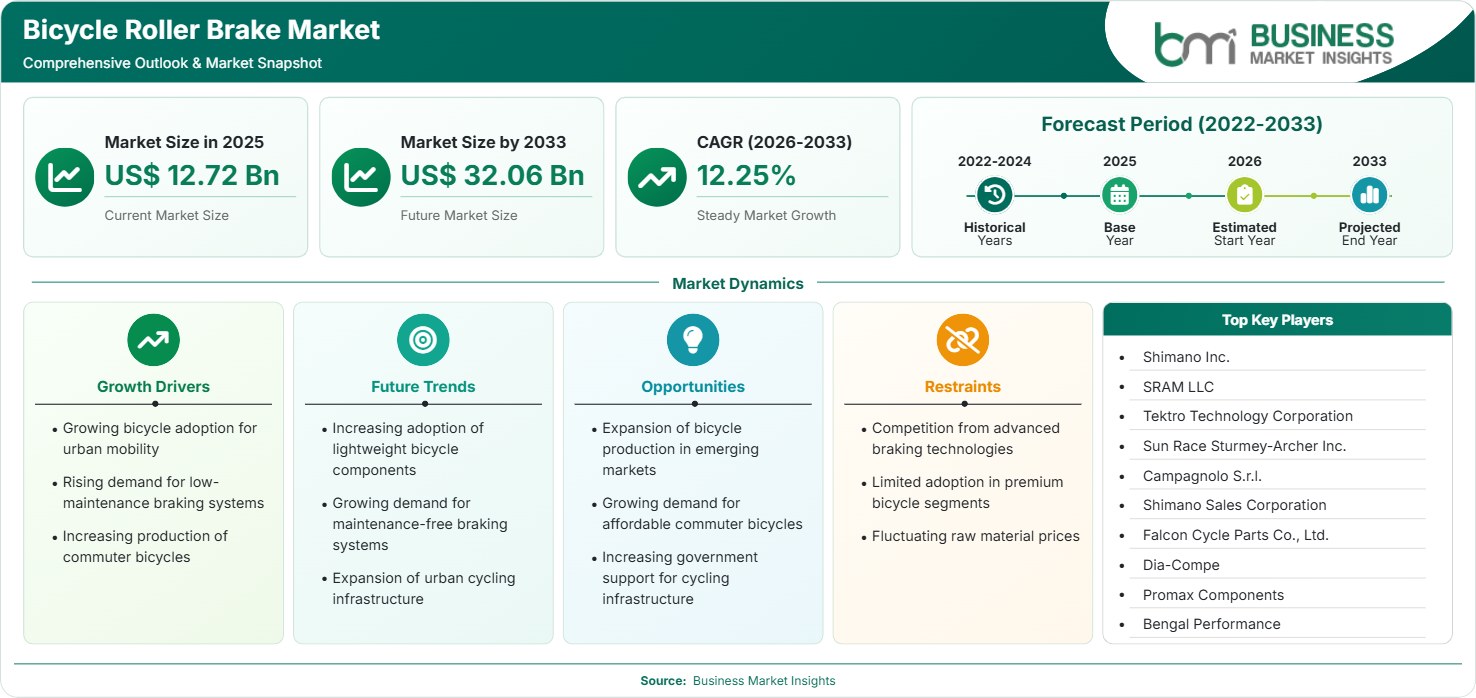
Bicycle Roller Brake Market Regional Highlights
North America Bicycle Roller Brake Market
North America held a 24%–27% share of the global Bicycle Roller Brake Market in 2025 and is projected to grow at a CAGR of 10.5%–11.2% during 2026–2033. Growth is driven by rising urban cycling, e-bike adoption, recreational cycling, and demand for low-maintenance braking systems. The U.S. leads the region with expanding bicycle infrastructure and sustainable mobility adoption.
- Growing investments in urban cycling infrastructure across major cities are encouraging bicycle adoption, increasing demand for durable braking components suitable for daily commuting and recreational applications.
- Expanding e-bike sales are creating new opportunities for roller brake manufacturers as consumers seek reliable braking systems offering consistent performance, reduced maintenance, and improved weather resistance.
- Increasing preference for practical commuter bicycles is supporting demand for standard and integrated braking technologies among manufacturers targeting urban mobility applications.
- Rising replacement demand from existing bicycle owners is strengthening aftermarket opportunities for component suppliers offering durable and service-friendly braking solutions.
US Bicycle Roller Brake Market
The United States accounted for 78%–82% of North American revenue in 2025 and is projected to grow at a CAGR of 10.8%–11.4% during 2026–2033. Growth is driven by rising commuter cycling, e-bike adoption, sustainable transport initiatives, and demand for reliable low-maintenance braking systems among urban and recreational riders in Bicycle Roller Brake Market.
- Growing adoption of electric bicycles among urban commuters is increasing demand for braking systems compatible with heavier bicycle designs and frequent stop-and-go riding conditions.
- Expansion of bicycle-sharing programs and last-mile delivery applications is encouraging manufacturers to develop durable braking systems designed for intensive commercial usage.
- Increasing consumer focus on bicycle maintenance efficiency is supporting adoption of enclosed braking technologies that provide improved protection against environmental conditions.
- Strong aftermarket networks and availability of replacement components continue supporting long-term demand among bicycle users across urban and suburban markets.
Europe Bicycle Roller Brake Market
Europe held a 28%–31% share of global revenue in 2025 and is projected to grow at a CAGR of 11.2%–11.8% during 2026–2033. Germany leads the market through strong bicycle adoption, infrastructure, and manufacturing capabilities, while the Netherlands and Denmark benefit from cycling-friendly policies and rising commuter bicycle demand.
- Germany maintains regional leadership through strong bicycle manufacturing expertise, high commuter bicycle adoption, and increasing integration of advanced braking systems in urban mobility products.
- The Netherlands continues expanding through extensive cycling infrastructure, high bicycle ownership rates, and consumer preference for durable components requiring minimal maintenance.
- Denmark demonstrates strong demand because of government-supported cycling initiatives, growing urban mobility programs, and increasing adoption of practical commuter bicycles.
- European sustainability policies encouraging reduced vehicle dependency are creating favorable conditions for bicycle component manufacturers and suppliers.
- Rising popularity of electric bicycles across European countries is supporting demand for efficient braking solutions designed for higher vehicle weight and speed requirements.
Asia Pacific Bicycle Roller Brake Market
Asia Pacific held a 38%–42% share of global revenue in 2025 and is projected to grow at the fastest CAGR of 13.5%–14.2% during 2026–2033. Growth is driven by bicycle manufacturing, urbanization, e-bike adoption, and demand for affordable mobility solutions. China leads the region, while India and Southeast Asia show strong bicycle roller brake market growth through expanding cycling infrastructure and commuter adoption.
- China dominates regional demand through its extensive bicycle manufacturing base, strong supply chain capabilities, and increasing production of commuter and electric bicycles requiring reliable braking components.
- India is emerging as a high-growth market due to rising urban mobility requirements, increasing bicycle usage for affordable transportation, and growing government initiatives supporting sustainable mobility solutions.
- Japan maintains steady demand through advanced bicycle technology adoption, aging population mobility needs, and strong consumer preference for durable, low-maintenance transportation products.
- Southeast Asian markets are expanding as urban populations increase, disposable incomes improve, and bicycles become increasingly popular for commuting and recreational activities.
- Growing regional e-bike production is creating opportunities for roller brake manufacturers developing integrated solutions suitable for heavier electric bicycle platforms and commercial mobility applications.
Rest of World Bicycle Roller Brake Market
The Rest of World region accounted for 5%–8% of global revenue in 2025 and is projected to grow at a CAGR of 9.5%–10.5% during 2026–2033. Growth is supported by rising bicycle adoption, sustainability initiatives, and improving cycling infrastructure. Brazil leads Latin America, while Gulf countries are advancing cycling-focused urban development programs.
- Brazil leads regional demand through rising bicycle usage, urban mobility programs, and demand for affordable transportation.
- Mexico is growing with increased recreational cycling, improved accessibility, and sustainable commuting trends.
- Gulf countries are creating opportunities through cycling infrastructure and smart city initiatives.
- African markets offer long-term potential as urbanization increases and bicycles support affordable mobility.
- Expanding distribution networks are improving access to bicycle components and supporting roller brake adoption in developing markets.