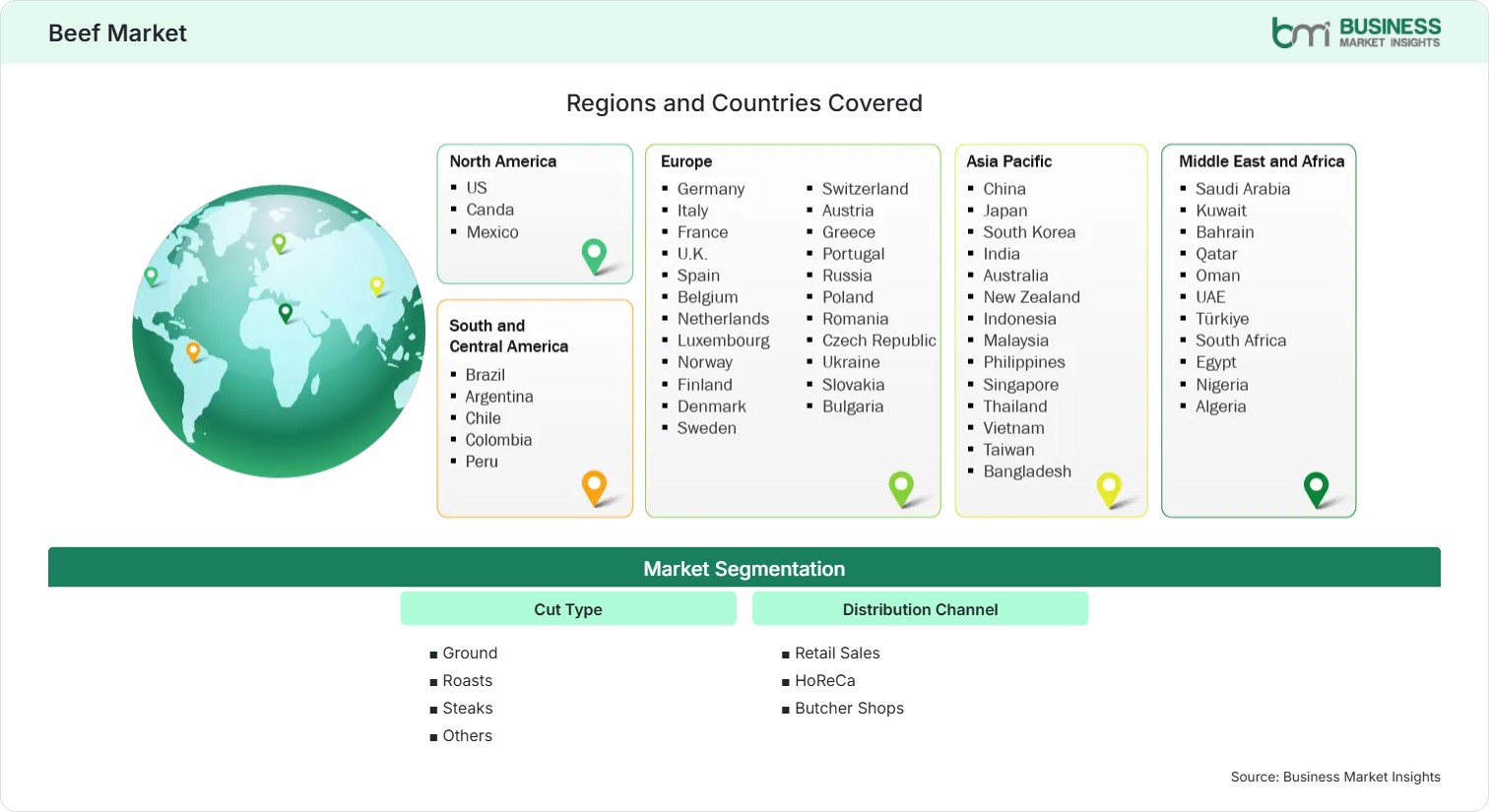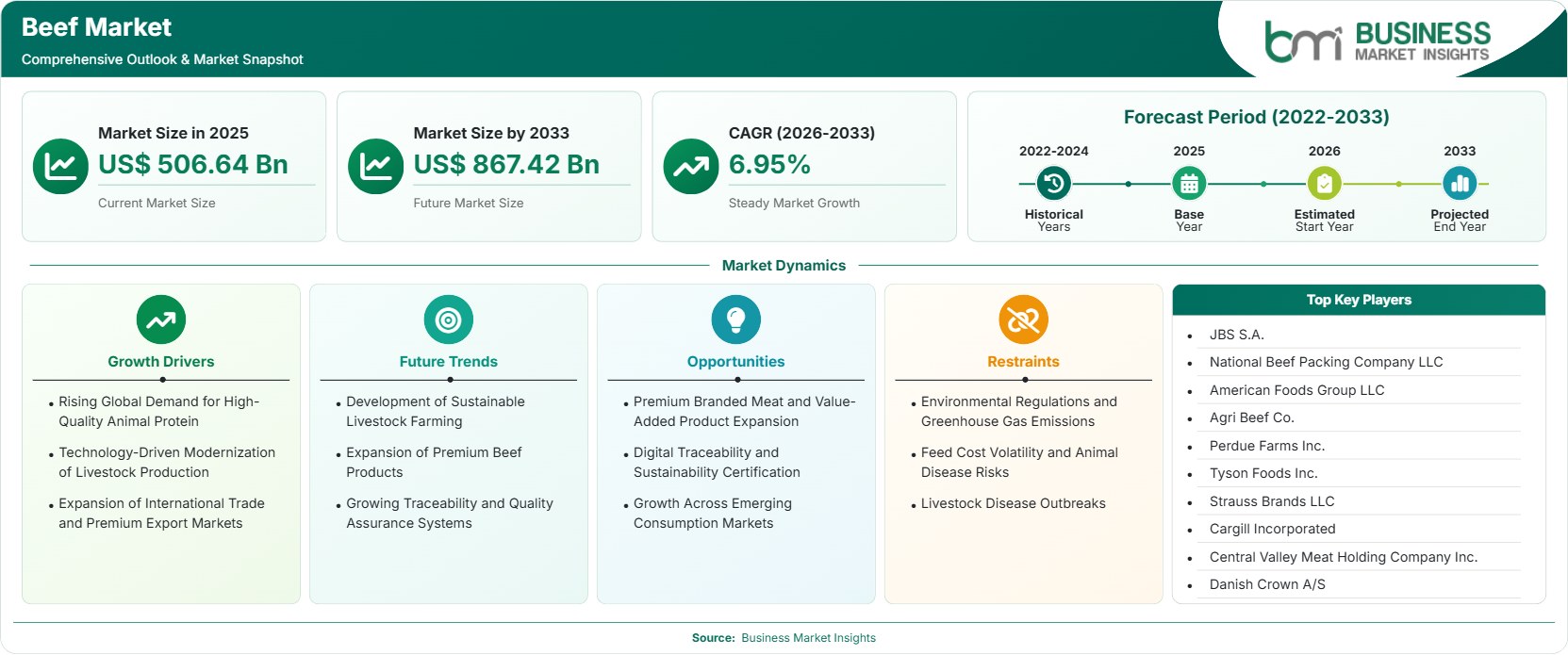
Beef Market Regional Highlights
North America Beef Market
North America accounts for approximately 34%–37% of global revenue in 2025 and is projected to expand at a CAGR of 6.2%–6.7% during 2026–2033. The region maintains leadership through highly commercialized cattle farming, vertically integrated processing facilities, advanced cold-chain infrastructure, and consistent consumer demand for premium protein products. The Beef Market share remains supported by productivity improvements and premium branded product offerings.
- Large-scale feedlot operations and modern meat processing facilities enhance production efficiency, improve yield consistency, reduce processing costs, and support reliable domestic supply alongside expanding export opportunities to Asian and North American trading partners.
- Retail chains increasingly prioritize premium branded beef, organic selections, and value-added packaged products, encouraging processors to introduce differentiated offerings supported by advanced packaging technologies and transparent sourcing information for consumers.
- Automation technologies, AI-enabled livestock monitoring, and precision feeding programs improve herd productivity while reducing operational costs, supporting profitability despite fluctuating feed prices and labor shortages across processing facilities.
- Rising investments in digital traceability platforms enhance food safety verification, strengthen regulatory compliance, improve recall management capabilities, and increase consumer confidence in premium livestock products throughout the regional value chain.
US Beef Market
The United States Beef Market represents nearly 78%–82% of North American revenue in 2025 and is anticipated to grow at a CAGR of 6.3%–6.8% through 2033. Extensive cattle inventories, sophisticated processing infrastructure, robust domestic consumption, and significant export capacity continue supporting industry expansion.
- Premium steak consumption continues expanding through restaurants, specialty retailers, and online grocery platforms, encouraging processors to increase production of branded and value-added meat products with higher profit margins.
- High food safety standards set by the government and full animal health surveillance increase the credibility of exports, allowing the producers to reach top-notch markets internationally while maintaining product consistency domestically.
- Use of digital herd management technologies, predictive analytics, and automation of the processing equipment increases efficiency, eliminates wastage, and improves visibility throughout the supply chain from farm to retail.
- Commitment to sustainable ranching and regenerative grazing increases efficiency and addresses changing environmental expectations from institutional customers and consumers around the world.
Europe Beef Market
Europe Beef Market share contributes approximately 22%–25% of worldwide revenue in 2025 and is forecast to register a CAGR of 5.8%–6.3% during 2026–2033. Strict animal welfare regulations, established premium meat brands, and growing consumer demand for traceable food products sustain market development. Germany and France remain leading revenue contributors, while Poland demonstrates one of the fastest expansion rates supported by export-oriented production and processing investments.
- Premium quality certifications, geographical indications, and sustainability labeling influence purchasing decisions, encouraging processors to invest in traceability systems and value-added product differentiation across European retail channels.
- Foodservice recovery continues supporting demand for premium steak and specialty beef cuts, particularly across hospitality, tourism, and fine-dining establishments throughout Western Europe.
- Producers increasingly adopt methane mitigation technologies, renewable energy systems, and resource-efficient processing facilities to comply with evolving environmental regulations while improving operational competitiveness.
- Export demand from Middle Eastern and Asian countries encourages processing companies to enhance production capacity, quality assurance systems, and international certification programs for premium meat shipments.
Asia Pacific Beef Market
Asia Pacific represents approximately 24%–27% of global revenue in 2025 and is expected to achieve the fastest CAGR of 7.8%–8.4% between 2026 and 2033. China, Japan, and Australia remain major contributors, while India and Southeast Asian economies demonstrate accelerating demand through rising disposable income, urbanization, premium foodservice expansion, and improving refrigerated logistics infrastructure supporting consistent product availability.
- Expanding supermarket networks and organized retail channels improve accessibility to premium imported and domestically processed beef products, strengthening consumer confidence through standardized quality and food safety assurance.
- Rising middle-class populations increasingly purchase premium protein products, encouraging processors to diversify offerings with marinated, ready-to-cook, and portion-controlled packaged meat selections.
- Australia continues strengthening export competitiveness through disease-free livestock status, advanced processing technologies, and strong trade relationships with Asian importing countries.
- Digital grocery platforms and quick-commerce services significantly increase household purchases of chilled and frozen meat products, supporting sustained demand across metropolitan areas.
Rest of World Beef Market
Rest of World accounts for approximately 14%–17% of global revenue in 2025 and is projected to expand at a CAGR of 6.6%–7.2% through 2033. South & Central America continue benefiting from abundant cattle resources and export-oriented production, while the Middle East and Africa experience rising protein consumption supported by population growth, urbanization, and improving retail infrastructure. Continued cold-chain investments and stronger veterinary health systems improve regional trade competitiveness and long-term Beef Market growth prospects.
- Brazil continues investing in export infrastructure, sustainable livestock practices, and processing capacity expansion to strengthen its leadership across global premium and commodity beef exports.
- Gulf Cooperation Council countries increasingly rely on imported premium beef products to satisfy hospitality, tourism, and high-income consumer demand supported by expanding cold-chain logistics.
- African livestock modernization initiatives improve animal health management, productivity, and processing efficiency, creating long-term opportunities for regional meat processors and international investors.
- Trade agreements, export diversification strategies, and investments in food safety certification strengthen international competitiveness while improving access to premium importing markets across Asia and Europe.