
Beauty & Personal Care Packaging Market Outlook: Size, Share, Trends, Growth Analysis, Competitive Landscape & Forecast, 2022-2033

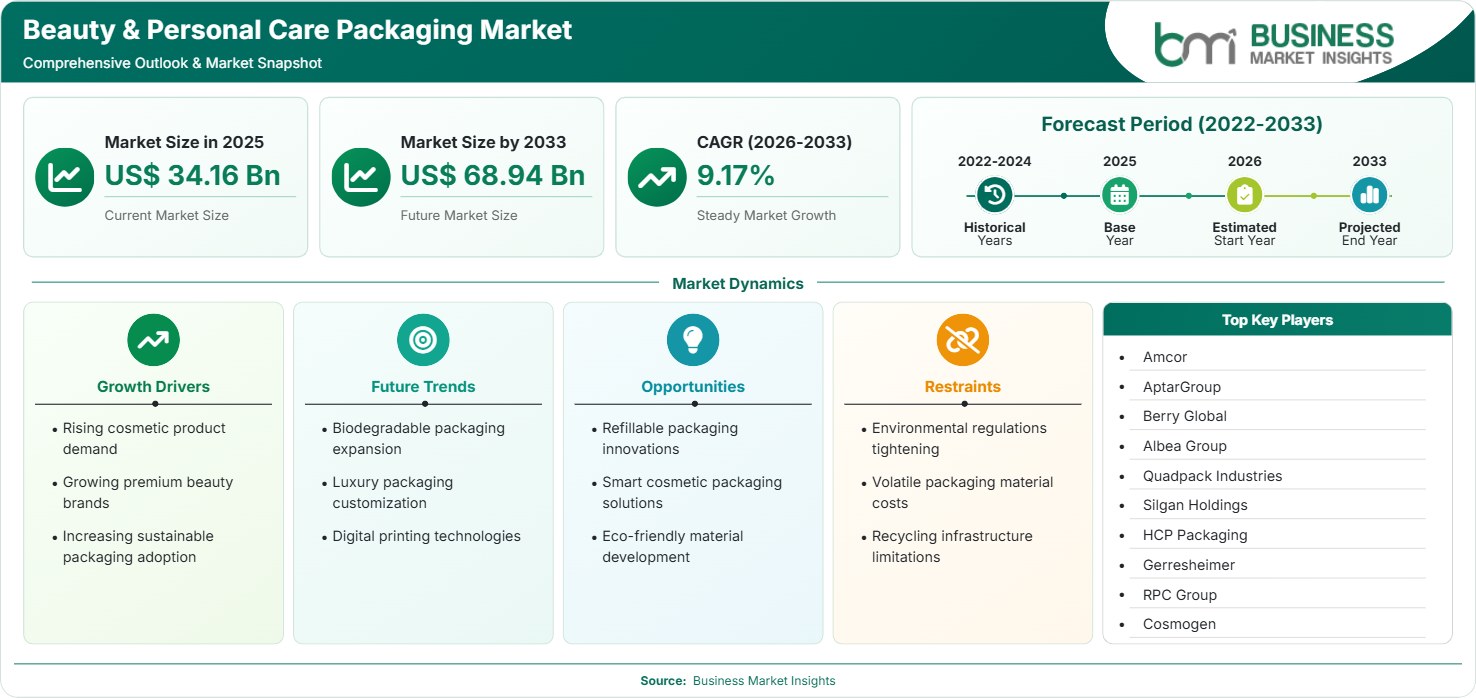
The Beauty & Personal Care Packaging Market size was valued at US$ 34.16 billion in 2025 and is projected to reach US$ 68.94 billion by 2033, growing at a CAGR of 9.17% during 2026–2033, driven by rising cosmetic product demand, expansion of premium beauty brands, increasing sustainable packaging adoption, refillable packaging innovations, smart cosmetic packaging solutions, and eco-friendly material development.

Report Coverage
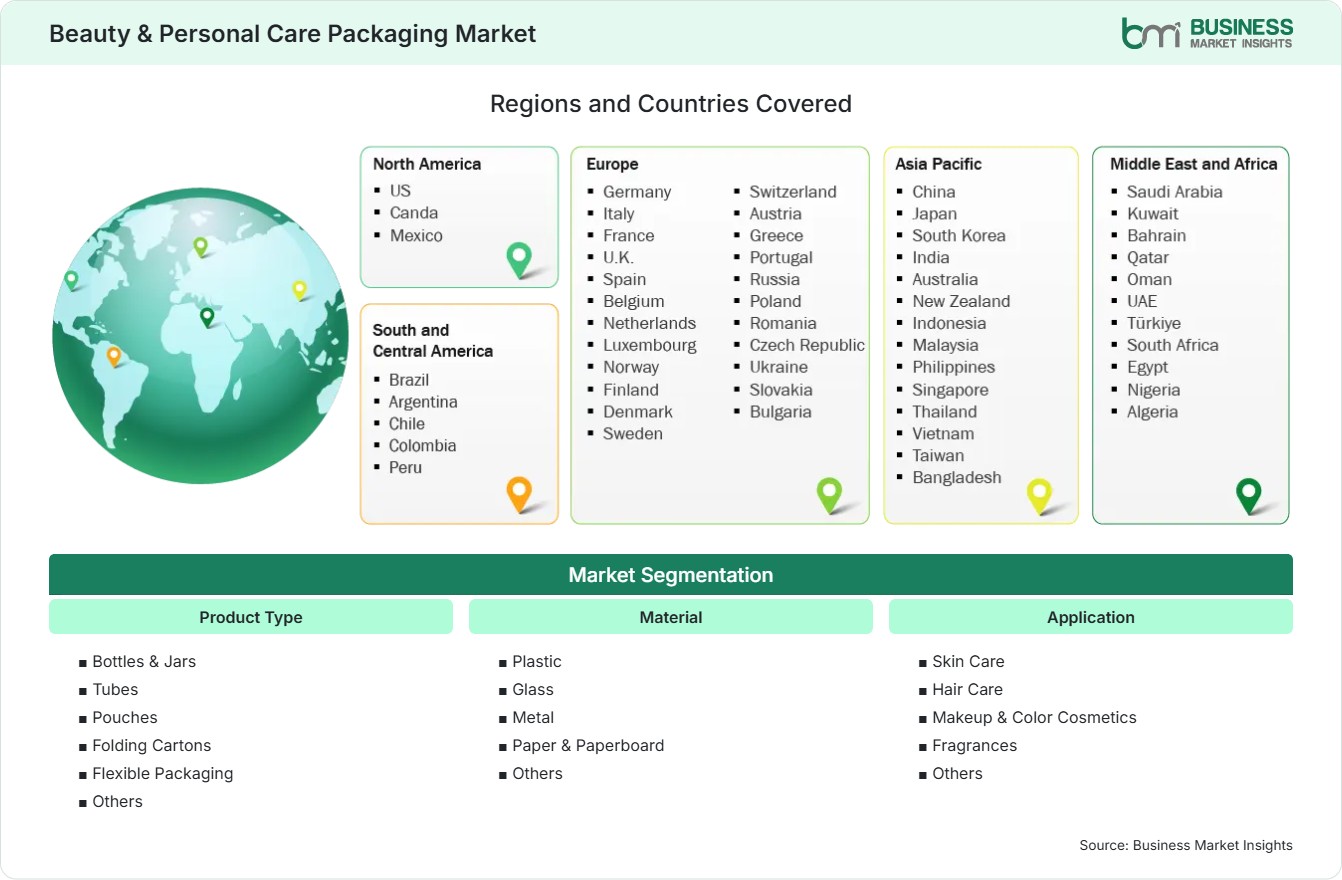
  • Product Type: Bottles & Jars, Tubes, Pouches, Folding Cartons, Flexible Packaging, Others
  • Material: Plastic, Glass, Metal, Paper & Paperboard, Others
  • Application: Skin Care, Hair Care, Makeup & Color Cosmetics, Fragrances, Others
US$ 34.16 Bn Market size in 2025
US$ 68.94 Bn Market Size by 2033
9.17% CAGR, 2026 - 2033
2026-2033 Forecast Period

AI Overview

Beauty & Personal Care Packaging Market Summary

  • North America Region: North America holds a market share of 24%–27% in 2025, growing with a CAGR of 8.2%–8.8% during 2026–2033, influenced by premium beauty consumption, innovative packaging formats, sustainability initiatives, and strong brand investments. The U.S. Beauty & Personal Care Packaging market shows consistent expansion with a CAGR of 8.5%–9.0% during 2026–2033, supported by skincare demand, e-commerce growth, and adoption of recyclable packaging solutions.
  • Fastest Growing Region: Asia Pacific holds a market share of 35%–38% in 2025, growing with a CAGR of 10.2%–11.0% during 2026–2033, influenced by rising beauty product consumption, expanding middle-class populations, growing domestic brands, and increasing investments in advanced packaging manufacturing capabilities.
  • Leading Segment: Bottles & Jars hold a Beauty & Personal Care Packaging market share of 38%–42% in 2025, growing with a CAGR of 8.5%–9.2% during 2026–2033, influenced by widespread usage in skincare, haircare, and fragrance products, along with demand for premium designs and functional dispensing systems.
  • High Growth Segment: Refillable and sustainable packaging solutions represent a high-growth opportunity, supported by increasing environmental awareness, brand sustainability commitments, regulatory pressure, and consumer preference for reduced-waste beauty packaging formats.
  • Key Market Opportunity: Growing adoption of refillable containers, smart packaging technologies, recycled materials, and innovative dispensing systems creates opportunities for packaging manufacturers to support premiumization and sustainability goals across global beauty brands.
  • Major Market Players: Amcor, AptarGroup, Berry Global, Albea Group, Quadpack Industries, Silgan Holdings, HCP Packaging, Gerresheimer, RPC Group, Cosmogen.
Strategic Insights

Beauty & Personal Care Packaging Market: Strategic Insights

Beauty & Personal Care Packaging Market Strategic Framework
FREE PDF
Request your free sample
Request free sample
Stakeholder View

Key Takeaways

  • Packaging manufacturers are shifting from traditional containers toward sustainable, lightweight, and customizable solutions to address evolving beauty brand requirements and consumer expectations.
  • Refillable packaging, recyclable materials, and premium designs represent high-potential opportunities as brands seek differentiation while meeting environmental commitments.
  • Innovation is moving toward smart packaging features, advanced dispensing systems, improved barrier properties, and digital solutions that enhance product functionality.
  • Asia Pacific provides strong investment potential due to expanding beauty markets, increasing manufacturing capabilities, and growing demand for premium personal care products.
  • Strategic partnerships, sustainable material investments, and portfolio expansion remain important competitive approaches among packaging companies seeking long-term growth.
Geographic Outlook

Beauty & Personal Care Packaging Market Regional Highlights

North America Beauty & Personal Care Packaging Market

North America accounted for 24%–27% of the global market in 2025 and is projected to expand at a 8.2%–8.8% CAGR during 2026–2033. The region benefits from strong demand for premium cosmetics, advanced packaging technologies, and sustainability-focused product development. The Beauty & Personal Care Packaging Market share in North America is supported by established beauty brands, high consumer spending on skincare products, and increasing adoption of recyclable and refillable packaging formats. Manufacturers are investing in lightweight materials, innovative dispensing systems, and customized packaging designs to strengthen brand differentiation.

  • The United States represents the largest contributor due to strong beauty product consumption, advanced packaging manufacturing capabilities, and growing demand for sustainable cosmetic containers.
  • Premium beauty brands are increasingly adopting customized packaging solutions featuring enhanced aesthetics, functional designs, and environmentally responsible materials to improve consumer engagement.
  • Regulatory pressure on plastic waste reduction is encouraging packaging companies to develop recyclable, reusable, and low-impact material alternatives.
  • E-commerce expansion is increasing demand for durable, lightweight, and shipping-efficient packaging formats across skincare, cosmetics, and personal care categories.

US Beauty & Personal Care Packaging Market

The U.S. accounted for approximately 19%–22% of the global market in 2025 and is expected to grow at a 8.5%–9.0% CAGR during 2026–2033. Growth is supported by strong demand for skincare, cosmetics, fragrances, and premium personal care products. The Beauty & Personal Care Packaging Market growth in the country is influenced by brand innovation, increasing consumer preference for sustainable packaging, and expansion of direct-to-consumer beauty companies. Packaging manufacturers are focusing on recyclable plastics, refillable systems, and visually appealing designs to meet changing market requirements.

  • Skincare brands are increasing investments in premium bottles, jars, and dispensing systems to enhance product positioning and customer experience.
  • Beauty companies are adopting sustainable packaging strategies to align with consumer expectations regarding environmental responsibility and waste reduction.
  • Growth of online beauty retail is creating demand for protective, lightweight, and efficient packaging solutions suitable for shipping.
  • Packaging suppliers are expanding design capabilities to support personalized and limited-edition product launches.

Europe Beauty & Personal Care Packaging Market

Europe accounted for 27%-30% of the overall market share in 2025 and is forecasted to grow at 8.7%-9.3% CAGR from 2026-2033. Europe remains an important market owing to sustainability regulations, an established cosmetics industry, and rising demand for eco-friendly packaging solutions. Some of the key countries driving the market are France, Germany, the UK, and Italy, due to the presence of established beauty brands and manufacturing bases in these countries. The Beauty & Personal Care Packaging Market growth across Europe is supported by circular economy initiatives, the adoption of recycled materials, and innovation in refillable packaging systems.

  • France maintains regional importance through its globally recognized beauty industry and increasing adoption of luxury and sustainable packaging solutions.
  • Germany demonstrates strong demand for efficient, recyclable packaging formats supported by advanced manufacturing infrastructure and environmental initiatives.
  • The United Kingdom is witnessing growth through premium beauty brands, e-commerce expansion, and demand for innovative cosmetic packaging designs.

Asia Pacific Beauty & Personal Care Packaging Market

Asia Pacific accounted for 35%–38% of global revenue in 2025 and is expected to grow at a 10.2%–11.0% CAGR during the Beauty & Personal Care Packaging Market forecasts period. The region represents the fastest-growing market due to expanding beauty industries, rising disposable incomes, increasing urbanization, and growing demand for skincare and cosmetic products. China, Japan, South Korea, and India are key markets, supported by strong domestic brands, manufacturing capabilities, and e-commerce penetration. Packaging suppliers are increasing investments in advanced production facilities and sustainable solutions to address regional demand.

  • China leads regional growth through large-scale beauty manufacturing, rising domestic brands, and increasing adoption of premium packaging formats.
  • India demonstrates strong potential due to expanding personal care consumption, increasing beauty awareness, and growth of online beauty platforms.
  • Japan and South Korea continue driving innovation through advanced cosmetic packaging designs, functional containers, and premium product presentation.

Rest of World Beauty & Personal Care Packaging Market

The Rest of World region, including South & Central America and the Middle East & Africa, stood at approximately 8%-11% in 2025, and it is estimated to grow at a CAGR of 8.8%-9.5% from 2024-2033. Growth drivers in the region include increased use of beauty products, a strong presence of retail chains, urbanization, and investments in the local cosmetics industry. Brazil, Mexico, Saudi Arabia, and the UAE are significant markets in the region owing to the increased demand for skin care, perfumes, and luxury personal care products.

  • Increasing beauty brand expansion across developing economies is encouraging packaging manufacturers to introduce affordable, sustainable, and customized solutions.
  • Brazil represents a major Latin American market due to strong cosmetics consumption and established personal care product manufacturing.
  • Mexico benefits from expanding beauty production capabilities and increasing demand for innovative packaging formats.
Global Market Geography
FREE PDF
Request your free sample
Request free sample
Segment Analysis

Beauty & Personal Care Packaging Market Segmentation

Product Type

The Bottles & Jars segment is a dominant product category, capturing about 38% - 42% market share in 2025 and growing at a CAGR of 8.5% - 9.2% during 2026-2033. They have been widely preferred for their toughness and elegant appearance, and their suitability for different types of formulations. The growing requirement for aesthetically pleasing packs, airless delivery systems, and sustainable packaging solutions is prompting manufacturers to introduce new bottle and jar concepts for global beauty brands.

  • Bottles & Jars: Bottles and jars dominate beauty packaging demand due to extensive application in creams, lotions, serums, shampoos, and fragrances. Premium designs and functional dispensing mechanisms support continued adoption.
  • Tubes: Tubes are increasingly preferred for convenience, portability, and controlled dispensing of products such as facial creams, toothpaste, and skincare formulations. Lightweight structures support sustainable packaging development.
  • Pouches: Pouches are gaining adoption through flexible designs, reduced material usage, and suitability for refill applications. Brands are exploring pouches to improve packaging efficiency and reduce environmental impact.
  • Folding Cartons: Folding cartons support product presentation, brand communication, and protection for cosmetics and personal care products. Increasing demand for premium shelf appeal is driving innovation in printed carton designs.
  • Flexible Packaging: Flexible packaging is expanding due to lightweight characteristics, lower material consumption, and improved transportation efficiency. Manufacturers are adopting advanced barrier technologies for enhanced product protection.

Material

Plastic is the largest material segment, accounting for around 45%–50% of market share in 2025 and experiencing a compound annual growth rate of 8.0%–8.7% between 2026 and 2033. Plastic packaging maintains a dominant position in the beauty packaging market due to its lightweight, cost-effectiveness, design versatility, and compatibility with various cosmetic formulations. However, rising environmental awareness has been driving demand for recycled plastics and biomaterials.

  • Plastic: Plastic packaging remains widely adopted due to versatility, affordability, lightweight properties, and compatibility with diverse beauty product formulations. Recycled and bio-based plastics are gaining attention.
  • Glass: Glass packaging is preferred for premium skincare, fragrances, and luxury cosmetics due to its high-end appearance, chemical resistance, and recyclability advantages.
  • Metal: Metal packaging supports durability, premium aesthetics, and protection against external factors. It is increasingly used in selected cosmetic applications requiring strong barrier properties.
  • Paper & Paperboard: Demand for paper and paperboard packaging is increasing due to sustainability goals, renewable material advantages, and growing preference for recyclable secondary packaging solutions.

Application

Skin care is the dominant application segment, contributing 35%-39% market share in 2025 and experiencing a CAGR of 9.0%-9.6% during 2026–2033. The growing consumer interest in skin care regimens, high-quality formulations, anti-aging ingredients, and specialized treatments is expected to propel growth in the packaging solutions market. Beauty companies are now using airless dispensing pumps, safety packs, and eco-friendly design features to improve product efficacy and the user experience.

  • Skin Care: Skin care packaging demand is increasing through growth in moisturizers, serums, cleansers, and specialty treatments requiring functional, hygienic, and premium packaging formats.
  • Hair Care: Hair care applications drive demand for bottles, tubes, and flexible packaging formats due to increasing consumption of shampoos, conditioners, treatments, and styling products.
  • Makeup & Color Cosmetics: Makeup packaging adoption is supported by demand for innovative designs, compact formats, and visually attractive containers that enhance brand identity and consumer engagement.
  • Fragrances: Fragrance packaging focuses on premium glass bottles, decorative designs, and advanced dispensing systems to support luxury positioning and improve product differentiation.
  • Others: Other applications include personal care categories requiring specialized packaging solutions, with manufacturers developing flexible and sustainable formats for emerging product segments.
Market Forces

Beauty & Personal Care Packaging Market Dynamics

Key Market Drivers

Rising cosmetic product demand

Increased consumer interest in cosmetics, fragrances, skin care, and personal care products has heightened the need for innovative packaging solutions worldwide. The emergence of new beauty habits, an increase in disposable income, and growing availability of web-based beauty stores have prompted manufacturers to launch multiple product lines that need different packaging solutions. These manufacturers are producing packages that offer ease of use, better protection, and attractive designs to differentiate their products. The rising demand for anti-aging products, organic formulas, and personalized beauty solutions has further increased packaging needs.

Growing premium beauty brands

The expansion of premium beauty brands is creating strong demand for Beauty & Personal Care Packaging Market trends high-quality packaging featuring sophisticated designs, premium materials, and enhanced functionality. Luxury cosmetic companies increasingly use glass containers, customized bottles, decorative finishes, and advanced dispensing systems to create distinctive consumer experiences. Brand owners are investing in packaging as a key marketing tool that communicates product quality and strengthens customer loyalty. Growth of niche beauty brands and direct-to-consumer companies is further increasing demand for flexible manufacturing capabilities and smaller production runs.

Increasing sustainable packaging adoption

Sustainability has become a primary consideration in the development of beauty packaging due to increased awareness of environmental impacts. Manufacturers are now opting for recycled plastics, biodegradable materials, reusable packaging, and lightweight packaging to support the aims of the circular economy. Growing regulations on packaging waste and plastics have pushed manufacturers to adopt sustainable manufacturing practices.

Key Market Opportunities

Refillable packaging innovations

Reusable packaging has become more popular as beauty brands look for ways to minimize wastage and foster lasting relationships with consumers. Reusable packaging allows consumers to reuse their existing primary packaging when buying new products in smaller packages, reducing raw material consumption and supporting sustainable practices. Premium skin care, perfume, and personal care brands have been embracing reusable packaging.

Smart cosmetic packaging solutions

Smart packaging solutions have enabled new possibilities by introducing digital elements that enhance interactions with products and facilitate authentication and visibility within the supply chain. Connected labels, QR codes, near-field communication technologies, and digital tracking systems allow brands to provide customers with information about products and how to use them, as well as authentication. These solutions help companies strengthen customer engagement while improving inventory management and brand protection.

Eco-friendly material development

Eco-friendly materials are an exciting prospect as the beauty industry seeks alternatives to traditional packaging. There is ongoing investment in recycling plastics, bioplastics, paper, and composite materials to minimize environmental effects. Improved materials and manufacturing techniques have enabled the development of sustainable packaging that does not compromise strength, appearance, or product security.

Market Restraints and Challenges

Environmental regulations tightening

Stricter environmental regulations are influencing packaging strategies by requiring companies to reduce waste, improve recyclability, and adopt responsible material practices. Beauty packaging manufacturers must continuously adjust designs, production processes, and material selection to comply with evolving sustainability standards. Regulatory changes related to plastic reduction, extended producer responsibility, and recycling requirements are increasing operational complexity.

Volatile packaging material costs

Fluctuating costs of packaging materials create uncertainty for manufacturers and beauty brands across global supply chains. Changes in prices of plastics, glass, metals, and paper-based materials can affect production expenses and profit margins. Supply disruptions, energy price fluctuations, and changes in raw material availability contribute to cost instability. Companies are responding by diversifying suppliers, improving material efficiency, and exploring alternative packaging solutions.

Company Analysis

Competitive Landscape

The competitive landscape involves innovation in packaging sustainability, material development, customization options, and network growth in manufacturing processes for the global beauty markets. Beauty & Personal Care Packaging Market analysis reveals that top players are focusing on recycled materials, reusable packaging systems, dispensing innovations, and high-end designs.

Company Name

Overview

Products and Services relevant to this market

Amcor plc

A global packaging company providing sustainable and innovative packaging solutions for beauty, healthcare, food, and consumer industries.

Flexible packaging, rigid containers, recyclable packaging solutions, specialty beauty packaging, and sustainable material technologies for cosmetics and personal care products.

AptarGroup, Inc.

A global leader in dispensing systems and packaging solutions serving beauty, personal care, pharmaceutical, and consumer markets.

Pumps, sprayers, airless dispensing systems, closures, fragrance packaging components, and customized solutions for skincare and cosmetic brands.

Berry Global Inc.

A global packaging manufacturer offering innovative and sustainable solutions across consumer, healthcare, and industrial applications.

Plastic bottles, jars, tubes, closures, dispensing systems, recycled-content packaging, and custom beauty packaging solutions.

Albéa Group

A specialist beauty packaging company focused on innovative and sustainable solutions for cosmetics and personal care brands worldwide.

Cosmetic tubes, mascara packaging, lipstick components, makeup packaging, refillable solutions, and environmentally responsible packaging formats.

Quadpack Industries S.A.

A global manufacturer specializing in premium packaging solutions for skincare, makeup, and fragrance brands.

Wooden packaging, jars, bottles, airless containers, custom cosmetic packaging, and sustainable beauty packaging designs.

Silgan Holdings Inc.

A leading packaging manufacturer providing rigid containers and dispensing solutions for consumer products.

Plastic and metal containers, closures, dispensing systems, specialty packaging, and solutions for beauty and personal care applications.

HCP Packaging

A global cosmetics packaging provider specializing in innovative packaging solutions for leading beauty brands.

Makeup packaging, skincare containers, compacts, tubes, airless systems, and customized luxury cosmetic packaging solutions.

Gerresheimer AG

A global packaging and healthcare solutions company offering premium glass and plastic packaging technologies.

Glass bottles, jars, cosmetic containers, premium fragrance packaging, and specialized packaging solutions for beauty products.

RPC Group

A packaging manufacturer providing rigid plastic packaging solutions across multiple consumer sectors.

Plastic containers, closures, dispensing solutions, and customized packaging formats for personal care and cosmetic applications.

Cosmogen

A beauty packaging specialist focused on innovative applicators and packaging solutions for cosmetics and skincare products.

Cosmetic tubes, applicators, brushes, skincare packaging systems, refillable packaging concepts, and customized beauty solutions.

Industry Activity

Recent Developments

July 2026

AptarGroup, Inc. the company expanded its portfolio of e-commerce-ready closures for beauty, personal care, and home care applications with the Embrace, E-Simplicity, Future Disc Top, and E-Disc Top closures, designed to improve product protection during shipping while supporting sustainability and consumer convenience.

March 2026

Amcor plc showcased new beauty and personal care packaging innovations at Cosmoprof 2026, including refillable stick packs, premium airless dispensers, lightweight roll-on packaging, and packaging incorporating post-consumer recycled (PCR) materials to advance sustainable beauty packaging.

January 2026

Amcor plc highlighted new trends and innovations in beauty packaging, including expanded refillable packaging formats, airless dispensers, recyclable sachets, and refill pouches, supporting brands' sustainability and premium packaging objectives.

November 2025

Amcor plc and Berry Global Group, Inc. announced their US$ 8.4 billion acquisition of Berry Global, creating one of the world's largest consumer and personal care packaging companies and significantly strengthening its capabilities across beauty and personal care packaging solutions.

Trust & Transparency

Research Methodology

The market analysis combines proprietary research with secondary data from government agencies, company disclosures, regulatory filings, industry databases and expert interviews. Market estimates are validated through data triangulation, cross-market benchmarking and analyst review.

View Full Research Methodology

Questions Answered

Frequently Asked Questions

What insights does the Beauty & Personal Care Packaging Market Report provide?

The Market Report provides insights into market size, growth trends, segmentation analysis, regional developments, competitive strategies, sustainability initiatives, and emerging opportunities. It helps packaging manufacturers, beauty brands, and investors evaluate market dynamics and identify future growth areas

What role does smart packaging play in the beauty packaging industry?

Smart packaging enables improved consumer engagement, product authentication, and supply chain transparency through technologies such as QR codes, digital labels, and connected packaging solutions. These technologies help brands provide product information, enhance customer experiences, and strengthen brand protection against counterfeiting.

How is sustainability influencing beauty and personal care packaging development?

Sustainability is influencing packaging development through increased adoption of recycled materials, recyclable plastics, refillable solutions, and bio-based alternatives. Beauty companies are redesigning packaging to reduce waste, comply with environmental regulations, and meet consumer expectations for responsible product manufacturing.

Which packaging formats are gaining popularity in the beauty industry?

Refillable containers, airless pumps, lightweight bottles, sustainable tubes, and flexible packaging formats are gaining popularity due to convenience, reduced material usage, and improved product protection. Beauty brands are increasingly adopting innovative packaging formats that combine functionality, premium aesthetics, and environmental responsibility.

What factors are driving the growth of the Beauty & Personal Care Packaging Market

The market is expanding due to rising cosmetic consumption, increasing demand for premium beauty products, sustainability initiatives, and innovation in packaging formats. Brands are investing in recyclable materials, refillable systems, and customized designs to improve product appeal while addressing environmental concerns and evolving consumer preferences.

Access the Full Beauty & Personal Care Packaging Market Report

Get segment-level forecasts, regional estimates, competitive benchmarking, company profiles and downloadable Excel datasets.

Access the full Beauty & Personal Care Packaging Market Report
350 pages PDF & Excel | 2026-08-04
Similar Research

Related Market Reports