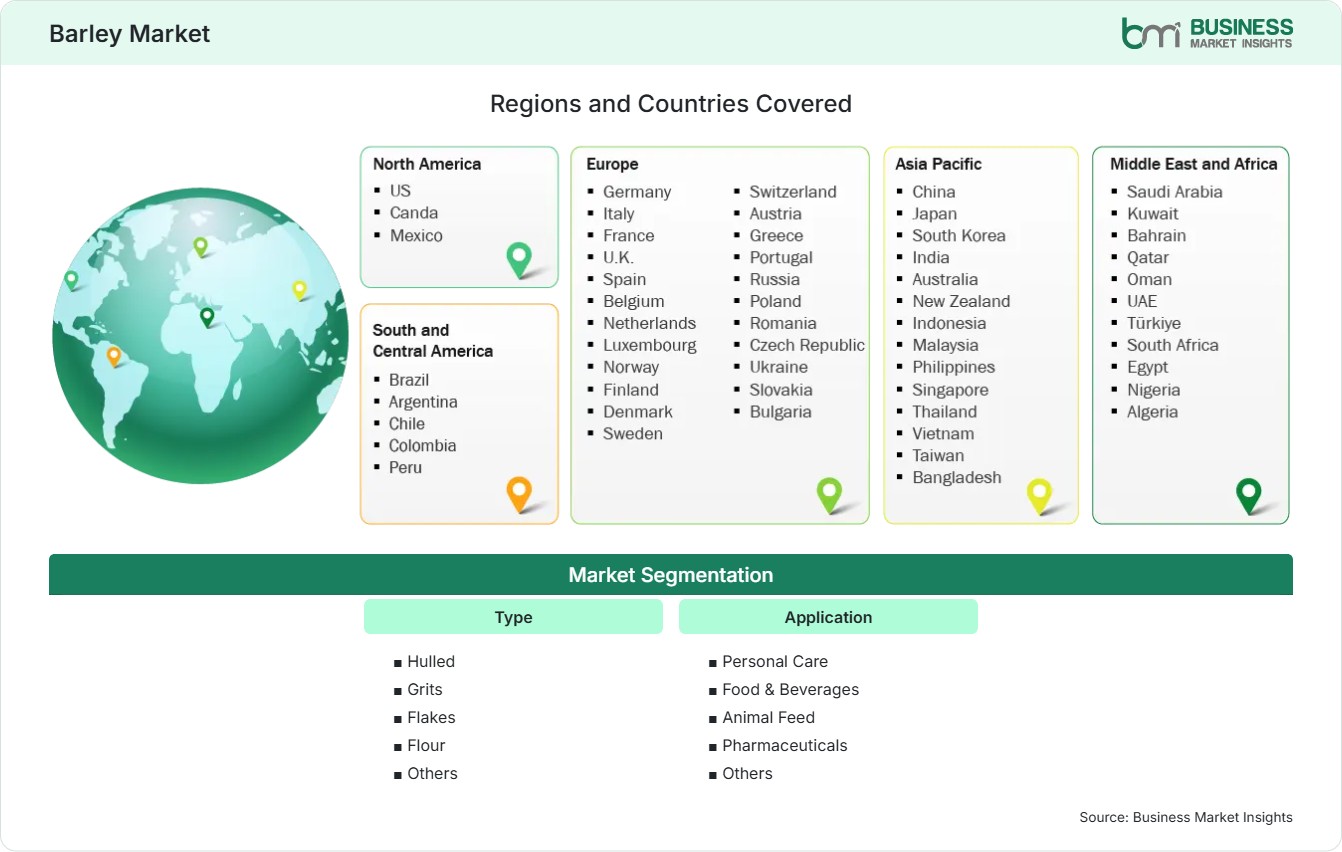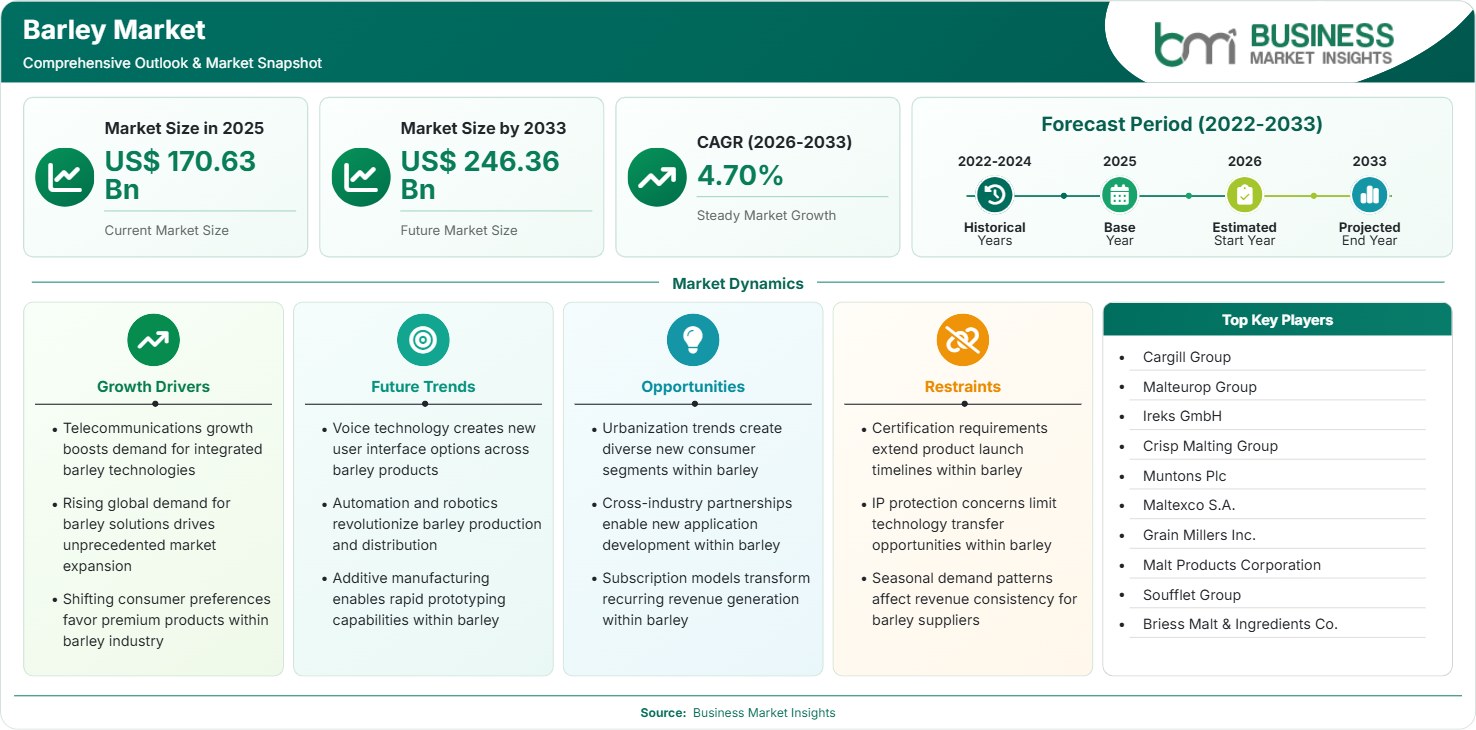
Barley Market Regional Highlights
North America Barley Market
North America accounted for 34%–37% of global revenue in 2025 and is projected to register a CAGR of 4.2%–4.6% during 2026–2033. Strong grain production, advanced malting infrastructure, and well-established brewing industries continue supporting regional leadership. Growing investments in regenerative agriculture and digital farm management are improving production efficiency, while increasing demand for functional food ingredients strengthens domestic consumption. The region also benefits from robust export networks and research initiatives focused on developing drought-tolerant barley varieties, reinforcing long-term competitiveness and Barley Market share leadership.
- Growing consumer demand for premium craft beer and specialty malt ingredients encourages capacity expansion among malt processors while supporting stronger procurement agreements between growers and beverage manufacturers across the United States and Canada.
- Precision agriculture technologies, including satellite monitoring, variable-rate fertilization, and AI-assisted crop management, are improving productivity while reducing input costs and enhancing environmental sustainability across commercial barley farming operations.
- Feed manufacturers increasingly utilize barley in livestock nutrition because of its favourable digestibility, energy profile, and competitive pricing, creating diversified revenue opportunities beyond beverage applications.
- Government-supported agricultural research programs continue developing climate-resilient barley cultivars capable of maintaining stable yields under changing weather conditions, strengthening long-term supply security for processors and exporters.
- Rising investments in value-added grain processing and export logistics improve regional competitiveness while supporting high-quality malt production for domestic breweries and international beverage manufacturers.
US Barley Market
The United States represents approximately 71%–74% of North American revenue and is expected to grow at a CAGR of 4.3%–4.7% through 2033. Major barley-producing states continue investing in improved seed genetics, irrigation efficiency, and sustainable farming practices. Strong collaboration among grain cooperatives, malt producers, breweries, and food ingredient manufacturers support innovation while expanding opportunities in specialty malts, functional cereals, and premium nutrition ingredients.
- Large-scale malting facilities continue investing in automation, digital quality monitoring, and energy-efficient operations to improve product consistency while reducing operating costs throughout the processing value chain.
- Increasing adoption of regenerative farming practices enhances soil health, reduces greenhouse gas emissions, and strengthens long-term productivity, supporting sustainable grain supply for domestic processors.
- Growing consumer interest in high-fiber foods, whole-grain cereals, and plant-based nutrition increases demand for barley flour and flakes across retail and foodservice sectors.
- Long-term supply contracts between growers and processors improve price stability while encouraging investments in advanced storage infrastructure and quality preservation technologies.
Europe Barley Market
Europe captured 29%–32% of global Barley Market revenue in 2025 and is forecast to expand at a CAGR of 4.3%–4.8% through 2033. The region remains a major producer and exporter of malting barley due to favourable climatic conditions, established agricultural practices, and sophisticated processing capabilities. France leads regional production, while Germany remains a major malt manufacturing hub. Poland demonstrates one of the strongest growth trajectories with an estimated CAGR of 4.9%–5.3%, supported by expanding processing investments and export opportunities.
- Sustainability regulations and the European Green Deal encourage efficient water management, precision fertilization, and environmentally responsible grain cultivation across major producing countries.
- Premium brewing traditions continue driving demand for high-quality malting barley, encouraging research into improved varieties with enhanced extract yield and disease resistance.
- Increasing consumption of clean-label bakery products and functional cereals supports wider utilization of barley ingredients throughout Europe's food processing industry.
- Investments in digital grain traceability improve supply-chain transparency, food safety compliance, and international export competitiveness for regional producers.
- Collaborative agricultural research programs accelerate commercialization of climate-resilient barley cultivars capable of maintaining stable yields despite changing environmental conditions.
Asia Pacific Barley Market
Asia Pacific represented 24%–27% of global revenue in 2025 and is anticipated to record the fastest Barley Market growth, achieving a CAGR of 5.5%–6.1% during 2026–2033. Expanding beer production, rising disposable incomes, growing livestock populations, and increasing awareness of functional nutrition continue stimulating regional demand. China leads overall consumption, while India demonstrates one of the fastest expansion rates with a projected CAGR of 6.2%–6.6%, supported by food processing investments and changing dietary preferences.
- Rapid urbanization increases consumption of processed foods, breakfast cereals, bakery products, and premium beverages utilizing barley-derived ingredients across metropolitan markets.
- Expanding feed manufacturing industries strengthen barley utilization in poultry, dairy, and swine nutrition because of its nutritional composition and supply flexibility.
- Government initiatives promoting agricultural modernization encourage adoption of precision farming technologies, improved irrigation systems, and high-yield seed varieties.
- International malt producers continue expanding regional production capacity to meet increasing demand from breweries and food manufacturers across emerging Asian economies.
- Rising health awareness supports stronger consumption of barley-based beverages and whole-grain food products emphasizing dietary fiber and cardiovascular wellness.
Rest of World Barley Market
The Rest of the World accounted for 8%–11% of global revenue in 2025 and is projected to expand at a CAGR of 4.8%–5.2% during 2026–2033. South & Central America continue strengthening barley cultivation and malt exports, particularly in Argentina and Chile, while Middle Eastern and African Barley Markets benefit from increasing food processing investments and expanding livestock production.
Argentina remains the leading South American producer, whereas Saudi Arabia demonstrates relatively faster growth because of increasing feed imports, food security initiatives, and investments in grain storage infrastructure. Continued modernization of agricultural practices supports regional production resilience despite climatic variability.
- Export-oriented malt manufacturing continues expanding across Chile and Argentina to supply international breweries seeking diversified sourcing strategies and premium-quality ingredients.
- Livestock sector expansion throughout the Middle East supports increasing demand for barley as an energy-rich feed grain with dependable nutritional performance.
- Food processing investments encourage wider adoption of barley flour and flakes across bakery, breakfast cereal, and health-focused product categories.
- Improvements in port infrastructure and grain logistics strengthen export efficiency while reducing transportation costs for producers serving international markets.
- Climate adaptation programs and improved irrigation technologies enhance production stability across water-constrained agricultural regions, supporting long-term supply reliability.