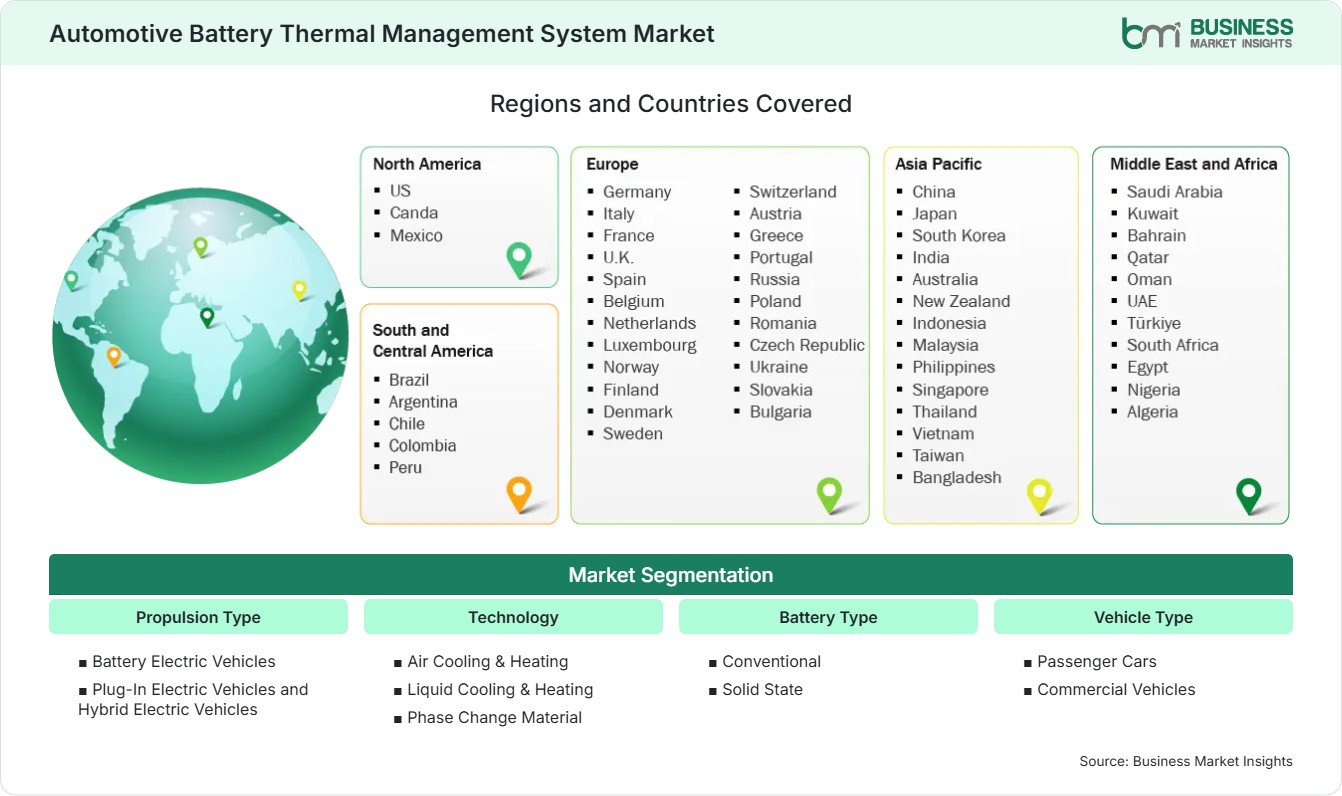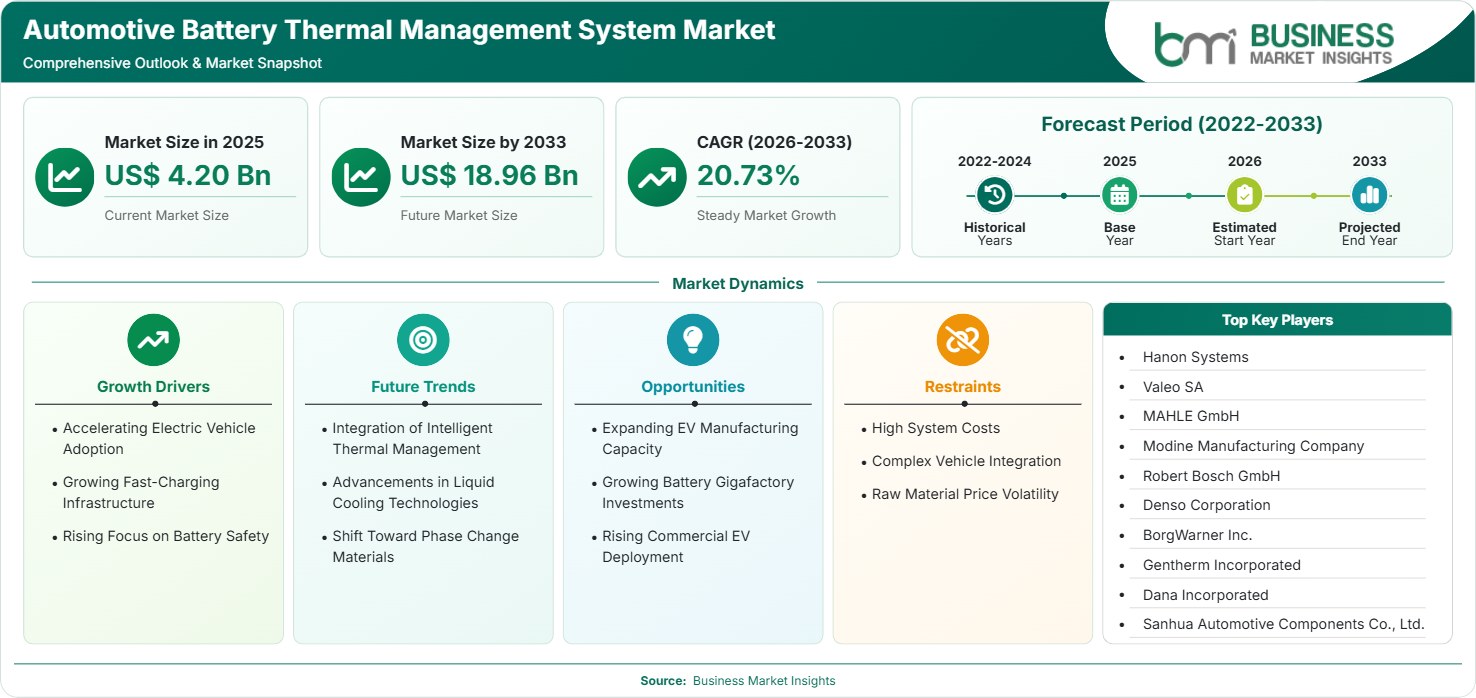
Automotive Battery Thermal Management System Market Regional Highlights
North America Automotive Battery Thermal Management System Market
North America accounts for approximately 31%–34% of the global market in 2025 and is anticipated to expand at a 19.5%–20.8% CAGR through 2033. Major OEMs are accelerating production of electric vehicles requiring sophisticated battery cooling technologies, while thermal management suppliers continue expanding manufacturing capacity to support growing battery production throughout the United States, Canada, and Mexico. The Automotive Battery Thermal Management System Market share remains highest globally.
- Growing battery gigafactory investments across the United States continue increasing demand for integrated liquid cooling systems, thermal interface materials, intelligent sensors, and advanced battery management solutions supporting large-scale EV manufacturing.
- Government incentives supporting domestic battery manufacturing encourage suppliers to establish regional production facilities while improving supply chain resilience and reducing dependence on imported battery components.
- Expansion of fast-charging infrastructure increases demand for efficient thermal systems capable of maintaining battery temperatures during repeated high-power charging cycles while preserving battery longevity.
- Commercial electric vehicle deployment across logistics, municipal transportation, and delivery fleets creates additional opportunities for thermal management suppliers offering scalable battery cooling technologies.
US Automotive Battery Thermal Management System Market
The United States contributes approximately 78%–82% of North American demand while expanding at an estimated 20.0%–21.2% CAGR through 2033. Federal manufacturing incentives, battery investments, EV assembly expansion, and strong consumer demand continue driving technology adoption across domestic automotive production.
- Battery manufacturing investments by global automakers continue supporting local sourcing strategies while increasing demand for high-performance thermal modules and integrated battery cooling technologies.
- Growing commercialization of electric pickup trucks and SUVs accelerates adoption of advanced liquid cooling architectures capable of supporting higher battery capacities and towing requirements.
- Increased deployment of public DC fast chargers encourages manufacturers to optimize battery temperature regulation for improved charging performance and battery durability.
- Collaboration among automakers, semiconductor suppliers, and thermal technology companies accelerates commercialization of AI-assisted battery temperature monitoring and predictive cooling systems.
Europe Automotive Battery Thermal Management System Market
Europe represents approximately 25%–28% of global demand in 2025 and is forecast to expand at a 20.5%–21.8% CAGR during 2026–2033. Germany remains the leading market because of its extensive automotive manufacturing ecosystem and battery technology investments, while Eastern European countries are emerging as high-growth manufacturing hubs.
- Germany leads regional demand through strong automotive OEM presence, battery research investments, and advanced engineering capabilities supporting next-generation thermal management technologies.
- France and the Nordic countries continue promoting electric mobility through consumer incentives, charging infrastructure expansion, and sustainability policies encouraging adoption of efficient battery cooling systems.
- Poland and Hungary are among the fastest-growing manufacturing destinations as battery cell investments attract thermal component suppliers and supporting automotive industries.
- European sustainability regulations encourage development of lightweight, recyclable thermal materials that improve battery performance while supporting circular economy objectives across automotive manufacturing.
Asia Pacific Automotive Battery Thermal Management System Market
Asia Pacific accounts for approximately 28%–31% of the global market in 2025 and is projected to record the fastest 22.3%–23.8% CAGR through 2033. China dominates regional demand due to its leadership in battery cell production and electric vehicle manufacturing, while India demonstrates the fastest growth supported by policy incentives, localization programs, and increasing investment in domestic EV ecosystems.
- China remains the largest manufacturing center for batteries and electric vehicles, driving sustained demand for advanced liquid cooling technologies and integrated battery thermal solutions.
- South Korea and Japan continue investing heavily in high-performance batteries, thermal interface materials, and intelligent battery management technologies supporting premium electric vehicles.
- India records the fastest regional expansion as government production-linked incentive programs encourage investments in EV manufacturing, battery assembly, and supporting thermal management component production.
- Rising exports of electric vehicles manufactured within Asia Pacific create opportunities for globally standardized thermal management systems meeting international safety and performance requirements.
Rest of World Automotive Battery Thermal Management System Market
South America, the Middle East, and Africa collectively account for approximately 11%–14% of global demand during 2025 and are expected to expand at a 18.2%–19.6% CAGR through 2033. Although adoption remains comparatively lower than developed regions, supportive electrification initiatives, expanding commercial vehicle fleets, and infrastructure investments continue creating long-term opportunities.
- Brazil leads regional adoption through increasing electric bus deployment, domestic vehicle production, and expanding charging infrastructure supporting commercial fleet electrification.
- Mexico benefits from strong automotive manufacturing integration with North American supply chains, encouraging investments in battery component production and thermal technologies.
- Gulf Cooperation Council countries continue promoting clean mobility strategies through smart city initiatives and investments in electric public transportation infrastructure.
- South Africa demonstrates growing opportunities through mining-related battery investments, renewable energy integration, and gradual expansion of electric vehicle adoption.