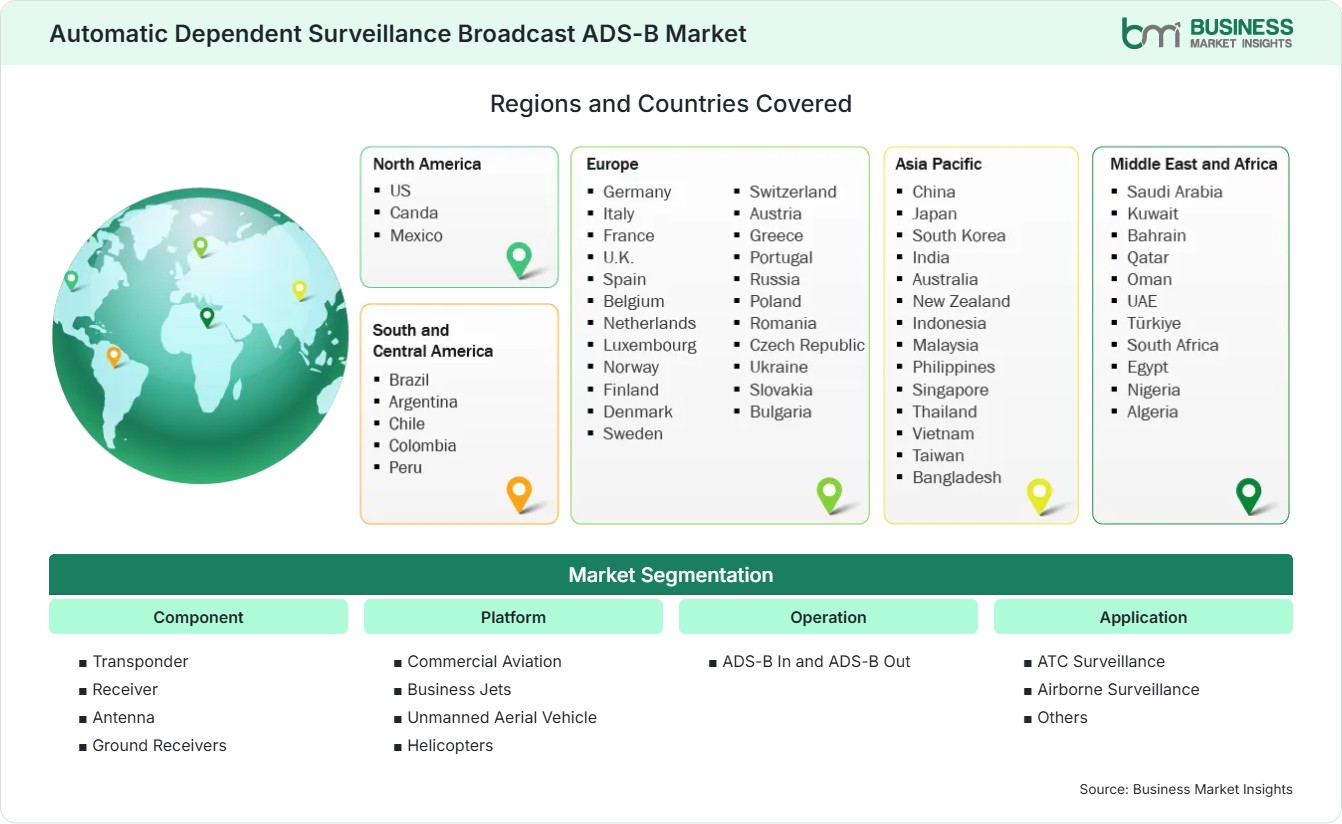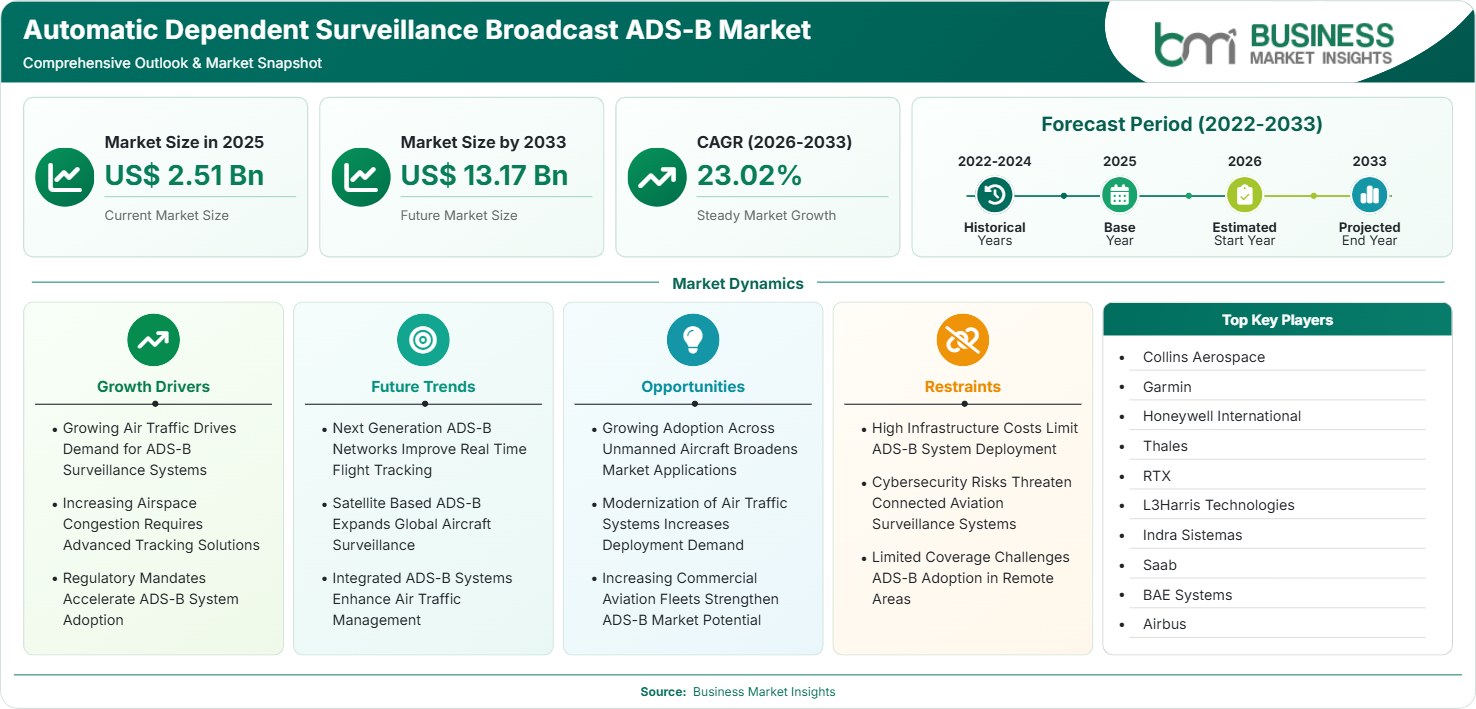
Automatic Dependent Surveillance Broadcast ADS-B Market Regional Highlights
North America Automatic Dependent Surveillance Broadcast ADS-B Market
North America accounted for 36%–40% of global revenue in 2025 and is projected to expand at a CAGR of 21.8%–22.6% through 2033. The region maintains a leading position due to advanced aviation infrastructure, strong regulatory frameworks, extensive aircraft operations, and widespread deployment of ADS-B systems. The Automatic Dependent Surveillance Broadcast ADS-B Market share remains significant as airlines and aviation authorities continue investing in surveillance modernization and operational efficiency.
- Regulatory compliance requirements continue supporting ADS-B equipment upgrades across commercial and general aviation fleets.
- Advanced air traffic management programs are increasing demand for accurate aircraft tracking and communication capabilities.
- Aerospace manufacturers and avionics suppliers are strengthening regional technology development through innovation initiatives.
- Growing aviation activity is encouraging airports to improve surveillance infrastructure and operational visibility.
US Automatic Dependent Surveillance Broadcast ADS-B Market
The United States represents the largest contributor within North America, accounting for 82%–86% of regional revenue and growing at a CAGR of 22.0%–22.8% during 2026–2033. Strong commercial aviation activity, regulatory implementation, and modernization of air traffic control infrastructure continue supporting market expansion.
- Federal aviation modernization programs continue encouraging deployment of advanced surveillance technologies.
- Large airline fleets require reliable tracking systems to improve operational safety and efficiency.
- General aviation operators are increasingly adopting ADS-B solutions to meet regulatory requirements.
Europe Automatic Dependent Surveillance Broadcast ADS-B Market
Europe represented 27%–31% of global revenue in 2025 and is expected to grow at a CAGR of 22.2%–23.0% through 2033. The region benefits from strong aviation regulations, high air traffic density, and ongoing airspace modernization initiatives. Germany leads regional adoption, while the United Kingdom and France demonstrate increasing investment in advanced surveillance technologies.
- European air traffic management modernization programs support continued ADS-B infrastructure deployment.
- Airlines are upgrading avionics systems to improve flight monitoring and operational efficiency.
- Increasing cross-border air traffic requires enhanced surveillance coordination capabilities.
- Aerospace technology companies are investing in next-generation aviation communication systems.
Asia Pacific Automatic Dependent Surveillance Broadcast ADS-B Market
Asia Pacific accounted for 25%–29% of global revenue in 2025 and is projected to register the fastest expansion at a CAGR of 24.0%–25.0% through 2033. Increasing passenger traffic, aircraft fleet expansion, airport development, and airspace modernization are accelerating adoption. China leads regional contribution, while India and Southeast Asian countries demonstrate strong growth potential.
- Rapid aviation infrastructure development is increasing demand for modern surveillance technologies.
- Growing aircraft deliveries require advanced avionics systems supporting operational efficiency.
- Regional governments are investing in air traffic management modernization programs.
- Increasing UAV activity is creating additional demand for reliable identification systems.
Rest of World Automatic Dependent Surveillance Broadcast ADS-B Market
The Rest of World region accounted for 7%–10% of global revenue in 2025 and is forecast to grow at a CAGR of 22.5%–23.5% through 2033. South America, Middle East, and Africa are improving aviation infrastructure through airport investments and connectivity programs. Brazil leads South American adoption, while the UAE and Saudi Arabia are expanding advanced aviation technology deployments.
- Aviation infrastructure investments are improving surveillance capabilities across developing markets.
- Growing regional air connectivity is increasing demand for reliable aircraft tracking systems.
- Airport modernization projects are supporting adoption of advanced communication technologies.
- International aerospace suppliers are expanding partnerships to capture emerging opportunities.