
Anticoagulants Market Outlook: Size, Share, Trends, Growth Analysis, Competitive Landscape & Forecast, 2026-2033

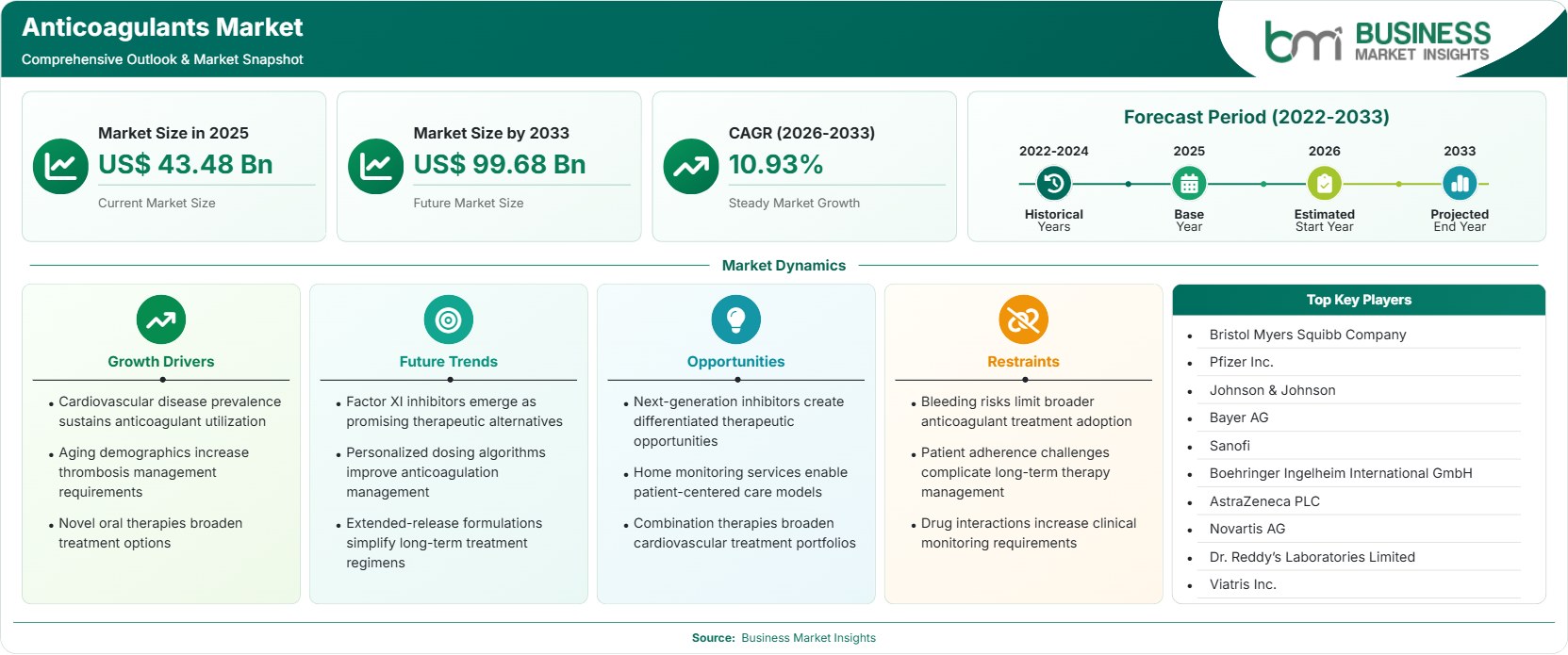
The Anticoagulants Market size was valued at US$ 43.48 Billion in 2025 and is projected to reach US$ 99.68 Billion by 2033, growing at a CAGR of 10.93% during 2026–2033, driven by cardiovascular disease burden, rising thrombosis diagnosis, oral therapy adoption, and expanding access to advanced anticoagulant treatments.

Report Coverage
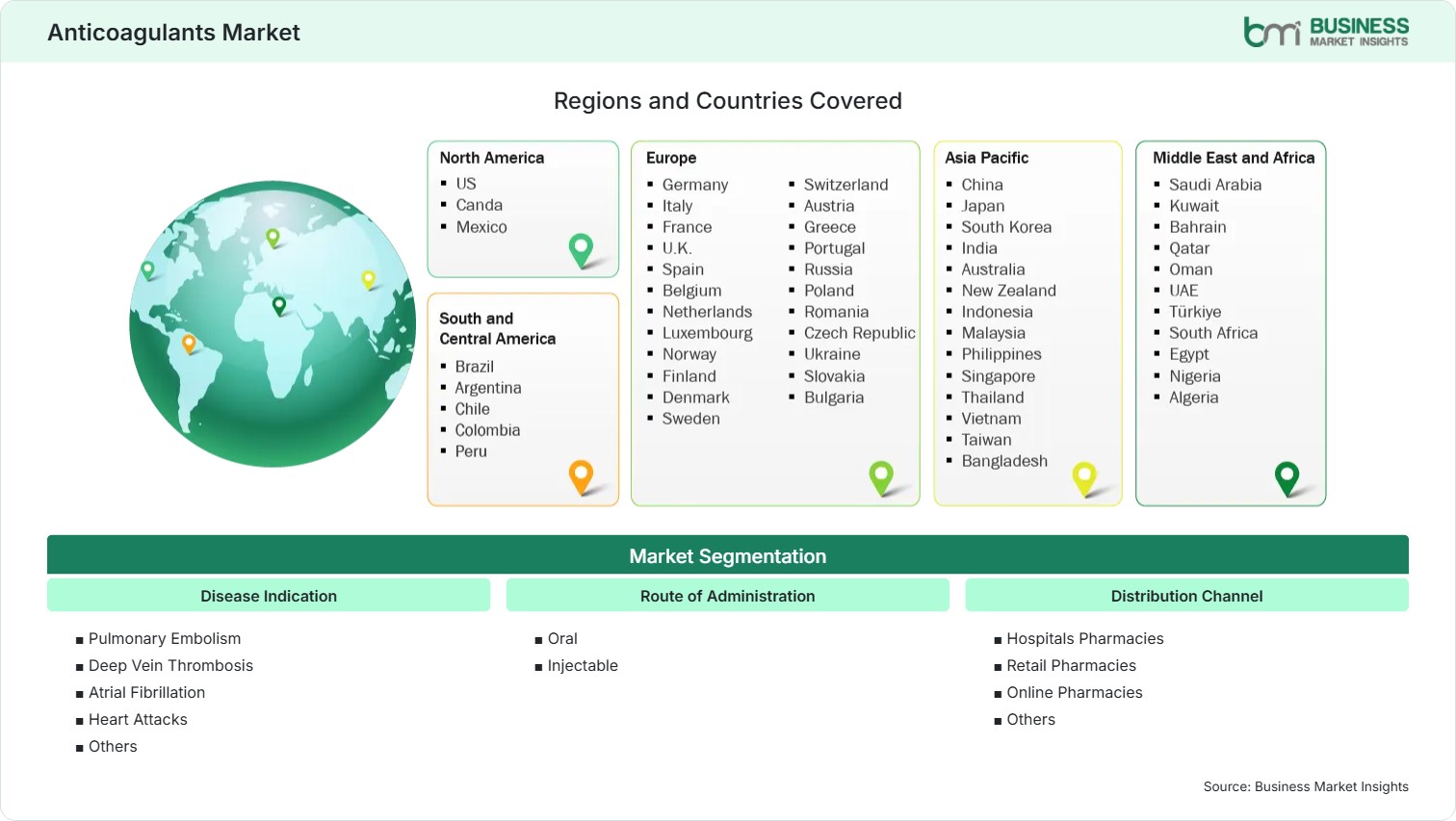
  • Disease Indication: Pulmonary Embolism, Deep Vein Thrombosis, Atrial Fibrillation, Heart Attacks, Others
  • Route of Administration: Oral, Injectable
  • Distribution Channel: Hospitals Pharmacies, Retail Pharmacies, Online Pharmacies, Others
US$ 43.48 Bn Market size in 2025
US$ 99.68 Bn Market Size by 2033
10.93% CAGR, 2026 - 2033
2026-2033 Forecast Period

AI Overview

Anticoagulants Market Summary

  • North America Region: North America holds a market share of 35%–38% in 2025, growing with a CAGR of 9.8%–10.5%, influenced by cardiovascular disease burden, mature reimbursement, established hospitals, anticoagulant awareness, and broader outpatient prescribing. The US accounts for the largest regional demand, supported by high VTE incidence, atrial fibrillation management, specialist prescribing, and broad availability of branded and generic therapies, with a 9.6%–10.3% CAGR through 2033.
  • Fastest Growing Region: Asia Pacific holds an Anticoagulants Market share of 23%–26% in 2025, growing with a CAGR of 12.0%–12.8%, supported by aging populations, expanding healthcare infrastructure, improving cardiovascular diagnosis, generic manufacturing, and rising treatment accessibility.
  • Leading Segment: Atrial Fibrillation represents a 31%–34% share in 2025, growing at a CAGR of 10.5%–11.2%, supported by aging populations, stroke prevention guidelines, wider rhythm diagnosis, long-term oral therapy, and increasing awareness.
  • High Growth Segment: Injectable administration records a 28%–31% share in 2025, advancing at a CAGR of 11.5%–12.5%, supported by hospital-based prophylaxis, acute thrombosis treatment, surgical care, oncology-associated thrombosis, and rapid therapeutic action.
  • Key Market Opportunity: Wider use of Factor XI-targeting therapies, pediatric formulations, digital adherence tools, generic anticoagulants, and decentralized prescribing can expand treatment access while addressing bleeding-risk and monitoring challenges.
  • Major Market Players: Bristol Myers Squibb Company, Pfizer Inc., Johnson & Johnson, Bayer AG, Sanofi, Boehringer Ingelheim International GmbH, AstraZeneca PLC, Novartis AG, Dr. Reddy’s Laboratories Limited, and Viatris Inc.
Strategic Insights

Anticoagulants Market: Strategic Insights

Anticoagulants Market Strategic Framework
FREE PDF
Request your free sample
Request free sample
Stakeholder View

Key Takeaways

  • The value chain is shifting from conventional anticoagulation toward differentiated oral formulations, injectable hospital products, specialized reversal strategies, and pipeline therapies targeting coagulation factors with potentially improved safety profiles.
  • The strongest commercial upside lies in atrial fibrillation, venous thromboembolism, and hospital-associated thrombosis, where aging, surgery, cancer treatment, and chronic cardiovascular conditions create recurring demand for preventive and therapeutic anticoagulation.
  • Innovation is moving beyond traditional Factor Xa and thrombin inhibition toward Factor XI pathway modulation. Abelacimab illustrates this direction, with development focused on maintaining antithrombotic activity while potentially reducing bleeding concerns.
  • Asia Pacific presents a compelling investment case because expanding healthcare infrastructure, rising diagnosis rates, large patient pools, domestic generic manufacturing, and improving specialist access can accelerate adoption faster than mature Western markets.
  • Investment activity increasingly targets differentiated cardiovascular pipelines rather than only established brands. Novartis agreed in February 2025 to acquire Anthos Therapeutics for US$925 million upfront, strengthening its late-stage cardiovascular pipeline through abelacimab.
  • Commercial strategies must increasingly account for patent expiration and generic erosion. The FDA approved several first generics of rivaroxaban in 2025, demonstrating how regulatory competition can reshape branded anticoagulant economics.
Geographic Outlook

Anticoagulants Market Regional Highlights

North America Anticoagulants Market

North America captured a 35%-38% market share of the Anticoagulants Market in 2025 and is forecast to achieve a 9.8%-10.5% CAGR over 2026-2033. This region features high-level cardiac care, effective reimbursement frameworks, specialist prescribing, and robust pharmaceutical supply chain networks. The United States is the driving force behind regional market growth due to the need for recurrent therapy for VTE and atrial fibrillation. According to CDC estimates, VTE affects up to 900,000 people in the US each year, reinforcing the clinical need for anticoagulation.

  • Hospital protocols increasingly integrate anticoagulant selection into standardized VTE prevention pathways, strengthening demand for injectable therapies during admissions, surgery, and acute-care episodes.
  • Generic competition is expanding treatment affordability. FDA approvals of multiple rivaroxaban generics during 2025 are likely to increase price competition while broadening access.
  • Cardiovascular specialists increasingly manage long-term stroke prevention through oral agents, supporting sustained prescription volumes across outpatient and specialty pharmacy channels.
  • The region also provides a strong commercialization environment for reversal agents, pediatric formulations, and next-generation coagulation inhibitors.

US Anticoagulants Market

The US accounted for 82%-86% of North American revenue in 2025 and is projected to grow at a CAGR of 9.6%-10.3% through 2033. It has high diagnosis rates, broad insurance coverage, a high concentration of cardiovascular specialists, and high spending on medicines. The CDC data show that there are up to 900,000 VTE cases among Americans per year, and about 60,000 to 100,000 deaths due to VTE complications in the underlying treatment burden.

  • Atrial fibrillation provides a large chronic-treatment pool, with the American Heart Association reporting that more than 6 million people in the US are affected by AFib.
  • Generic entry is changing payer and provider economics. Lower-cost rivaroxaban alternatives can improve access while pressuring branded products.
  • Pediatric formulation development creates incremental demand by addressing administration challenges in younger patients requiring anticoagulation.

Europe Anticoagulants Market

The Europe region had a market share of 27%–30% in 2025 and is expected to record a CAGR of 10.4%–11.1% from 2026 to 2033. Germany is the dominant country owing to its extensive healthcare infrastructure, ability to treat cardiovascular disease, and pharmaceutical distribution. Spain is among the countries expected to experience the fastest growth, with a CAGR of 11.2%–12.0%, driven by factors such as an aging population, cardiovascular screening, and expansion of outpatient services.

  • Germany benefits from established anticoagulation pathways, specialist cardiology services, and strong hospital and retail pharmacy networks supporting chronic therapy.
  • Spain is gaining momentum as cardiovascular diagnosis and outpatient management improve, creating opportunities for convenient oral therapies.
  • The United Kingdom provides a strong evidence-based prescribing environment, with clinical pathways increasingly emphasizing stroke prevention and risk-adjusted anticoagulation.
  • France and Italy offer substantial addressable patient pools as population aging increases demand for chronic cardiovascular disease management.

Asia Pacific Anticoagulants Market

Asia Pacific had a market share ranging from 23%-26% in 2025 and is expected to post the fastest growth rate, with a 12.0%-12.8% CAGR through 2033. China and Japan lead the regional revenues, whereas India, South Korea, and Southeast Asia offer significant growth prospects. An aging population, urbanization, cardiovascular disease diagnosis, domestic production of generics, and growth in hospital infrastructure drive the adoption of anticoagulant drugs.

  • China combines a large cardiovascular patient population with expanding tertiary hospitals and domestic pharmaceutical capabilities, supporting wider availability of generic and branded therapies.
  • Japan benefits from advanced cardiovascular diagnostics, an aging population, established reimbursement mechanisms, and high physician familiarity with long-term anticoagulation.
  • India provides significant volume potential because domestic manufacturers supply multiple anticoagulant molecules while hospital and retail pharmacy networks continue expanding.
  • Southeast Asian countries are increasing cardiovascular treatment capacity, creating opportunities for affordable oral therapies and hospital injectable products.

Rest of World Anticoagulants Market

Rest of World held an 11%-14% share in 2025 and is expected to grow at a CAGR of 11.0%-11.7% between 2026 and 2033 in the Anticoagulants Market. South and Central America get an advantage owing to their increased cardiovascular care facilities and a larger number of generics available. The Middle East and Africa benefit from improved hospital facilities and greater availability of specialties.

  • Brazil offers scale through its large healthcare system and expanding availability of generic cardiovascular medicines, supporting anticoagulant penetration across public and private channels.
  • Mexico provides growth potential as cardiovascular diagnosis expands and pharmaceutical distribution reaches more outpatient settings.
  • Saudi Arabia is investing in healthcare infrastructure and specialist services, supporting demand for cardiovascular and thrombosis therapies.
  • The United Arab Emirates benefits from advanced private healthcare facilities and high adoption of innovative medicines, supporting premium anticoagulant opportunities.
Global Market Geography
FREE PDF
Request your free sample
Request free sample
Segment Analysis

Anticoagulants Market Segmentation

Disease Indication

The significance of Disease Indication will remain prominent in prescribing because anticoagulants have their own target diseases across venous and arterial indications. In Atrial Fibrillation, market share is estimated at 31%-34% in 2025 and is expected to grow at a CAGR of 10.5%-11.2% from 2026 to 2033. Some of the drivers include increased diagnosis rates, an aging population, and stroke prevention. These dynamics shape Anticoagulants Market trends across chronic cardiovascular care.

  • Pulmonary Embolism (PE): PE treatment requires rapid anticoagulation to prevent clot extension and recurrence. Growing diagnostic imaging, emergency-care capacity, and awareness of VTE symptoms support therapy adoption.
  • Deep Vein Thrombosis (DVT): DVT management benefits from outpatient oral treatment and hospital prophylaxis. Surgical procedures, immobility, cancer, and hospitalization continue creating recurring demand for anticoagulant therapy.
  • Atrial Fibrillation: AF creates persistent embolic stroke risk and supports long-term anticoagulation. Aging populations, improved rhythm detection, and guideline-driven prevention increasingly favor convenient oral therapies.
  • Heart Attacks: Anticoagulants contribute to acute cardiovascular management alongside antiplatelet and revascularization strategies. Expanding emergency cardiac services supports demand during selected acute coronary interventions.

Route of Administration

The route of administration influences convenience, the speed of drug action, the site of administration, and compliance. Oral drugs have been commercially dominant to date, whereas the market for injectables accounted for 28%-31% in 2025 and is expected to increase at a CAGR of 11.5%-12.5% from 2025 to 2033. Thus, the scope of the anticoagulants market spans chronic outpatient treatment and acute hospital-based anticoagulation.

  • Oral: Oral therapies dominate chronic management because they reduce administration burden and support outpatient care. Direct oral anticoagulants continue gaining preference where clinicians prioritize convenient dosing and predictable pharmacological activity.
  • Injectable: Injectable therapies remain essential in acute VTE treatment, surgical prophylaxis, pregnancy-related care, and inpatient settings. Rapid onset and established clinical protocols sustain demand across hospitals and specialty facilities.

Distribution Channel

The distribution channel affects treatment access, continuity, pricing, and convenience. Hospital pharmacies will continue to play a critical role in the initial phase of treatment, while retail pharmacies and online platforms will increasingly be used for chronic outpatient treatments. The Anticoagulants market trend will continue to shift towards diversified delivery methods.

  • Hospital Pharmacies: Hospital pharmacies support emergency treatment, perioperative prophylaxis, inpatient VTE management, and treatment initiation, making them critical for injectable anticoagulant utilization.
  • Retail Pharmacies: Retail pharmacies provide recurring access to oral therapies and support prescription refills for patients receiving long-term anticoagulation for atrial fibrillation or recurrent VTE.
  • Online Pharmacies: Online pharmacies improve convenience for chronic users, particularly where digital prescriptions, home delivery, refill reminders, and remote consultations are integrated into care.
Market Forces

Anticoagulants Market Dynamics

Key Market Drivers

Rising Burden of Cardiovascular and Thromboembolic Disorders

Cardiovascular disease remains the primary driver of anticoagulant demand. According to the WHO, there were 19.8 million cases of cardiovascular mortality in 2022, accounting for about 32% of all deaths in the world, out of which 85% were due to heart attacks and strokes. Thromboembolic diseases, such as atrial fibrillation and VTE, add additional complications needing preventive or therapeutic measures. CDC estimates that up to 900,000 cases of VTE occur each year in the US. Thus, the Anticoagulants Market is driven by several factors, including increasing treatment duration, aging populations, and broader integration of thrombosis prevention into hospital protocols.

Increasing Preference for Direct Oral Anticoagulants

Oral anticoagulants have influenced the prescribing pattern of the drug because of the presence of fixed-dose therapy and fewer monitoring problems associated with the first generation of Vitamin K antagonists. The use of oral anticoagulants in the management of Atrial Fibrillation and VTE has made it convenient to follow current outpatient management pathways. The diversification of the product range has made it more convenient to administer the drug, including FDA approval of ELIQUIS Sprinkle in April 2025 for the management of VTE in the pediatric population and for recurrent VTE. These trends favor the Anticoagulants Market in terms of patient-friendly formulation, wider age coverage, and convenience of administration. Further generic launches can increase prescription availability.

Expansion of Hospital-Based Thrombosis Prevention

Hospitalizations, surgeries, immobility, cancers, and injuries are associated with clinically significant risks for thrombotic conditions. The CDC describes hospitalizations and surgeries as among the most significant risk factors for VTE and claims that about half of all thromboembolic events happen during or after hospitalization or surgery. Therefore, hospitals continue to improve their protocols for assessing risk and preventing thrombosis. Injectable heparins and related drugs remain important because doctors need reliable, fast-acting anticoagulants for acute situations. Increased demand for surgeries and oncology services, along with complex patients, drives Anticoagulants Market growth through institutional procurement and protocol-based utilization.

Key Market Opportunities

Development of Factor XI Inhibitors With Improved Safety Profiles

The development of Factor XI inhibitors represents a critical innovation strategy, as researchers seek to prevent blood clotting without increasing the risk of hemorrhage, unlike conventional anticoagulants. In February 2025, Novartis reached an agreement with Anthos Therapeutics to purchase the company for $925 million upfront to gain access to abelacimab, a monoclonal antibody targeting Factor XI in phase 3 development. This is an example of a strategically focused innovation strategy for the future of coagulation biology. Clinical differentiation of this kind has the potential to define a premium segment in the market. Consequently, Anticoagulants Market Forecasts will increasingly depend on pipeline validation, safety outcomes, and regulatory adoption of Factor XI approaches.

Expansion of Pediatric and Flexible-Dose Formulations

Pediatric anticoagulation is an underserved area due to the problems associated with the use of traditional pills. FDA approval of ELIQUIS Sprinkle in 2025 for use in children with VTE provides another formulation option, beginning at birth after initiation of the first anticoagulant therapy. This type of drug development will provide a solution to the problems associated with difficulty in swallowing, enteral feeding needs, and special dosing needs. Companies that combine existing molecules with age-based formulations can extend product life cycles while serving new groups. This opportunity also supports partnerships between pharmaceutical developers, formulation specialists, hospitals, and specialty pharmacies.

Expansion of Affordable Generic Anticoagulant Supply

Generic competition can help improve access to medication in cost-efficient healthcare systems and offer volume opportunities for vertical players. The FDA granted initial approval for 2.5mg rivaroxaban generics in March 2025 for certain cardiovascular applications, with additional generics approved in 2025. Generic players with stable supply chains for APIs and formulation know-how across several geographies will find opportunities amid patent weakening. This is particularly the case for Asia-Pacific and Latin America, and for healthcare systems, where affordability affects drug choice.

Market Restraints and Challenges

Bleeding Risk and Clinical Safety Management

Factor: Anticoagulant therapy is by nature counterproductive to coagulation and carries a risk of bleeding, which necessitates careful selection of patients, dosage, renal function testing, drug interactions, and perioperative care. Impact: Safety concerns will limit the prescription of the drug in people who have a higher likelihood of developing bleeding disorders and require further monitoring. Additionally, it will raise the requirements for having reversal agents and emergency plans in place. Safety monitoring by regulatory bodies can significantly impact a drug's positioning, as seen when the FDA announced in December 2025 that the risk-benefit balance of Andexxa was poor, prompting its manufacturer to withdraw from the US market.

Generic Price Pressure and Patent Erosion

Factor: Lack of exclusivity will put branded anticoagulants at risk of generic competition, price pressure, payor substitution, and reduced market share. Impact: Pharmaceutical companies will suffer from declining revenues despite constant patient numbers, thereby requiring them to expand their portfolios and improve lifecycle management. The 2025 FDA approvals of several generic versions of rivaroxaban illustrate how rapidly competition will expand following regulatory approval. For already existing players, differentiation, new indications, combinations, production processes, or pipeline innovation have become necessary to secure the company’s value.

Company Analysis

Competitive Landscape

Anticoagulants Market analysis indicates a competitive structure spanning multinational innovators, established injectable manufacturers, cardiovascular specialists, and generic pharmaceutical companies. Bristol Myers Squibb and Pfizer maintain a major branded position through ELIQUIS, while Bayer and Johnson & Johnson participate through XARELTO. Sanofi remains relevant through Lovenox, whereas Boehringer Ingelheim markets Pradaxa. AstraZeneca, Novartis, Dr. Reddy’s Laboratories, and Viatris add differentiated pipeline, generic, and cardiovascular capabilities.

Company Name

Overview

Products and Services relevant to this market

Bristol Myers Squibb Company

Global biopharmaceutical company with a major cardiovascular portfolio and significant anticoagulant commercial presence.

ELIQUIS (apixaban), including oral formulations and pediatric ELIQUIS Sprinkle.

Pfizer Inc.

Global pharmaceutical company and co-developer of ELIQUIS with extensive cardiovascular commercialization capabilities.

ELIQUIS (apixaban), cardiovascular development, manufacturing, regulatory, and commercialization services.

Johnson & Johnson

Diversified healthcare company participating in anticoagulation through its Innovative Medicine business.

XARELTO (rivaroxaban), clinical development, medical information, and cardiovascular commercialization.

Bayer AG

Global pharmaceutical company with a substantial cardiovascular and thrombosis franchise.

XARELTO (rivaroxaban), thrombosis research, clinical development, and commercialization.

Sanofi

Global pharmaceutical company with long-standing expertise in hospital and cardiovascular medicines.

Lovenox and Lovenox HP (enoxaparin sodium), injectable anticoagulation products.

Boehringer Ingelheim International GmbH

Research-driven pharmaceutical company with an established anticoagulation franchise.

Pradaxa (dabigatran etexilate), VTE treatment, recurrence prevention, and atrial fibrillation applications.

AstraZeneca PLC

Global biopharmaceutical company with expertise spanning cardiovascular and hematology medicines.

Andexxa, coagulation reversal expertise, hematology research, and related safety programs.

Novartis AG

Innovative medicines company expanding its cardiovascular pipeline through targeted coagulation research.

Abelacimab development through Anthos, Factor XI inhibition research, and cardiovascular pipeline capabilities.

Dr. Reddy’s Laboratories Limited

Vertically integrated global generic pharmaceutical company with cardiovascular and API capabilities.

Rivaroxaban API and formulations, apixaban, dabigatran, fondaparinux, and generic development.

Viatris Inc.

Global healthcare company focused on broad medicine access across developed and emerging markets.

Generic anticoagulant portfolio, cardiovascular medicines, regulatory services, and international distribution.

Trust & Transparency

Research Methodology

The market analysis combines proprietary research with secondary data from government agencies, company disclosures, regulatory filings, industry databases and expert interviews. Market estimates are validated through data triangulation, cross-market benchmarking and analyst review.

View Full Research Methodology

Questions Answered

Frequently Asked Questions

Which distribution channels will gain importance?

Hospital pharmacies will remain central for acute treatment and injectable products, while retail pharmacies should remain important for chronic prescriptions. Online pharmacies are positioned for additional growth as digital prescribing, home delivery, refill management, and remote care become more integrated.

What does the Anticoagulants Market Report cover?

The report evaluates disease indications, administration routes, distribution channels, regional dynamics, growth drivers, opportunities, restraints, competitive positioning, recent developments, and strategic trends across major anticoagulant categories.

Why are Factor XI inhibitors attracting pharmaceutical investment?

Factor XI inhibition is being investigated as a way to prevent thrombosis while potentially reducing bleeding compared with established anticoagulation approaches. Phase 3 development and regulatory outcomes will determine whether these candidates become commercially important.

How is generic competition changing anticoagulant markets?

Generic entry improves affordability and can increase patient access, but it also reduces branded pricing power. Manufacturers increasingly rely on differentiated formulations, new indications, lifecycle management, manufacturing efficiency, and pipeline innovation to protect commercial value.

What factors will influence anticoagulant prescribing through 2033?

The main factors include atrial fibrillation prevalence, VTE diagnosis, aging populations, surgical activity, cancer-associated thrombosis, generic pricing, reimbursement, renal considerations, bleeding risk, and the clinical performance of emerging Factor XI inhibitors.

Access the Full Anticoagulants Market Report

Get segment-level forecasts, regional estimates, competitive benchmarking, company profiles and downloadable Excel datasets.

Access the full Anticoagulants Market Report
350 pages PDF & Excel | 2026-09-21
Similar Research

Related Market Reports