
Alkaline Water Electrolysis Market Size, Share, Trends & Forecast Report, 2026–2033

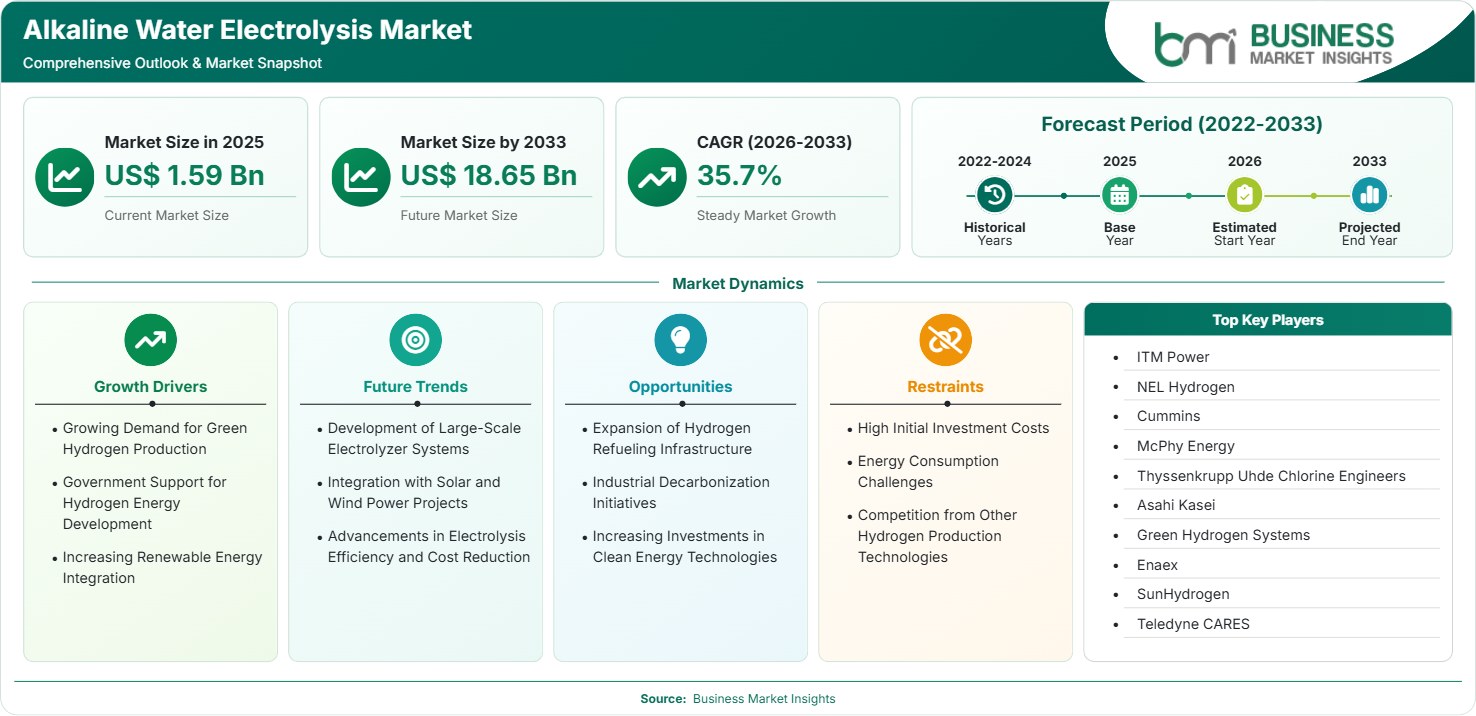
The Alkaline Water Electrolysis Market size was valued at US$ 1.59 Billion in 2025 and is projected to reach US$ 18.65 Billion by 2033, growing at a CAGR of US$ 35.7% during 2026–2033, driven by rising green hydrogen demand, industrial decarbonization, renewable integration, and expanding clean energy investments.

Report Coverage
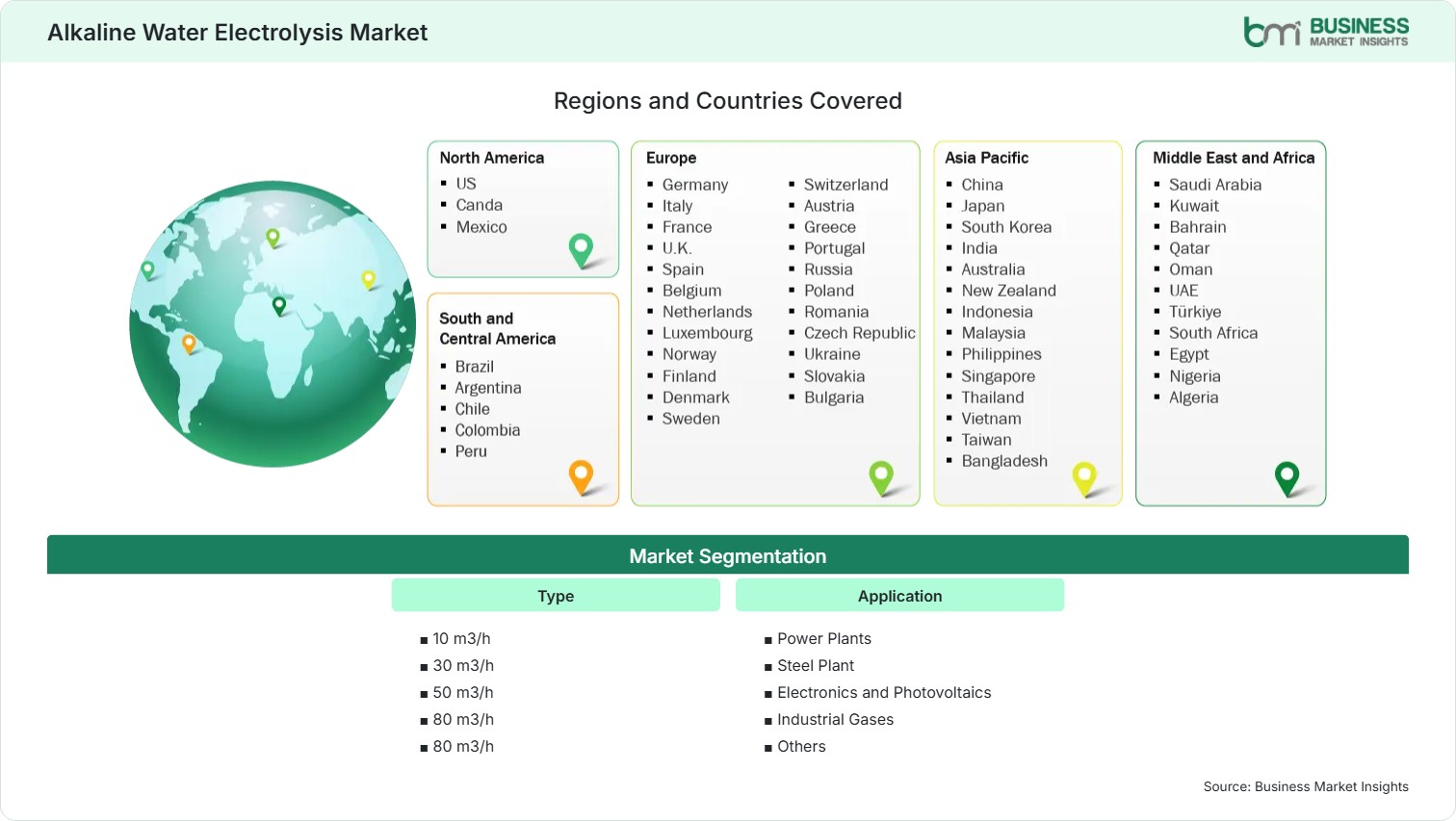
  • Type: 10 m3/h, 30 m3/h, 50 m3/h, 80 m3/h, 80 m3/h
  • Application: Power Plants, Steel Plant, Electronics and Photovoltaics, Industrial Gases, Others
US$ 1.59 Bn Market size in 2025
US$ 18.65 Bn Market Size by 2033
35.7% CAGR, 2026 - 2033
2026-2033 Forecast Period

01 AI Overview

Alkaline Water Electrolysis Market Summary

  • North America Region: North America is expected to maintain a market share of 22% to 25% in 2025 and to experience a CAGR of 34% to 37% between 2026 and 2033, driven by hydrogen hubs, green energy development, and industrial transformation policies. The U.S. market has an excellent uptake potential, exhibiting a CAGR of 35% to 38%.
  • Fastest Growing Region: The Asia Pacific region represents 38% to 42% share in 2025, growing at a CAGR of 37% to 40% from 2026 to 2033, due to the presence of large hydrogen projects, increased manufacturing capacity, availability of renewable energy sources, and government policies on hydrogen.
  • Leading Segment: 50 m3/h alkaline electrolyzers represent 28%–32% share in 2025, growing at a CAGR of 36%–39% during 2026–2033, supported by industrial hydrogen requirements, scalability advantages, and integration with renewable energy facilities.
  • High Growth Segment: Electronics and Photovoltaics application segment is projected to achieve 40%–43% CAGR during 2026–2033, supported by high-purity hydrogen requirements, semiconductor expansion, and photovoltaic manufacturing growth.
  • Key Market Opportunity: The construction of green hydrogen facilities, decarbonization projects for industries, and the development of electrolyzers powered by renewable energy present great opportunities for technology developers, manufacturers, and energy investors worldwide.
  • Major Market Players: ITM Power, Nel Hydrogen, Cummins, McPhy Energy, Thyssenkrupp Uhde Chlorine Engineers, Asahi Kasei, Green Hydrogen Systems, Enaex, SunHydrogen, and Teledyne Technologies Incorporated.
02 Strategic Insights

Alkaline Water Electrolysis Market: Strategic Insights

Alkaline Water Electrolysis Market Strategic Framework
FREE PDF
Request your free sample
Request free sample
03 Stakeholder View

Key Takeaways

  • The market ecosystem is evolving from standalone electrolyzer suppliers toward integrated hydrogen solution providers combining equipment manufacturing, renewable power sourcing, storage systems, and project development capabilities.
  • Large-scale industrial applications, particularly steel production, chemical processing, and renewable-powered hydrogen plants, present the strongest growth opportunities due to increasing pressure to reduce carbon emissions.
  • Technology innovation is concentrated on improving electrode durability, reducing energy consumption, increasing system flexibility, and developing modular electrolyzer designs suitable for diverse operating environments.
  • Asia Pacific provides a strong investment opportunity because countries including China, Japan, South Korea, and India are accelerating hydrogen infrastructure deployment through national energy transition programs.
  • Strategic partnerships, capacity expansions, and technology collaborations are increasing as established industrial companies seek positions within the emerging hydrogen economy value chain.
  • Project developers are increasingly prioritizing renewable integration, digital monitoring systems, and optimized hydrogen production economics to improve long-term operational efficiency.
04 Geographic Outlook

Alkaline Water Electrolysis Market Regional Highlights

North America Alkaline Water Electrolysis Market

North America represented a 22%–25% share of the market in 2025 and is projected to grow at a CAGR of 34%–37% between 2026–2033. The region benefits from hydrogen infrastructure investments, renewable energy availability, and supportive policy mechanisms. The Alkaline Water Electrolysis Market share is strengthened by industrial demand from refining, transportation, and manufacturing sectors.

  • The United States supports deployment through hydrogen hubs, clean energy funding programs, and industrial decarbonization initiatives targeting low-carbon hydrogen production capacity.
  • Canada is developing hydrogen projects supported by abundant renewable resources, export opportunities, and partnerships focused on sustainable energy infrastructure expansion.
  • Regional manufacturers are investing in electrolyzer localization, supply chain resilience, and advanced system integration capabilities to improve competitiveness.
  • Increasing renewable electricity penetration is enabling cost-efficient hydrogen production through grid-connected and dedicated renewable power systems.

US Alkaline Water Electrolysis Market

The US market accounted for 18%–21% share in 2025 and is expected to expand at a CAGR of 35%–38% during 2026–2033. Federal clean hydrogen initiatives, industrial demand, and renewable energy investments are supporting deployment. The country remains a strategic market for technology developers seeking commercial-scale hydrogen opportunities.

  • Hydrogen hub development is accelerating electrolyzer adoption across industrial clusters, improving project economics and infrastructure readiness.
  • Clean hydrogen incentives are encouraging manufacturers and energy companies to establish domestic production capabilities.
  • Growing demand from steel, chemicals, and transportation sectors is increasing investments in low-carbon hydrogen supply chains.

Europe Alkaline Water Electrolysis Market

Europe held a 25%–28% share in 2025, with a projected CAGR of 33%–36% during 2026–2033. The region remains a major hydrogen innovation center due to climate targets, renewable energy policies, and industrial transition plans. Germany, the Netherlands, and Spain represent leading markets, while countries such as Denmark demonstrate strong renewable hydrogen potential.

  • Germany is expanding electrolyzer deployment through industrial hydrogen projects and renewable energy integration initiatives.
  • Spain benefits from solar resources, large renewable capacity, and plans for competitive green hydrogen production.
  • The Netherlands is developing hydrogen corridors connecting industrial centers with renewable energy sources.
  • European manufacturers are focusing on efficiency improvements and localized hydrogen technology supply chains.

Asia Pacific Alkaline Water Electrolysis Market

Asia Pacific dominated the market with a 38%–42% share in 2025 and is forecast to register a CAGR of 37%–40% during 2026–2033. The region benefits from manufacturing strength, renewable energy expansion, and government hydrogen strategies. China, Japan, South Korea, and India are key contributors to regional growth.

  • China is increasing electrolyzer manufacturing capacity through large-scale hydrogen projects and renewable energy investments.
  • Japan is promoting hydrogen adoption across industrial and energy applications through technology partnerships.
  • India is developing hydrogen infrastructure supported by renewable energy expansion and industrial decarbonization targets.
  • South Korea is advancing hydrogen applications through clean energy policies and industrial innovation programs.

Rest of World Alkaline Water Electrolysis Market

Rest of World accounted for 8%–10% share in 2025 and is estimated to grow at a CAGR of 32%–35% during 2026–2033. South America, the Middle East, and Africa are emerging regions due to renewable resources, export opportunities, and hydrogen production potential. The Alkaline Water Electrolysis Market growth is supported by solar and wind availability.

  • Brazil is exploring renewable hydrogen opportunities using hydropower and expanding clean energy infrastructure.
  • Chile is developing export-oriented hydrogen projects supported by exceptional renewable energy resources.
  • Middle Eastern countries are investing in hydrogen projects to diversify energy portfolios.
  • Africa is emerging as a future hydrogen supplier through renewable resource development and international partnerships.
  • Regional projects are attracting global investors seeking long-term clean hydrogen production opportunities.
Global Market Geography
FREE PDF
Request your free sample
Request free sample
05 Segment Analysis

Alkaline Water Electrolysis Market Segmentation

Type

Type segment defines system capacity preferences across industrial hydrogen projects, with larger electrolyzer configurations gaining adoption due to scalability and efficiency. The Alkaline Water Electrolysis Market scope is expanding as industries require flexible hydrogen production systems. The segment accounted for 2025 shares based on capacity distribution, with projected CAGR growth between 2026–2034 driven by renewable integration, industrial demand, and infrastructure investments.

  • 10 m3/h: Small-scale alkaline electrolyzers support research facilities, distributed hydrogen production, and localized applications requiring compact systems with lower operational requirements and flexible installation capabilities.
  • 30 m3/h: Medium-capacity systems are adopted by commercial users seeking reliable hydrogen generation for industrial applications, balancing operational efficiency, installation requirements, and investment considerations.
  • 50 m3/h: This capacity segment serves industrial facilities requiring scalable hydrogen output, with strong adoption in chemical processing, renewable integration projects, and medium-scale production environments.
  • 80 m3/h: Large-capacity electrolyzers support high-demand applications requiring continuous hydrogen supply, particularly industrial clusters and integrated clean energy projects requiring efficient production.

Application

Application-based adoption is shaped by industrial decarbonization goals, hydrogen purity requirements, and renewable energy integration. Power plants and industrial facilities represent major demand areas, while emerging sectors increase utilization potential. The segment analysis highlights increasing adoption across diverse end users, supported by policy incentives and expanding clean hydrogen infrastructure. The Alkaline Water Electrolysis Market trends indicate rising application diversity.

  • Power Plants: Power generation facilities utilize alkaline electrolyzers for energy storage, grid balancing, and renewable electricity conversion, supporting flexible energy management and low-carbon operations.
  • Steel Plant: Steel manufacturers are adopting hydrogen-based processes to reduce emissions, replacing conventional fossil fuel-dependent production methods with cleaner alternatives.
  • Electronics and Photovoltaics: Semiconductor and photovoltaic industries require high-purity hydrogen, creating demand for advanced electrolyzer systems with reliable production performance.
  • Industrial Gases: Industrial gas producers integrate electrolyzers to manufacture hydrogen locally, improving supply security and reducing dependence on traditional production pathways.
06 Market Forces

Alkaline Water Electrolysis Market Dynamics

Key Market Drivers

Growing Demand for Green Hydrogen Production

The increasing global focus on reducing carbon emissions is accelerating green hydrogen adoption across industrial sectors. Market growth is supported by rising demand for low-carbon hydrogen from steel, chemicals, and energy industries. According to the International Energy Agency, hydrogen production must expand substantially to support net-zero pathways. Alkaline electrolyzers remain attractive due to technology maturity, operational reliability, and suitability for large-scale projects. The Alkaline Water Electrolysis Market trends indicate increasing deployment alongside renewable energy sources as companies pursue cleaner production methods and governments strengthen hydrogen strategies.

Government Support for Hydrogen Energy Development

Government policies and funding programs are creating favorable conditions for hydrogen infrastructure development worldwide. National hydrogen strategies in Europe, Asia, and North America are encouraging electrolyzer deployment through financial incentives, research programs, and industrial partnerships. The Alkaline Water Electrolysis Market benefits from public investments aimed at reducing carbon intensity in energy-intensive industries. Regulatory frameworks supporting renewable hydrogen certification are improving project visibility and encouraging private sector participation. Supportive policies are also helping manufacturers expand production capacity and improve technology economics.

Increasing Renewable Energy Integration

The expansion of solar and wind power generation is strengthening the connection between renewable electricity and hydrogen production. Alkaline electrolyzers enable conversion of excess renewable power into hydrogen, supporting energy storage and grid flexibility. Increasing renewable penetration creates opportunities for integrated hydrogen systems capable of balancing variable electricity supply. Developers are prioritizing projects where renewable resources can provide competitive electricity costs, improving hydrogen production economics. This integration approach is encouraging investments in large-scale electrolyzer facilities across regions with abundant clean energy resources.

Key Market Opportunities

Expansion of Hydrogen Refueling Infrastructure

The development of hydrogen refueling networks creates opportunities for electrolyzer suppliers by increasing demand for localized hydrogen generation systems. Transportation applications, including heavy-duty vehicles, require reliable hydrogen availability and supporting infrastructure. The Alkaline Water Electrolysis Market Forecasts indicate that infrastructure expansion could stimulate demand for modular and scalable electrolyzer installations. Partnerships between energy companies, governments, and technology providers are supporting hydrogen mobility ecosystems. Investments in refueling infrastructure can improve hydrogen accessibility while creating new commercial opportunities for equipment manufacturers and project developers.

Industrial Decarbonization Initiatives

Industrial sectors are increasingly adopting hydrogen solutions to reduce emissions from processes that are difficult to electrify. Steel, chemicals, and refining industries are exploring hydrogen substitution strategies to meet climate targets. Large-scale industrial decarbonization projects represent significant opportunities for alkaline electrolyzer providers due to their ability to deliver continuous hydrogen production. Companies are developing integrated systems combining renewable energy, electrolyzers, and storage technologies. These initiatives are expected to strengthen demand for advanced hydrogen production infrastructure over the forecast period.

Increasing Investments in Clean Energy Technologies

Growing investments in clean energy technologies are creating opportunities for electrolyzer manufacturers, suppliers, and infrastructure developers. Venture funding, government grants, and corporate investments are supporting innovation in hydrogen production systems. Companies are focusing on improving efficiency, reducing manufacturing costs, and increasing system durability. The expansion of clean energy portfolios by utilities and industrial corporations is creating new project pipelines. Technology providers with scalable manufacturing capabilities are positioned to benefit from rising demand for sustainable hydrogen solutions.

Market Restraints and Challenges

High Initial Investment Costs

Factor: High capital expenditure requirements for alkaline electrolyzer systems increase project development complexity. Impact: Elevated upfront costs can delay adoption among smaller industrial users and emerging markets with limited financing availability. Large-scale hydrogen projects require significant investments in electrolyzer equipment, renewable power infrastructure, and supporting facilities. Although costs are expected to decline with manufacturing expansion, financing remains a major consideration for developers. Project economics depend heavily on electricity prices, operational efficiency, and policy support. Companies are addressing this challenge through modular designs, manufacturing optimization, and strategic partnerships.

Energy Consumption Challenges

Factor: Electricity intensity associated with hydrogen production affects operational economics. Impact: High energy requirements can reduce competitiveness where renewable electricity availability or pricing is unfavorable. Alkaline electrolysis requires continuous electricity input, making energy sourcing a critical factor for project viability. Regions with expensive electricity markets may face slower adoption compared with areas having abundant renewable resources. Technology improvements targeting efficiency gains and integration with low-cost renewable energy are essential to improving long-term competitiveness. Developers are increasingly selecting project locations based on renewable resource availability and energy infrastructure conditions.

07 Company Analysis

Competitive Landscape

The Alkaline Water Electrolysis Market analysis indicates a competitive environment shaped by established electrolyzer manufacturers, hydrogen technology specialists, and industrial engineering companies. Companies are focusing on improving electrolyzer efficiency, expanding manufacturing capacity, developing integrated hydrogen solutions, and strengthening partnerships across renewable energy and industrial sectors.

Company Name

Overview

Products and Services relevant to this market

ITM Power

UK-based clean hydrogen technology company specializing in electrolyzer development and manufacturing.

Proton exchange membrane electrolyzers, hydrogen systems, integrated clean energy solutions.

Nel Hydrogen

Global hydrogen technology provider with extensive electrolyzer manufacturing experience and project expertise.

Alkaline electrolyzers, hydrogen production systems, fueling infrastructure solutions.

Cummins Inc.

Diversified power technology company expanding capabilities in hydrogen production equipment.

Electrolyzers, hydrogen generation systems, industrial clean energy technologies.

McPhy Energy S.A.

European hydrogen equipment specialist focused on large-scale decarbonization solutions.

Alkaline electrolyzers, hydrogen stations, industrial hydrogen production equipment.

Thyssenkrupp Uhde Chlorine Engineers

Industrial engineering company providing large-scale electrolysis technologies globally.

Large-scale alkaline water electrolysis systems and industrial hydrogen solutions.

Asahi Kasei Corporation

Japanese technology company developing advanced hydrogen production technologies.

Alkaline water electrolysis systems, hydrogen-related engineering solutions.

Green Hydrogen Systems A/S

Danish electrolyzer manufacturer focused on modular hydrogen production systems.

Modular alkaline electrolyzers, hydrogen generation units, energy integration solutions.

Enaex S.A.

Chilean industrial company investing in renewable hydrogen applications.

Hydrogen production solutions supporting industrial and mining applications.

SunHydrogen, Inc.

Renewable hydrogen technology developer focused on sustainable hydrogen production.

Hydrogen generation technologies and clean energy research solutions.

Teledyne Technologies Incorporated

Technology company providing advanced engineering and industrial solutions.

Hydrogen-related technologies, scientific equipment, and energy solutions.

08 Industry Activity

Recent Developments

July 2026

Bharat Heavy Electricals Limited (BHEL) entered into a strategic collaboration with thyssenkrupp nucera India Private Limited to localize manufacturing of alkaline water electrolyzer systems in India. The partnership aims to enable phased indigenization of alkaline electrolyzer module production and strengthen BHEL’s capabilities for large-scale green hydrogen projects under India’s National Green Hydrogen Mission.

March 2026

Asahi Kasei Corporation began installation of its Aqualyzer-C3 containerized 1 MW-class alkaline water electrolyzer at Finland’s first commercial hydrogen refueling station in Jyväskylä. The project supports hydrogen mobility development in Europe and demonstrates deployment of Asahi Kasei’s alkaline electrolysis technology in commercial infrastructure.

March 2026

Advait Greenergy Limited commissioned a 30 MW alkaline electrolyzer assembly facility in Gujarat, India, with plans to scale manufacturing capacity toward 100 MW by the end of 2026 and eventually 1 GW annually. The facility is intended to support domestic green hydrogen production for industries such as fertilizers, refining, steel, and heavy transport.

August 2025

Thermax Limited signed a technology licensing and supply agreement with HydrogenPro ASA to provide alkaline electrolyzer solutions for green hydrogen projects in India. Under the partnership, Thermax will supply, install, commission, and provide after-sales services for HydrogenPro-based alkaline electrolyzer systems while developing local manufacturing capabilities for system components.

10 Trust & Transparency

Research Methodology

The market analysis combines proprietary research with secondary data from government agencies, company disclosures, regulatory filings, industry databases and expert interviews. Market estimates are validated through data triangulation, cross-market benchmarking and analyst review.

View Full Research Methodology

11 Questions Answered

Frequently Asked Questions

What challenges affect alkaline electrolyzer deployment?

Key challenges include high initial investment requirements, electricity consumption, infrastructure availability, and project financing complexity. Improvements in efficiency, manufacturing scale, and renewable power integration are helping address these limitations.

What does the Alkaline Water Electrolysis Market Report indicate about future adoption?

The report highlights increasing commercialization opportunities driven by renewable energy expansion, hydrogen infrastructure development, and industrial transition toward low-carbon production methods. Investments in electrolyzer manufacturing capacity are expected to support future market development.

How does alkaline electrolysis compare with other hydrogen production technologies?

Alkaline electrolysis offers technology maturity, operational reliability, and suitability for large-scale applications. It remains competitive for industrial hydrogen production because of established manufacturing processes, lower material requirements, and proven long-term operating experience.

Which industries are adopting alkaline electrolyzer systems?

Major adopting industries include steel manufacturing, industrial gases, chemical processing, electronics, photovoltaics, and power generation. These sectors use hydrogen for emissions reduction, high-purity applications, energy storage, and production process optimization.

What factors are driving the Alkaline Water Electrolysis Market expansion?

The market is driven by rising green hydrogen demand, industrial decarbonization efforts, renewable energy integration, and government-backed hydrogen initiatives. Growing adoption in steel, chemicals, power generation, and transportation sectors is creating new demand for scalable electrolyzer systems.

Access the Full Alkaline Water Electrolysis Market Report

Get segment-level forecasts, regional estimates, competitive benchmarking, company profiles and downloadable Excel datasets.

Access the full Alkaline Water Electrolysis Market Report
350 pages PDF & Excel | 2026-07-28