Market Summary
Executive Summary and Global Market Analysis
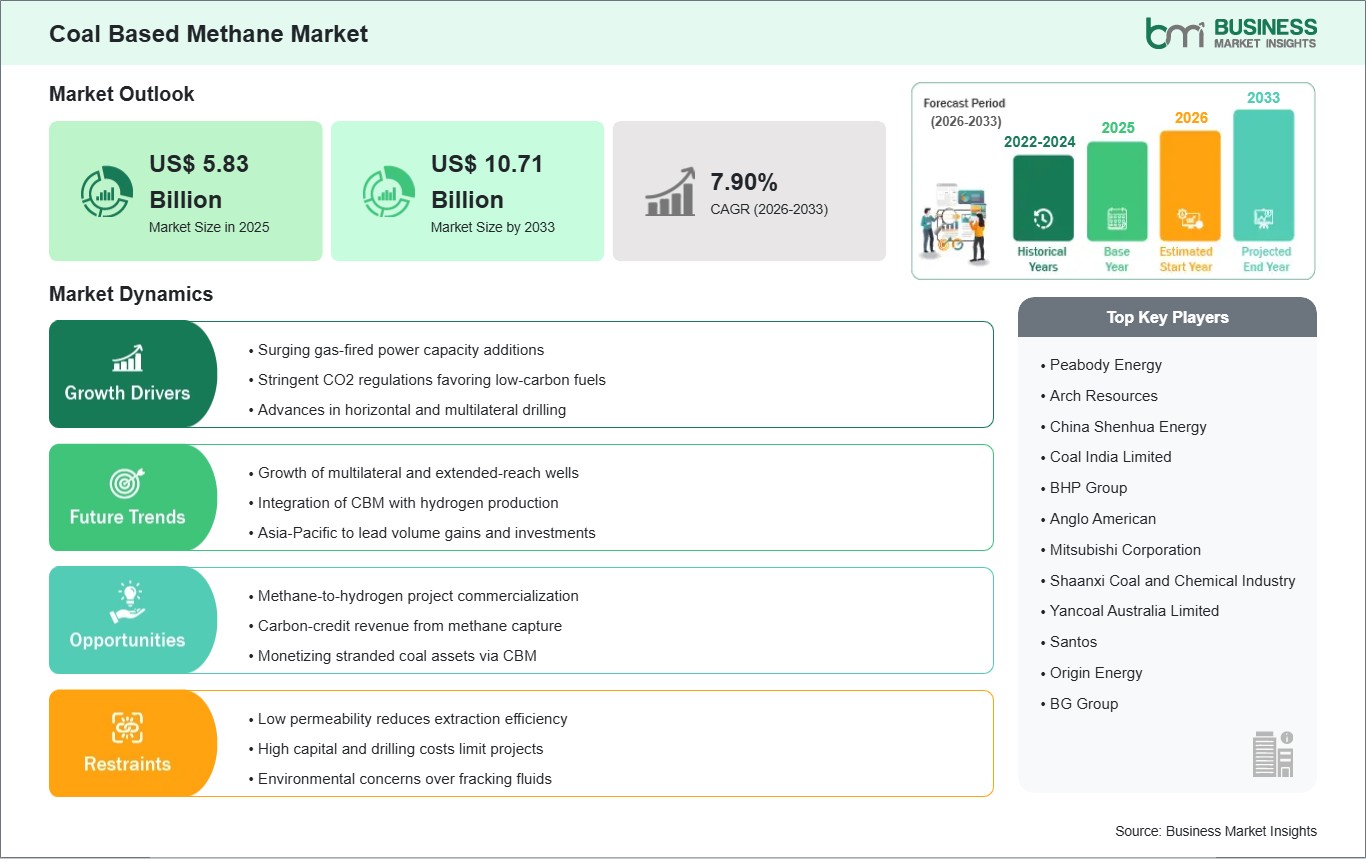
Coal seam methane extraction involves recovering methane trapped in coal deposits for commercial energy use. This process supports cleaner combustion than conventional coal and improves mine safety through gas drainage operations. Better drilling and reservoir management have made methane recovery more feasible in active and abandoned coalfields.
Energy diversification strategies in industrial economies encourage wider use of coal-based methane infrastructure. Power producers and industrial facilities are looking for stable fuel alternatives that can help with emissions management without needing a complete system overhaul. Regulatory focus on capturing methane and reducing flaring is also shaping project development in mining-heavy areas.
In the market, horizontal drilling technologies are gaining interest due to better reservoir exposure and extraction efficiency. Power generation applications remain important as utilities look for transitional fuel solutions that support grid reliability. Industrial fuel uses are also increasing because methane-based systems work well with existing thermal processing setups.
Improvements in hydraulic fracturing techniques, geological mapping, and directional drilling have made gas recovery more consistent in complex coal seams. Operators are increasingly using digital monitoring platforms to enhance well productivity and minimize operational interruptions. These changes are altering project costs by increasing extraction accuracy and reducing long-term maintenance needs.
Competitive conditions in the industry are influenced by operational know-how, access to resource-rich coal basins, and integration of infrastructure. Market players are focusing on partnerships, asset optimization, and improving production efficiency to strengthen their positions. Strategic investments in methane commercialization and transportation networks continue to drive long-term growth in both developed and emerging energy markets.
Segment Analysis
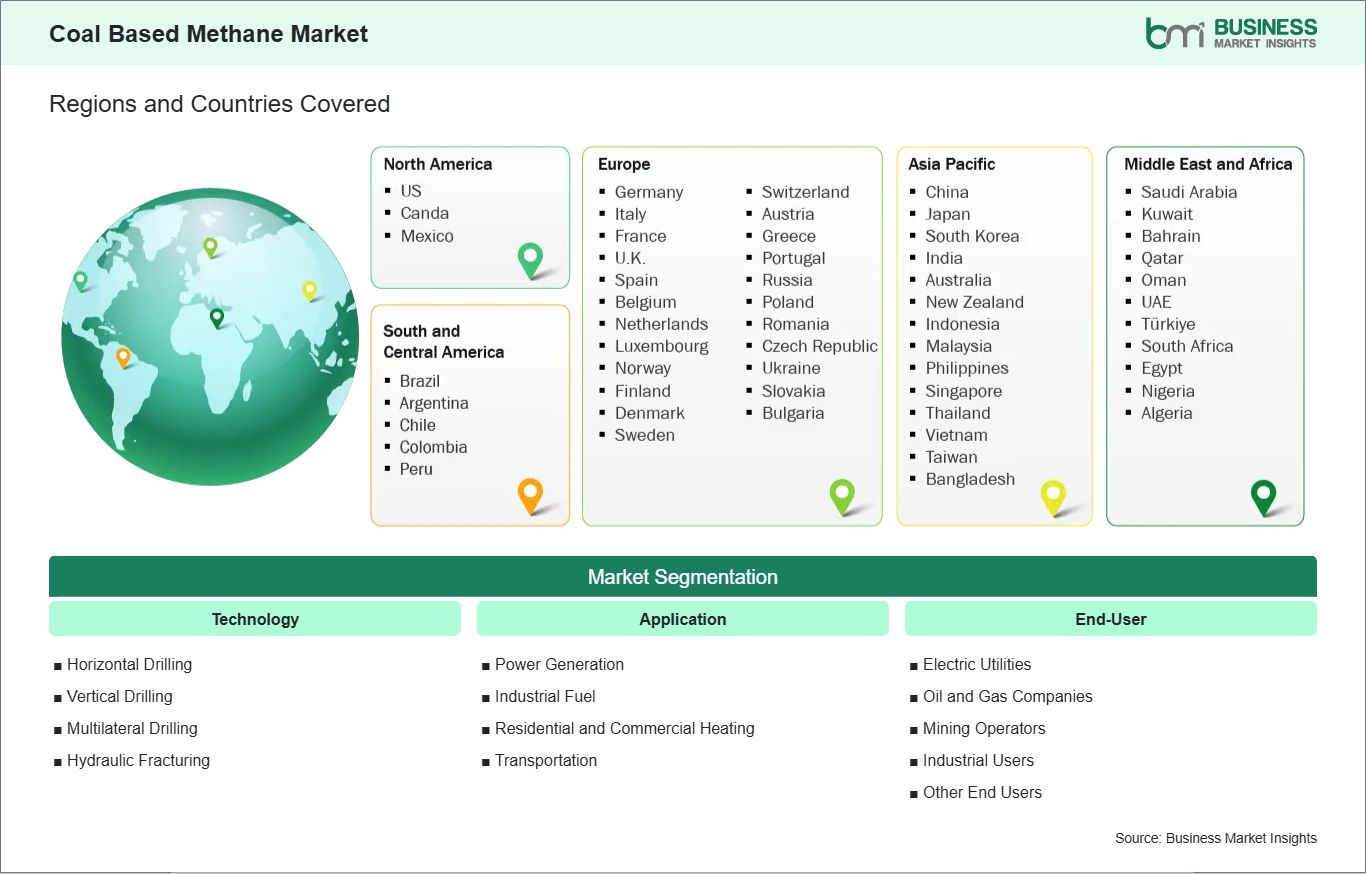
Coal Based Methane Market Segmentation
The market demonstrates differentiated operational trends across extraction technologies, applications, and end-user categories.
By Technology
- Horizontal Drilling – Enhances reservoir exposure across extensive coal seam formations.
- Vertical Drilling – Supports cost-efficient extraction in shallow methane-bearing deposits.
- Multilateral Drilling – Improves gas recovery through interconnected well pathways.
- Hydraulic Fracturing – Increases permeability within dense coal formations.
By Application
- Power Generation – Maintains a consistent fuel supply for utility-scale electricity production.
- Industrial Fuel – Supports thermal operations requiring stable combustion performance.
- Residential and Commercial Heating – Expands localized heating efficiency in colder regions.
- Transportation – Encourages alternative gaseous fuel utilization within fleet operations.
By End-User
- Electric Utilities – Utilize methane resources for grid-oriented energy generation.
- Oil and Gas Companies – Integrate methane extraction within broader upstream portfolios.
- Mining Operators – Prioritize methane drainage to improve underground operational safety.
- Industrial Users – Deploy methane systems for continuous process heating requirements.
- Other End Users – Include regional energy distributors and infrastructure operators.
Market Forces
Coal Based Methane Market Drivers and Opportunities
Driver: Expansion of Methane Capture Regulations
Environmental authorities are tightening methane management rules for mining and energy operations. Coal mine operators are increasingly using methane extraction systems to meet emission control standards and to improve safety conditions underground. This regulatory focus is promoting the wider use of drilling technologies and gas use infrastructure in established coal-producing economies.
The push for reducing methane is shifting investment priorities in the utility and industrial sectors. Organizations are looking at ways to turn past vented emissions into usable energy. This shift helps improve operational efficiency and fits with the wider goals of reducing carbon emissions in energy-intensive industries.
Opportunity: Integration of Advanced Reservoir Monitoring Technologies
Digital reservoir assessment platforms and real-time monitoring systems are opening up new options for methane extraction projects. Improved analytics increase the accuracy of production forecasts and help operators find productive coal seams. These technologies also improve maintenance scheduling and optimize extraction performance in complex mining areas.
Future growth opportunities are arising from combining automation, remote monitoring, and predictive drilling models. Energy producers are expected to use intelligent methane recovery systems more to boost operational consistency and cut down on extraction inefficiencies. Ongoing innovation may enhance commercial viability in unconventional and previously underdeveloped coal basin regions.
Size and Share Analysis
Coal Based Methane Market Size and Share Analysis
The Coal Based Methane Market is projected to grow from US$ 5.83 Billion in 2025 to US$ 10.71 Billion by 2033 , registering a CAGR of 7.90% from 2026 to 2033.
The coal based methane market was valued at USD 18.55 billion in 2025 and is projected to reach USD 30.66 billion by 2033, registering a CAGR of 6.5% during the forecast period. Market expansion shows a wider use of methane recovery technologies in mining and industrial energy systems. Improvements in operational efficiency and efforts to meet environmental standards continue to support commercial deployment in major producing areas.
Horizontal drilling holds a strong position in the technology landscape because it enhances seam accessibility and extraction continuity. Hydraulic fracturing is also becoming more relevant in dense geological formations where improving permeability is crucial for stable gas recovery. Power generation accounts for a large part of industry use due to ongoing fuel needs across utility infrastructure. Industrial fuel use is also strong as manufacturers focus on cleaner combustion systems that fit with existing thermal processing operations.
Report Coverage
Coal Based Methane Market Report Coverage and Deliverables
The " Coal Based Methane Market Size and Forecast (2022-2033)" report provides a detailed analysis of the market covering below areas:
- Market size and forecast at global, regional, and country levels for all market segments covered under the scope
- Market trends, as well as drivers, restraints, and opportunities
- Market analysis covering key trends, global and regional framework, major players, regulations, and recent developments
- Industry landscape and competition analysis covering market concentration, heat map analysis, prominent players, and recent developments for the coal based methane market
- Detailed company profiles, including SWOT analysis
Geographic Insights
Coal Based Methane Market Geographic Insights
The coal-based methane market shows different adoption patterns in various regions. These patterns are influenced by energy transition policies, the maturity of mining infrastructure, environmental regulations, and industrial fuel needs. Resource availability and extraction costs continue to shape investment priorities in both established and emerging methane-producing economies. The level of technology integration varies greatly based on regional drilling skills and access to transportation infrastructure.
North America has a developed operational landscape, supported by modern drilling technologies and established capabilities for unconventional gas extraction. Methane recovery efforts in mining operations are receiving regulatory attention due to the focus on managing emissions. Utility operators and industrial users in the region are increasingly assessing strategies for using methane to support long-term fuel diversification goals.
Asia Pacific sees substantial market activity due to its extensive coal reserves and growing industrial energy demands. Countries with large-scale mining operations are enhancing methane extraction to improve mine safety and reduce environmental impact. Efforts to modernize infrastructure and initiatives focused on energy security are encouraging the deployment of improved methane recovery and transportation systems throughout the region.
European markets continue to focus on methane capture programs that support environmental sustainability and industrial decarbonization goals. Emerging economies in the Middle East, Africa, and South and Central America are gradually exploring opportunities to use methane related to mining expansion and energy infrastructure growth. Regional collaborations and foreign investments are helping improve technical skills in these developing markets.
Industry Activity
Recent Developments
The coal based methane market is evaluated by gathering qualitative and quantitative data post primary and secondary research, which includes important corporate publications, association data, and databases. A few of the key developments in the coal based methane market are:
- February 2026: Halliburton announced expanded methane recovery technology collaboration projects targeting unconventional coal seam operations in Asia-Pacific markets.
- December 2024: China imposed tougher curbs on the amount of methane released during coal extraction to reduce emissions of the powerful climate-warming gas.
Trust & Transparency
Research Methodology
The market analysis combines proprietary research with secondary data from government agencies, company disclosures, regulatory filings, industry databases and expert interviews. Market estimates are validated through data triangulation, cross-market benchmarking and analyst
review.
View Full Research Methodology
Key Sources Referred:
International Energy Agency
S. Energy Information Administration
International Association of Oil and Gas Producers
United Nations Economic Commission for Europe
Society of Petroleum Engineers
World Coal Association
American Association of Petroleum Geologists
International Journal of Coal Geology