Market Summary
Executive Summary and Global Market Analysis
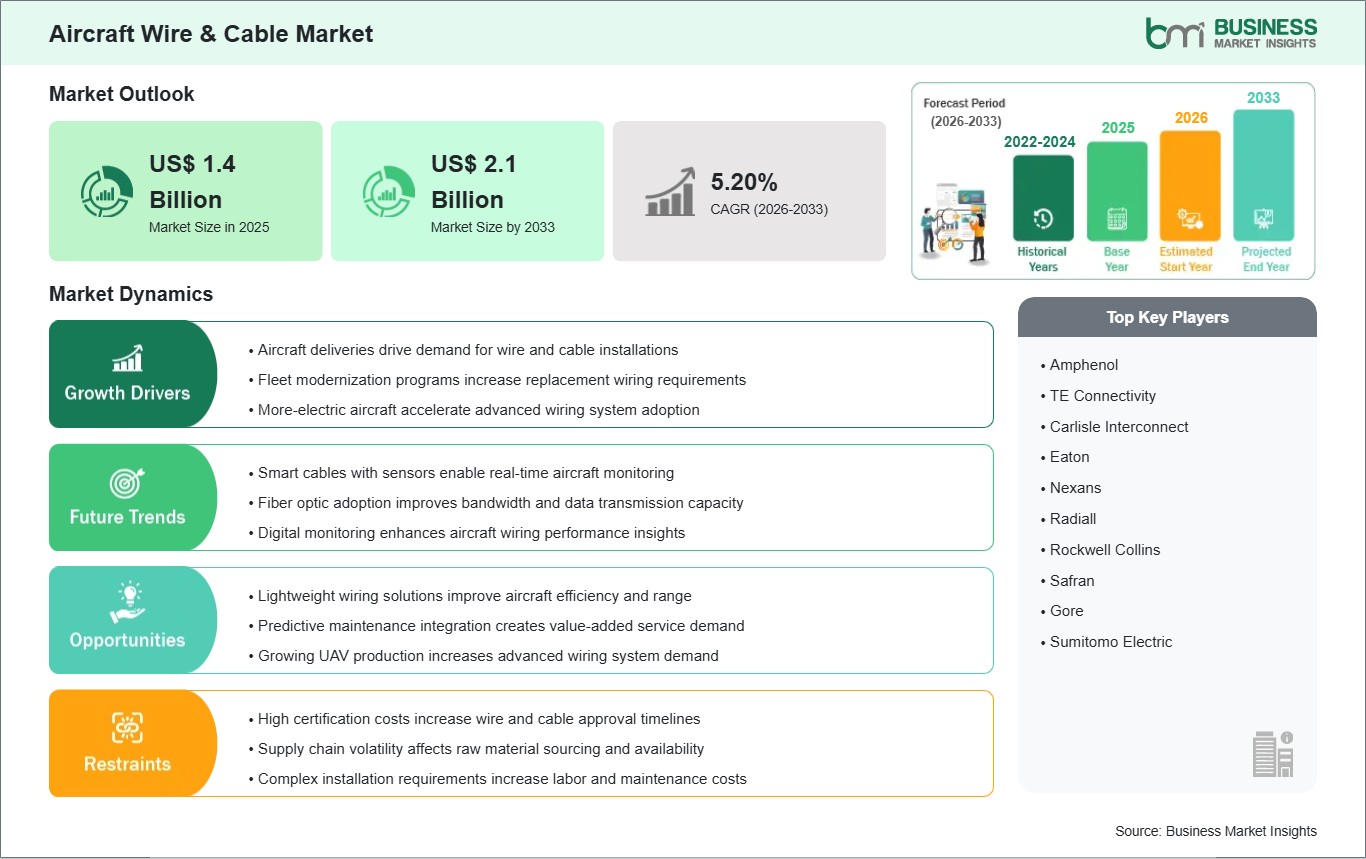
Aircraft wire and cable systems are essential components that enable the transmission of electrical power, signals, and data throughout an aircraft. These products include wires, cables, and harnesses used across avionics, lighting systems, power distribution networks, and flight control systems. The Aircraft Wire & Cable market is experiencing steady growth as aircraft manufacturers focus on improving electrical efficiency, reliability, and safety across modern aircraft platforms. The increasing adoption of advanced avionics, connected aircraft technologies, and more-electric aircraft architectures is driving demand for high-performance wiring solutions.
Despite favorable industry conditions, the market faces several challenges. Aircraft wire and cable systems must meet strict aerospace standards related to safety, fire resistance, electromagnetic compatibility, and environmental performance. Adherence to these demands may result in higher manufacturing complexity as well as additional certification expenses. encounter several challenges associated with aging aircraft, including replacing old wiring and upgrading systems.
The market continues to create opportunities through the development of lightweight wiring technologies, advanced harness systems, and solutions designed for electric and hybrid-electric aircraft. Increased investment in the electrification of aircraft systems has resulted in innovations in power transmission and electric connections. Competition in the market focuses on reliability, regulatory standards, technology, and support for future development in the electrical architecture of the aircraft.
Segment Analysis
Aircraft Wire & Cable Market Segmentation
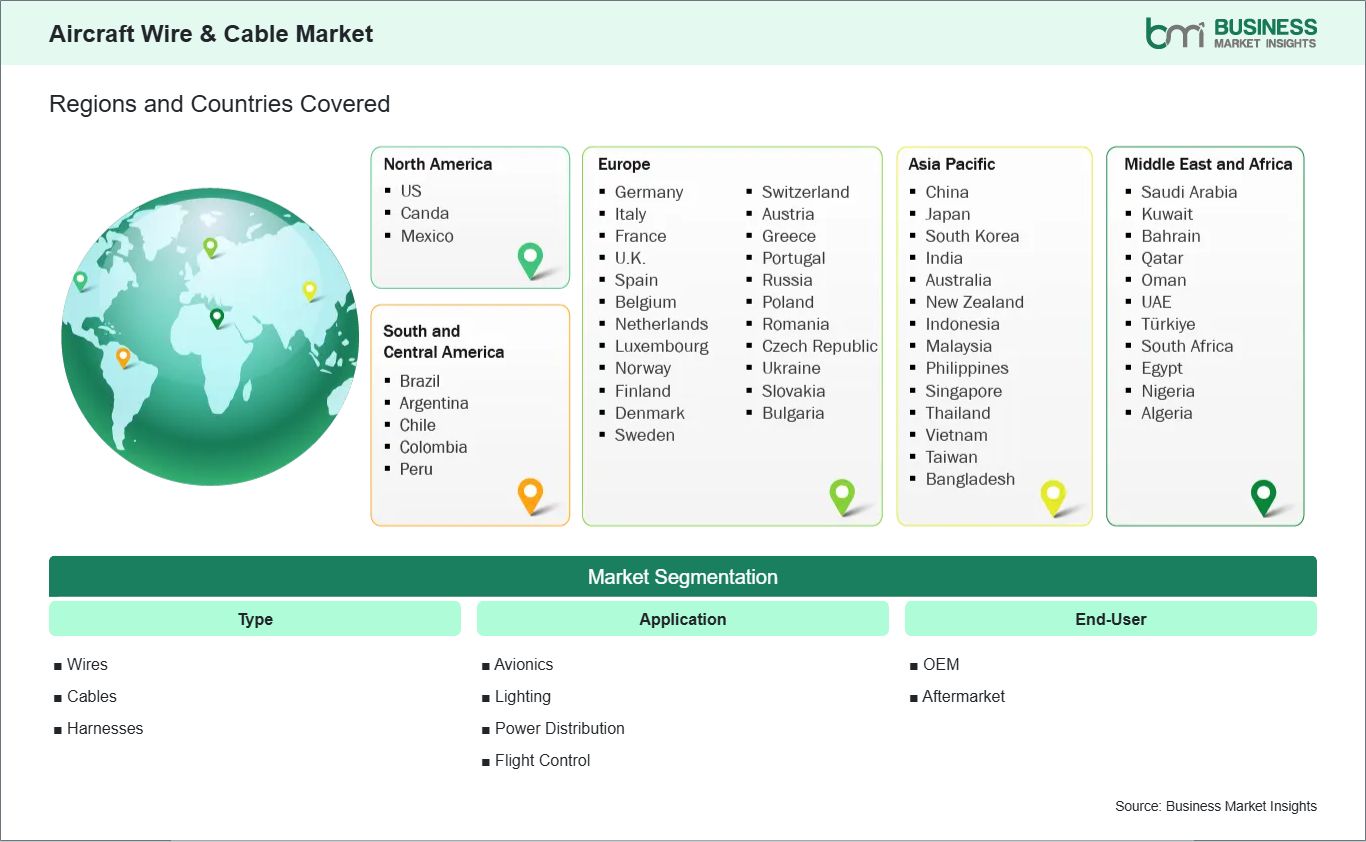
The Aircraft Wire & Cable market is segmented based on type, application, and end-user, reflecting the diverse electrical and connectivity requirements across modern aircraft systems.
By Type
- Wires: Used for electrical signal transmission and connectivity across aircraft systems.
- Cables: Designed for power transfer, communication, and high-performance electrical applications.
- Harnesses: Integrated assemblies that organize and protect multiple wires and cables within aircraft structures.
By Application
- Avionics: Supports communication, navigation, monitoring, and control systems.
- Lighting: Used in cabin, cockpit, and exterior aircraft lighting applications.
- Power Distribution: Enables the safe transfer of electrical power throughout the aircraft.
- Flight Control: Supports critical control systems that ensure aircraft operation and safety.
By End-User
- OEM: Driven by demand from new aircraft manufacturing and assembly programs.
- Aftermarket: Includes maintenance, repair, replacement, and retrofit activities across existing fleets.
Market Forces
Aircraft Wire & Cable Market Drivers and Opportunities
Growing Aircraft Electrification and Advanced Avionics Integration
The demand for aircraft wire and cable systems is increasing as the aviation industry continues to adopt more-electric aircraft technologies and advanced avionics platforms. Contemporary airplanes make extensive use of electrical systems for communication, navigation, monitoring, and other functional purposes. With the increasing demand by airlines for improved efficiency and reliability, electrical systems with complex wiring and cable structures are being designed to cope with additional electronic equipment aboard an airplane.
Regulatory requirements related to aircraft safety, electromagnetic compatibility, and system reliability further contribute to the demand for high-quality wire and cable products. Aircraft manufacturers are focusing on lightweight electrical components that help reduce overall aircraft weight while supporting increased electrical loads. In addition, fleet modernization programs and the replacement of aging aircraft systems continue to generate demand across both OEM and aftermarket segments. These factors are reinforcing the importance of advanced wire and cable solutions within the evolving aerospace industry.
Development of Lightweight Harness Systems and Electric Aircraft Platforms
The Aircraft Wire & Cable market is benefiting from emerging opportunities associated with aircraft electrification and next-generation aviation technologies. Manufacturers are developing lightweight wires, cables, and harnesses that can support higher power requirements while minimizing aircraft weight. These innovations are becoming increasingly important as the industry explores hybrid-electric and fully electric aircraft concepts that require more advanced electrical infrastructure.
The growing use of digital technologies and connected aircraft systems is also creating demand for improved data transmission and electrical connectivity solutions. Advanced harness designs that simplify installation, improve reliability, and reduce maintenance requirements are gaining attention across the aerospace sector. Activities in research and development that concentrate on high voltage, insulating material, and better thermal behavior would facilitate market growth in the future. With the increased use of electricity in planes, companies with capabilities of supplying effective and durable wire and cable solutions can take advantage of new growth areas.
Size and Share Analysis
Aircraft Wire & Cable Market Size and Share Analysis
The Aircraft Wire & Cable Market size is expected to reach US$ 2.1 billion by 2033 from US$ 1.4 billion in 2025. The market is estimated to record a CAGR of 5.20% from 2026 to 2033.
By type, wires account for a significant share of the market because they are widely used across aircraft electrical systems. Cables and harnesses continue to gain importance as aircraft architectures become more complex and require integrated electrical interconnection solutions. Lightweight and high-performance designs are becoming a key focus across all product categories.
By application, avionics and power distribution represent major areas of demand due to the growing dependence on electronic systems and electrical power management. Demand from both OEM and aftermarket segments remains strong as new aircraft deliveries and maintenance activities continue to support market growth.
Report Coverage
Aircraft Wire & Cable Market Report Coverage and Deliverables
The "Aircraft Wire & Cable Market Size and Forecast (2022-2033)" report provides a detailed analysis of the market covering below areas:
- Market size and forecast at global, regional, and country levels for all the key market segments covered under the scope
- Market trends, as well as market dynamics such as drivers, restraints, and key opportunities
- Market analysis covering key market trends, global and regional framework, major players, regulations, and recent market developments
- Industry landscape and competition analysis covering market concentration, heat map analysis, prominent players, and recent developments for the market
- Detailed company profiles, including SWOT analysis
Geographic Insights
Aircraft Wire & Cable Market Geographic Insights
The Aircraft Wire & Cable Market shows diverse regional adoption patterns influenced by aircraft manufacturing activity, aviation infrastructure development, electrical system modernization, and maintenance requirements.
North America represents a mature aerospace market with established aircraft manufacturing facilities, advanced aviation infrastructure, and strong maintenance capabilities. The region comprises the United States and Canada, where commercial and defense aviation programs continue to generate demand for aircraft wire and cable systems. Airlines and aircraft manufacturers are focused on improving electrical efficiency and supporting advanced avionics integration. The presence of experienced aerospace suppliers and well-developed regulatory frameworks contributes to the consistent adoption of advanced wiring technologies across multiple aircraft platforms.
Asia Pacific is witnessing increasing demand for aircraft wire and cable systems due to growing air passenger traffic, fleet expansion programs, and investments in aviation infrastructure. The region comprises countries such as China, India, Japan, and Singapore, where airlines are expanding operations and modernizing fleets. Aircraft procurement activities and the development of regional aerospace manufacturing capabilities continue to support market growth. The expansion of maintenance, repair, and overhaul facilities across the region is also increasing demand for replacement and upgrade solutions. Government support for aviation development and technological advancement further strengthens market opportunities.
Industry Activity
Recent Developments
The Aircraft Wire & Cable Market is analyzed using a mix of primary and secondary research sources, including corporate publications, industry associations, and verified databases. This approach ensures accurate tracking of innovation trends and strategic developments influencing the market.
- In June 2026, Safran Electrical & Power secured an EU Innovation Fund grant to accelerate high-rate automated production of its ENGINeUS 100 electric motors at its Niort facility in France. The initiative introduces specialized manufacturing automation and resources to meet surging commercial demand for hybrid-electric commuter fleets. The development strengthens the supply chain for advanced electric propulsion systems and highlights growing investment in high-performance factory technologies for sustainable aviation.
- In June 2025, GKN Aerospace delivered the first high-voltage Electrical Wiring Interconnection System (EWIS) harnesses for the Clean Aviation SWITCH project focused on hybrid-electric aircraft propulsion. The harnesses were designed and tested to support advanced electrical power systems for future aircraft platforms. The development highlights growing industry investment in next-generation aircraft wiring technologies and electrification initiatives.
Trust & Transparency
Research Methodology
The market analysis combines proprietary research with secondary data from government agencies, company disclosures, regulatory filings, industry databases and expert interviews. Market estimates are validated through data triangulation, cross-market benchmarking and analyst
review.
View Full Research Methodology
Key Sources Referred:
World Bank - Global Trade IndicatorsWorld Trade Organization (WTO)International Monetary Fund (IMF)International Trade Administration (ITA)Company WebsitesCompany Annual ReportsCompany Investor Presentations