Market Summary
Executive Summary and Global Market Analysis
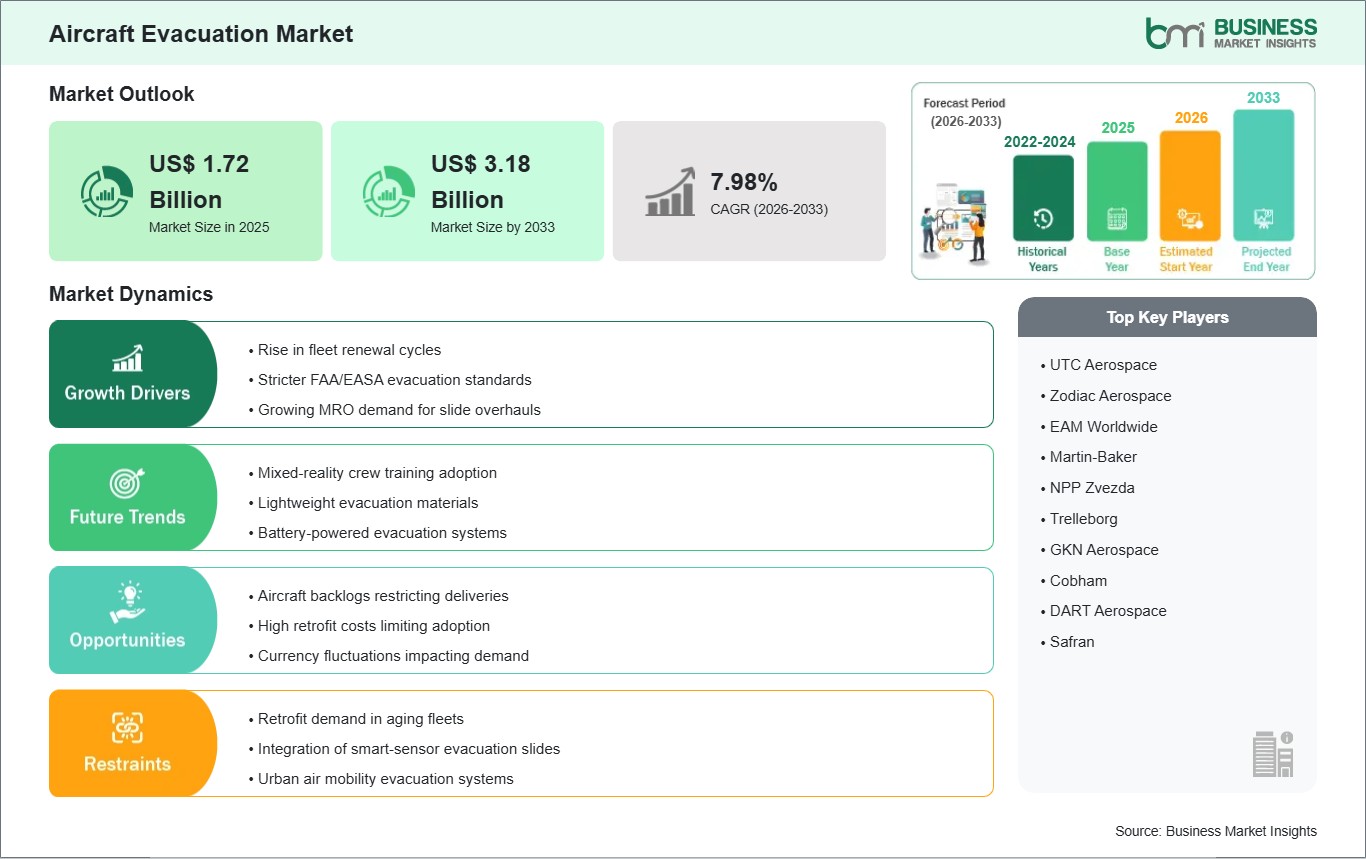
Aircraft evacuation systems are designed to support the safe and rapid evacuation of passengers and crew during emergency situations. These systems include evacuation slides, life rafts, personal floatation devices, emergency lighting systems, and related safety equipment used across commercial, military, and rotary aircraft platforms. The Aircraft Evacuation market is expanding as aviation authorities continue to strengthen passenger safety standards and airlines focus more on emergency preparedness. Increasing global air traffic, rising aircraft production, and the modernization of airline fleets are supporting the demand for advanced evacuation technologies. Manufacturers are also focusing on lightweight materials and compact system designs to improve operational efficiency and reduce aircraft weight.
There are several factors that may limit market expansion in certain regions. Aircraft evacuation systems require strict regulatory certification and frequent inspection procedures, which can increase operational and maintenance costs for airlines and aircraft operators. Retrofitting older aircraft with updated evacuation systems can also be technically challenging due to limited cabin space and compatibility concerns. In addition, the testing and replacement cycles of safety equipment often require specialized expertise and dedicated maintenance infrastructure. Supply chain disruptions affecting high-performance fabrics, inflation systems, and composite materials may further impact production schedules and delivery timelines for aircraft evacuation equipment manufacturers.
Even with these challenges, the Aircraft Evacuation market is expected to grow steadily due to continuous innovation in passenger safety technologies and increasing investments in next-generation aircraft programs. The adoption of smart evacuation systems with improved inflation mechanisms and advanced durability features is gaining attention among airlines and aircraft manufacturers. Growth opportunities are also emerging from retrofit programs for aging fleets and increasing demand for safety upgrades in regional aviation markets. Competitive activity in the market remains focused on regulatory compliance, product reliability, lightweight engineering, and long-term maintenance capabilities.
Segment Analysis
Aircraft Evacuation Market Segmentation
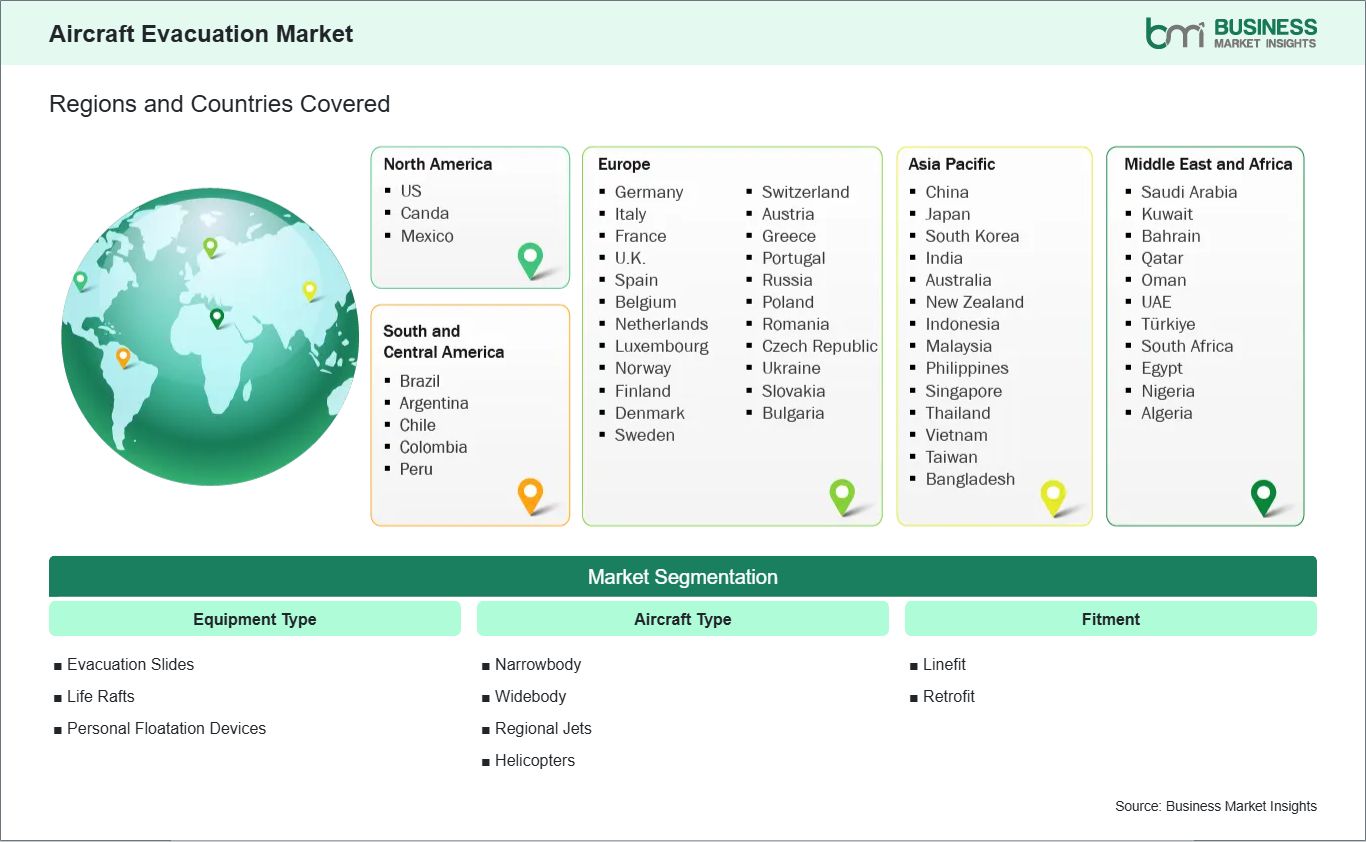
The Aircraft Evacuation market is segmented based on equipment type, aircraft type, and fitment. The growing focus on passenger safety and regulatory compliance is supporting demand across all major segments.
By Equipment Type
- Evacuation Slides: Widely used in commercial aircraft for rapid passenger evacuation during emergency landings and onboard incidents.
- Life Rafts: Essential for overwater operations and long-haul aircraft routes requiring enhanced survival equipment.
- Personal Floatation Devices: Increasingly adopted to improve passenger safety compliance and emergency preparedness standards.
By Aircraft Type
- Narrowbody: Represents a significant segment due to high global deployment in domestic and regional airline operations.
- Widebody: Demand is driven by international air travel and stringent long-range operational safety requirements.
- Regional Jets: Growing regional connectivity is supporting evacuation equipment installations in smaller aircraft fleets.
- Helicopters: Used extensively in offshore, rescue, and military operations where emergency evacuation readiness is critical.
By Fitment
- Linefit: Supported by increasing aircraft production and factory-installed safety system integration.
- Retrofit: Growing steadily due to fleet modernization programs and replacement of aging evacuation equipment.
Market Forces
Aircraft Evacuation Market Drivers and Opportunities
Increasing Focus on Passenger Safety Regulations
The aviation industry continues to strengthen its focus on passenger safety and emergency preparedness, which is driving the demand for advanced aircraft evacuation systems. Aviation authorities across multiple regions require airlines and aircraft manufacturers to comply with strict safety standards regarding emergency evacuation procedures and onboard equipment performance. These regulations encourage the installation of highly reliable evacuation slides, life rafts, and personal floatation devices in both new and existing aircraft fleets.
Airlines are also investing more in emergency response systems to improve passenger confidence and operational safety standards. Modern evacuation systems are being designed with lightweight materials, faster deployment mechanisms, and improved durability to support efficient emergency operations. In military aviation and offshore helicopter operations, evacuation readiness has become increasingly important due to challenging operating environments. As airlines expand fleets and replace older aircraft, the need for certified and technologically advanced evacuation equipment is expected to continue supporting long-term market growth.
Development of Lightweight and Smart Evacuation Systems
The growing adoption of lightweight and technologically advanced safety systems is creating new opportunities in the Aircraft Evacuation market. Aircraft manufacturers are increasingly focusing on reducing overall aircraft weight to improve fuel efficiency and operational performance. This trend is encouraging the development of compact evacuation systems made from advanced fabrics, composite materials, and high-strength lightweight components.
Innovation is also supporting the introduction of smart evacuation technologies with improved inflation reliability, monitoring systems, and maintenance tracking capabilities. Manufacturers are working on evacuation systems that require lower maintenance while delivering better operational performance under extreme environmental conditions. Retrofit opportunities are expanding as airlines modernize aging fleets with upgraded evacuation equipment that meets current aviation safety requirements. Emerging aviation segments such as regional air mobility, advanced helicopters, and next-generation aircraft platforms are also expected to create long-term opportunities for advanced evacuation system integration. Continuous research in durable materials and automated inspection technologies is likely to further improve system efficiency and operational safety in the coming years.
Size and Share Analysis
Aircraft Evacuation Market Size and Share Analysis
The Aircraft Evacuation Market is projected to grow from US$ 1.72 Billion in 2025 to US$ 3.18 Billion by 2033 , registering a CAGR of 7.98% from 2026 to 2033.
By equipment type, evacuation slides account for a significant share due to their mandatory installation in commercial aircraft and their critical role in ensuring rapid passenger evacuation during emergencies. Life rafts are witnessing steady demand because of increasing long-haul and overwater flight operations, while personal floatation devices are gaining importance with the growing emphasis on passenger safety compliance and emergency preparedness standards.
By aircraft type, narrowbody aircraft dominate the market owing to their extensive deployment across domestic and regional airline networks. Widebody aircraft continue to support demand due to rising international air travel and long-distance operations requiring advanced evacuation systems. Regional jets and helicopters are also contributing to market growth with increasing fleet modernization, offshore operations, and emergency rescue applications.
Report Coverage
Aircraft Evacuation Market Report Coverage and Deliverables
The "Aircraft Evacuation Size and Forecast (2022-2033)" report provides a detailed analysis of the market covering below areas:
- Aircraft Evacuation Market size and forecast at global, regional, and country levels for all the key market segments covered under the scope
- Aircraft Evacuation Market trends, as well as market dynamics such as drivers, restraints, and key opportunities
- Aircraft Evacuation Market analysis covering key market trends, global and regional framework, major players, regulations, and recent market developments
- Industry landscape and competition analysis covering market concentration, heat map analysis, prominent players, and recent developments for the market
- Detailed company profiles, including SWOT analysis
Geographic Insights
Aircraft Evacuation Market Geographic Insights
The Aircraft Evacuation Market shows diverse regional adoption patterns influenced by aviation safety regulations, aircraft fleet expansion, airline modernization programs, and investments in emergency preparedness infrastructure.
North America represents a mature market for aircraft evacuation systems due to the strong presence of commercial airlines, aircraft manufacturers, and advanced aviation safety regulations. The United States continues to lead the region with ongoing fleet modernization activities and strict compliance standards for passenger safety systems. The development of new evacuation slides, light life rafts, and improved emergency floatation devices is taking place as part of their efforts to enhance their preparedness. In Canada, they are fostering growth through increased activities in the airline sector and the improvement of the helicopter fleet. The region benefits from established maintenance infrastructure, certified testing facilities, and strong adoption of technologically advanced safety equipment.
Asia Pacific is witnessing rapid growth in the Aircraft Evacuation market due to expanding airline fleets, increasing passenger traffic, and rising investments in airport and aviation infrastructure. Countries such as China and India are experiencing strong demand for evacuation systems as airlines continue to add new narrowbody and regional aircraft to support domestic and international travel demand. Japan and South Korea are focusing on advanced aviation technologies and the modernization of aircraft safety systems. Regional airlines have been using more retrofitted evacuation systems to meet the changing safety requirements and enhance their passenger evacuation standards. The use of helicopters in offshore drilling, medical transportation, and military operations is another factor fueling the growth of this market in the region.
Industry Activity
Recent Developments
The Aircraft Evacuation Market is analyzed using a mix of primary and secondary research sources, including corporate publications, industry associations, and verified databases. This approach ensures accurate tracking of innovation trends and strategic developments influencing the market.
- In April 2024, Safran announced the expansion of its aircraft safety systems production capabilities to support growing global demand for evacuation slides and emergency safety equipment. The development focused on improving manufacturing efficiency and supporting next-generation aircraft programs. The company also emphasized lightweight evacuation technologies designed to improve operational performance and passenger safety.
- In July 2023, Collins Aerospace introduced upgraded aircraft evacuation slide technologies designed to improve deployment reliability and reduce maintenance requirements for commercial aircraft operators. The updated systems included improvements in material durability and operational performance under extreme environmental conditions. The development supported the aviation industry's increasing focus on passenger safety and regulatory compliance.
Trust & Transparency
Research Methodology
The market analysis combines proprietary research with secondary data from government agencies, company disclosures, regulatory filings, industry databases and expert interviews. Market estimates are validated through data triangulation, cross-market benchmarking and analyst
review.
View Full Research Methodology
Key Sources Referred:
World Bank - Global Trade Indicators
World Trade Organization (WTO)
International Monetary Fund (IMF)
International Trade Administration (ITA)
Company Websites
Company Annual Reports
Company Investor Presentations