Market Summary
Executive Summary and Global Market Analysis
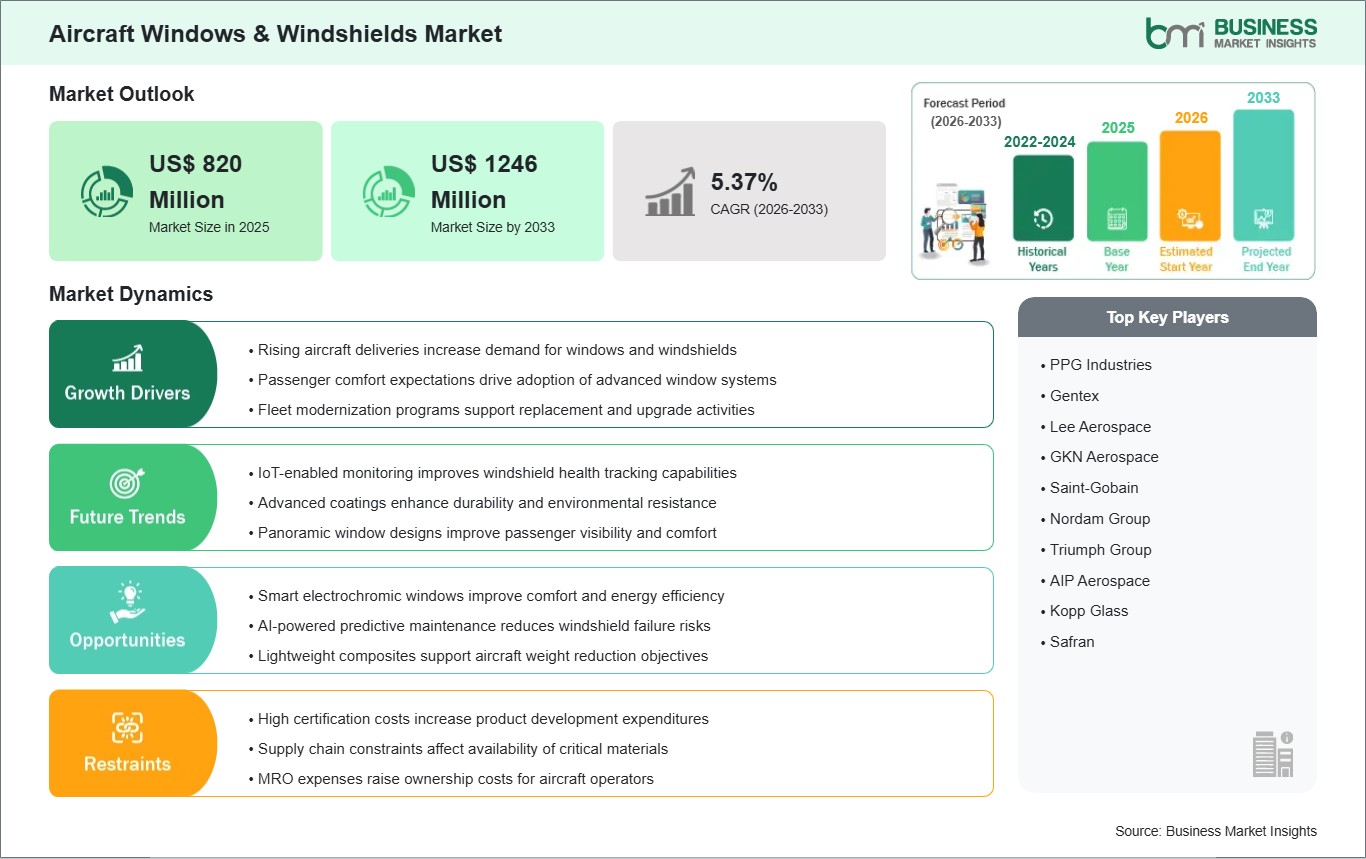
Aircraft windows and windshields are critical transparency components that provide visibility, passenger comfort, structural integrity, and protection from environmental conditions during flight. These products are used across commercial, regional, and large aircraft fleets and are designed to meet strict aviation safety and performance requirements. The market is experiencing steady growth due to increasing aircraft deliveries, fleet modernization programs, and growing air passenger traffic worldwide. Manufacturers are focusing on lightweight materials, improved durability, enhanced optical performance, and advanced coatings that help improve operational efficiency and reduce maintenance requirements.
Despite favorable growth conditions, the market faces several challenges. Aircraft windows and windshields are subject to high standards for aviation certification, resulting in higher costs of production. Replacement and maintenance of the transparency systems are not easy processes, and they involve considerable cost. In addition, airlines and operators continue to seek cost-effective solutions while maintaining high safety and performance standards, creating pressure on manufacturers to balance innovation with affordability.
The market continues to present opportunities through advancements in smart transparency technologies, lightweight glazing materials, and improved thermal management solutions. Airlines are increasingly focused on enhancing passenger experience through larger windows and advanced cabin designs. The aftermarket segment is also benefiting from the growing global aircraft fleet and increasing maintenance requirements. Investments in future generation aircraft models and environmental-friendly aviation technologies should fuel further demand for efficient aircraft windows and windshields. Business competition will focus on product quality, regulations, innovations, and services.
Segment Analysis
Aircraft Windows & Windshields Market Segmentation
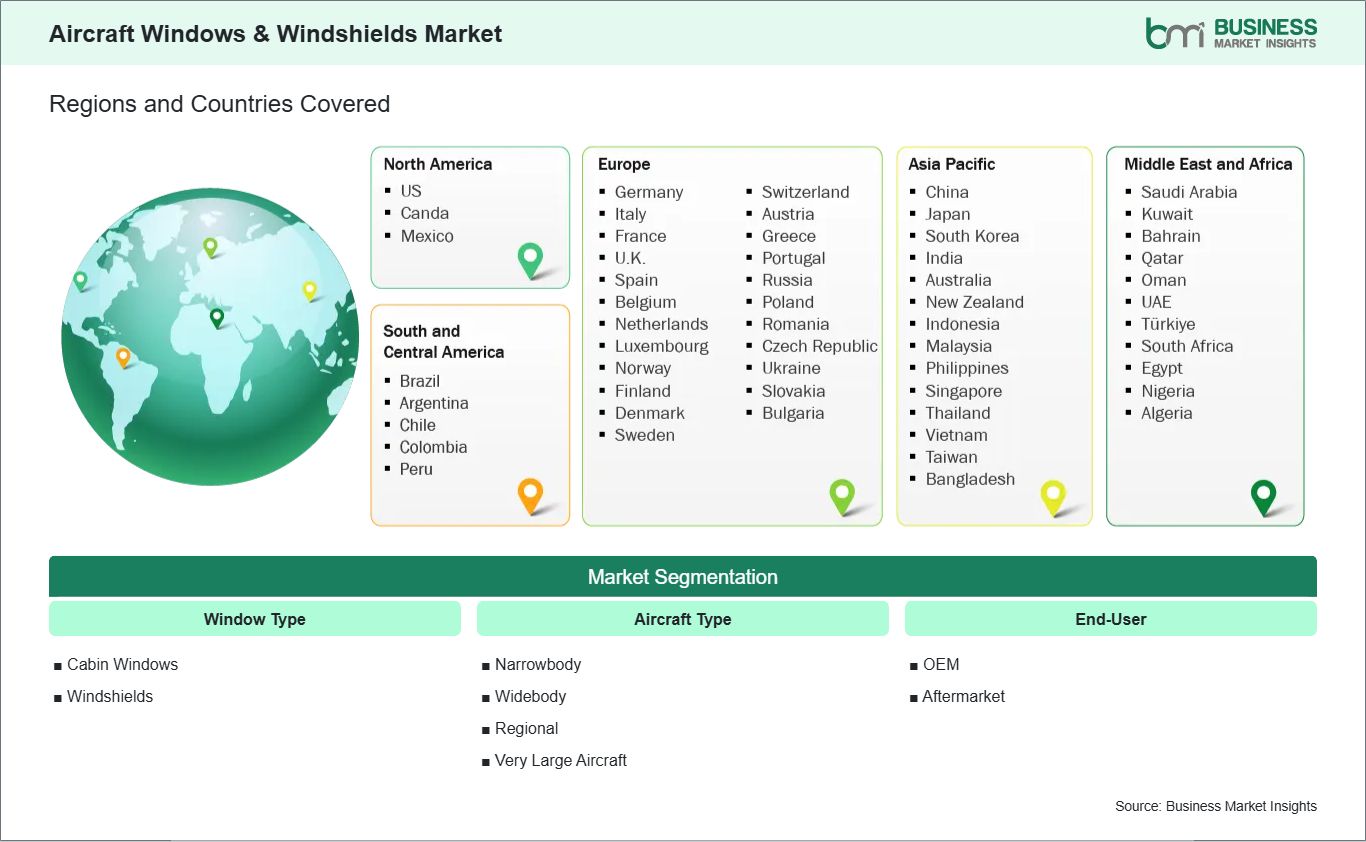
The Aircraft Windows & Windshields market is segmented based on window type, aircraft type, and end-user, reflecting varying operational and maintenance requirements across the aviation industry.
By Window Type
- Cabin Windows: Used to enhance passenger visibility, comfort, and cabin aesthetics while maintaining structural performance.
- Windshields: Essential cockpit components that provide pilot visibility, impact resistance, and environmental protection.
By Aircraft Type
- Narrowbody: Widely used in short- and medium-haul commercial aviation operations.
- Widebody: Requires advanced transparency systems designed for long-haul aircraft applications.
- Regional: Supports regional connectivity through efficient and cost-effective aircraft operations.
- Very Large Aircraft: Utilizes specialized window and windshield systems designed for larger airframes.
By End-User
- OEM: Driven by demand from new aircraft manufacturing and assembly activities.
- Aftermarket: Includes replacement, repair, refurbishment, and maintenance of aircraft transparency systems.
Market Forces
Aircraft Windows & Windshields Market Drivers and Opportunities
Rising Aircraft Deliveries and Fleet Modernization Programs
The demand for aircraft windows and windshields is increasing as airlines continue to expand and modernize their fleets. Growing air travel demand has encouraged aircraft manufacturers to increase production of commercial and regional aircraft, creating a direct need for advanced transparency systems. These components play an important role in ensuring flight safety, operational reliability, and passenger comfort. As aviation authorities continue to enforce strict safety and certification requirements, aircraft manufacturers and operators are investing in high-performance windows and windshields that offer durability, visibility, and resistance to environmental stress.
The growing number of aircraft entering service is also increasing the need for replacement and maintenance activities. Airlines are focusing on reducing downtime and improving operational efficiency, which supports demand for reliable aftermarket transparency solutions. Modern aircraft designs require lighter and more efficient materials, encouraging continuous innovation in window and windshield technologies. These factors collectively contribute to the long-term growth of the Aircraft Windows & Windshields market and reinforce its importance within the global aerospace industry.
Advancements in Lightweight and Smart Transparency Technologies
The Aircraft Windows & Windshields market is creating new opportunities through the development of lightweight materials and advanced transparency technologies. Aerospace manufacturers are increasingly exploring solutions that improve fuel efficiency, passenger comfort, and aircraft performance. Advanced glazing materials, specialized coatings, and improved thermal management systems are becoming more important as aircraft designs evolve to meet changing operational requirements.
Smart transparency technologies are also gaining attention within the aviation industry. Features such as electronically controlled dimming systems, enhanced UV protection, and improved optical performance are helping airlines improve passenger experience while reducing maintenance needs. Research and development efforts are focused on increasing durability, reducing component weight, and extending service life. The growing emphasis on sustainable aviation and next-generation aircraft platforms is expected to create additional opportunities for innovation. As airlines and manufacturers continue to prioritize efficiency, comfort, and safety, advanced aircraft window and windshield technologies are likely to play a greater role in future aviation programs.
Size and Share Analysis
Aircraft Windows & Windshields Market Size and Share Analysis
The Aircraft Windows & Windshields Market size is expected to reach US$ 1246 million by 2033 from US$ 820 million in 2025. The market is estimated to record a CAGR of 5.37% from 2026 to 2033.
By window type, cabin windows account for a significant share due to their widespread use across commercial aircraft fleets. Windshields remain a critical segment because of their essential role in ensuring pilot visibility, flight safety, and environmental protection. Continuous innovation in durability and performance is supporting demand across both categories.
By end-user, OEM demand remains strong due to increasing aircraft deliveries, while the aftermarket segment continues to expand as operators focus on maintenance, replacement, and refurbishment activities. Growing aviation activity across commercial and regional aircraft sectors is expected to support long-term market growth.
Report Coverage
Aircraft Windows & Windshields Market Report Coverage and Deliverables
The "Aircraft Windows & Windshields Market Size and Forecast (2022-2033)" report provides a detailed analysis of the market covering below areas:
- Market size and forecast at global, regional, and country levels for all the key market segments covered under the scope
- Market trends, as well as market dynamics such as drivers, restraints, and key opportunities
- Market analysis covering key market trends, global and regional framework, major players, regulations, and recent market developments
- Industry landscape and competition analysis covering market concentration, heat map analysis, prominent players, and recent developments for the market
- Detailed company profiles, including SWOT analysis
Geographic Insights
Aircraft Windows & Windshields Market Geographic Insights
The Aircraft Windows & Windshields Market shows diverse regional adoption patterns influenced by aircraft manufacturing activity, aviation infrastructure development, fleet modernization initiatives, and maintenance requirements.
North America represents a mature aviation market supported by advanced aerospace manufacturing capabilities and a large commercial aircraft fleet. The region comprises the United States and Canada, where aircraft production activities and airline modernization programs continue to support demand for aircraft windows and windshields. Strong maintenance, repair, and overhaul infrastructure contributes to steady aftermarket demand. The main emphasis in this region is placed on the optimization of the efficiency of aircraft operation, increasing passenger comfort, and meeting all safety requirements with the aid of transparent technologies.
Asia Pacific is witnessing significant growth due to expanding air travel demand, increasing aircraft procurement, and ongoing airport infrastructure development. The region comprises countries such as China, India, Japan, and Singapore, where aviation expansion is creating demand for new aircraft and related components. The airlines are working on building their fleets to be able to handle the increase in passengers. Governments have continued to invest in projects to build more aviation infrastructures. The expansion of maintenance centers and the increased use of high-end aircraft technology contribute to the growth of the market.
Industry Activity
Recent Developments
The Aircraft Windows & Windshields Market is analyzed using a mix of primary and secondary research sources, including corporate publications, industry associations, and verified databases. This approach ensures accurate tracking of innovation trends and strategic developments influencing the market.
- In September 2025, Satair and Saint-Gobain Sully renewed their exclusive multi-year distribution agreement for aircraft cabin and cockpit windows. The agreement extends global distribution support for transparency products used across multiple commercial aircraft platforms. The renewal strengthens aftermarket availability and supports continued access to certified aircraft window solutions for operators and maintenance providers worldwide.
- In April 2025, Aerospace Technologies Group (ATG) introduced the AerLuxe window shading system for VIP aircraft and premium airline cabins. The new system incorporates advanced electronic controls, remote diagnostics capabilities, and integrated performance monitoring features. The development reflects ongoing innovation in aircraft window technologies focused on improving passenger comfort and cabin experience.
Trust & Transparency
Research Methodology
The market analysis combines proprietary research with secondary data from government agencies, company disclosures, regulatory filings, industry databases and expert interviews. Market estimates are validated through data triangulation, cross-market benchmarking and analyst
review.
View Full Research Methodology
Key Sources Referred:
World Bank - Global Trade IndicatorsWorld Trade Organization (WTO)International Monetary Fund (IMF)International Trade Administration (ITA)Company WebsitesCompany Annual ReportsCompany Investor Presentations