Market Summary
Executive Summary and Global Market Analysis
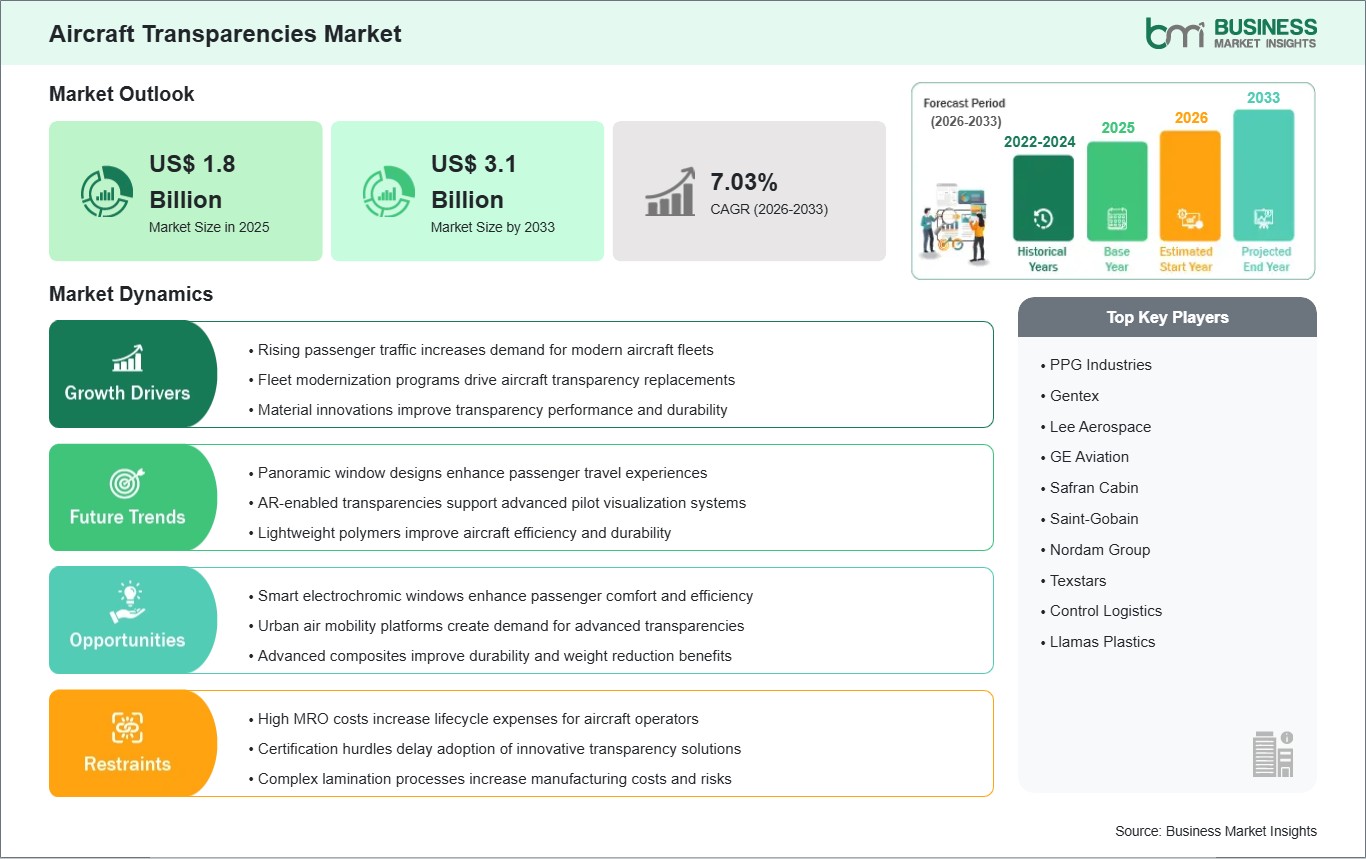
Aircraft transparencies are specialized transparent structures used in aircraft, including windows, windshields, canopies, skylights, and interior transparent panels. These components help to offer visibility, passenger comfort, good aerodynamics, and protection from external factors like variations in pressure, bird hits, UV rays, and extreme temperatures. Glass, acrylic, and polycarbonate are common materials used in aircraft transparency due to their strength and transparency. The aircraft transparencies market is growing steadily as there is an emphasis on ensuring that the aircraft being operated remain safe and efficient. Growing demand from the airline industry, military, and general aviation players is fueling the demand.
Several factors present challenges to market growth. Aircraft transparencies must meet strict aviation safety and certification requirements, which increases manufacturing complexity and development costs. Exposure to harsh operating conditions can result in wear, scratches, and replacement requirements over time. The employment of advanced materials and coatings may lead to an increase in the cost of production, and repairs and maintenance require skills and specialization. Disruptions in the supply chain of special aerospace-grade materials, as well as lengthy certification processes, may also pose difficulties in accessing and expanding into new markets.
Despite these constraints, the market continues to create new opportunities through technological advancements and changing aviation requirements. Manufacturers are developing lightweight transparency materials and coating technology that enhances impact resistance and boosts aircraft performance. There is an increased need for larger windows in the cockpit and better visibility in the commercial and business jet sectors. Military aircraft modernization and the growing adoption of unmanned aerial vehicles are also creating opportunities for advanced transparency systems. Competition in the market remains focused on product quality, material innovation, durability, and compliance with evolving aerospace standards.
Segment Analysis
Aircraft Transparencies Market Segmentation
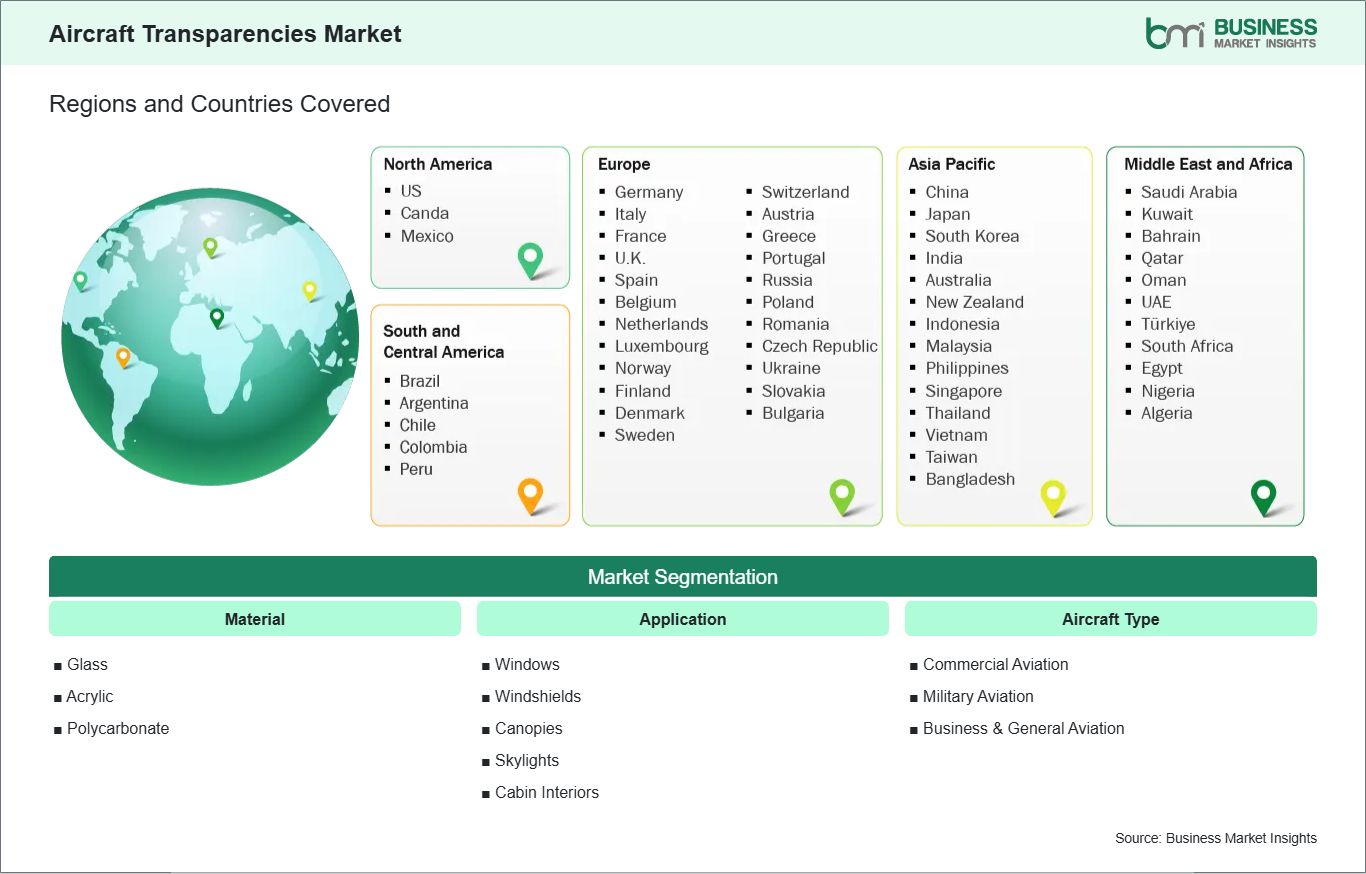
The Aircraft Transparencies market is segmented based on material, application, and aircraft type, reflecting the diverse requirements of modern aviation platforms.
By Material
- Glass: Preferred for high optical clarity, durability, and resistance to environmental conditions
- Acrylic: Widely used due to its lightweight characteristics and excellent transparency
- Polycarbonate: Known for superior impact resistance and suitability for advanced aerospace applications
By Application
- Windows: Essential for passenger visibility and cabin comfort
- Windshields: Critical for pilot visibility and operational safety
- Canopies: Extensively used in military and special-purpose aircraft
- Skylights: Enhance cabin aesthetics and natural lighting
- Cabin Interiors: Applied in transparent partitions and interior aircraft structures
By Aircraft Type
- Commercial Aviation: Represents significant demand due to large passenger aircraft fleets
- Military Aviation: Requires durable and high-performance transparency solutions
- Business & General Aviation: Focuses on passenger comfort, visibility, and premium aircraft design
Market Forces
Aircraft Transparencies Market Drivers and Opportunities
Growing Aircraft Production and Fleet Modernization
The expansion of global aviation activities is a major factor driving the Aircraft Transparencies market. Airlines continue to modernize fleets with newer aircraft that offer improved fuel efficiency, enhanced passenger comfort, and better operational performance. This transformation creates an increased need for sophisticated transparency systems that are able to satisfy high standards associated with aerospace engineering. Military organizations have been upgrading their aircraft systems to increase mission efficiency and provide safety to pilots. This increases demand for robust canopies and windshields.
Regulatory requirements related to aircraft safety and performance further encourage the adoption of high-quality transparency materials. Manufacturers are increasingly investing in lightweight and durable solutions that can withstand challenging environmental conditions while supporting fuel efficiency objectives. The requirement for replacement and servicing of older transparencies in aircraft is another driving factor behind the continuous market demand. With reliability, visibility, and safety being key considerations in the aviation industry, the significance of advanced aircraft transparencies is growing.
Innovation in Lightweight and Smart Transparency Technologies
Technological advancements are creating new opportunities for the Aircraft Transparencies market. The development of lightweight materials and advanced coatings is helping manufacturers improve aircraft efficiency while maintaining structural integrity and optical performance. Modern transparency systems are being designed to provide better resistance against scratches, ultraviolet radiation, and environmental degradation, extending product lifespan and reducing maintenance requirements.
The growing interest in smart aviation technologies is also opening new possibilities. Advanced transparency solutions with enhanced thermal management, improved visibility features, and innovative coating technologies are attracting attention across the aerospace industry. Business aviation and premium commercial aircraft segments increasingly emphasize passenger comfort through larger windows and enhanced cabin experiences. Additionally, the emergence of next-generation aircraft concepts, including advanced air mobility platforms and specialized unmanned aircraft systems, is expected to create demand for innovative transparency designs. These developments provide long-term growth opportunities for manufacturers focused on performance, efficiency, and sustainability.
Size and Share Analysis
Aircraft Transparencies Market Size and Share Analysis
The Aircraft Transparencies Market size is expected to reach US$ 3.1 billion by 2033 from US$ 1.8 billion in 2025. The market is estimated to record a CAGR of 7.03% from 2026 to 2033.
By material, acrylic holds a significant share due to its lightweight properties, excellent optical clarity, and widespread use across commercial and general aviation aircraft. Glass remains important in applications requiring high durability and environmental resistance, while polycarbonate is gaining attention because of its superior impact resistance and suitability for advanced aerospace designs.
By application, windows account for a major share of the market owing to their extensive use across commercial, military, and business aircraft fleets. Windshields continue to represent a substantial segment because of their critical role in flight safety and pilot visibility. Canopies are witnessing steady demand from military aviation programs, while skylights and cabin interior applications are growing as aircraft manufacturers focus on passenger comfort, aesthetics, and enhanced cabin experiences.
Report Coverage
Aircraft Transparencies Market Report Coverage and Deliverables
The "Aircraft Transparencies Market Size and Forecast (2022-2033)" report provides a detailed analysis of the market covering below areas:
- Market size and forecast at global, regional, and country levels for all the key market segments covered under the scope
- Market trends, as well as market dynamics such as drivers, restraints, and key opportunities
- Market analysis covering key market trends, global and regional framework, major players, regulations, and recent market developments
- Industry landscape and competition analysis covering market concentration, heat map analysis, prominent players, and recent developments for the market
- Detailed company profiles, including SWOT analysis
Geographic Insights
Aircraft Transparencies Market Geographic Insights
The Aircraft Transparencies Market shows diverse regional adoption patterns influenced by aircraft manufacturing activities, aviation infrastructure development, military modernization programs, and increasing demand for advanced aerospace materials.
North America, being a developed region, has a well-established aerospace manufacturing sector and extensive adoption of advanced aircraft transparency technologies. The region comprises the United States and Canada, where commercial aviation, defense aviation, and business jet production create consistent demand for high-performance transparency systems. The region focuses on improving aircraft safety, operational efficiency, and passenger comfort through advanced materials and coatings. Strong aerospace infrastructure, established supply chains, and continuous investments in aircraft modernization support the adoption of innovative transparency solutions across commercial and military platforms.
Asia Pacific is growing significantly, driven by expanding aviation fleets, rising air passenger traffic, and increasing aerospace manufacturing investments. The region comprises countries such as China, India, and Japan, where governments and industry participants are strengthening domestic aerospace capabilities. The region focuses on aircraft production expansion, modernization of military aviation assets, and development of aviation infrastructure. Growing commercial airline operations and increasing demand for business aviation are contributing to higher adoption of advanced windows, windshields, and canopy systems. Investments in aerospace research and manufacturing capabilities further support market development across the region.
Both regions are contributing significantly to the growth of the Aircraft Transparencies Market, focusing on aircraft modernization, aviation infrastructure development, technological advancement, and increasing demand for safe and durable transparency solutions.
Industry Activity
Recent Developments
The Aircraft Transparencies Market is analyzed using a mix of primary and secondary research sources, including corporate publications, industry associations, and verified databases. This approach ensures accurate tracking of innovation trends and strategic developments influencing the market.
- In May 2026, Lockheed Martin secured an $18.6 million contract modification to expand tooling and test equipment for F-35 canopy production. The infrastructure expansion will be carried out at the Garden Grove facility in California to directly support sustained output across U.S. military branches and international partners. The development strengthens the domestic manufacturing base for the Joint Strike Fighter program and highlights continued investment in specialized aerospace fabrication infrastructure to meet rising aircraft delivery schedules.
- In July 2025, GKN Aerospace secured a six-year follow-on contract with BAE Systems for the continued manufacture of transparencies for the Eurofighter Typhoon program through 2030. The agreement ensures ongoing production of cockpit windows and canopy systems while supporting long-term fleet sustainment requirements. The development reflects sustained demand for advanced transparency solutions in military aviation platforms.
Trust & Transparency
Research Methodology
The market analysis combines proprietary research with secondary data from government agencies, company disclosures, regulatory filings, industry databases and expert interviews. Market estimates are validated through data triangulation, cross-market benchmarking and analyst
review.
View Full Research Methodology
Key Sources Referred:
World Bank - Global Trade IndicatorsWorld Trade Organization (WTO)International Monetary Fund (IMF)International Trade Administration (ITA)Company WebsitesCompany Annual ReportsCompany Investor Presentations