Market Summary
Executive Summary and Global Market Analysis
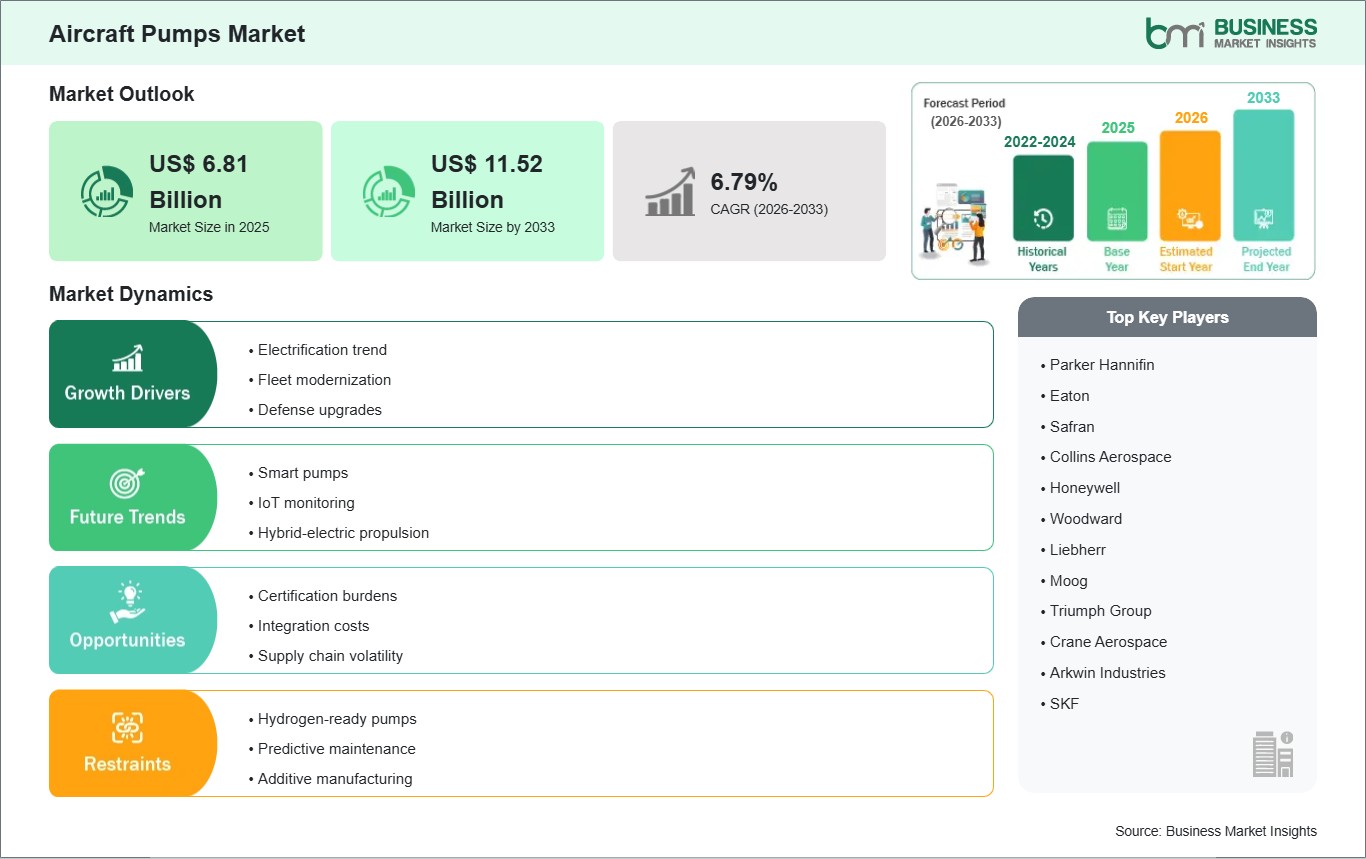
Aircraft Pumps are critical components used in aircraft systems to transfer and regulate fluids such as fuel, hydraulic fluid, lubricants, and cooling liquids throughout various aircraft operations. These pumps support essential functions including engine performance, flight control systems, landing gear operations, lubrication management, and thermal regulation. The increasing production of commercial aircraft, growing modernization of military fleets, and rising demand for fuel-efficient aviation systems are supporting the adoption of advanced Aircraft Pumps across the aerospace industry.
Several operational and technological factors continue to influence the Aircraft Pumps market. Aircraft systems operate under demanding conditions that require pumps to deliver consistent performance, durability, and safety throughout extended service cycles. Adherence to stringent standards of certification, difficult maintenance practices, and the high cost of manufacture might make it difficult for both the suppliers and consumers of the aviation systems. The integration of advanced electronic controls and lightweight materials often requires extensive testing and qualification procedures before deployment. In addition, supply chain disruptions, raw material cost fluctuations, and the need for continuous technological upgrades can affect production schedules and investment decisions within the industry.
Despite these challenges, the Aircraft Pumps market continues to expand due to increasing air travel demand, fleet expansion programs, and ongoing aircraft replacement activities. Fuel pumps and hydraulic pumps remain widely utilized due to their critical role in aircraft operations. Electric motor-driven pumps are gaining attention as aviation manufacturers pursue more-electric aircraft concepts. Commercial aviation continues to represent a major area of demand, while military aviation programs are creating opportunities for advanced fluid management systems. Competitive activity remains focused on efficiency improvements, lightweight designs, enhanced reliability, and integration of smart monitoring capabilities.
Segment Analysis
Aircraft Pumps Market Segmentation
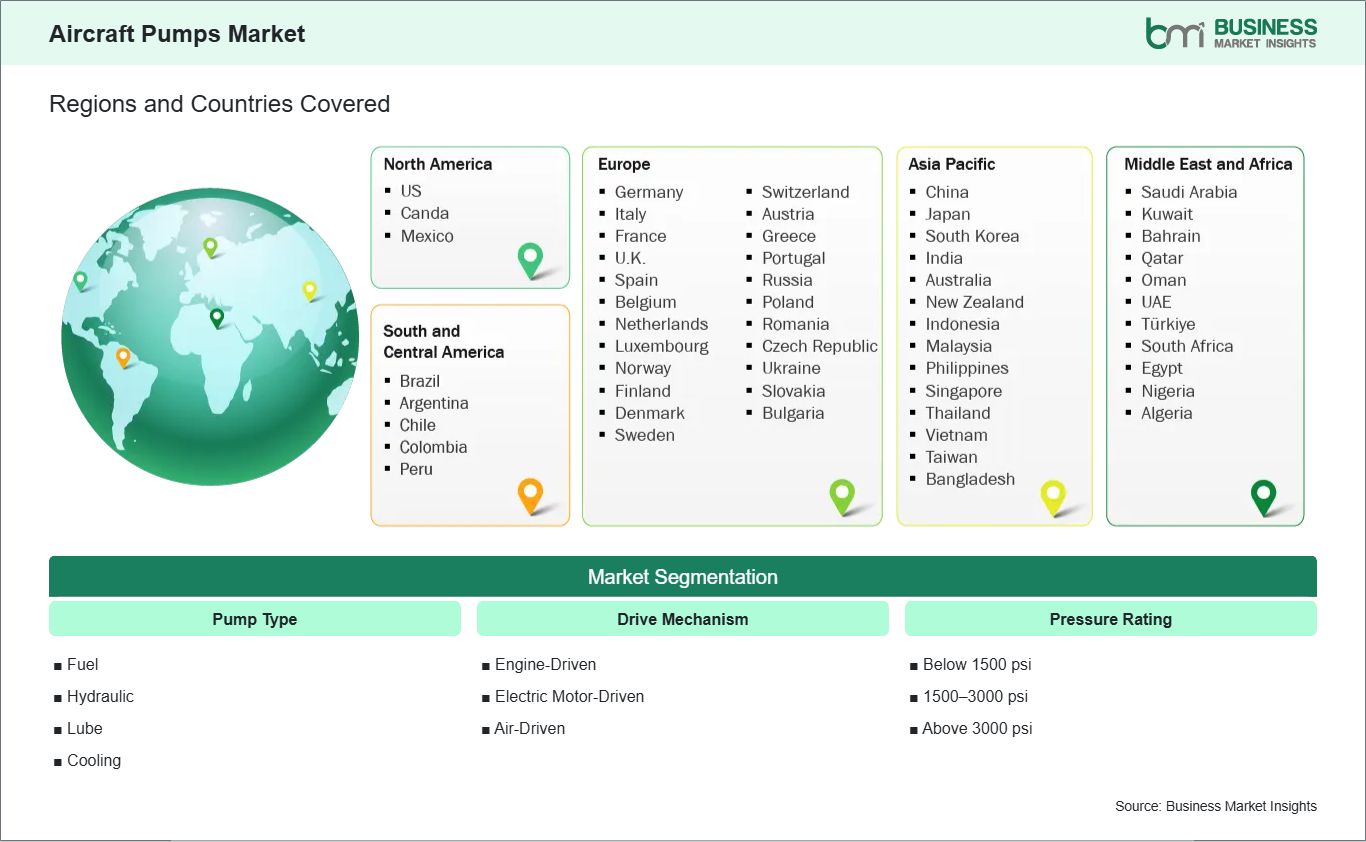
The Aircraft Pumps market is segmented based on pump type, drive mechanism, and pressure rating. These segments help address diverse aircraft operational requirements and fluid management applications.
By Pump Type
- Fuel Pumps: Essential for transferring fuel efficiently from storage tanks to aircraft engines.
- Hydraulic Pumps: Support flight control systems, landing gear operations, and braking functions.
- Lube Pumps: Maintain lubrication flow to reduce component wear and improve engine performance.
- Cooling Pumps: Regulate temperatures within aircraft systems and electronic components.
By Drive Mechanism
- Engine-Driven: Commonly used in traditional aircraft systems and directly powered by engines.
- Electric Motor-Driven: Increasingly adopted in modern and more-electric aircraft designs.
- Air-Driven: Utilized in specialized aircraft applications requiring pneumatic operation.
By Pressure Rating
- Below 1500 psi: Suitable for lower-pressure fluid transfer applications.
- 1500-3000 psi: Widely used across various aircraft hydraulic and fluid systems.
- Above 3000 psi: Preferred for demanding aerospace applications requiring high-pressure performance.
Market Forces
Aircraft Pumps Market Drivers and Opportunities
Growing Aircraft Production and Fleet Modernization Programs
The expansion of commercial aviation and continuous modernization of military aircraft fleets are creating sustained demand for Aircraft Pumps worldwide. Airlines are investing in new-generation aircraft to improve operational efficiency, reduce fuel consumption, and meet environmental objectives. These developments require reliable fuel, hydraulic, lubrication, and cooling systems that depend heavily on advanced pump technologies.
Government investments in defense aviation programs are also supporting the replacement and upgrade of aging aircraft platforms. Modern military aircraft require highly efficient fluid management systems capable of operating under demanding conditions. In addition, increasing maintenance, repair, and overhaul activities are generating demand for replacement pumps and upgraded components. The emphasis on safety and reliability of aircraft systems makes it necessary to consider the role of Aircraft Pumps. As modern aviation manufacturers design lighter and energy-efficient systems for their aircraft, they will require more advanced pumps for the same.
Expansion of More-Electric Aircraft Technologies
The aviation industry's shift toward more-electric aircraft presents significant opportunities for the Aircraft Pumps market. Aircraft manufacturers are increasingly replacing conventional mechanical and hydraulic systems with electrically powered alternatives to improve efficiency, reduce weight, and simplify maintenance processes. Electric motor-driven pumps are emerging as an important component within these evolving aircraft architectures. Their ability to provide precise control, improved energy management, and reduced system complexity supports broader aviation electrification initiatives. Advances in power electronics, smart monitoring systems, and digital diagnostics are further enhancing the capabilities of next-generation pump technologies.
The development of hybrid-electric and fully electric aircraft programs is also creating new requirements for advanced fluid circulation and thermal management systems. As sustainability objectives gain importance across the aviation industry, manufacturers are expected to invest in innovative pump designs that support improved efficiency and environmental performance, creating long-term opportunities throughout the Aircraft Pumps market.
Size and Share Analysis
Aircraft Pumps Market Size and Share Analysis
The Aircraft Pumps Market is projected to grow from US$ 6.81 Billion in 2025 to US$ 11.52 Billion by 2033 , registering a CAGR of 6.79% from 2026 to 2033.
By pump type, fuel pumps account for a significant share due to their critical role in supplying fuel to aircraft engines and ensuring operational efficiency. Hydraulic pumps also hold a substantial share as they support flight control systems, landing gear operations, and braking functions. Lube and cooling pumps are witnessing steady demand with increasing emphasis on engine performance, component protection, and thermal management.
By drive mechanism, engine-driven pumps remain widely adopted because of their established use in conventional aircraft systems. Electric motor-driven pumps are gaining increasing attention with the growth of more-electric aircraft architectures and the need for improved energy efficiency. Air-driven pumps continue to serve specialized aerospace applications requiring pneumatic operation and system redundancy.
Report Coverage
Aircraft Pumps Market Report Coverage and Deliverables
The "Aircraft Pumps Size and Forecast (2022-2033)" report provides a detailed analysis of the market covering below areas:
- Aircraft Pumps Market size and forecast at global, regional, and country levels for all the key market segments covered under the scope
- Aircraft Pumps Market trends, as well as market dynamics such as drivers, restraints, and key opportunities
- Aircraft Pumps Market analysis covering key market trends, global and regional framework, major players, regulations, and recent market developments
- Industry landscape and competition analysis covering market concentration, heat map analysis, prominent players, and recent developments for the market
- Detailed company profiles, including SWOT analysis
Geographic Insights
Aircraft Pumps Market Geographic Insights
The Aircraft Pumps Market shows diverse regional adoption patterns influenced by aircraft manufacturing capabilities, aviation infrastructure development, fleet modernization programs, and aerospace technology investments.
North America remains a mature market supported by a strong aerospace manufacturing base, advanced aviation technologies, and significant defense aviation investments. The United States continues to drive demand through commercial aircraft production, military modernization programs, and extensive maintenance, repair, and overhaul activities. Canada also contributes through aerospace component manufacturing and aviation technology development. The region benefits from established supply chains, advanced engineering expertise, and strong regulatory frameworks supporting aircraft safety and performance.
Asia Pacific is witnessing increasing adoption due to rapid growth in air passenger traffic, fleet expansion initiatives, and investments in domestic aerospace manufacturing capabilities. China continues to strengthen its aviation industry via its aircraft development programs and the growth of its airlines. India is focusing on aviation infrastructure development, military modernization programs, and aircraft acquisition projects. The contribution of Japan comes in the form of its prowess in aerospace engineering and components manufacturing. Increasing focus on indigenous aerospace production and technological development is further enhancing market maturity and creating opportunities for advanced pump technologies throughout Asia Pacific.
Industry Activity
Recent Developments
The Aircraft Pumps Market is analyzed using a mix of primary and secondary research sources, including corporate publications, industry associations, and verified databases. This approach ensures accurate tracking of innovation trends and strategic developments influencing the market.
- In September 2024, Parker Hannifin announced expanded aerospace fluid system capabilities through new product developments supporting next-generation commercial and military aircraft programs. The initiative focused on improving system efficiency, reliability, and performance across critical aerospace applications, including fluid transfer and hydraulic systems.
- In July 2023, Safran Electrical & Power continued development activities related to more-electric aircraft technologies, including advanced electric systems supporting aircraft fluid management functions. The development supports industry efforts to improve aircraft efficiency and reduce dependence on conventional mechanical systems.
Trust & Transparency
Research Methodology
The market analysis combines proprietary research with secondary data from government agencies, company disclosures, regulatory filings, industry databases and expert interviews. Market estimates are validated through data triangulation, cross-market benchmarking and analyst
review.
View Full Research Methodology
Key Sources Referred:
World Bank - Global Trade Indicators
World Trade Organization (WTO)
International Monetary Fund (IMF)
International Trade Administration (ITA)
Company Websites
Company Annual Reports
Company Investor Presentations