Market Summary
Executive Summary and Global Market Analysis
Aircraft Propeller System refers to the mechanical assembly that converts engine power into thrust through rotating blades, enabling aircraft propulsion and flight operations. Aircraft propeller technology is commonly employed in aircraft that fall under general aviation, regional aircraft, military aircraft, unmanned aerial vehicles, and newly evolving electric airplanes. The aircraft propellers comprise components such as blades, hubs, and spinners working together to ensure effective propelling of aircraft performance and fuel efficiency. The increased need for regional air travel, unmanned aerial systems, and advances in electric aviation have contributed to the adoption of aircraft propeller technology.
Several technical and operational challenges continue to influence the Aircraft Propeller System market. Manufacturers must comply with stringent aviation safety regulations and certification requirements while ensuring high durability and performance standards. The propeller systems have been designed to withstand different environmental conditions and vibrations during operation. The use of new forms of hybrid and electrical propulsion systems is also another complicating factor for such designs. In addition, variations in the rate of manufacturing and maintenance expenses could affect their purchases and replacements.
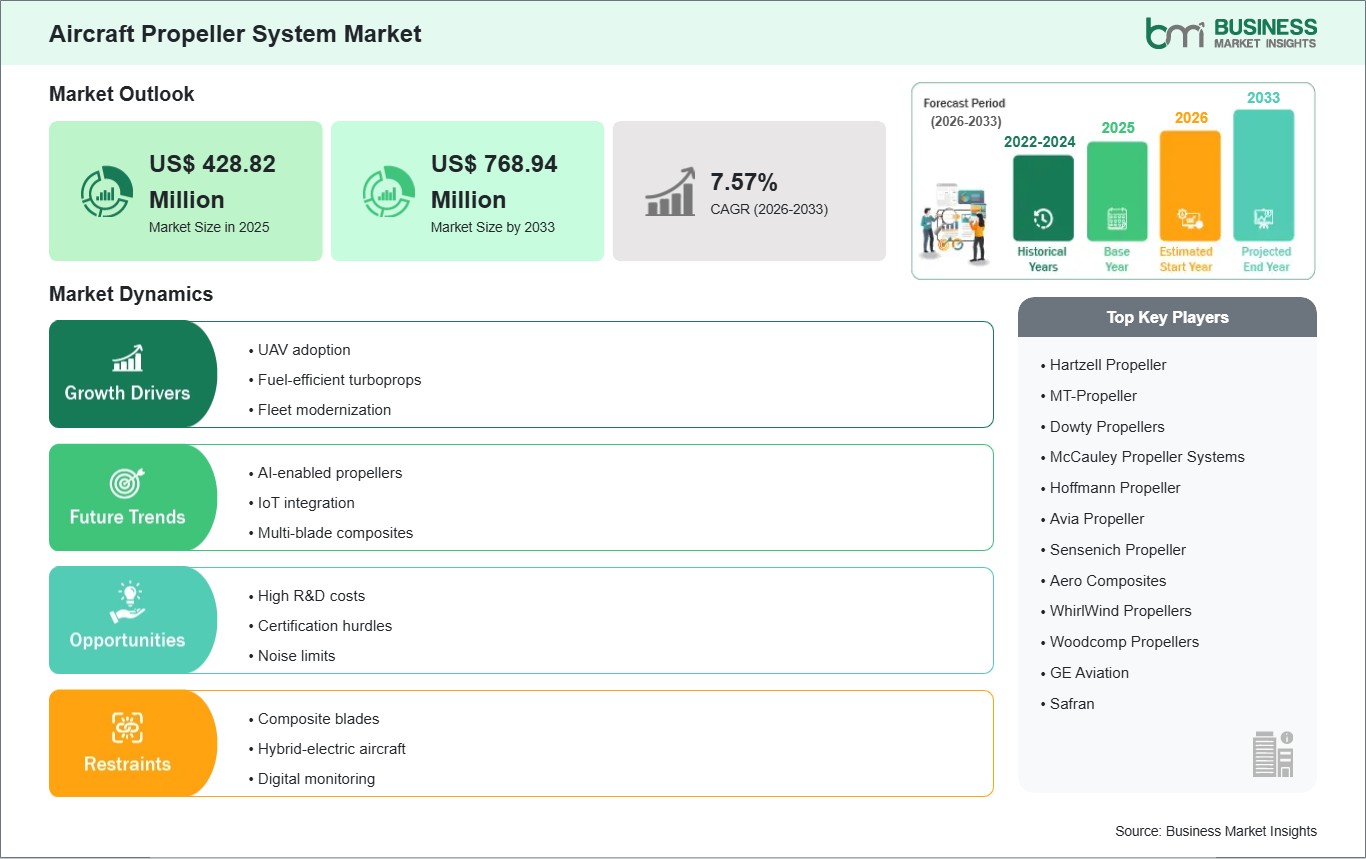
Despite these challenges, the market continues to expand due to advancements in lightweight materials, aerodynamic blade designs, and next-generation propulsion technologies. Variable pitch propeller systems are witnessing increasing adoption because they improve flight efficiency and operational flexibility across different flight conditions. The general aviation sector remains a significant user of aircraft propeller systems, while military and unmanned aircraft applications continue to generate steady demand. Hybrid and electric aircraft development programs are creating new opportunities for innovative propeller technologies designed to maximize propulsion efficiency and reduce environmental impact. Competitive activity within the market is focused on advanced composite materials, noise reduction technologies, improved blade performance, and enhanced propulsion system integration capabilities.
Segment Analysis
Aircraft Propeller System Market Segmentation
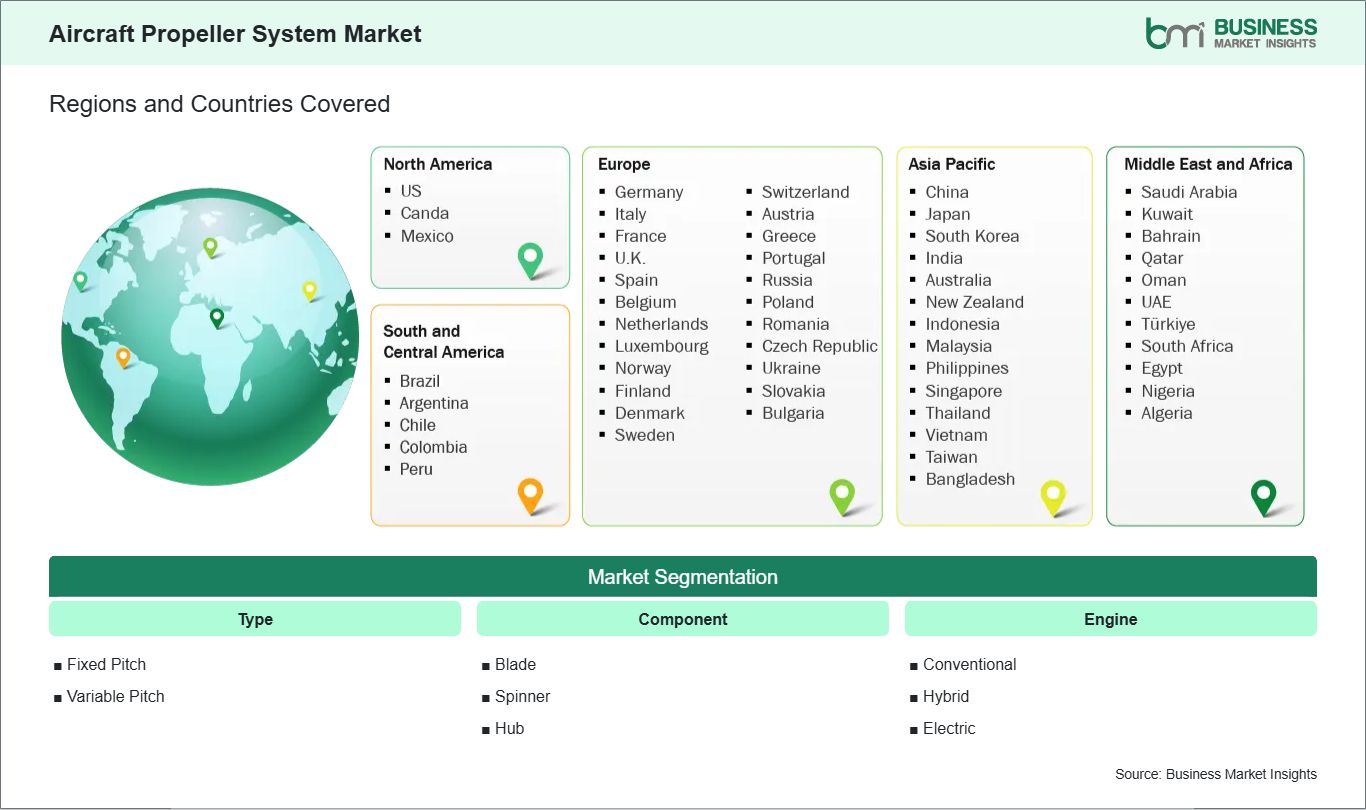
The Aircraft Propeller System market is segmented based on type, component, and engine. These segments influence propulsion efficiency, aircraft performance, and application suitability across various aviation platforms.
By Type
- Fixed Pitch: Designed with a constant blade angle and commonly used in smaller aircraft due to simplicity and lower maintenance requirements.
- Variable Pitch: Allows blade angle adjustment during flight, improving efficiency, performance, and fuel utilization across varying operating conditions.
By Component
- Blade: Generates thrust by converting rotational energy into aerodynamic force.
- Spinner: Improves aerodynamics while protecting the propeller hub assembly.
- Hub: Serves as the central structure connecting blades to the propulsion system.
By Engine
- Conventional: Widely used across traditional piston and turboprop aircraft platforms.
- Hybrid: Combines conventional and electric propulsion technologies to improve efficiency.
- Electric: Supports emerging sustainable aviation initiatives focused on reduced emissions and lower operating costs.
Market Forces
Aircraft Propeller System Market Drivers and Opportunities
Expansion of Regional Aviation and Unmanned Aircraft Operations
Growing regional air transportation networks and increasing utilization of unmanned aircraft systems are supporting demand for advanced aircraft propeller systems. Regional airlines continue to invest in turboprop aircraft because they provide cost-effective operations on short and medium-distance routes. These aircraft rely heavily on efficient propeller systems to optimize fuel consumption and operational performance. At the same time, unmanned aerial vehicles are being increasingly deployed across defense, surveillance, agriculture, infrastructure inspection, and logistics applications, creating additional demand for reliable propulsion solutions.
The use of modern technology in blade designs, the application of lightweight composites, and enhanced aerodynamics is enabling the operator to realize higher efficiency and reduced maintenance costs. Regulators focus on issues relating to safety, efficiency, and the environment, which push the manufacturers towards developing more sophisticated propulsion technologies. With regional connectivity projects growing and drone usage expanding across various industries, the demand for effective propeller systems will likely be one of the major factors driving market growth in the future.
Emerging Opportunities in Hybrid and Electric Aircraft Development
The ongoing transition toward sustainable aviation is creating significant opportunities for the Aircraft Propeller System market. Aircraft manufacturers and aviation technology developers are increasingly exploring hybrid-electric and fully electric aircraft platforms to reduce emissions and improve energy efficiency. These next-generation propulsion systems require advanced propeller technologies capable of delivering optimal performance while supporting new powertrain architectures.
Technological advancements in composite material design, aerodynamic shape design optimization, and computerized control technology are making it possible for new generation propeller designs that promise greater energy efficiency. Concepts such as urban air mobility and electric aircraft have generated interest in propulsion technologies characterized by lightweight and quiet operation. Additionally, improvements in battery technology and electric motor performance are accelerating the feasibility of electric aviation projects. As governments and aviation stakeholders continue supporting sustainable transportation initiatives, the demand for innovative propeller systems designed for hybrid and electric aircraft applications is expected to create substantial long-term growth opportunities for market participants.
Size and Share Analysis
Aircraft Propeller System Market Size and Share Analysis
The Aircraft Propeller System Market is projected to grow from US$ 428.82 Million in 2025 to US$ 768.94 Million by 2033 , registering a CAGR of 7.57% from 2026 to 2033.
By type, variable pitch propeller systems hold a significant market share due to their ability to improve efficiency and operational flexibility across different flight conditions. Fixed pitch systems continue to maintain demand in smaller aircraft categories because of their simplicity and cost-effectiveness. By component, blades account for a major share of the market due to their direct role in propulsion performance and aerodynamic efficiency.
By engine, conventional propulsion systems currently dominate market demand because of their widespread use across existing aircraft fleets. However, hybrid and electric propulsion applications are gaining increasing attention as aviation stakeholders pursue sustainable transportation solutions. Continued innovation in propulsion technologies and aircraft modernization initiatives is expected to support long-term market growth.
Report Coverage
Aircraft Propeller System Market Report Coverage and Deliverables
The "Aircraft Propeller System Size and Forecast (2022-2033)" report provides a detailed analysis of the market covering below areas:
- Aircraft Propeller System market size and forecast at global, regional, and country levels for all the key market segments covered under the scope
- Aircraft Propeller System market trends, as well as market dynamics such as drivers, restraints, and key opportunities
- Aircraft Propeller System market analysis covering key market trends, global and regional framework, major players, regulations, and recent market developments
- Industry landscape and competition analysis covering market concentration, heat map analysis, prominent players, and recent developments for the market
- Detailed company profiles, including SWOT analysis
Geographic Insights
Aircraft Propeller System Market Geographic Insights
The Aircraft Propeller System Market shows diverse regional adoption patterns influenced by aviation infrastructure development, aircraft manufacturing activities, defense requirements, and emerging sustainable aviation initiatives.
North America remains a leading market due to its established aerospace industry, strong general aviation presence, and growing investment in unmanned aircraft systems. The United States continues to drive regional demand through aircraft production activities, defense aviation programs, and ongoing research into hybrid and electric propulsion technologies. Canada also contributes through aerospace manufacturing capabilities and aviation technology development initiatives. The region benefits from advanced maintenance infrastructure, regulatory support, and continued investment in next-generation aviation platforms.
Europe represents a significant market supported by strong aerospace engineering capabilities and an increasing focus on sustainable aviation solutions. Countries such as Germany, France, and the United Kingdom continue investing in advanced aircraft technologies, electric aviation research, and regional air mobility programs. The region places considerable emphasis on environmental sustainability, encouraging the adoption of efficient propulsion systems and lightweight aircraft components. Ongoing collaboration between aerospace manufacturers, research institutions, and regulatory organizations supports innovation in propeller technologies. Growing interest in electric aircraft, urban air mobility concepts, and modern regional aviation platforms is expected to contribute to long-term market development across Europe.
Industry Activity
Recent Developments
The Aircraft Propeller System Market is analyzed using a mix of primary and secondary research sources, including corporate publications, industry associations, and verified databases. This approach ensures accurate tracking of innovation trends and strategic developments influencing the market.
- In July 2024, Hartzell Propeller announced the expansion of its propeller support and modernization capabilities for general aviation and turboprop aircraft fleets. The initiative focused on enhancing maintenance services, improving product availability, and supporting operators with upgraded propeller technologies. The development reflects growing demand for efficient and reliable propulsion systems across aviation markets.
- In October 2023, MT-Propeller received additional certifications for advanced composite propeller systems designed for various aircraft applications. The certified propeller solutions were developed to improve performance, reduce weight, and enhance operational efficiency. The development highlights ongoing innovation in lightweight composite propeller technologies within the aviation industry.
Trust & Transparency
Research Methodology
The market analysis combines proprietary research with secondary data from government agencies, company disclosures, regulatory filings, industry databases and expert interviews. Market estimates are validated through data triangulation, cross-market benchmarking and analyst
review.
View Full Research Methodology
Key Sources Referred:
World Bank - Global Trade Indicators
World Trade Organization (WTO)
International Monetary Fund (IMF)
International Trade Administration (ITA)
Company Websites
Company Annual Reports
Company Investor Presentations