Market Summary
Executive Summary and Global Market Analysis
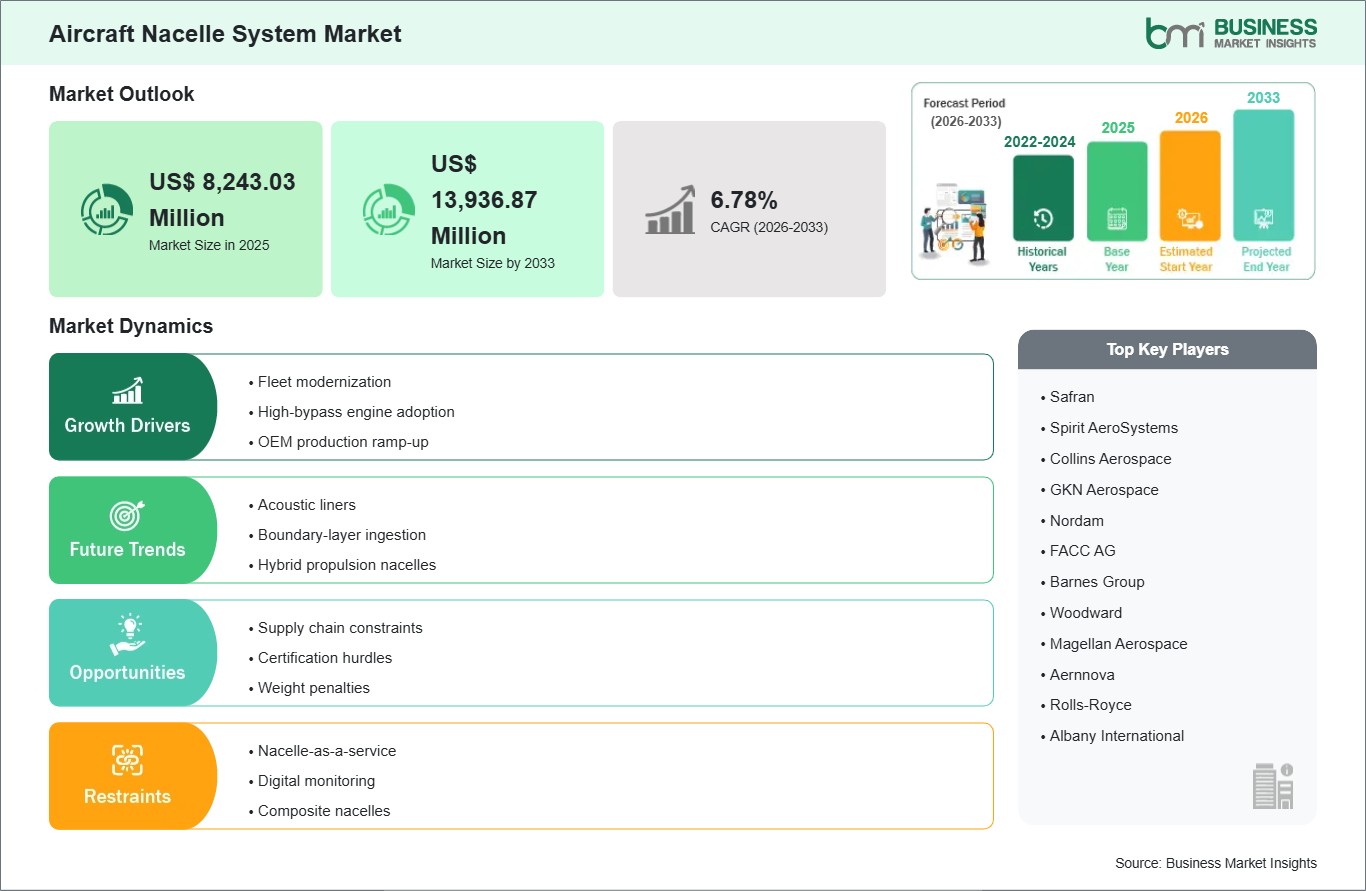
Aircraft Nacelle System refers to the aerodynamic structure that surrounds and supports an aircraft engine while contributing to engine performance, noise reduction, thrust reversal, and overall aircraft efficiency. These systems consist of components such as inlet cowls, fan cowls, thrust reversers, and exhaust systems that protect engine assemblies and improve airflow management. Growing aircraft production, increasing airline fleet expansion programs, and rising demand for fuel-efficient aircraft are supporting the adoption of advanced nacelle systems across commercial, military, and general aviation sectors. Manufacturers are increasingly focusing on lightweight materials, aerodynamic optimization, and noise reduction technologies to improve aircraft operational performance and environmental compliance.
Several operational and technical challenges continue to influence the Aircraft Nacelle System market. The development of advanced nacelle structures requires significant engineering expertise, specialized manufacturing capabilities, and extensive certification procedures. Aircraft manufacturers and suppliers often face challenges associated with material costs, complex integration requirements, and stringent aviation safety regulations. The need to balance lightweight design with structural durability and thermal resistance can also increase development complexity. In addition, fluctuations in aircraft production schedules, supply chain disruptions, and maintenance requirements may impact procurement and replacement activities across the aviation industry.
Despite these challenges, the market continues to expand due to ongoing investments in next-generation aircraft platforms and aviation modernization programs. Commercial aircraft remain the largest application segment as airlines focus on improving fuel efficiency and passenger transportation capacity. Turbofan-powered aircraft continue to drive demand due to their widespread use in commercial aviation. The adoption of advanced composite materials and acoustic technologies is increasing as manufacturers seek to reduce aircraft weight and engine noise. Competitive activity within the market is focused on lightweight nacelle architectures, advanced thrust reverser systems, improved maintenance solutions, and technologies that enhance overall aircraft performance and sustainability.
Segment Analysis
Aircraft Nacelle System Market Segmentation
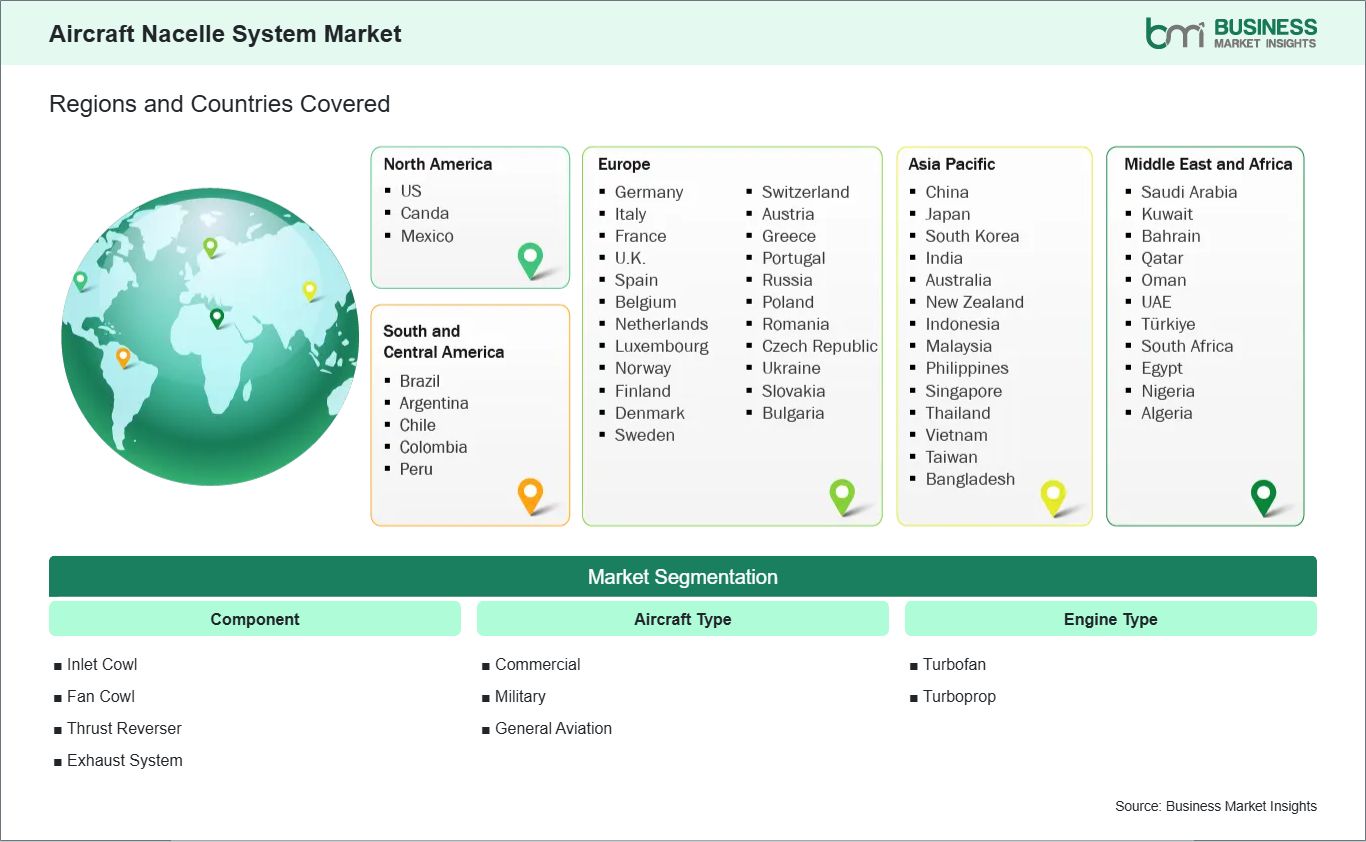
The Aircraft Nacelle System market is segmented based on component, aircraft type, and engine type. These segments influence product design, operational performance, and maintenance requirements across aviation applications.
By Component
- Inlet Cowl: Supports airflow management and engine protection during flight operations.
- Fan Cowl: Provides access for engine maintenance while protecting critical engine components.
- Thrust Reverser: Assists aircraft deceleration during landing and improves operational safety.
- Exhaust System: Helps manage engine exhaust flow, heat, and noise reduction requirements.
By Aircraft Type
- Commercial: Represents significant demand due to growing passenger air travel and fleet expansion.
- Military: Utilized in defense aircraft requiring advanced performance and durability capabilities.
- General Aviation: Supports business aviation and private aircraft operations.
By Engine Type
- Turbofan: Widely adopted in commercial aircraft due to fuel efficiency and performance advantages.
- Turboprop: Commonly used in regional and specialized aviation applications.
Market Forces
Aircraft Nacelle System Market Drivers and Opportunities
Increasing Demand for Fuel-Efficient and Lightweight Aircraft Structures
The aviation industry is continuously focused on reducing fuel consumption and improving operational efficiency. Aircraft manufacturers are increasingly adopting lightweight nacelle systems that help minimize aircraft weight while maintaining structural strength and safety performance. Advanced composite materials, aerodynamic designs, and integrated engine systems are enabling improved airflow management and reduced drag during flight operations.
Environmental regulations aimed at lowering aviation emissions are also encouraging the adoption of more efficient aircraft technologies. Airlines seek solutions that reduce operational costs while supporting sustainability objectives. Nacelle systems play a critical role in improving engine efficiency, reducing noise levels, and enhancing overall aircraft performance. Growing commercial aircraft deliveries, modernization of existing fleets, and expansion of air transportation networks continue to support demand for advanced nacelle technologies. As aircraft operators focus on long-term efficiency improvements and regulatory compliance, investments in innovative nacelle systems are expected to remain an important driver of market growth.
Advanced Materials and Next-Generation Aircraft Programs
The development of next-generation aircraft platforms is creating new opportunities for the Aircraft Nacelle System market. Manufacturers are increasingly exploring advanced composites, thermoplastic materials, and innovative acoustic technologies to improve durability, reduce maintenance requirements, and enhance fuel efficiency. These advancements support the aviation industry's efforts to meet evolving environmental and operational standards.
Emerging aircraft programs focused on sustainable aviation and improved aerodynamic performance are generating demand for advanced nacelle architectures. Increased investment in military aircraft modernization, regional aviation expansion, and business jet development is also contributing to new growth opportunities. Digital maintenance technologies and predictive monitoring solutions are becoming more integrated into nacelle support services, enabling operators to improve reliability and reduce downtime. As aviation stakeholders continue investing in advanced aircraft designs and efficient propulsion systems, opportunities for innovative nacelle technologies are expected to expand across commercial, military, and general aviation sectors.
Size and Share Analysis
Aircraft Nacelle System Market Size and Share Analysis
The Aircraft Nacelle System Market is projected to grow from US$ 8,243.03 Million in 2025 to US$ 13,936.87 Million by 2033 , registering a CAGR of 6.78% from 2026 to 2033.
By component, thrust reversers and fan cowls hold significant market shares due to their essential role in aircraft operation, safety, and maintenance activities. Inlet cowls and exhaust systems also remain important as manufacturers focus on airflow optimization and engine performance enhancement. Commercial aircraft represent a major share of market demand owing to ongoing passenger traffic growth and aircraft fleet expansion initiatives.
By aircraft type, commercial aviation remains the leading demand contributor, while military aviation supports steady adoption through modernization programs and defense procurement activities. Turbofan engines continue to dominate market demand due to their extensive use in modern passenger aircraft. Continued advancements in materials engineering, aerodynamic design, and maintenance technologies are expected to support sustained market development over the forecast period.
Report Coverage
Aircraft Nacelle System Market Report Coverage and Deliverables
The "Aircraft Nacelle System Size and Forecast (2022-2033)" report provides a detailed analysis of the market covering below areas:
- Aircraft Nacelle System market size and forecast at global, regional, and country levels for all the key market segments covered under the scope
- Aircraft Nacelle System market trends, as well as market dynamics such as drivers, restraints, and key opportunities
- Aircraft Nacelle System market analysis covering key market trends, global and regional framework, major players, regulations, and recent market developments
- Industry landscape and competition analysis covering market concentration, heat map analysis, prominent players, and recent developments for the market
- Detailed company profiles, including SWOT analysis
Geographic Insights
Aircraft Nacelle System Market Geographic Insights
The Aircraft Nacelle System Market shows diverse regional adoption patterns influenced by aircraft manufacturing activity, aviation infrastructure development, defense investments, and fleet modernization initiatives.
North America remains a mature market supported by a strong aerospace manufacturing ecosystem, advanced aircraft development programs, and extensive maintenance infrastructure. The United States continues to lead regional demand due to its large commercial aviation sector, military aircraft procurement programs, and presence of major aerospace suppliers. Canada also contributes through aerospace manufacturing activities and participation in global aircraft supply chains. Airlines and defense organizations across the region continue to invest in advanced aircraft technologies, supporting sustained demand for modern nacelle systems.
Europe represents another important market driven by aircraft production capabilities, environmental compliance requirements, and ongoing fleet modernization efforts. Countries such as France, Germany, and the United Kingdom maintain strong aerospace industries and continue investing in advanced aircraft programs. The region emphasizes lightweight materials, noise reduction technologies, and fuel-efficient aircraft designs. European airlines are actively upgrading fleets to improve operational efficiency and sustainability performance, contributing to nacelle system adoption. Strong collaboration between aerospace manufacturers, research institutions, and regulatory bodies also supports technological advancement and long-term market development across the region.
Industry Activity
Recent Developments
The Aircraft Nacelle System Market is analyzed using a mix of primary and secondary research sources, including corporate publications, industry associations, and verified databases. This approach ensures accurate tracking of innovation trends and strategic developments influencing the market.
- In March 2025, RTX Corporation announced that its Collins Aerospace business would provide nacelle systems and propulsion mounting structures for JetZero's blended wing aircraft demonstrator program. The initiative supports the development of next-generation fuel-efficient aircraft architectures and highlights continued innovation in nacelle integration technologies for future aviation platforms.
- In June 2024, Safran announced two NacelleLife service agreements with Sunclass covering Airbus A320neo and A330neo nacelles. The agreement provides access to nacelle component pools and maintenance support services, helping improve nacelle availability and operational efficiency for airline fleets. This development highlights the growing importance of lifecycle support services within the aircraft nacelle sector.
Trust & Transparency
Research Methodology
The market analysis combines proprietary research with secondary data from government agencies, company disclosures, regulatory filings, industry databases and expert interviews. Market estimates are validated through data triangulation, cross-market benchmarking and analyst
review.
View Full Research Methodology
Key Sources Referred:
World Bank - Global Trade Indicators
World Trade Organization (WTO)
International Monetary Fund (IMF)
International Trade Administration (ITA)
Company Websites
Company Annual Reports
Company Investor Presentations