
Aircraft Lavatory System Market Outlook: Size, Share, Trends, Growth Analysis, Competitive Landscape & Forecast, 2026-2033

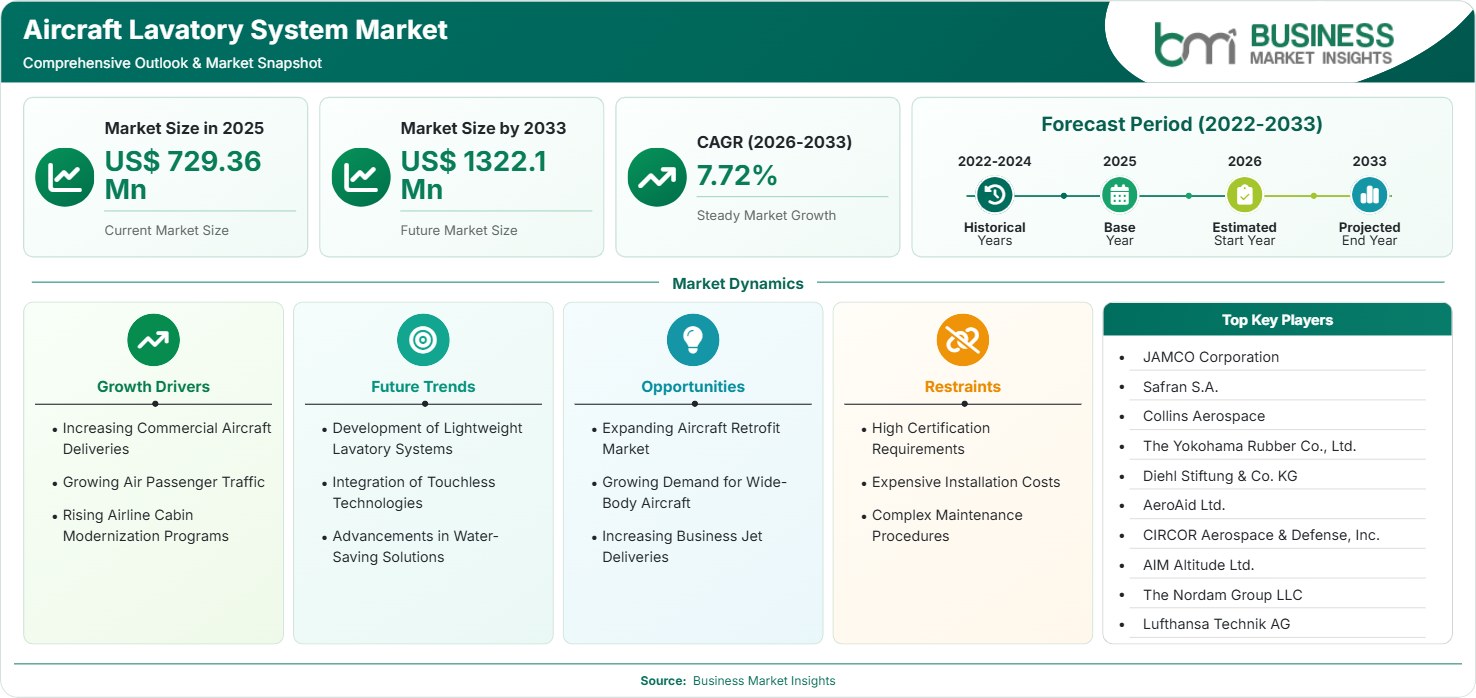
The Aircraft Lavatory System Market size was valued at US$ 729.36 Million in 2025 and is projected to reach US$ 1322.1 Million by 2033, growing at a CAGR of 7.72% during 2026–2033, driven by rising aircraft production, fleet modernization, retrofit demand, and increasing investments in lightweight, hygienic, and water-efficient cabin systems.

Report Coverage
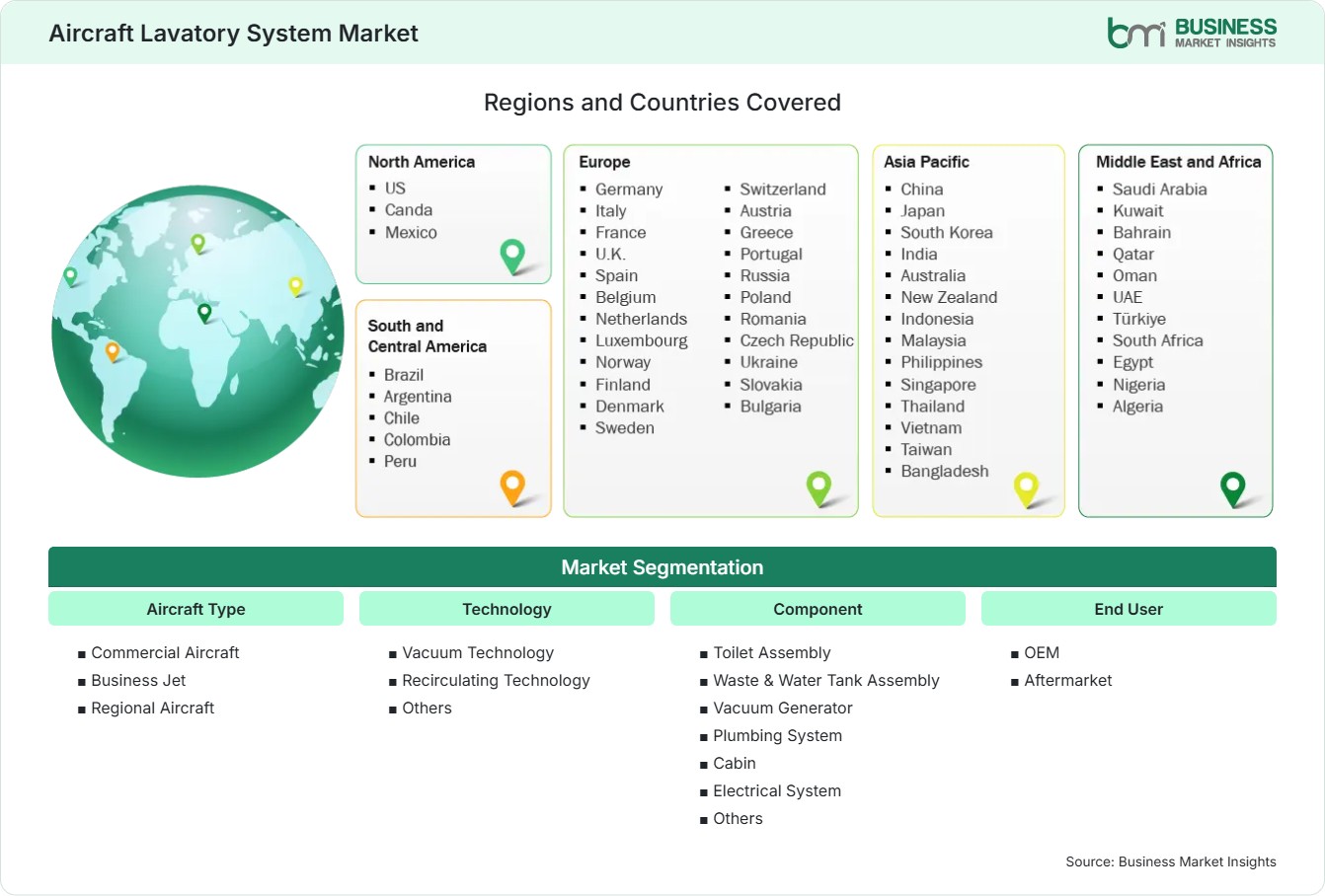
  • Aircraft Type: Commercial Aircraft, Business Jet, Regional Aircraft
  • Technology: Vacuum Technology, Recirculating Technology, Others
  • Component: Toilet Assembly, Waste & Water Tank Assembly, Vacuum Generator, Plumbing System , Cabin, Electrical System, Others
  • End User: OEM, Aftermarket
US$ 729.36 Mn Market size in 2025
US$ 1322.1 Mn Market Size by 2033
7.72% CAGR, 2026 - 2033
2026-2033 Forecast Period

AI Overview

Aircraft Lavatory System Market Summary

  • North America Region: Holds 36%–40% market share in 2025 and is projected to grow at a 7.3%–7.7% CAGR during 2026–2033, supported by aircraft manufacturing, retrofit demand, and advanced cabin technologies. The U.S. market benefits from OEM production expansion and fleet upgrades, growing at 7.4%–7.8% CAGR.
  • Fastest Growing Region: Asia Pacific accounts for 25%–29% market share in 2025 and is forecast to expand at a 8.8%–9.4% CAGR, supported by airline fleet expansion, airport infrastructure investments, and increasing aircraft deliveries.
  • Leading Segment: Commercial Aircraft represents 68%–72% market share in 2025 and is expected to register a 7.8%–8.4% CAGR, driven by rising passenger traffic, airline fleet expansion, and continuous cabin refurbishment programs.
  • High Growth Segment: Vacuum Technology holds 70%–74% market share in 2025 and is projected to grow at 8.2%–8.8% CAGR, supported by reduced water usage, weight savings, improved hygiene, and airline operational efficiency.
  • Key Market Opportunity: Expanding retrofit programs, sustainable cabin technologies, lightweight composite materials, and smart monitoring systems create significant opportunities for suppliers developing efficient, reliable, and environmentally friendly aircraft lavatory solutions globally.
  • Major Market Players: JAMCO Corporation, Safran S.A., Collins Aerospace, The Yokohama Rubber Co., Ltd., Diehl Stiftung & Co. KG, AeroAid Ltd., CIRCOR Aerospace & Defense, Inc., AIM Altitude Ltd., The Nordam Group LLC, Lufthansa Technik AG.
Strategic Insights

Aircraft Lavatory System Market: Strategic Insights

Aircraft Lavatory System Market Strategic Framework
FREE PDF
Request your free sample
Request free sample
Stakeholder View

Key Takeaways

  • Commercial aircraft OEMs and cabin integrators continue strengthening supplier partnerships to improve production efficiency, reduce component weight, and integrate sustainable cabin solutions across new aircraft platforms.
  • Retrofit activities offer attractive long-term revenue opportunities as airlines prioritize passenger comfort, hygiene improvements, and compliance with evolving operational and environmental standards.
  • Digital diagnostics, predictive maintenance, touchless technologies, and lightweight composite materials will remain the principal innovation priorities for aircraft cabin equipment manufacturers.
  • Asia Pacific presents the strongest investment opportunity due to expanding airline fleets, regional aircraft procurement, airport infrastructure development, and rapidly growing passenger demand.
  • Strategic collaborations between OEMs, maintenance providers, and component manufacturers are accelerating product innovation while strengthening aftermarket support capabilities.
Geographic Outlook

Aircraft Lavatory System Market Regional Highlights

North America Aircraft Lavatory System Market

North America accounted for 36%–40% of the market share in 2025 and is projected to expand at a 7.3%–7.7% CAGR during 2026–2033. The region benefits from strong commercial aircraft manufacturing, established aerospace supply chains, extensive retrofit activities, and continuous airline investments in cabin modernization. The Aircraft Lavatory System Market share remains highest in North America because of sustained aircraft deliveries and aftermarket demand.

  • The United States leads regional demand through Boeing production programs, extensive airline fleet modernization, and strong investments in premium cabin upgrades supporting advanced lavatory installations.
  • Airlines increasingly adopt touchless flushing systems, antimicrobial cabin surfaces, and lightweight composite assemblies to improve passenger hygiene while reducing aircraft operating weight and maintenance costs.
  • Major MRO providers continue expanding retrofit capabilities for narrow-body and wide-body fleets, creating recurring demand for replacement lavatory modules and plumbing assemblies.
  • Digital predictive maintenance platforms improve system monitoring, enabling airlines to reduce unexpected maintenance events and optimize aircraft availability.

US Aircraft Lavatory System Market

The U.S. Aircraft Lavatory System Market represented 74%–78% of North America's market in 2025 and is anticipated to register a 7.4%–7.8% CAGR during 2026–2033. Aircraft production, cabin refurbishment programs, and a large installed fleet continue driving demand. Airlines increasingly prioritize sustainable cabin equipment that lowers water consumption, reduces aircraft weight, and enhances passenger experience across domestic and international operations.

  • Boeing manufacturing activity continues supporting demand for advanced lavatory modules integrated into new commercial aircraft deliveries.
  • Airlines are investing in premium cabin refurbishment programs incorporating contactless lavatory technologies and enhanced sanitation systems.
  • Strong MRO infrastructure supports recurring replacement of plumbing systems, waste tanks, and vacuum components throughout aircraft service life.
  • Business jet manufacturers increasingly integrate customized lavatory interiors featuring lightweight materials and premium cabin aesthetics.

Europe Aircraft Lavatory System Market

Europe held 28%–32% market share in 2025 and Aircraft Lavatory System Market trend to grow at a 7.6%–8.1% CAGR through 2026–2033. The region benefits from Airbus production, stringent environmental regulations, and continuous airline investments in sustainable aircraft interiors. Germany, France, and the United Kingdom remain major manufacturing hubs, while Eastern European maintenance facilities strengthen regional aftermarket capabilities through competitive MRO services.

  • Germany leads regional manufacturing with strong aerospace engineering capabilities and expanding aircraft systems integration activities supporting OEM production.
  • France benefits from Airbus assembly programs, encouraging suppliers to develop lightweight lavatory systems with improved operational efficiency.
  • The United Kingdom records one of the fastest retrofit markets as airlines modernize aging fleets with water-efficient and digitally monitored cabin equipment.
  • Sustainability initiatives encourage manufacturers to introduce recyclable materials, lower-emission manufacturing processes, and environmentally responsible cabin technologies.
  • Expanding European MRO networks create consistent demand for replacement plumbing systems, vacuum generators, and toilet assemblies.

Asia Pacific Aircraft Lavatory System Market

Asia Pacific accounted for 25%–29% of global revenue in 2025 and is expected to register the fastest expansion at 8.8%–9.4% CAGR during 2026–2033. Rapid airline fleet expansion, rising passenger traffic, airport development, and increasing domestic aircraft procurement continue supporting regional growth. China dominates regional demand, while India records the fastest expansion owing to aggressive fleet acquisition and aviation infrastructure investments.

  • China remains the largest regional aviation market due to commercial aircraft procurement, airline expansion, and domestic aerospace manufacturing development.
  • India demonstrates the fastest growth as airlines expand fleets, increase international connectivity, and invest heavily in cabin modernization.
  • Southeast Asian carriers continue purchasing fuel-efficient aircraft equipped with lightweight vacuum lavatory systems supporting operational savings.
  • Regional governments support airport expansion projects, encouraging long-term investments across commercial aviation infrastructure.
  • Growing regional MRO capabilities strengthen aftermarket demand for replacement lavatory assemblies and maintenance services.

Rest of World Aircraft Lavatory System Market

Rest of World represented 8%–11% market share in 2025 and is projected to grow at a 7.5%–8.0% CAGR during 2026–2033. South & Central America benefit from gradual airline fleet renewal and expanding regional connectivity. Meanwhile, Middle East & Africa continue investing in premium aviation infrastructure, wide-body aircraft procurement, and airline expansion strategies supporting demand for advanced aircraft cabin systems.

  • Brazil leads South & Central America through commercial aviation expansion and modernization of regional airline fleets.
  • Mexico continues strengthening aircraft maintenance capabilities, supporting aftermarket demand for lavatory replacement components.
  • The UAE dominates Middle Eastern demand through premium airline expansion and continuous wide-body aircraft acquisitions.
  • Saudi Arabia records strong growth driven by aviation diversification strategies and significant airport infrastructure investments.
  • African aviation modernization programs gradually increase demand for efficient cabin equipment across commercial airline fleets.
Global Market Geography
FREE PDF
Request your free sample
Request free sample
Segment Analysis

Aircraft Lavatory System Market Segmentation

Aircraft Type

Aircraft type segmentation reflects demand across commercial aviation, business aviation, and regional air transport. Commercial aircraft remain the dominant category due to higher production volumes, fleet expansion, and cabin refurbishment activities. The Aircraft Lavatory System Market scope continues expanding with airline investments in passenger comfort and lightweight cabin systems. Commercial aircraft accounted for 68%–72% market share in 2025 and are projected to grow at a 7.8%–8.4% CAGR during 2026–2033.

  • Commercial Aircraft: Commercial aircraft generate the highest demand through continuous fleet expansion, new aircraft deliveries, retrofit programs, and increasing installation of lightweight, hygienic, and digitally monitored lavatory systems.
  • Business Jet: Business jets increasingly adopt premium lavatory interiors featuring compact layouts, lightweight materials, touchless fixtures, and customized cabin solutions enhancing passenger comfort and operational efficiency.
  • Regional Aircraft: Regional aircraft utilize space-efficient lavatory systems designed to maximize cabin utilization while maintaining reliability, reduced maintenance requirements, and compliance with aviation safety standards.

Technology

Technology segmentation is driven by efficiency, water conservation, and maintenance performance. Vacuum technology dominates owing to reduced water usage, lower aircraft weight, and superior waste management efficiency compared with traditional systems. Vacuum technology represented 70%–74% of the market in 2025 and is expected to expand at a 8.2%–8.8% CAGR during 2026–2033 as airlines increasingly prioritize operational efficiency.

  • Vacuum Technology: Vacuum systems reduce water consumption, minimize aircraft weight, improve waste disposal efficiency, and lower maintenance frequency, making them the preferred technology across modern commercial aircraft fleets.
  • Recirculating Technology: Recirculating systems continue serving selected regional and legacy aircraft where replacement economics, operational familiarity, and existing infrastructure support continued utilization.

Component

Component segmentation highlights the integration of multiple systems required for reliable lavatory operation. Toilet assemblies represent the largest component category owing to mandatory installation across every aircraft. Continuous technological improvements enhance hygiene, reduce maintenance, and optimize cabin space utilization. Toilet assemblies accounted for 27%–31% market share in 2025 and are projected to register a 7.9%–8.5% CAGR during 2026–2033.

  • Toilet Assembly: Toilet assemblies combine lightweight structures, advanced flushing technologies, durable materials, and ergonomic designs to improve passenger experience while reducing maintenance and operational costs.
  • Waste & Water Tank Assembly: Waste and water tank assemblies ensure efficient fluid storage, simplified servicing, corrosion resistance, and compliance with aviation sanitation requirements.
  • Vacuum Generator: Vacuum generators create reliable pressure differentials supporting efficient waste removal while minimizing water consumption and supporting consistent aircraft lavatory performance.
  • Plumbing System (Flush Line and Drain Line): Plumbing systems facilitate efficient water distribution and waste transport using lightweight, corrosion-resistant materials designed for long operational service life.
  • Cabin: Cabin structures surrounding lavatory modules utilize lightweight composite materials, maximizing available passenger space while improving durability and simplifying maintenance activities.
  • Electrical System: Electrical systems support automated flushing, lighting, monitoring sensors, occupancy indicators, and integrated diagnostics that improve reliability and maintenance efficiency.

End User

End-user segmentation reflects demand from aircraft manufacturers and aftermarket service providers. OEM installations dominate through continuous commercial aircraft production, while aftermarket demand expands with retrofit programs and fleet maintenance activities. OEM accounted for 60%–64% market share in 2025 and is forecast to grow at a 7.6%–8.2% CAGR between 2026–2033, supported by increasing aircraft deliveries worldwide.

  • OEM: Original equipment manufacturers integrate advanced lavatory systems into new aircraft, emphasizing lightweight construction, digital monitoring capabilities, and compliance with evolving aviation standards.
  • Aftermarket: Aftermarket providers support replacement, refurbishment, upgrades, and maintenance services, helping airlines extend fleet life while improving passenger comfort and operational reliability.
Market Forces

Aircraft Lavatory System Market Dynamics

Key Market Drivers

Increasing Commercial Aircraft Deliveries

Commercial aircraft production continues to accelerate as airlines expand fleets to meet rising passenger demand and replace aging aircraft. Trends in the global aviation industry have revealed that there are large orders from manufacturers in support of growth in production for the future. The Aircraft Lavatory System Market growth is driven by the delivery of new aircraft since each commercial aircraft needs a reliable lavatory system. Original equipment manufacturers (OEMs) have been working hand-in-hand with cabin equipment manufacturers to develop more modular, lighter weight and digitally monitored lavatory systems to reduce maintenance and operational costs. There are constant investments in the development of fuel-efficient aircraft types.

Growing Air Passenger Traffic

The global Aircraft Lavatory System Market is witnessing growth through the recovery of tourism, international business travel, and connectivity within developed and developing nations. Airlines are improving the usage of their aircraft while making investments in the development of improved passenger experience through cabin upgrade programs. Modern toilet systems equipped with features such as touchless flushes, antimicrobial surfaces, better ventilation, and improved water flushing mechanisms assist airlines in satisfying the needs of passengers. Increased frequency of flights leads to greater maintenance, which helps operators invest in durable systems that possess the ability for predictive monitoring.

Rising Airline Cabin Modernization Programs

Despite the ongoing advancements in cabin refurbishment initiatives, airlines are constantly looking at ways to make their cabins more comfortable, efficient, and distinguishable. Lavatory improvements are an important part of this process since they help improve hygienic conditions, accessibility and, in general, the appearance of the cabin interior. Using lightweight components, efficient plumbing systems, economical electrical installations, and occupancy sensors helps cut costs and increase customer satisfaction. Modernization efforts are gaining momentum in mature air travel markets where airlines prefer extending aircrafts' lifespans instead of updating their fleets immediately.

Key Market Opportunities

Expanding Aircraft Retrofit Market

The expanding global aircraft retrofit industry creates significant opportunities for suppliers of modular lavatory systems and replacement components. The aviation industry is gradually integrating new assemblies that include lightweight components, touch-free fittings, plumbing systems, and digital health monitoring systems in its existing aircraft fleet. Retrofitting requires a smaller initial investment compared to replacing the whole fleet and offers increased passenger comfort and compliance with regulations. The Aircraft Lavatory System Market Forecasts show that more investment will be made in retrofit programs in order to increase efficiency and sustainability.

Growing Demand for Wide-Body Aircraft

The deliveries of wide-body aircraft are on the rise due to the rise in international flights and development of route networks of airlines. The aircraft need more than one lavatory module that requires durability, sophisticated waste disposal units, and better space management. Additionally, the premium class passengers will demand custom-made lavatories that provide comfort and access to passengers. Those manufacturers who manufacture lavatory modules that are light weight and technologically sophisticated will enjoy greater demand from OEMs as well as airlines.

Increasing Business Jet Deliveries

Expansion in the business Aircraft Lavatory System Market is driven by an increasing demand for corporate travel and private chartering services as well as the affluent passengers. Manufacturers of business jets focus on designing their aircraft with premium interior design with small but luxurious lavatories designed using modern materials and technology as well as customizable lavatory systems. The operators of such aircraft prefer those with light weight and those that utilize the maximum cabin space with reduced need for maintenance.

Market Restraints and Challenges

High Certification Requirements

Factor: Aircraft lavatory systems must comply with rigorous aviation certification requirements covering structural integrity, fire safety, sanitation, reliability, and environmental performance before installation on commercial aircraft. Impact: Lengthy certification procedures increase development costs, delay product commercialization, and require extensive testing for every design modification. Smaller suppliers often face barriers entering the market because certification expenses consume significant engineering and financial resources. Regulatory compliance across multiple aviation authorities also increases documentation complexity and extends product development timelines.

Expensive Installation Costs

Factor: Advanced lavatory systems incorporate lightweight composites, automated controls, vacuum technologies, sophisticated plumbing assemblies, and integrated electrical systems that increase installation complexity and procurement costs. Impact: High initial investment discourages smaller airlines from immediate upgrades and extends replacement cycles for existing fleets. Retrofit activities may require aircraft downtime, additional engineering modifications, and certification approvals, increasing total ownership costs. These financial constraints particularly affect cost-sensitive operators despite the long-term operational savings delivered by modern lavatory technologies.

Company Analysis

Competitive Landscape

The Aircraft Lavatory System Market analysis reflects competition centered on lightweight engineering, cabin integration capabilities, sustainability, aftermarket support, and compliance with stringent aviation certification standards. Manufacturers continue investing in modular designs, touchless technologies, predictive maintenance solutions, and water-efficient systems to strengthen long-term partnerships with aircraft OEMs and airline operators.

Company Name

Overview

Products and Services Relevant to this Market

JAMCO Corporation

Japanese aerospace interiors manufacturer specializing in aircraft cabin equipment for leading commercial aircraft OEMs and global airlines.

Aircraft lavatories, galley systems, passenger service units, cabin monuments, interior refurbishment solutions, and aftermarket support services.

Safran S.A.

Global aerospace supplier delivering aircraft equipment, propulsion, and cabin interior technologies across commercial and defense aviation.

Vacuum lavatory systems, cabin equipment, water and waste systems, lightweight aircraft interiors, and integrated support services.

Collins Aerospace

Leading aerospace systems provider offering integrated aircraft technologies for commercial, military, and business aviation markets worldwide.

Aircraft lavatories, cabin interior systems, environmental control solutions, digital monitoring technologies, and aftermarket maintenance services.

The Yokohama Rubber Co., Ltd.

Diversified industrial manufacturer supplying aerospace components alongside advanced rubber and composite technologies.

Aircraft water systems, lavatory components, seals, hoses, fluid transfer systems, and aerospace maintenance products.

Diehl Stiftung & Co. KG

German aerospace technology company delivering cabin systems and integrated aircraft interior solutions for major OEMs.

Aircraft lavatories, cabin monuments, lighting systems, passenger service units, and lightweight interior assemblies.

AeroAid Ltd.

Aviation engineering company focused on specialized aircraft cabin equipment and maintenance support solutions.

Lavatory components, retrofit engineering, maintenance support, spare parts, and customized aircraft interior solutions.

CIRCOR Aerospace & Defense, Inc.

Aerospace fluid control specialist supplying precision-engineered components for commercial and defense aircraft applications.

Fluid control valves, plumbing assemblies, pumps, pressure control systems, and aerospace fluid management technologies.

AIM Altitude Ltd.

Aircraft cabin interiors specialist providing customized premium cabin solutions for airlines and business aviation customers.

Lavatory interiors, monuments, premium cabin furnishings, refurbishment programs, and customized aircraft interior systems.

The Nordam Group LLC

Aerospace manufacturing and repair company supporting aircraft structures, interiors, and aftermarket services globally.

Aircraft interiors, repair services, composite structures, cabin components, and retrofit engineering solutions.

Lufthansa Technik AG

Global MRO provider delivering engineering, maintenance, refurbishment, and aircraft modification services for commercial aviation.

Cabin modernization, lavatory refurbishment, engineering services, component maintenance, and integrated aftermarket support.

Trust & Transparency

Research Methodology

The market analysis combines proprietary research with secondary data from government agencies, company disclosures, regulatory filings, industry databases and expert interviews. Market estimates are validated through data triangulation, cross-market benchmarking and analyst review.

View Full Research Methodology

Questions Answered

Frequently Asked Questions

What challenges affect market expansion?

Major challenges include stringent aviation certification requirements, high installation and retrofit costs, extended product qualification timelines, and the need for continuous technological innovation to satisfy evolving airline and regulatory requirements.

Which region offers the strongest future growth opportunities according to the Aircraft Lavatory System Market Report?

Asia Pacific is expected to deliver the strongest long-term growth owing to rapid airline expansion, rising aircraft procurement, airport infrastructure investments, increasing passenger traffic, and expanding regional maintenance capabilities.

How do vacuum lavatory systems benefit airlines?

Vacuum systems reduce water consumption, decrease aircraft weight, improve waste management efficiency, lower maintenance requirements, and contribute to reduced operating costs while enhancing passenger hygiene and environmental sustainability.

Which aircraft segment generates the highest demand?

Commercial aircraft account for the largest demand because of higher production volumes, expanding airline fleets, frequent cabin refurbishment programs, and continuous investment in passenger comfort and operational efficiency.

What is driving demand for aircraft lavatory systems?

Demand is primarily supported by increasing commercial aircraft deliveries, airline cabin modernization programs, expanding retrofit activities, rising air passenger traffic, and growing adoption of lightweight, water-efficient, and digitally monitored cabin equipment.

Access the Full Aircraft Lavatory System Market Report

Get segment-level forecasts, regional estimates, competitive benchmarking, company profiles and downloadable Excel datasets.

Access the full Aircraft Lavatory System Market Report
350 pages PDF & Excel | 2026-08-18