Market Summary
Executive Summary and Global Market Analysis
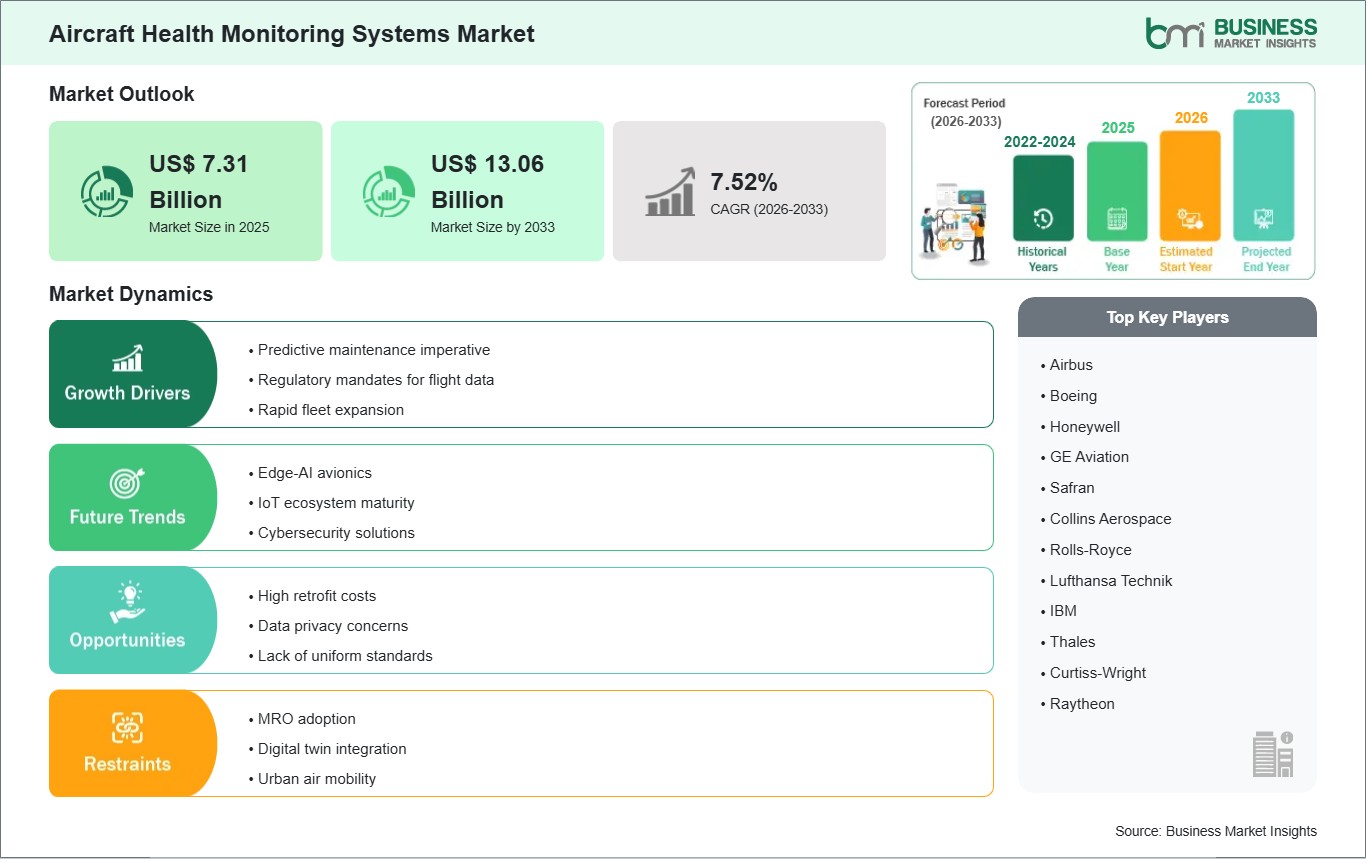
Aircraft health monitoring systems are used to continuously assess the condition and performance of aircraft components and systems during operation. These systems collect and analyze data from engines, structures, avionics, and other critical subsystems to identify potential issues before they lead to failures. They help airlines, maintenance providers, and aircraft manufacturers improve safety, reduce maintenance costs, and enhance operational efficiency. The market is growing as airlines seek to reduce unscheduled downtime, improve fleet reliability, and adopt predictive maintenance practices. Advances in sensors, connectivity technologies, and real-time data analytics are also supporting wider adoption across commercial and military aviation sectors.
There are several challenges that may limit market growth. The implementation of advanced monitoring systems requires significant investment in hardware, software, and data infrastructure. Integrating health monitoring platforms with existing aircraft systems can be complex, particularly for older fleets. Data management and cybersecurity concerns also create operational challenges as aircraft generate increasing volumes of information. In addition, regulatory certification requirements and the need for skilled personnel to interpret system outputs can increase deployment costs and implementation timelines. These factors may slow adoption among some operators, especially those managing budget constraints.
Despite these challenges, the market is expected to benefit from the aviation industry's continued shift toward predictive and condition-based maintenance. Emerging technologies such as artificial intelligence, machine learning, and digital twins are creating new opportunities for more accurate fault detection and maintenance planning. Increased use of connected aircraft platforms and cloud-based analytics solutions is improving fleet visibility and operational decision-making. Airlines, OEMs, and maintenance organizations are investing in advanced monitoring capabilities to improve aircraft availability and optimize maintenance schedules. These trends are expected to support long-term growth in the Aircraft Health Monitoring Systems market.
Segment Analysis
Aircraft Health Monitoring Systems Market Segmentation
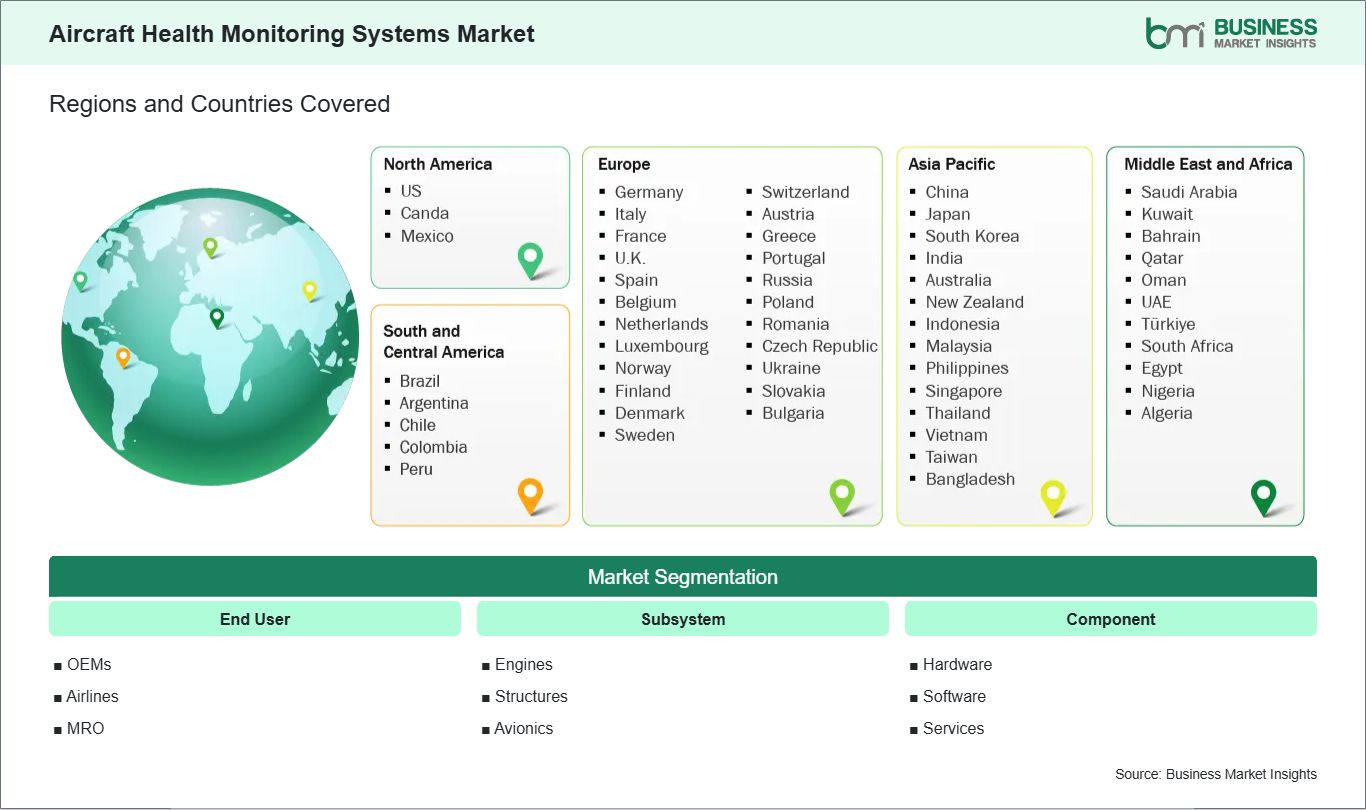
The Aircraft Health Monitoring Systems market is segmented based on end-user, subsystem, and component, reflecting the industry's growing focus on predictive maintenance and operational efficiency.
By End-User
- OEMs: Utilize health monitoring systems to improve aircraft design validation and lifecycle support.
- Airlines: Adopt monitoring solutions to reduce downtime and optimize maintenance planning.
- MRO: Use real-time aircraft condition data to improve maintenance efficiency and service quality.
By Subsystem
- Engines: Represent a major area of monitoring due to their critical role in aircraft performance and safety.
- Structures: Support continuous assessment of airframe integrity and fatigue management.
- Avionics: Help maintain reliability and performance of navigation, communication, and control systems.
By Component
- Hardware: Includes sensors, processors, and communication devices used for data collection.
- Software: Enables data analysis, diagnostics, and predictive maintenance functions.
- Services: Support system integration, maintenance, training, and technical assistance.
Market Forces
Aircraft Health Monitoring Systems Market Drivers and Opportunities
Rising Demand for Predictive Maintenance in Aviation
The aviation industry is increasingly focusing on predictive maintenance to improve operational efficiency and reduce unexpected aircraft downtime. Aircraft operators are moving away from traditional scheduled maintenance approaches and adopting condition-based maintenance strategies that rely on real-time health monitoring data. This transition is supported by advancements in sensors, onboard diagnostics, and data analytics technologies.
Health monitoring systems enable operators to identify component degradation at an early stage, allowing maintenance activities to be planned more effectively. This improves aircraft availability, reduces maintenance-related disruptions, and supports better utilization of fleet assets. Regulatory authorities also continue to emphasize safety and reliability, encouraging the use of advanced monitoring technologies throughout aircraft lifecycles.
As airlines face increasing pressure to control operating costs while maintaining high safety standards, demand for aircraft health monitoring systems continues to expand. The ability to improve maintenance efficiency, reduce operational risks, and enhance aircraft performance makes these systems an important part of modern aviation operations.
Expansion of Digital Aviation and Connected Aircraft Technologies
The growing adoption of digital aviation technologies is creating significant opportunities for the Aircraft Health Monitoring Systems market. Airlines and maintenance organizations are increasingly investing in connected aircraft platforms that allow continuous transmission and analysis of operational data. This digital transformation is enabling more accurate monitoring of aircraft conditions and supporting faster maintenance decision-making.
Artificial intelligence and machine learning technologies are enhancing the ability of monitoring systems to detect patterns, predict failures, and optimize maintenance schedules. The development of digital twin technologies is also allowing operators to simulate aircraft performance and evaluate maintenance requirements more effectively. Cloud-based platforms further improve accessibility to maintenance data across global fleets.
As aircraft become more connected and data-driven, health monitoring systems are expected to play a larger role in aviation operations. The integration of advanced analytics, automation, and digital maintenance platforms is likely to create new growth opportunities while improving overall fleet reliability and operational performance.
Size and Share Analysis
Aircraft Health Monitoring Systems Market Size and Share Analysis
The Aircraft Health Monitoring Systems Market is projected to grow from US$ 7.31 Billion in 2025 to US$ 13.06 Billion by 2033 , registering a CAGR of 7.52% from 2026 to 2033.
By end-user, airlines account for a significant share of the market due to their continuous focus on reducing operational disruptions, improving fleet availability, and implementing predictive maintenance strategies. OEMs continue to expand adoption by integrating monitoring capabilities into new aircraft platforms, while MRO organizations increasingly utilize health monitoring solutions to improve maintenance planning and service efficiency.
By subsystem, engines represent a major segment because engine performance and reliability directly influence aircraft safety and operational costs. Structural monitoring is becoming increasingly important for extending aircraft lifespan and improving inspection processes, while avionics monitoring supports the reliability of critical communication, navigation, and flight management systems.
Report Coverage
Aircraft Health Monitoring Systems Market Report Coverage and Deliverables
The "Aircraft Health Monitoring Systems Size and Forecast (2022-2033)" report provides a detailed analysis of the market covering below areas:
- Aircraft Health Monitoring Systems Market size and forecast at global, regional, and country levels for all the key market segments covered under the scope
- Aircraft Health Monitoring Systems Market trends, as well as market dynamics such as drivers, restraints, and key opportunities
- Aircraft Health Monitoring Systems Market analysis covering key market trends, global and regional framework, major players, regulations, and recent market developments
- Industry landscape and competition analysis covering market concentration, heat map analysis, prominent players, and recent developments for the market
- Detailed company profiles, including SWOT analysis
Geographic Insights
Aircraft Health Monitoring Systems Market Geographic Insights
The Aircraft Health Monitoring Systems Market shows diverse regional adoption patterns influenced by fleet modernization programs, aviation safety requirements, and increasing adoption of predictive maintenance technologies.
North America, being a developed region, has a mature aviation ecosystem and a high level of adoption of advanced aircraft monitoring technologies. The region comprises the United States and Canada, where airlines, aircraft manufacturers, and maintenance providers continue to invest in digital aviation solutions. The region focuses on improving aircraft reliability, reducing operational disruptions, and enhancing maintenance efficiency through advanced analytics and connected aircraft technologies. Strong regulatory oversight and established aviation infrastructure support widespread implementation of aircraft health monitoring systems across commercial and defense aviation sectors.
Asia Pacific is growing significantly, driven by expanding airline fleets, rising air passenger traffic, and increasing investments in aviation infrastructure. The region comprises countries such as China, India, and Japan, where airlines are adopting advanced monitoring systems to improve operational performance and fleet management. The region focuses on modernization of aviation infrastructure and implementation of digital maintenance practices. Growing aircraft deliveries and the expansion of maintenance capabilities are creating favorable conditions for the adoption of aircraft health monitoring solutions across the region.
Both regions are contributing significantly to the growth of the Aircraft Health Monitoring Systems Market, focusing on fleet modernization, operational efficiency improvements, and the increasing adoption of predictive maintenance technologies.
Industry Activity
Recent Developments
The Aircraft Health Monitoring Systems Market is analyzed using a mix of primary and secondary research sources, including corporate publications, industry associations, and verified databases. This approach ensures accurate tracking of innovation trends and strategic developments influencing the market.
- In July 2024, Airbus expanded the capabilities of its Skywise predictive maintenance platform with enhanced aircraft health monitoring and maintenance analytics functions. The development supports airline efforts to improve fleet reliability, reduce maintenance disruptions, and optimize operational performance.
- In February 2024, Boeing accelerated the expansion of its digital aviation services portfolio through enhanced predictive maintenance and aircraft health management solutions. These technologies help operators monitor aircraft systems more effectively and improve maintenance planning across fleets.
Trust & Transparency
Research Methodology
The market analysis combines proprietary research with secondary data from government agencies, company disclosures, regulatory filings, industry databases and expert interviews. Market estimates are validated through data triangulation, cross-market benchmarking and analyst
review.
View Full Research Methodology
Key Sources Referred:
World Bank - Global Trade Indicators
World Trade Organization (WTO)
International Monetary Fund (IMF)
International Trade Administration (ITA)
Company Websites
Company Annual Reports
Company Investor Presentations