
Aircraft Component Mro Market Outlook: Size, Share, Trends, Growth Analysis, Competitive Landscape & Forecast, 2026-2033

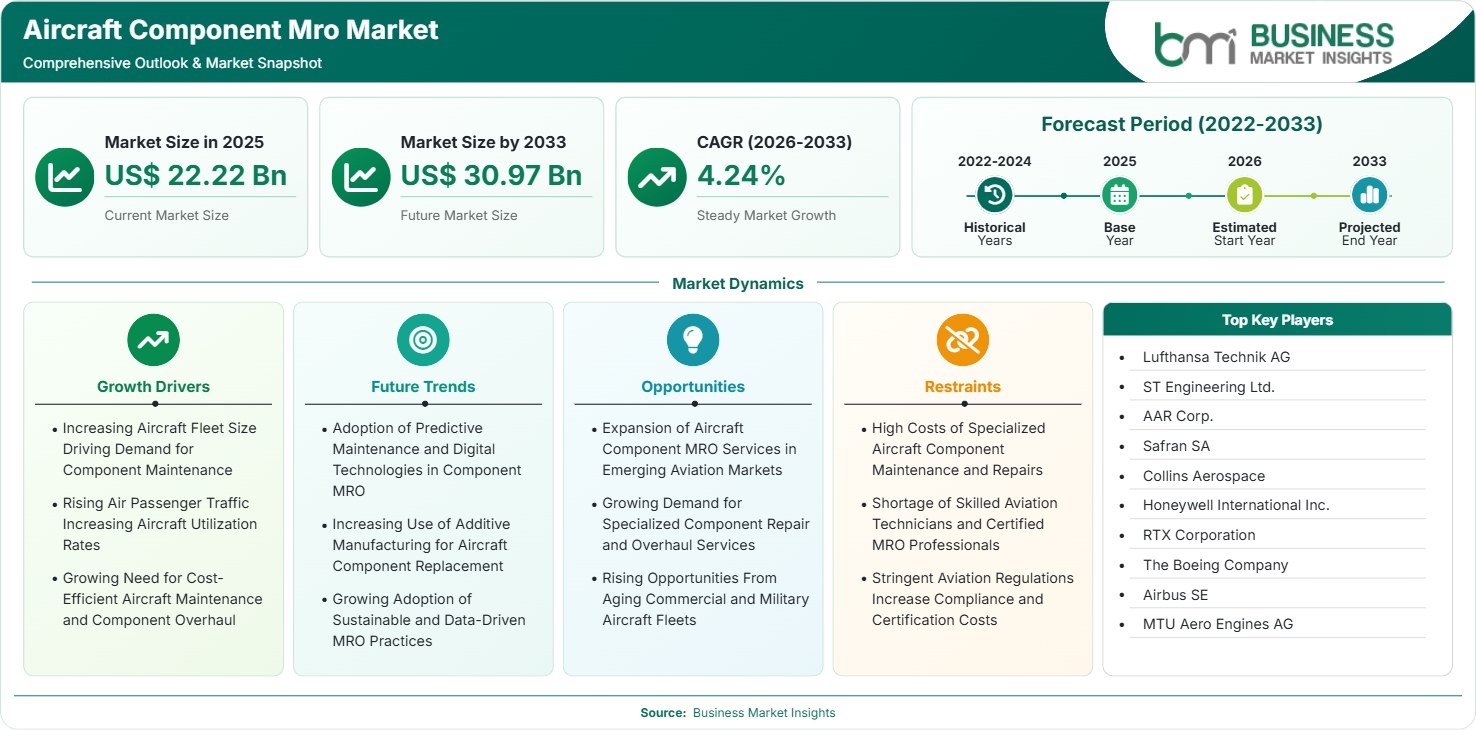
The Aircraft Component Mro Market size was valued at US$ 22.22 billion in 2025 and is projected to reach US$ 30.97 billion by 2033, growing at a CAGR of 4.24% during 2026–2033, driven by expanding aircraft fleets, rising utilization, aging aircraft, specialized repair requirements, and demand for cost-efficient maintenance solutions.

Report Coverage
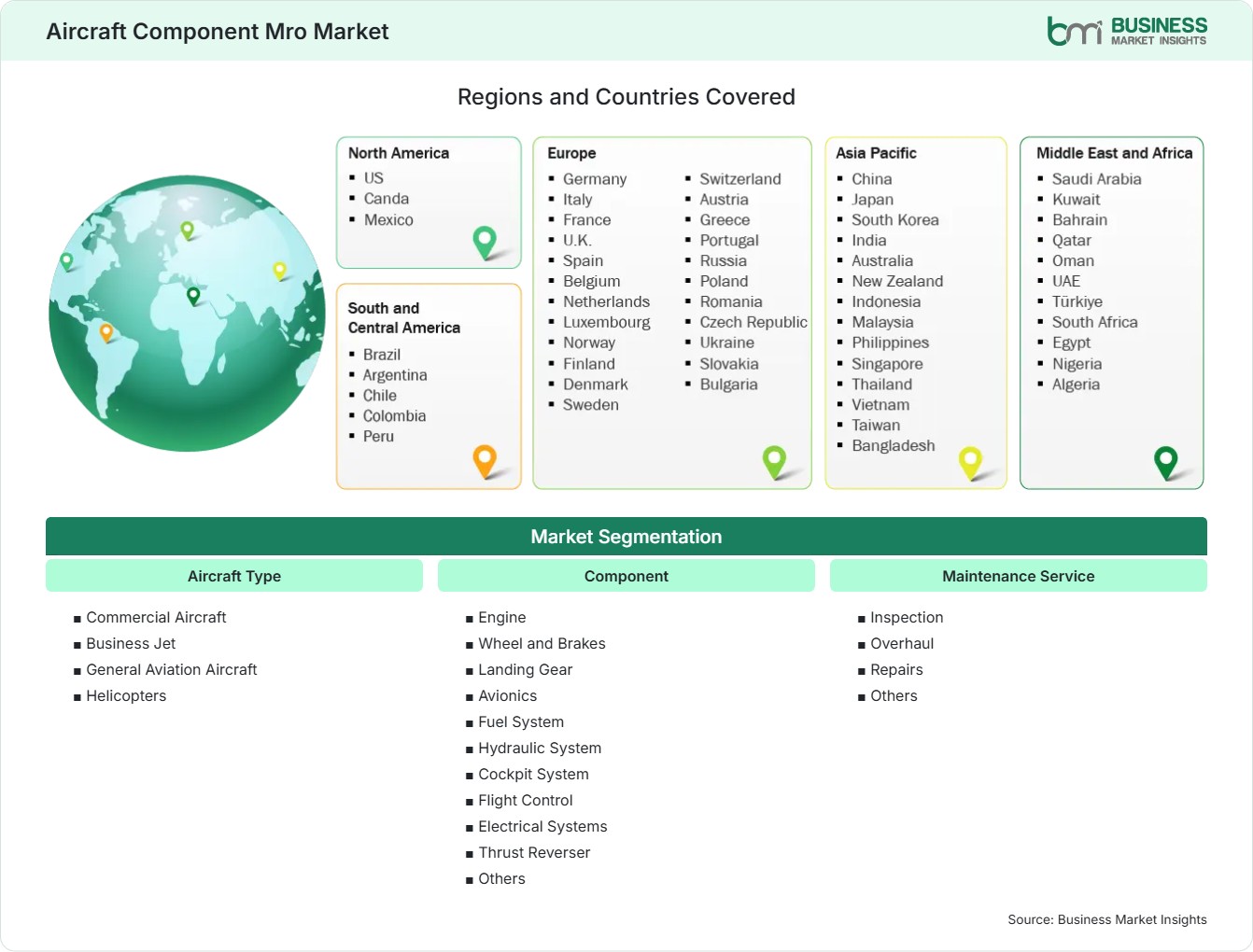
  • Aircraft Type: Commercial Aircraft, Business Jet, General Aviation Aircraft, Helicopters
  • Component: Engine, Wheel and Brakes, Landing Gear, Avionics, Fuel System, Hydraulic System, Cockpit System, Flight Control, Electrical Systems, Thrust Reverser, Others
  • Maintenance Service: Inspection, Overhaul, Repairs, Others
US$ 22.22 Bn Market size in 2025
US$ 30.97 Bn Market Size by 2033
4.24% CAGR, 2026 - 2033
2026-2033 Forecast Period

AI Overview

Aircraft Component Mro Market Summary

  • North America Region: North America held a 34%–38% share in 2025, growing at a CAGR of 3.8%–4.5%, supported by a large installed aircraft base, high utilization rates, mature MRO infrastructure, and extensive aftermarket demand. The US market is expanding at a CAGR of 3.9%–4.6%, supported by commercial fleet activity, military aviation requirements, component repair capabilities, and strong demand for avionics and engine-related services.
  • Fastest Growing Region: Asia Pacific held a 22%–26% share in 2025, growing at a CAGR of 5.5%–6.5%, driven by fleet expansion, rising passenger traffic, new airline capacity, increasing aircraft utilization, and growing investment in regional MRO infrastructure and specialized component repair capabilities.
  • Leading Segment: Commercial Aircraft held a 68%–72% share in 2025, growing at a CAGR of 4.3%–4.9%, supported by the large global commercial fleet, increasing flight cycles, passenger traffic recovery, and recurring demand for inspection, repair, overhaul, and replacement components.
  • High Growth Segment: Avionics held a 10%–14% share in 2025, growing at a CAGR of 5.5%–6.5%, supported by digital cockpit upgrades, navigation modernization, connectivity requirements, regulatory mandates, and increasing demand for advanced electronic systems across commercial and business aviation.
  • Key Market Opportunity: Aging aircraft fleets, expanding aviation markets, and increasingly specialized component repair requirements are creating opportunities for MRO providers to develop predictive maintenance, repair engineering, exchange pools, and localized service capabilities.
  • Major Market Players: Lufthansa Technik AG, ST Engineering Ltd., AAR Corp., Safran SA, Collins Aerospace, Honeywell International Inc., RTX Corporation, The Boeing Company, Airbus SE, and MTU Aero Engines AG.
Strategic Insights

Aircraft Component Mro Market: Strategic Insights

Aircraft Component Mro Market Strategic Framework
FREE PDF
Request your free sample
Request free sample
Stakeholder View

Key Takeaways

  • The value chain is increasingly centered on integrated relationships among airlines, aircraft lessors, OEMs, component manufacturers, independent MRO providers, parts distributors, repair specialists, and logistics companies.
  • Specialized component repair represents an attractive growth area as operators seek alternatives to expensive component replacement and face extended lead times for new parts.
  • Digital inspection, predictive analytics, automated diagnostics, additive manufacturing, and advanced repair technologies are reshaping turnaround management and improving component reliability.
  • India, Southeast Asia, China, and the Middle East offer compelling investment cases as expanding fleets and growing passenger traffic increase demand for geographically accessible maintenance capacity.
  • Strategic partnerships between airlines, OEMs, MRO providers, and technology companies are becoming increasingly important for securing long-term contracts, component pools, repair capabilities, and localized service infrastructure.
  • Aging aircraft will remain a structural demand driver, creating opportunities for providers capable of supporting older platforms while maintaining regulatory compliance and cost-effective component availability.
Geographic Outlook

Aircraft Component Mro Market Regional Highlights

North America Aircraft Component Mro Market

North America accounted for a 34%–38% share in 2025 and is projected to grow at a CAGR of 3.8%–4.5% through 2033. The region benefits from a substantial installed aircraft base, established MRO infrastructure, and high commercial aircraft utilization. Aircraft Component Mro Market share is supported by the US aviation ecosystem, where airlines, lessors, OEMs, and independent providers maintain extensive component repair and exchange capabilities across major aviation hubs.

  • A large installed base of commercial and business aircraft generates recurring requirements for component inspection, repair, overhaul, testing, and replacement throughout operational lifecycles.
  • Established repair stations, certified technicians, parts inventories, and logistics networks allow operators to manage complex component maintenance requirements with comparatively short turnaround times.
  • Providers are investing in predictive analytics, digital inspection, automated testing, and advanced repair processes to improve component reliability and reduce aircraft downtime.
  • Military and government aviation requirements provide an additional source of component maintenance demand, particularly for avionics, hydraulics, landing systems, and specialized electronic equipment.

US Aircraft Component Mro Market

The US represented a 31%–35% share in 2025 and is expected to expand at a CAGR of 3.9%–4.6% through 2033. The country remains a major global MRO center because of its extensive airline fleet, aviation manufacturing base, defense requirements, and mature repair infrastructure. Aircraft Component Mro Market growth is supported by fleet utilization, aging aircraft, and continued demand for certified component repair capabilities.

  • High aircraft utilization and extensive domestic air connectivity create recurring demand for component inspections, repairs, overhauls, and replacement parts.
  • Strong presence of major aircraft and component manufacturers supports advanced repair capabilities, technical documentation, engineering support, and long-term aftermarket service programs.
  • Specialized MRO companies compete by offering component exchange programs, repair engineering, inventory management, and flexible solutions for airlines and lessors.
  • Technician shortages are encouraging companies to expand training, apprenticeship programs, digital work instructions, and workforce development initiatives across aviation maintenance operations.

Europe Aircraft Component Mro Market

Europe held a 25%–29% share in 2025 and Europe aircraft component mro market forecast to grow at a CAGR of 3.5%–4.3% through 2033. Germany leads regional component MRO activity, supported by major aviation service providers and a strong engineering base. France is another important market with a projected CAGR of 3.8%–4.6%.

  • Germany's aviation ecosystem supports demand for component repair, overhaul, engineering, and logistics services, strengthened by established MRO providers and technical expertise.
  • France benefits from its aerospace manufacturing and airline ecosystem, creating opportunities for component maintenance alongside OEM-supported aftermarket and specialized repair services.
  • The UK remains an important aviation maintenance center, with established capabilities across commercial aircraft components, engine systems, avionics, and specialized repair services.
  • European regulatory standards require rigorous certification, traceability, and maintenance documentation, supporting demand for qualified MRO providers with comprehensive compliance capabilities.

Asia Pacific Aircraft Component Mro Market

Asia Pacific Aircraft Component Mro Market represented a 22%–26% share in 2025 and is projected to grow at a CAGR of 5.5%–6.5% through 2033. China leads regional demand, while India represents one of the fastest-growing markets. China is projected to grow at a CAGR of 5.0%–6.0%, whereas India is expected to expand at 7.0%–8.0%.

  • China's expanding aviation fleet and domestic aviation ecosystem are creating demand for localized component repair, overhaul, parts support, and technical maintenance capabilities.
  • India's rapidly expanding airline sector is encouraging investments in MRO facilities, supporting domestic maintenance capacity and reducing reliance on overseas component service providers.
  • Southeast Asia benefits from growing air travel and established airline operations, creating opportunities for specialized component repair and regional MRO service centers.
  • Fleet modernization: New aircraft deliveries are increasing the installed base while older aircraft continue generating demand for component maintenance, creating a diversified service opportunity.

Rest of World Aircraft Component Mro Market

South and Central America Aircraft Component Mro Market accounted for a 7%–9% share in 2025 and are projected to grow at a CAGR of 3.5%–4.5% through 2033, led by Brazil and Mexico. Middle East and Africa represented a 7%–9% share and are expected to grow at a CAGR of 4.5%–5.5%, with the UAE and Saudi Arabia offering attractive aviation investment opportunities.

  • Brazil's large aviation market supports recurring component maintenance demand, while local MRO capabilities can benefit from growing airline activity and fleet modernization requirements.
  • Mexico's proximity to North American aviation markets creates opportunities for component repair, maintenance outsourcing, parts logistics, and specialized aviation service partnerships.
  • The UAE is developing as an international aviation and MRO hub, supported by major airlines, global connectivity, and investment in advanced maintenance capabilities.
  • Saudi Arabia's aviation expansion and broader economic diversification initiatives are creating opportunities for new MRO infrastructure, localized technical capabilities, and aviation services supporting fleet growth.
Global Market Geography
FREE PDF
Request your free sample
Request free sample
Segment Analysis

Aircraft Component Mro Market Segmentation

Aircraft Type

Commercial Aircraft held a 68%–72% of global aircraft component mro market share in 2025 and is projected to grow at a CAGR of 4.3%–4.9% during 2026–2033. The segment benefits from fleet expansion, rising utilization, and recurring component maintenance cycles. Business jets, general aviation aircraft, and helicopters generate specialized demand.

  • Commercial Aircraft (Narrow Body, Wide Body, and Regional Aircraft): Large fleets and high utilization generate recurring component inspections, repairs, overhauls, and replacements, with narrow-body aircraft supporting substantial maintenance volumes.
  • Business Jet: Growing corporate aviation activity supports specialized avionics, cabin systems, landing gear, and component maintenance services requiring rapid turnaround and high service responsiveness.
  • General Aviation Aircraft: Diverse aircraft fleets create demand for flexible component repair and inspection capabilities, particularly across avionics, electrical systems, landing gear, and flight controls.
  • Helicopters: High mission intensity across emergency services, offshore operations, defense, and commercial applications supports recurring maintenance requirements for engines, transmissions, flight controls, and avionics.

Component

Engine components represented a 30%–34% share in 2025 and are projected to grow at a CAGR of 4.0%–4.7% during 2026–2033. Their high replacement value and technical complexity support specialized MRO demand. Avionics represents a faster-growing area as connectivity and cockpit modernization increase. Component diversification strengthens service opportunities across mechanical, hydraulic, electronic, and electrical systems.

  • Engine: High-value components require specialized inspection, repair, testing, and overhaul capabilities, creating strong demand for certified providers and OEM-supported maintenance programs.
  • Wheel and Brakes: Frequent operational cycles and safety requirements generate recurring inspection, refurbishment, replacement, and overhaul requirements across commercial and specialized aircraft fleets.
  • Landing Gear: Complex structural systems require periodic overhaul and specialized testing, with aging fleets generating additional demand for component refurbishment and life-extension services.
  • Avionics: Increasing cockpit digitization, connectivity, navigation upgrades, and electronic system complexity are driving demand for diagnostics, repair, testing, and modernization services.
  • Fuel System: Safety-critical fuel components require rigorous inspection and repair, supporting specialized maintenance services as aircraft systems age and operating cycles increase.
  • Hydraulic System: Hydraulic components require scheduled inspection and repair to maintain flight-control and landing-system reliability, supporting recurring demand for specialized testing and overhaul.
  • Cockpit System: Modern cockpit electronics require advanced diagnostics, software support, component testing, and upgrades as airlines adopt newer digital flight-management capabilities.
  • Flight Control: Safety-critical flight-control components require specialized maintenance, inspection, and repair services to maintain operational reliability and regulatory compliance.
  • Electrical Systems: Increasing aircraft electrification and electronic complexity are expanding requirements for component diagnostics, repair, testing, and replacement across commercial aviation fleets.
  • Thrust Reverser: Complex thrust-reverser systems require specialized inspection and repair, while high replacement costs encourage airlines to use component overhaul and refurbishment services.

Maintenance Service

Inspection represented a 32%–36% share in 2025 and is projected to grow at a CAGR of 4.0%–4.6% during 2026–2033. Inspections provide the foundation for component airworthiness and early defect detection. Overhaul and repair services generate higher-value opportunities as aircraft age. Airlines increasingly seek integrated maintenance programs that combine inspections, engineering, parts availability, and turnaround optimization.

  • Inspection: Regular inspections identify wear, corrosion, fatigue, and component defects, supporting airworthiness compliance and reducing the risk of unexpected aircraft downtime.
  • Overhaul: Comprehensive disassembly, testing, refurbishment, and reassembly extend component service life, providing airlines with cost-effective alternatives to purchasing replacement units.
  • Repairs: Specialized repairs address component failures and damage, with advanced engineering capabilities helping MRO providers restore complex parts to certified operational standards.
Market Forces

Aircraft Component Mro Market Dynamics

Key Market Drivers

Increasing Aircraft Fleet Size Driving Demand for Component Maintenance

Despite the current situation, the global aviation industry continues to expand its fleet to meet passenger needs, while the current aircraft fleet is rather large in developed countries with aviation infrastructure. The larger the aircraft fleet, the more components that need to be inspected, repaired, tested, and replaced as necessary. Modern aircraft possess more advanced electronic and mechanical components and thus have special maintenance requirements. Moreover, the older aircraft require increasingly frequent component intervention as systems accumulate flight cycles and operating hours.

Rising Air Passenger Traffic Increasing Aircraft Utilization Rates

The increased passenger traffic boosts flight frequency and utilization of the aircraft, especially for popular domestic and international routes. A rise in the usage rate results in an accelerated flight cycle and flight hours that result in increased stress on the aircraft’s components like brakes, landing gears, control surfaces, and engines. Airlines will have a growing need for more maintenance checks and component interventions to achieve dispatch reliability. The growth in utilization will boost the economic value of quick turnaround as an aircraft not being utilized may translate to lost revenues. Maintenance organizations that have repair capacity combined with strategically positioned inventory and logistics services will capture opportunities for service providers seeking to reduce delays.

Growing Need for Cost-Efficient Aircraft Maintenance and Component Overhaul

Airlines face continuous pressure to manage operating costs while maintaining high aircraft availability and safety standards. Component repair and overhaul can provide economically attractive alternatives to purchasing new replacement units, particularly for high-value systems. Airlines and lessors are increasingly evaluating repair-versus-replace decisions using lifecycle economics, component reliability, availability, and turnaround time. This environment favors MRO providers with strong engineering capabilities, repair development expertise, exchange pools, and inventory management. Advanced repair processes can further reduce material consumption and extend component life.

Key Market Opportunities

Expansion of Aircraft Component MRO Services in Emerging Aviation Markets

There are potential benefits of new emerging MRO markets where airlines are expanding their fleets and regional connectivity of passengers is improving. The ability to perform localized component repairs may save transportation time and effort, as well as decrease time spent on performing the aircraft downtime. India, Southeast Asia, the Middle East, and some Latin American markets appear promising due to the fact that the growing fleet is raising maintenance demand. Building certified workshops and maintaining inventory will be beneficial to capture additional airlines that need to minimize reliance on distant MRO facilities.

Growing Demand for Specialized Component Repair and Overhaul Services

Increasing component complexity is creating aircraft component mro market trend for specialized MRO providers capable of handling avionics, electronic systems, advanced flight controls, and sophisticated engine components. Airlines increasingly require technical expertise that goes beyond conventional maintenance, particularly as aircraft incorporate more digital and electronically controlled systems. Providers can differentiate through proprietary repair capabilities, engineering approvals, advanced testing, and predictive diagnostics. Specialized repair can also generate attractive economics by restoring high-value components rather than replacing them.

Rising Opportunities from Aging Commercial and Military Aircraft Fleets

Aging aircraft create sustained demand for component overhaul, refurbishment, repair engineering, and life-extension services. As aircraft remain operational for longer periods, components experience increased cycles and require more frequent intervention. Military fleets can offer additional opportunities because procurement cycles and platform replacement timelines often encourage operators to extend existing aircraft service lives. MRO providers can benefit by developing repair solutions for legacy components, maintaining parts availability, and supporting obsolescence management.

Market Restraints and Challenges

High Costs of Specialized Aircraft Component Maintenance and Repairs

Factor: The repair of some aircraft parts requires special tools, facilities, testing machines, engineers' certifications and skilled laborers, hence the maintenance becomes very costly. Impact: High operating cost can lead to high service charges and dissuade smaller airlines or operators from subcontracting particular repairs. Some parts may also demand costly spare parts and extensive diagnosis, which lengthens the process time. MRO providers must continuously invest in equipment, certification, workforce development, and technology to remain competitive.

Shortage of Skilled Aviation Technicians and Certified MRO Professionals

Factor: Aviation maintenance requires specialized technical knowledge, certification, and practical experience, while workforce shortages are affecting the availability of qualified technicians across several aviation markets. Impact: Limited skilled labour can constrain MRO capacity, increase labour costs, extend turnaround times, and delay the expansion of new repair facilities. The challenge becomes more significant as aircraft systems become increasingly complex and experienced technicians retire. MRO companies are responding through apprenticeship programs, technical partnerships, digital training tools, and workforce development initiatives.

Company Analysis

Competitive Landscape

The Aircraft Component Mro Market analysis is shaped by global MRO specialists, aircraft OEMs, engine manufacturers, avionics providers, and diversified aerospace technology companies. Competition increasingly centers on technical certifications, global repair networks, component availability, turnaround time, engineering expertise, and long-term customer relationships.

Company Name

Overview

Products and Services relevant to this market

Lufthansa Technik AG

Global aircraft technical services provider with extensive capabilities across commercial and specialized aviation maintenance.

Component MRO, engineering, aircraft maintenance, logistics, digital solutions, and technical support services.

ST Engineering Ltd.

Diversified engineering group providing aviation MRO services and integrated aerospace solutions globally.

Component MRO, aircraft maintenance, repair engineering, avionics, landing systems, and technical services.

AAR Corp.

Aviation aftermarket services provider supporting airlines, MRO organizations, and aerospace customers worldwide.

Component repair, parts distribution, inventory management, repair engineering, and MRO supply chain services.

Safran SA

Aerospace company with extensive capabilities across aircraft systems, engines, equipment, and aftermarket support.

Component maintenance, repair services, aircraft systems support, engine services, and technical aftermarket solutions.

Collins Aerospace

Aerospace technology provider offering aircraft systems and extensive aftermarket support capabilities.

Avionics, landing systems, flight controls, electrical systems, component repair, and aftermarket services.

Honeywell International Inc.

Technology and aerospace company providing aircraft systems, avionics, and aftermarket maintenance support.

Avionics, cockpit systems, flight controls, repair services, diagnostics, and technical support programs.

RTX Corporation

Aerospace and defense company with broad commercial aviation systems and aftermarket capabilities.

Aircraft components, engines, avionics, systems maintenance, repair, overhaul, and aftermarket support.

The Boeing Company

Major aircraft manufacturer providing comprehensive commercial aviation aftermarket and maintenance solutions.

Component services, parts, repairs, engineering support, digital maintenance, and aircraft aftermarket programs.

Airbus SE

Global aircraft manufacturer offering extensive aftermarket services supporting commercial and military aviation customers.

Component support, technical services, parts, maintenance solutions, engineering, and digital aftermarket platforms.

MTU Aero Engines AG

Aerospace engine manufacturer specializing in commercial and military engine maintenance and engineering capabilities.

Engine MRO, component repair, engineering services, overhaul, diagnostics, and aftermarket support programs.

Trust & Transparency

Research Methodology

The market analysis combines proprietary research with secondary data from government agencies, company disclosures, regulatory filings, industry databases and expert interviews. Market estimates are validated through data triangulation, cross-market benchmarking and analyst review.

View Full Research Methodology

Questions Answered

Frequently Asked Questions

Why are regional MRO hubs becoming more important?

Regional MRO hubs reduce transportation distances and maintenance logistics complexity while improving turnaround times.

What technologies are changing aircraft component MRO?

Predictive analytics, digital inspection, artificial intelligence, additive manufacturing, automated testing, and digital maintenance records.

How are aircraft lessors influencing component MRO demand in aircraft component mro market report?

Lessors increasingly emphasize asset reliability, lifecycle value, and return conditions when managing aircraft portfolios.

Which aircraft components generally create high-value MRO opportunities?

Engine components, avionics, landing gear, and specialized flight-control systems often create attractive opportunities.

Why is component MRO different from aircraft-level maintenance?

Component MRO focuses on individual systems and parts removed from aircraft for inspection, testing, repair, overhaul, or replacement.

Access the Full Aircraft Component Mro Market Report

Get segment-level forecasts, regional estimates, competitive benchmarking, company profiles and downloadable Excel datasets.

Access the full Aircraft Component Mro Market Report
350 pages PDF & Excel | 2026-08-06