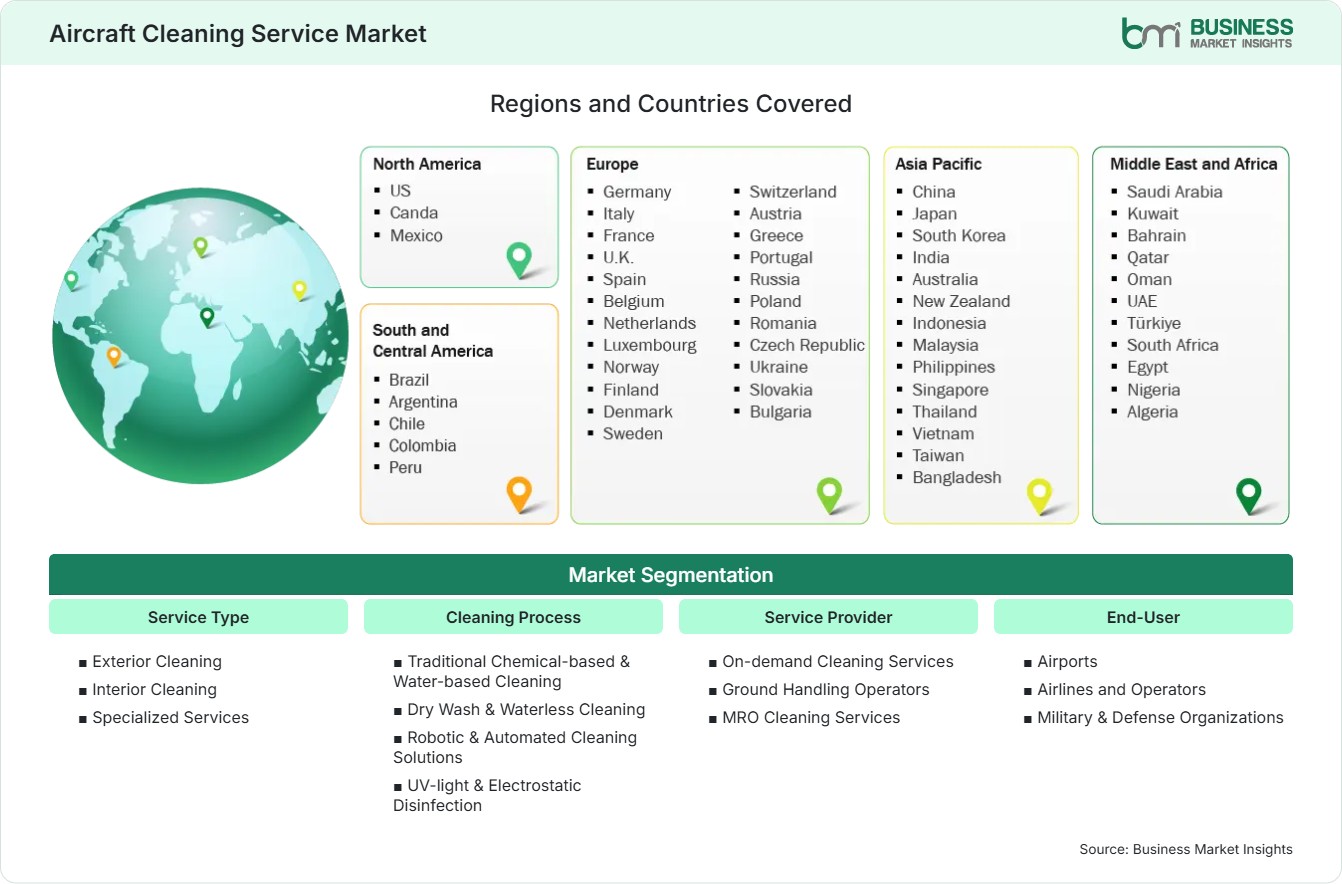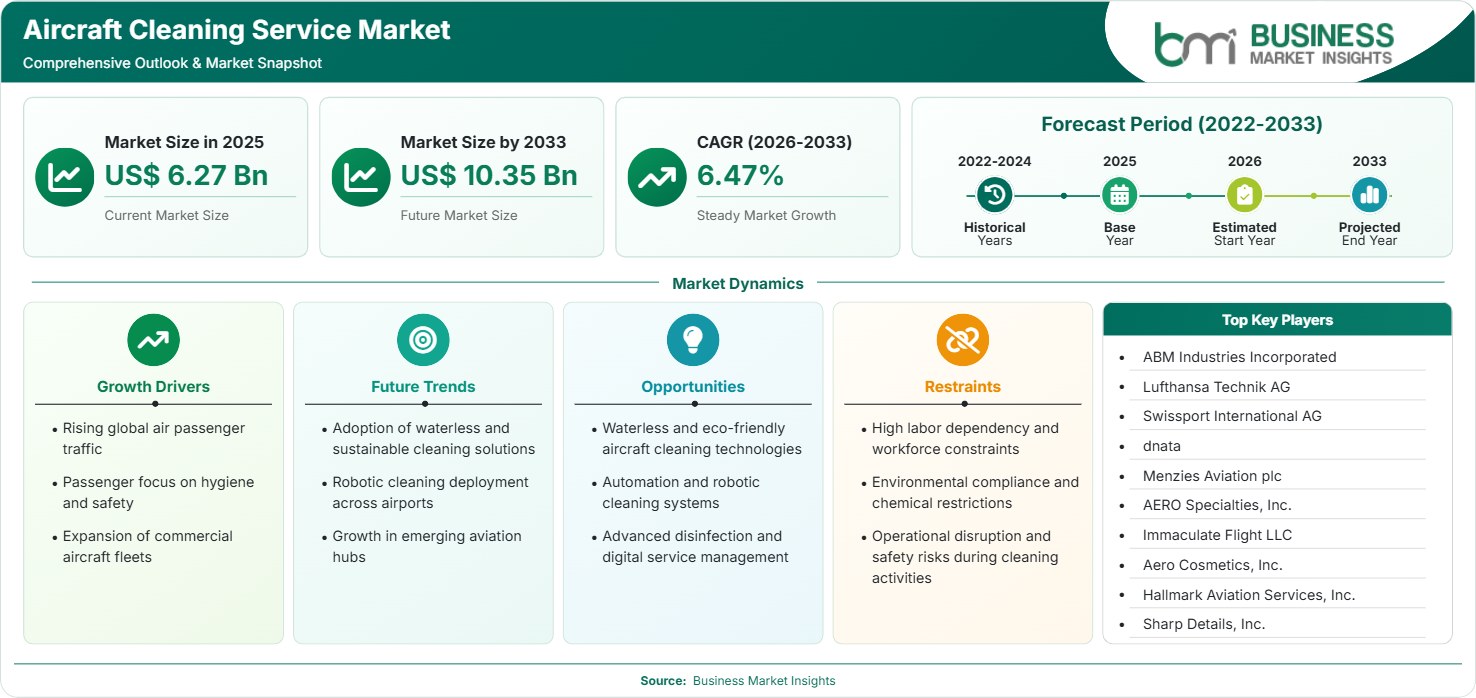
Aircraft Cleaning Service Market Regional Highlights
North America Aircraft Cleaning Service Market
North America accounted for approximately 34%–37% of the Aircraft Cleaning Service Market share in 2025 and is projected to record a CAGR of 5.8%–6.2% through 2033. Large airline fleets, high aircraft utilization rates, and stringent regulatory requirements support market leadership. Airlines increasingly outsource cleaning functions to specialized providers to improve turnaround efficiency and reduce operational costs. Adoption of waterless cleaning technologies and automated maintenance systems continues rising across major airport hubs.
- Major airlines prioritize premium cabin appearance and hygiene programs.
- Increased outsourcing supports recurring contracts for specialist service providers.
- Robotic and automated washing systems are gaining commercial adoption.
- Sustainability targets encourage water-saving and biodegradable cleaning solutions.
- Strong airport traffic volumes ensure predictable service demand.
US Aircraft Cleaning Service Market
The United States represents approximately 75%–79% of North American revenue and is expected to expand at 5.9%–6.3% CAGR. Large commercial aviation networks, extensive airport infrastructure, and high daily aircraft movement support demand. Airlines continue investing in enhanced cabin sanitation programs and operational efficiency measures. Growth remains supported by fleet modernization and increased passenger expectations regarding travel hygiene standards.
- Major hub airports generate consistent demand for recurring cleaning services.
- Premium travel growth supports specialized interior maintenance programs.
- Digital workforce management tools improve service productivity.
- Adoption of sustainable cleaning chemicals continues accelerating.
Europe Aircraft Cleaning Service Market
Europe holds an estimated 26%–29% share in 2025 and is projected to grow at 5.5%–6.0% CAGR in the Aircraft Cleaning Service Market. Environmental regulations, mature airline operations, and strong airport networks drive demand. Germany and the United Kingdom remain leading markets, while Eastern European aviation activity contributes additional growth potential. Airlines increasingly adopt environmentally compliant cleaning practices and water-conservation initiatives across maintenance operations.
- Germany leads regional revenue generation through extensive airline activity.
- United Kingdom benefits from high passenger traffic and outsourcing demand.
- Sustainability regulations encourage adoption of eco-friendly service models.
- Increasing MRO investments support specialized cleaning requirements.
- Eastern European aviation expansion creates new contract opportunities.
Asia Pacific Aircraft Cleaning Service Market
Asia Pacific represents a 25%–28% share in 2025 and records the fastest CAGR of 7.5%–8.2%. Strong fleet expansion, airport construction, and rising passenger traffic underpin demand. China leads regional revenues, while India demonstrates the fastest growth profile. Expanding low-cost carrier networks and increasing outsourcing trends support rising utilization of professional aircraft cleaning solutions across commercial aviation markets.
- China remains the largest regional aviation maintenance market.
- India benefits from rapid airport development and fleet additions.
- Southeast Asia supports strong demand from tourism recovery.
- Growing middle-class travel stimulates airline service expansion.
- Outsourced cleaning contracts gain preference among regional carriers.
Rest of World Aircraft Cleaning Service Market
Rest of World accounts for a 10%–13% share in 2025 and expands at 6.5%–7.1% CAGR in the Aircraft Cleaning Service Market. Middle Eastern aviation hubs continue investing in premium passenger experiences and fleet appearance management. South and Central American markets benefit from aviation modernization programs and growing airline activity.
The UAE leads regional demand, while Saudi Arabia records strong expansion. Brazil remains a key South American market supported by airport infrastructure improvements and increasing domestic travel activity.
- Gulf airlines prioritize premium cabin standards and brand image.
- Saudi aviation expansion generates new outsourcing opportunities.
- Brazil supports long-term demand through fleet modernization.
- Tourism growth boosts aircraft utilization across multiple destinations.
- Airport upgrades encourage recurring maintenance service contracts.