Market Summary
Executive Summary and Global Market Analysis
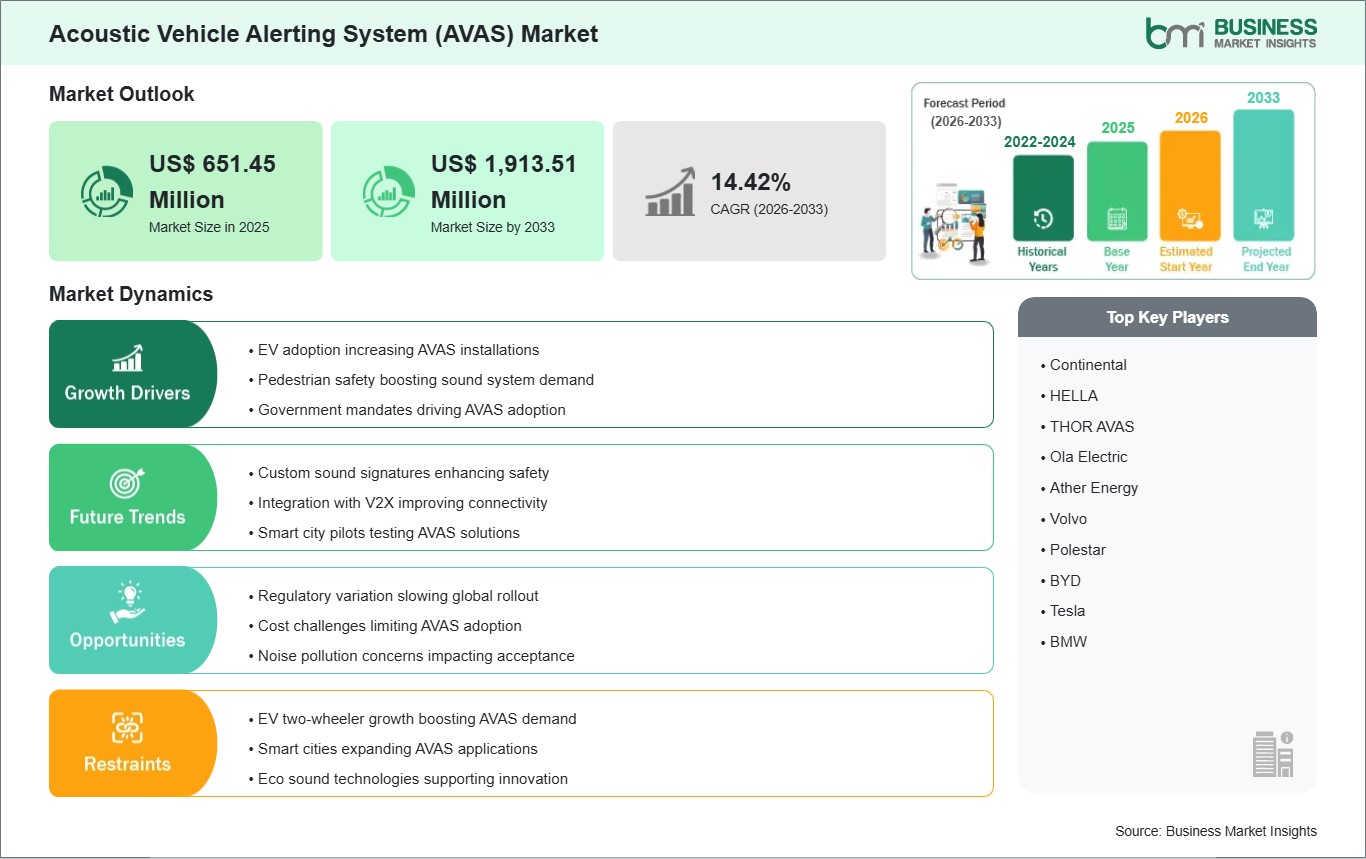
Acoustic Vehicle Alerting System (AVAS) systems are designed to generate artificial sounds for electric and hybrid vehicles operating at low speeds to improve pedestrian awareness and road safety. These systems help compensate for the reduced engine noise produced by battery electric vehicles and hybrid electric vehicles. AVAS solutions are integrated into passenger cars, commercial vehicles, and two-wheelers to comply with vehicle safety regulations and improve urban mobility safety. The market is gaining importance as electric vehicle adoption increases globally and governments introduce mandatory pedestrian warning sound regulations.
Several factors continue to influence the development of the Acoustic Vehicle Alerting System market. Automotive manufacturers are integrating advanced software-controlled sound systems that can adapt warning sounds based on vehicle speed and surrounding environments. Increasing focus on pedestrian protection, especially for visually impaired individuals, is encouraging wider deployment of AVAS technologies in urban transportation systems. However, regulatory differences across countries, integration complexities in compact vehicle platforms, and cost sensitivity in entry-level electric vehicles can create challenges for manufacturers.
Despite these challenges, the market continues to benefit from the global expansion of electric mobility and transportation safety initiatives. Passenger vehicles remain a major contributor due to the increasing production of electric and hybrid cars. Commercial vehicle fleets are also adopting AVAS technologies to improve operational safety in urban logistics and public transportation applications. OEM-installed systems are gaining preference as vehicle manufacturers focus on regulatory compliance and integrated safety solutions. Technological advancements in customizable sound profiles, lightweight audio components, and intelligent warning systems are expected to create future growth opportunities.
Segment Analysis
Acoustic Vehicle Alerting System (AVAS) Market Segmentation
The Acoustic Vehicle Alerting System market is segmented based on vehicle, propulsion, sales channel, and mounting. Increasing electric vehicle production and pedestrian safety regulations are supporting growth across all major segments.
By Vehicle
- Passenger Cars: High adoption of electric passenger vehicles and urban mobility solutions is supporting segment growth.
- Commercial: Demand is increasing due to the electrification of logistics and public transportation fleets.
- 2W: Electric two-wheelers are creating new opportunities for compact AVAS integration.
By Propulsion
- BEV: Dominates due to silent vehicle operation and mandatory pedestrian safety regulations.
- HEV: Growing adoption supports moderate demand for AVAS technologies.
- PHEV: Increasing use of hybrid systems contributes to market expansion.
By Sales Channel
- OEM: Leads the market with factory-installed AVAS systems in new electric vehicles.
- Aftermarket: Demand is rising for replacement and retrofit solutions in existing vehicles.
By Mounting
- Integrated: Preferred for compact design, efficient sound distribution, and easier vehicle integration.
- Separated: Used in specific vehicle configurations requiring flexible installation options.
Market Forces
Acoustic Vehicle Alerting System (AVAS) Market Drivers and Opportunities
Growing Electric Vehicle Adoption and Pedestrian Safety Regulations
The demand for AVAS solutions is increasing because electric and hybrid vehicles operate with very low noise levels at slower speeds, making them difficult for pedestrians and cyclists to detect. Governments and transportation authorities across several countries are implementing regulations that require electric vehicles to include AVAS technologies for improved road safety. These regulations are encouraging automotive manufacturers to integrate advanced sound generation systems into passenger cars, commercial vehicles, and electric two-wheelers.
The growing adoption of electric mobility in urban transportation is also supporting market expansion. Consumers are increasingly choosing electric vehicles due to environmental concerns, fuel efficiency, and government incentives supporting clean transportation. As vehicle electrification increases, manufacturers are focusing on improving pedestrian awareness while maintaining vehicle comfort and efficiency. Automotive companies are also investing in lightweight and energy-efficient AVAS technologies that support modern vehicle architectures.
Integration of Smart Audio Technologies and Connected Mobility Systems
The Acoustic Vehicle Alerting System market is creating new opportunities with the integration of smart audio technologies, connected mobility platforms, and customizable sound systems. Automotive manufacturers are increasingly developing advanced AVAS solutions that allow vehicles to produce adaptive sounds based on driving conditions, speed, and surrounding environments. These technologies are improving pedestrian safety while enhancing the overall driving experience and vehicle identity.
The rise of connected vehicles and intelligent transportation systems is also creating opportunities for AVAS integration with advanced driver assistance systems and vehicle communication technologies. Smart sound management systems can support better interaction between vehicles, pedestrians, and urban infrastructure. As cities continue investing in smart transportation networks, the need for advanced vehicle safety technologies is expected to increase further.
Size and Share Analysis
Acoustic Vehicle Alerting System (AVAS) Market Size and Share Analysis
The Acoustic Vehicle Alerting System Market is projected to grow from US$ 651.45 Million in 2025 to US$ 1,913.51 Million by 2033 , registering a CAGR of 14.42% from 2026 to 2033.
By vehicle, passenger cars account for a significant share due to the high production and adoption of electric passenger vehicles in urban transportation. By propulsion, BEV dominates the market because battery electric vehicles operate quietly and require artificial sound systems for pedestrian awareness. By sales channel, OEM leads due to increasing factory-level integration of AVAS technologies during vehicle manufacturing processes.
By mounting, integrated systems hold a major share as manufacturers prefer compact and efficient sound integration within modern vehicle architectures. Demand is also increasing across commercial vehicles and electric two-wheelers with the rapid expansion of sustainable transportation and smart mobility infrastructure worldwide.
Report Coverage
Acoustic Vehicle Alerting System (AVAS) Market Report Coverage and Deliverables
The "Acoustic Vehicle Alerting System Size and Forecast (2022-2033)" report provides a detailed analysis of the market covering below areas:
- Market size and forecast at global, regional, and country levels for all the key market segments covered under the scope
- Market trends, as well as market dynamics such as drivers, restraints, and key opportunities
- Market analysis covering key market trends, global and regional framework, major players, regulations, and recent market developments
- Industry landscape and competition analysis covering market concentration, heat map analysis, prominent players, and recent developments for the market
- Detailed company profiles, including SWOT analysis
Geographic Insights
Acoustic Vehicle Alerting System (AVAS) Market Geographic Insights
The Acoustic Vehicle Alerting System Market shows diverse regional adoption patterns influenced by electric vehicle adoption, transportation safety regulations, and advancements in automotive electronics technologies.
North America, being a developed region, has a strong automotive industry and increasing adoption of electric mobility solutions. The region comprises the United States and Canada, where regulatory authorities are emphasizing pedestrian safety standards for electric and hybrid vehicles. The region focuses on integrating advanced safety systems and intelligent automotive technologies into modern vehicles. It has established electric vehicle infrastructure and strong investments in automotive innovation, supporting the adoption of AVAS technologies across passenger cars, commercial vehicles, and electric two-wheelers. Growing investments in connected mobility and smart transportation systems are also contributing to the expansion of the Acoustic Vehicle Alerting System market in the region.
Asia Pacific is growing significantly due to rapid electric vehicle production, urbanization, and supportive government initiatives for sustainable transportation. The region comprises countries such as China, Japan, South Korea, and India, where automotive manufacturers are increasing production of electric passenger vehicles and commercial fleets. The region focuses on improving road safety standards and supporting clean mobility initiatives through regulatory frameworks and infrastructure modernization. Expanding automotive manufacturing capabilities and rising consumer adoption of electric mobility are contributing to strong demand for AVAS technologies. Technological advancements in automotive electronics and growing smart city developments are also supporting regional market growth.
Both regions are contributing significantly to the growth of the Acoustic Vehicle Alerting System market, focusing on electric mobility expansion, transportation safety improvements, and advancements in intelligent automotive technologies.
Industry Activity
Recent Developments
The Acoustic Vehicle Alerting System Market is analyzed using a mix of primary and secondary research sources, including corporate publications, industry associations, and verified databases. This approach ensures accurate tracking of innovation trends and strategic developments influencing the market.
- In January 2024, Continental introduced advanced AVAS solutions designed for electric vehicles to improve pedestrian safety and support compliance with evolving global regulations. The company focused on integrating customizable sound technologies and lightweight electronic systems to enhance vehicle safety and driving experience. The development reflects the growing industry focus on intelligent acoustic systems for electric mobility.
- In October 2023, Harman International announced advancements in vehicle sound management technologies for electric vehicles, including solutions supporting external acoustic warning systems. The development focused on improving pedestrian awareness while allowing manufacturers to create customized vehicle sound profiles. The initiative highlights the increasing integration of digital sound technologies within modern electric vehicle platforms.
Trust & Transparency
Research Methodology
The market analysis combines proprietary research with secondary data from government agencies, company disclosures, regulatory filings, industry databases and expert interviews. Market estimates are validated through data triangulation, cross-market benchmarking and analyst
review.
View Full Research Methodology
Key Sources Referred:
Industry Reports Company Filings Government Transportation Data Automotive Safety Regulations Research Publications Technical Journals Industry Associations