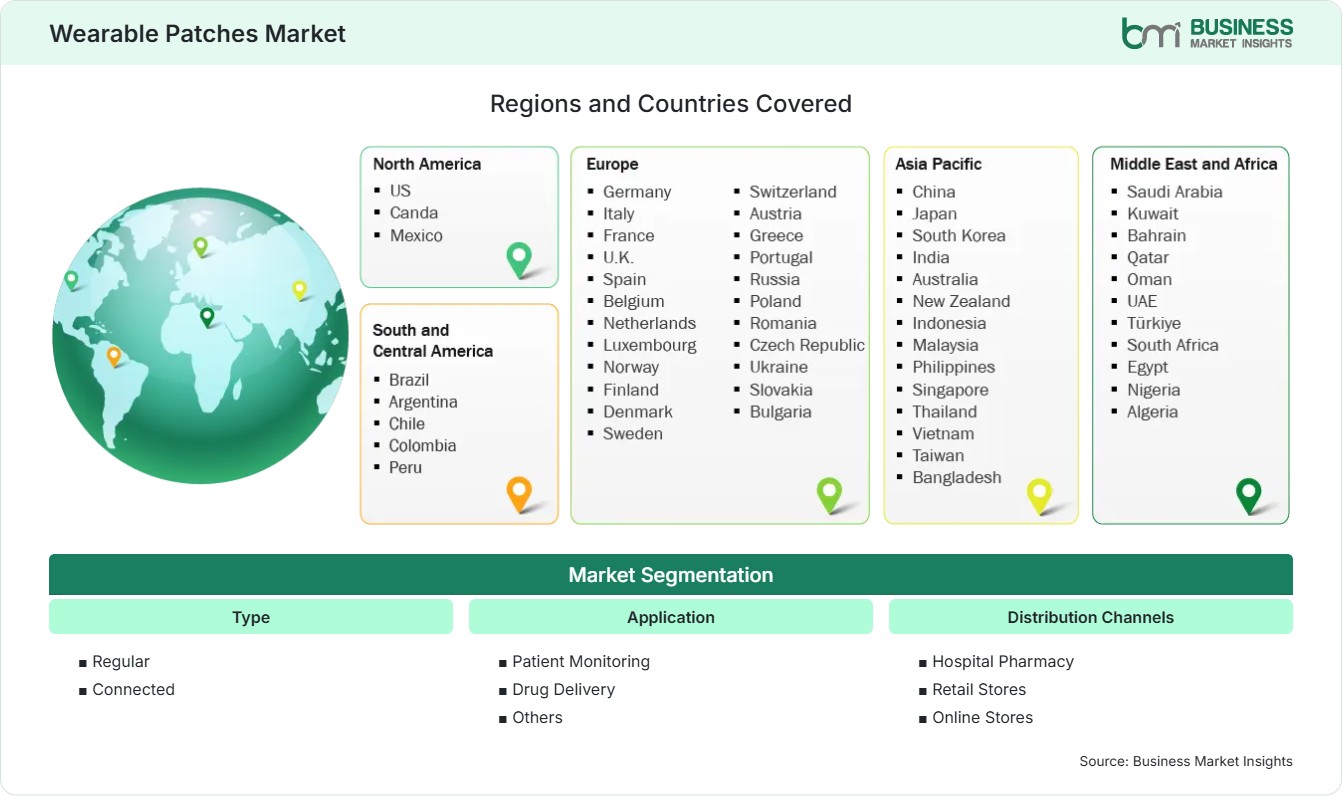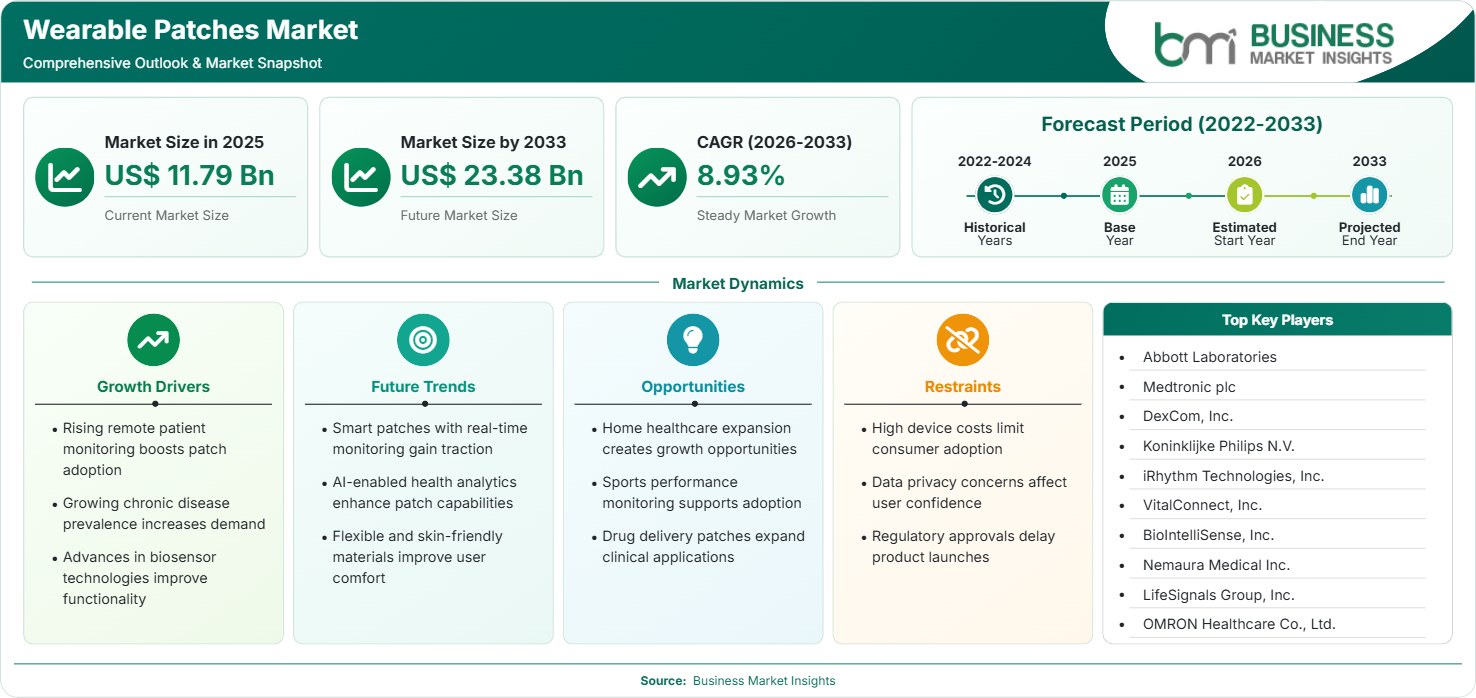
Wearable Patches Market Regional Highlights
North America Wearable Patches Market
North America accounted for approximately 38%–41% of global revenue during 2025 and is projected to expand at 8.0%–8.5% CAGR through 2033. The region benefits from advanced reimbursement systems, high digital-health adoption, and strong uptake of continuous patient monitoring technologies. Healthcare providers increasingly integrate connected biosensor platforms into chronic disease management programs. The region maintains the largest Wearable Patches Market share due to widespread use of remote monitoring solutions, favorable regulatory pathways, and significant investments in healthcare technology innovation.
- Expansion of remote patient monitoring reimbursement supports large-scale deployment across hospital systems, specialty clinics, and homecare networks while improving patient engagement and long-term disease management efficiency.
- Diabetes monitoring remains a major demand driver as continuous glucose monitoring technologies gain rapid physician acceptance and broader insurance coverage.
- Strong venture capital activity continues supporting biosensor innovation, AI-powered diagnostics, and connected health platforms throughout the healthcare ecosystem.
- Healthcare providers increasingly adopt predictive analytics platforms integrated with wearable monitoring solutions to reduce emergency admissions and improve care outcomes.
US Wearable Patches Market
The United States represents approximately 76%–80% of North American revenue and is expected to grow at 8.1%–8.6% CAGR during 2026–2033. Wearable Patches Market expansion is supported by chronic disease prevalence, telehealth integration, and strong commercial adoption of connected monitoring technologies. Hospitals increasingly utilize wearable biosensors to improve patient outcomes and optimize staff efficiency. Continuous innovation by major technology and medical-device companies strengthens product commercialization and accelerates clinical implementation across multiple care settings.
- Advanced reimbursement structures enable wider adoption of continuous monitoring technologies and facilitate scalable remote healthcare delivery models.
- Integrated healthcare systems increasingly use data-driven patient management approaches supported by cloud-connected physiological monitoring platforms.
- High diabetes prevalence supports sustained demand for glucose-monitoring patch technologies and digital disease-management ecosystems.
Europe Wearable Patches Market
The European market is estimated to hold about 28%-31% market share in 2025 and is expected to register an 8.3%-8.8% CAGR from 2026 to 2033. Digitization efforts in the healthcare industry, the older demographic population, and a preventive approach facilitate acceptance of gadgets in the region. While Germany dominates the market in terms of size, Spain and some Nordic countries are showing higher growth rates. Regulatory acceptance of medical innovations motivates investments in the region. The demand is strengthened by the increasing penetration of connected monitoring devices in both public healthcare systems and homecare programs.
- Germany leads regional demand due to advanced healthcare infrastructure and extensive implementation of digital health initiatives.
- Spain represents one of the faster-growing markets, supported by telemedicine expansion and modernization of healthcare delivery networks.
- Public health agencies increasingly prioritize chronic disease monitoring solutions that reduce hospitalization costs and improve treatment adherence.
- Strong research collaboration across universities and healthcare institutions accelerates biosensor development and validation.
Asia Pacific Wearable Patches Market
The Asia Pacific accounted for around 24%-27% of the global Wearable Patches market in 2025 and is expected to witness the highest growth rate, at a 10.2%-10.8% CAGR during 2033. China has the highest demand in the region, whereas India has the highest growth rate. Fast-paced urbanization, healthcare reform measures, high smartphone penetration, and rising cases of chronic illness propel its growth. The region also witnesses a high level of electronics manufacturing along with increasing investments in the connected healthcare sector.
- China remains the largest regional market due to manufacturing strength, technology adoption, and expanding healthcare infrastructure.
- India demonstrates robust expansion driven by telehealth penetration, healthcare digitization programs, and improving access to connected health technologies.
- Regional manufacturers are strengthening domestic sensor production capabilities to support cost-effective innovation and supply-chain resilience.
- Growing public awareness regarding preventive healthcare and wellness monitoring stimulates consumer adoption.
Rest of World Wearable Patches Market
Rest of World held around 8%–11% of the share in 2025 and is estimated to witness an 8.7%–9.2% CAGR up to 2033. South and Central America will benefit from increased access to telemedicine services and improvements in healthcare facilities. The Middle East and Africa will benefit from investments in smart healthcare facilities that are required for market development. While Brazil continues to lead in Latin America, the UAE offers better growth prospects due to its digital health initiatives and healthcare technology investments.
- Brazil maintains regional leadership through healthcare digitalization and increasing acceptance of remote monitoring technologies.
- The United Arab Emirates demonstrates high growth potential supported by smart-hospital investments and digital health transformation programs.
- Demand increasingly originates from chronic disease management initiatives and expansion of home-based treatment models.
- Government-supported healthcare modernization strategies continue improving technology accessibility across emerging economies.