
Vaginal Slings Market Outlook: Size, Share, Trends, Growth Analysis, Competitive Landscape & Forecast, 2026-2033

Vaginal Slings Market Size, Share, Trends & Forecast Report, 2026–2033

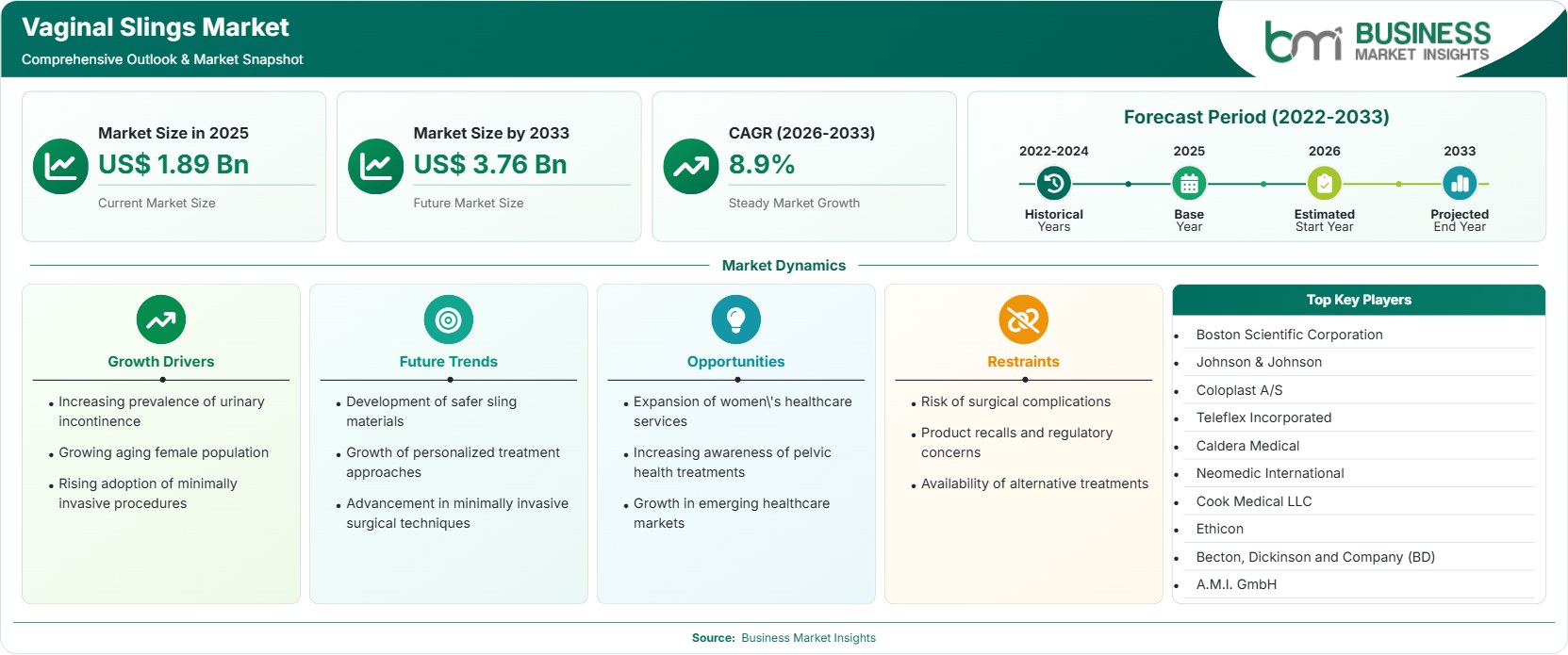
The Vaginal Slings Market size was valued at US$ 1.89 Billion in 2025 and is projected to reach US$ 3.76 Billion by 2033, growing at a CAGR of 8.98% during 2026–2033. The market is expanding steadily due to the increasing prevalence of urinary incontinence, a growing aging female population, and rising adoption of minimally invasive procedures. Continuous advancements in sling materials, surgical techniques, and women's healthcare infrastructure are supporting broader treatment accessibility and improving clinical outcomes worldwide.

Report Coverage
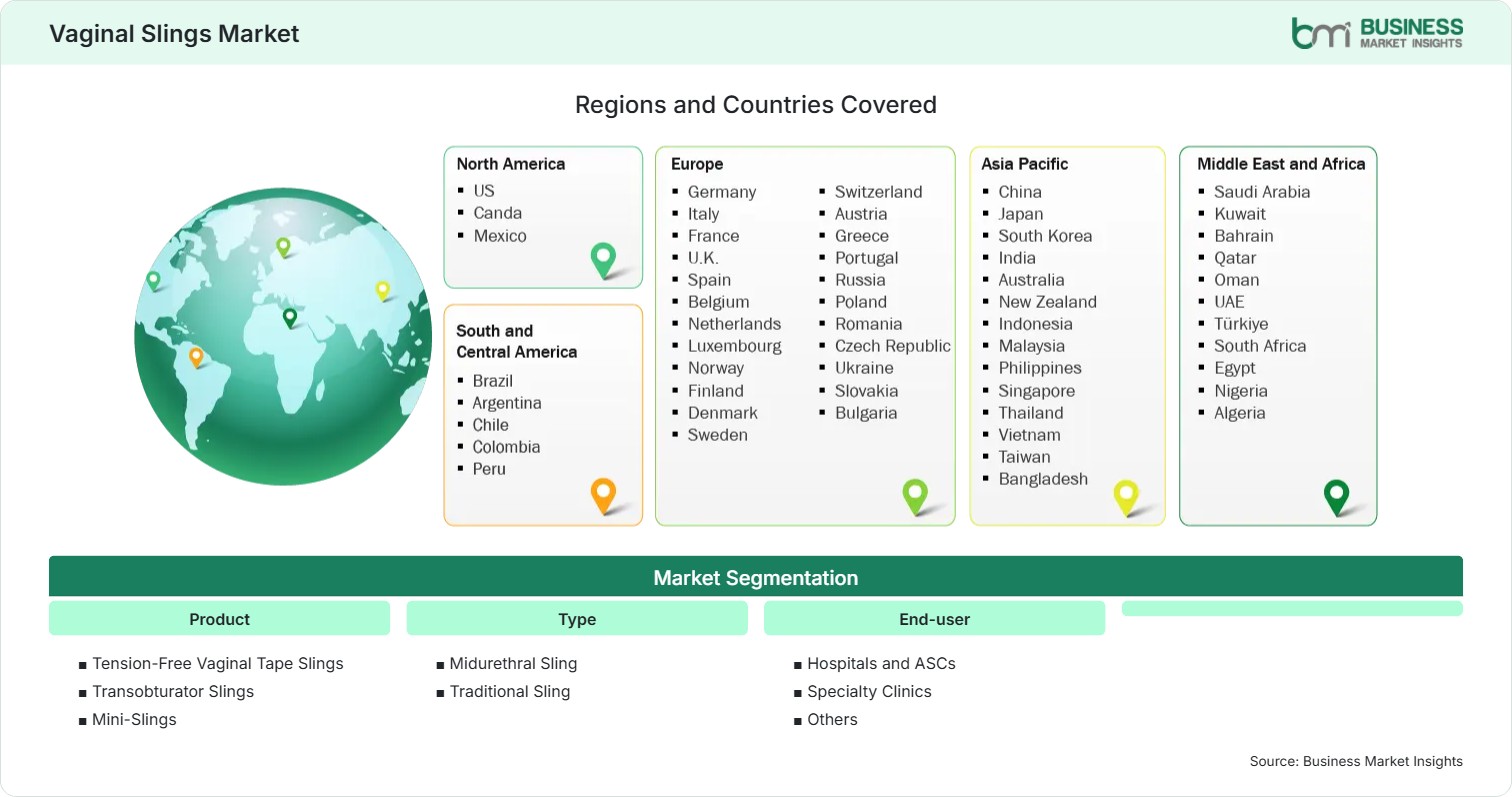
  • Product: Tension-Free Vaginal Tape Slings, Transobturator Slings, Mini-Slings
  • Type: Midurethral Sling, Traditional Sling
  • End-user: Hospitals and ASCs, Specialty Clinics, Others
US$ 1.89 Bn Market size in 2025
US$ 3.76 Bn Market Size by 2033
8.9% CAGR, 2026 - 2033
2026-2033 Forecast Period

01 AI Overview

Vaginal Slings Market Summary

  • North America Region: North America holds 36%–39% market share in 2025, growing at a CAGR of 8.3%–8.8%, driven by advanced urogynecology services, favorable reimbursement policies, and high awareness regarding urinary incontinence treatment. The US market grows at 8.5%–9.0% supported by increasing minimally invasive surgical procedures and strong healthcare infrastructure.
  • Fastest Growing Region: Asia Pacific accounts for 23%–26% market share in 2025, expanding at a CAGR of 9.8%–10.4%, supported by improving women's healthcare services, increasing healthcare expenditure, expanding hospital infrastructure, and growing awareness of pelvic floor disorders across China, India, Japan, and South Korea.
  • Leading Segment: Midurethral Sling accounts for 63%–66% market share in 2025, growing at a CAGR of 9.1%–9.7%, driven by its high clinical success rate, minimally invasive nature, shorter recovery period, and widespread physician preference.
  • High Growth Segment: Specialty Clinics account for 28%–31% share in 2025, growing at a CAGR of 10.2%–10.8%, driven by increasing availability of specialized urogynecology centers, outpatient surgical procedures, and personalized women's healthcare services.
  • Key Market Opportunity: Expansion of women's healthcare services, increasing awareness of pelvic health treatments, and growth in emerging healthcare markets continue creating substantial opportunities for manufacturers and healthcare providers.
  • Major Market Players: Boston Scientific Corporation, Johnson & Johnson, Coloplast A/S, Teleflex Incorporated, Caldera Medical, Neomedic International, Cook Medical LLC, Ethicon, Becton, Dickinson and Company (BD), A.M.I. GmbH.
02 Strategic Insights

Vaginal Slings Market: Strategic Insights

Vaginal Slings Market Strategic Framework
FREE PDF
Request your free sample
Request free sample
03 Stakeholder View

Key Takeaways

  • The vaginal slings value chain is becoming increasingly integrated as medical device manufacturers, healthcare providers, specialty clinics, hospitals, and distribution partners collaborate to improve treatment accessibility, surgical outcomes, and long-term patient care. Stronger partnerships are supporting wider adoption of minimally invasive procedures and enhancing product availability across both developed and emerging healthcare markets.
  • Growth opportunities remain strongest in midurethral sling procedures, specialty urogynecology clinics, outpatient surgical centers, and expanding women's healthcare services. Rising diagnosis rates of stress urinary incontinence and increasing patient willingness to seek treatment continue creating sustained demand for advanced vaginal sling products.
  • Innovation is focused on lightweight mesh materials, improved sling fixation technologies, minimally invasive surgical techniques, enhanced biocompatibility, and advanced delivery systems that improve procedural precision while reducing recovery time and post-operative complications. Manufacturers are also investing in physician education and clinical research to strengthen product acceptance.
  • Asia Pacific presents the strongest long-term investment opportunity due to expanding healthcare infrastructure, growing aging female population, increasing awareness regarding pelvic floor disorders, and improving access to specialized urogynecological care across China, India, Japan, and Southeast Asia.
  • Strategic collaborations, product launches, regulatory approvals, and geographic expansion continue strengthening the competitive landscape as companies seek to broaden their product portfolios and increase their presence in high-growth healthcare markets.
  • Increasing emphasis on early diagnosis of urinary incontinence, expansion of minimally invasive treatment options, and continued improvements in women's healthcare infrastructure are expected to support long-term market growth while encouraging greater adoption of advanced vaginal sling procedures worldwide.
04 Geographic Outlook

Vaginal Slings Market Regional Highlights

North America Vaginal Slings Market

North America accounts for 36%–39% share in 2025, expanding at a CAGR of 8.3%–8.8%. The vaginal slings market share remains dominant owing to advanced healthcare infrastructure, high awareness regarding urinary incontinence treatment, favorable reimbursement policies, and widespread availability of minimally invasive urogynecological procedures. The region benefits from strong clinical expertise, increasing diagnosis rates, and continuous adoption of innovative sling technologies across hospitals and specialty clinics. Growing healthcare expenditure and expanding women's health programs continue supporting long-term market growth.

  • Advanced urogynecology centers continue adopting minimally invasive sling procedures to improve patient outcomes and reduce hospitalization time.
  • Strong reimbursement coverage across the United States and Canada supports wider access to stress urinary incontinence treatment and advanced vaginal sling products.
  • Increasing prevalence of urinary incontinence among aging women continues driving procedural volumes across hospitals and ambulatory surgical centers.
  • Continuous technological innovation and physician training programs are improving surgical success rates and encouraging broader adoption of advanced sling systems.

US Vaginal Slings Market

The US holds 30%–33% share in 2025, growing at a CAGR of 8.5%–9.0%. the vaginal slings market growth is supported by increasing prevalence of pelvic floor disorders, expanding minimally invasive surgical procedures, and growing awareness regarding women's pelvic health. Ongoing investments in specialized healthcare services and advanced medical technologies continue strengthening demand for vaginal sling procedures across the country.

  • Rising diagnosis of stress urinary incontinence continues increasing demand for effective minimally invasive surgical treatment options.
  • Expansion of outpatient surgical facilities and specialty women's healthcare centers supports higher procedural volumes and improved patient access.
  • Strong clinical adoption of advanced midurethral sling technologies contributes to improved treatment outcomes and physician confidence.
  • Continuous product innovation and favourable reimbursement policies continue strengthening long-term market growth across the United States.

Europe Vaginal Slings Market

Europe captures 28%–31% share in 2025, expanding at a CAGR of 8.2%–8.7%. The Vaginal Slings Market share is supported by established healthcare systems, increasing awareness of pelvic floor disorders, and growing adoption of minimally invasive urogynaecology procedures. Germany, France, Italy, and the UK remain the leading markets, while Eastern Europe records the fastest growth with a CAGR of 9.1%–9.7% due to improving healthcare infrastructure and expanding women's health services. Continuous investments in specialized medical care and physician training programs continue supporting regional market expansion.

  • Growing emphasis on women's healthcare and early diagnosis of urinary incontinence is increasing adoption of advanced vaginal sling procedures across Europe.
  • Favourable healthcare reimbursement systems and well-established hospital networks continue supporting demand for minimally invasive treatment options.
  • Increasing investments in urogynaecology departments and specialty clinics are improving patient access to advanced surgical interventions.
  • Eastern European countries are expanding healthcare infrastructure and women's health awareness programs, creating new opportunities for market growth.

Asia Pacific Vaginal Slings Market

Asia Pacific accounts for 23%–26% share in 2025 and is projected to grow at a CAGR of 9.8%–10.4%. The Vaginal Slings Market growth is driven by improving healthcare infrastructure, increasing aging female population, rising awareness of pelvic floor disorders, and expanding access to minimally invasive surgical procedures. China, India, Japan, South Korea, and Australia continue investing in women's healthcare services, supporting long-term market development.

  • China continues expanding hospital infrastructure and specialized women's healthcare services, increasing the adoption of vaginal sling procedures.
  • India records the fastest regional growth with a CAGR of 10.3%–10.9%, supported by improving healthcare accessibility, growing medical awareness, and rising investments in women's health programs.
  • Japan and South Korea continue adopting advanced minimally invasive surgical technologies, improving treatment outcomes for urinary incontinence patients.
  • Rising healthcare expenditure and increasing availability of trained urogynecologists continue strengthening regional market growth.

Rest of World Vaginal Slings Market

Rest of World represents 8%–10% share in 2025, growing at a CAGR of 8.6%–9.1%. The Middle East, South & Central America, and Africa continue witnessing gradual market expansion through improving healthcare access, growing awareness regarding urinary incontinence, and increasing investments in women's healthcare services.

  • Middle Eastern countries continue investing in specialized hospitals and women's healthcare facilities, supporting increased adoption of minimally invasive urogynecological procedures.
  • Brazil and Mexico remain the largest South American markets due to expanding healthcare infrastructure and growing awareness of pelvic health treatments.
  • African healthcare systems are gradually improving access to specialized women's healthcare services, supporting steady market growth.
  • Government healthcare initiatives and increasing investments in maternal and women's health programs continue creating long-term opportunities across emerging markets.
Global Market Geography
FREE PDF
Request your free sample
Request free sample
05 Segment Analysis

Vaginal Slings Market Segmentation

Product

The product segment is led by Tension-Free Vaginal Tape (TVT) Slings, accounting for 45%–48% market share in 2025 and projected to grow at a CAGR of 9.0%–9.6% during the forecast period. TVT slings continue to dominate due to their proven clinical efficacy, high long-term success rates, minimally invasive implantation techniques, and widespread adoption by urogynecologists. The vaginal slings market scope continues expanding with increasing preference for effective surgical treatment of stress urinary incontinence.

  • Tension-Free Vaginal Tape Slings: TVT slings remain the preferred product owing to excellent long-term clinical outcomes, shorter recovery periods, and high physician confidence in treating stress urinary incontinence.
  • Transobturator Slings: Transobturator slings continue witnessing strong adoption due to reduced risk of bladder injury, lower postoperative complications, and minimally invasive surgical approaches.
  • Mini-Slings: Mini-slings are gaining popularity through smaller incisions, reduced surgical time, improved patient comfort, and faster postoperative recovery, particularly in outpatient treatment settings.

Type

The type segment is dominated by Midurethral Sling, accounting for 63%–66% share in 2025 while registering a CAGR of 9.1%–9.7% during the forecast period. The segment continues leading because of superior treatment effectiveness, minimally invasive procedures, shorter hospitalization, and favorable long-term patient outcomes.

  • Midurethral Sling: Midurethral slings remain the standard treatment option for stress urinary incontinence owing to high success rates, reduced surgical trauma, and widespread clinical acceptance.
  • Traditional Sling: Traditional sling procedures continue serving patients requiring alternative surgical approaches, particularly in complex clinical cases where customized treatment strategies are necessary.

End-user

The end-user segment is led by Hospitals and ASCs, accounting for 58%–61% market share in 2025 and projected to grow at a CAGR of 8.8%–9.4% throughout the forecast period. The increasing number of minimally invasive urogynecological procedures and availability of specialized surgical facilities continue supporting segment growth.

  • Hospitals and ASCs: Hospitals and ambulatory surgical centers remain the largest end users due to comprehensive surgical infrastructure, experienced healthcare professionals, and increasing outpatient treatment procedures.
  • Specialty Clinics: Specialty clinics represent the fastest-growing segment, supported by rising demand for specialized pelvic health services, personalized patient care, and expanding minimally invasive treatment capabilities.
  • Others: Other healthcare facilities continue contributing to market demand by providing follow-up care, referral services, and supportive treatment for women with pelvic floor disorders and urinary incontinence.
06 Market Forces

Vaginal Slings Market Dynamics

Key Market Drivers

Increasing Prevalence of Urinary Incontinence

The rising prevalence of urinary incontinence among women is significantly driving demand for vaginal sling procedures worldwide. Factors such as pregnancy, childbirth, obesity, menopause, and chronic medical conditions continue increasing the incidence of stress urinary incontinence across different age groups. The Vaginal Slings Market growth is better diagnosis of the disease, higher propensity on the part of the patient to get themselves medically treated, and more prevalence of minimal surgery procedures. There has been an increase in the number of recommendations for vaginal sling surgeries by the healthcare professionals due to their high success rate, long-term effectiveness, and improved quality of life of the patient.

Growing Aging Female Population

The rapidly expanding elderly female population is creating substantial demand for vaginal sling procedures. Age-related weakening of pelvic floor muscles and connective tissues significantly increases the risk of stress urinary incontinence, resulting in higher treatment requirements. Increasing life expectancy, improved healthcare access, and rising healthcare expenditure continue encouraging elderly women to undergo minimally invasive corrective procedures. Hospitals and specialty clinics are expanding urogynecology services to address the growing burden of pelvic floor disorders, further strengthening long-term market growth.

Rising Adoption of Minimally Invasive Procedures

Increasing trend of adopting minimally invasive surgical techniques is causing rapid acceptance of vaginal slings in hospitals. There are various benefits of vaginal slings when compared to the traditional surgical techniques like decreased surgery injury, less duration of stay in hospital, speedy recovery period, less post-surgery pain, and greater satisfaction among others. Innovations in technology related to slings, instruments, and skills of doctors are improving results along with increased safety of the process, reflecting evolving Vaginal Slings Market trends.

Key Market Opportunities

Expansion of Women's Healthcare Services

Expansion of healthcare services catering to women's health offers ample prospects for vaginal sling suppliers and healthcare service providers. The Vaginal Slings Market Forecast suggests that there will be increased investment in urogynecology centers and pelvic health centers in addition to hospitals that concentrate on women's health care. Availability of specialized healthcare facilities is anticipated to lead to higher rates of diagnosis and procedures.

Increasing Awareness of Pelvic Health Treatments

With an increased understanding by the general populace about pelvic disorders and treatments, market opportunities will continue to grow. Awareness campaigns and patient advocacy programs are helping encourage women to consult physicians about issues of urinary incontinence. Early detection and higher acceptability of minimally invasive treatments are likely to boost demand for vaginal slings.

Growth in Emerging Healthcare Markets

Economies in the process of development are providing ample scope for future growth by enhancing their health care facilities, increased spending on healthcare services, and advanced surgical procedures. Increased investments in hospital and specialty clinic settings as well as women's healthcare initiatives have been promoting penetration in the markets of the Asia Pacific, Latin America, and the Middle East regions.

Market Restraints and Challenges

Risk of Surgical Complications

Factor: Vaginal sling implantation procedures may involve complications such as infection, bleeding, mesh erosion, urinary retention, pain, and recurrence of urinary incontinence. Impact: Concerns regarding potential surgical complications may discourage some patients from undergoing treatment while increasing the need for careful patient selection, physician expertise, and long-term postoperative monitoring. Healthcare providers continue emphasizing improved surgical techniques and patient education to minimize complication rates and improve overall treatment outcomes.

Product Recalls and Regulatory Concerns

Factor: Regulatory scrutiny surrounding certain vaginal mesh products and periodic product recalls have increased compliance requirements for manufacturers. Impact: Stringent regulatory approvals, ongoing clinical evaluation, and enhanced post-market surveillance increase product development costs and may delay new product launches. Manufacturers continue investing in clinical research, product safety improvements, and regulatory compliance to strengthen physician confidence and maintain long-term market competitiveness.

07 Company Analysis

Competitive Landscape

The vaginal slings market analysis reflects a competitive environment characterized by continuous product innovation, expansion of minimally invasive surgical solutions, and strategic collaborations with hospitals and specialty clinics. Leading manufacturers are investing in advanced sling materials, physician training programs, regulatory compliance, and clinical research to strengthen their market positions while improving patient safety and long-term treatment outcomes.

Company Name

Overview

Products and Services Relevant to this Market

Boston Scientific Corporation

Global medical technology company specializing in minimally invasive devices across urology, gynecology, and pelvic health applications.

Midurethral slings, stress urinary incontinence treatment systems, urogynecology devices, and pelvic floor repair solutions.

Johnson & Johnson

Global healthcare company providing innovative medical devices and surgical solutions through its healthcare businesses.

Women's health surgical products, vaginal sling systems, minimally invasive surgical devices, and pelvic floor repair technologies.

Coloplast A/S

International healthcare company focused on continence care, urology, and women's health products.

Vaginal slings, continence management products, urogynecology devices, and pelvic floor treatment solutions.

Teleflex Incorporated

Global provider of medical technologies serving hospitals and specialty healthcare facilities.

Urology products, minimally invasive surgical devices, vaginal sling systems, and women's health technologies.

Caldera Medical

Medical device company dedicated to women's pelvic health and minimally invasive urogynecological treatments.

Midurethral slings, pelvic floor repair systems, surgical mesh products, and physician training solutions.

Neomedic International

Specialized medical device manufacturer focusing on female urinary incontinence treatment technologies.

Transobturator slings, mini-slings, midurethral sling systems, and minimally invasive urogynecology products.

Cook Medical LLC

Global medical device company developing minimally invasive technologies across multiple clinical specialties.

Urology devices, pelvic health products, surgical instruments, and women's healthcare solutions.

Ethicon

Leading surgical technology company offering advanced products for minimally invasive and open surgical procedures.

Surgical meshes, vaginal sling systems, sutures, and advanced surgical technologies for pelvic floor repair.

Becton, Dickinson and Company (BD)

Global medical technology company providing healthcare products and surgical technologies worldwide.

Surgical devices, urology products, minimally invasive medical technologies, and hospital care solutions.

A.M.I. GmbH

Austrian medical device company specializing in urology, gynecology, and minimally invasive surgical technologies.

Vaginal sling systems, pelvic floor repair products, surgical implants, and urogynecological treatment solutions.

08 Industry Activity

Recent Developments

September 2025

FEMSelect expanded its women’s pelvic health portfolio through a strategic partnership with Elidah to distribute the Elitone urinary incontinence device, supporting broader treatment options in the female pelvic health market.

May 2025

Endotherapeutics announced an exclusive distribution agreement for Caldera Medical’s GYNECARE TVT Sling Systems in Australia, expanding access to clinically established vaginal sling products for urogynecology and continence care.

May 2025

Watkins-Conti announced clinical study results for its Yoni.Fit bladder support device, highlighting continued innovation in female stress urinary incontinence management and the development of alternatives within the broader market served by vaginal sling procedures.

March 2025

Caldera Medical acquired the GYNECARE TVT family of products from Johnson & Johnson MedTech’s Ethicon business, strengthening its global women’s health portfolio with established midurethral sling systems for the treatment of stress urinary incontinence.

10 Trust & Transparency

Research Methodology

The market analysis combines proprietary research with secondary data from government agencies, company disclosures, regulatory filings, industry databases and expert interviews. Market estimates are validated through data triangulation, cross-market benchmarking and analyst review.

View Full Research Methodology

11 Questions Answered

Frequently Asked Questions

What does the Vaginal Slings Market Report cover?

The report provides comprehensive analysis of market size, segmentation, regional trends, competitive landscape, technological developments, recent industry activities, and future growth opportunities across global healthcare markets.

What are the major challenges affecting the market?

Risk of surgical complications and product recalls along with regulatory concerns remain the major challenges influencing market expansion.

Which type segment holds the largest market share?

Midurethral slings hold the largest market share owing to their high clinical success rates, minimally invasive surgical approach, faster patient recovery, and broad physician acceptance.

Which region dominates the market?

North America dominates the market due to advanced healthcare infrastructure, strong reimbursement systems, high awareness of urinary incontinence treatment, and widespread adoption of minimally invasive urogynecological procedures.

What is driving the Vaginal Slings Market?

Increasing prevalence of urinary incontinence, growing aging female population, and rising adoption of minimally invasive procedures are the primary factors driving market growth.

Access the Full Vaginal Slings Market Report

Get segment-level forecasts, regional estimates, competitive benchmarking, company profiles and downloadable Excel datasets.

Access the full Vaginal Slings Market Report
350 pages PDF & Excel | 2026-07-28