Vaginal Pessary Market Regional Highlights
North America Vaginal Pessary Market
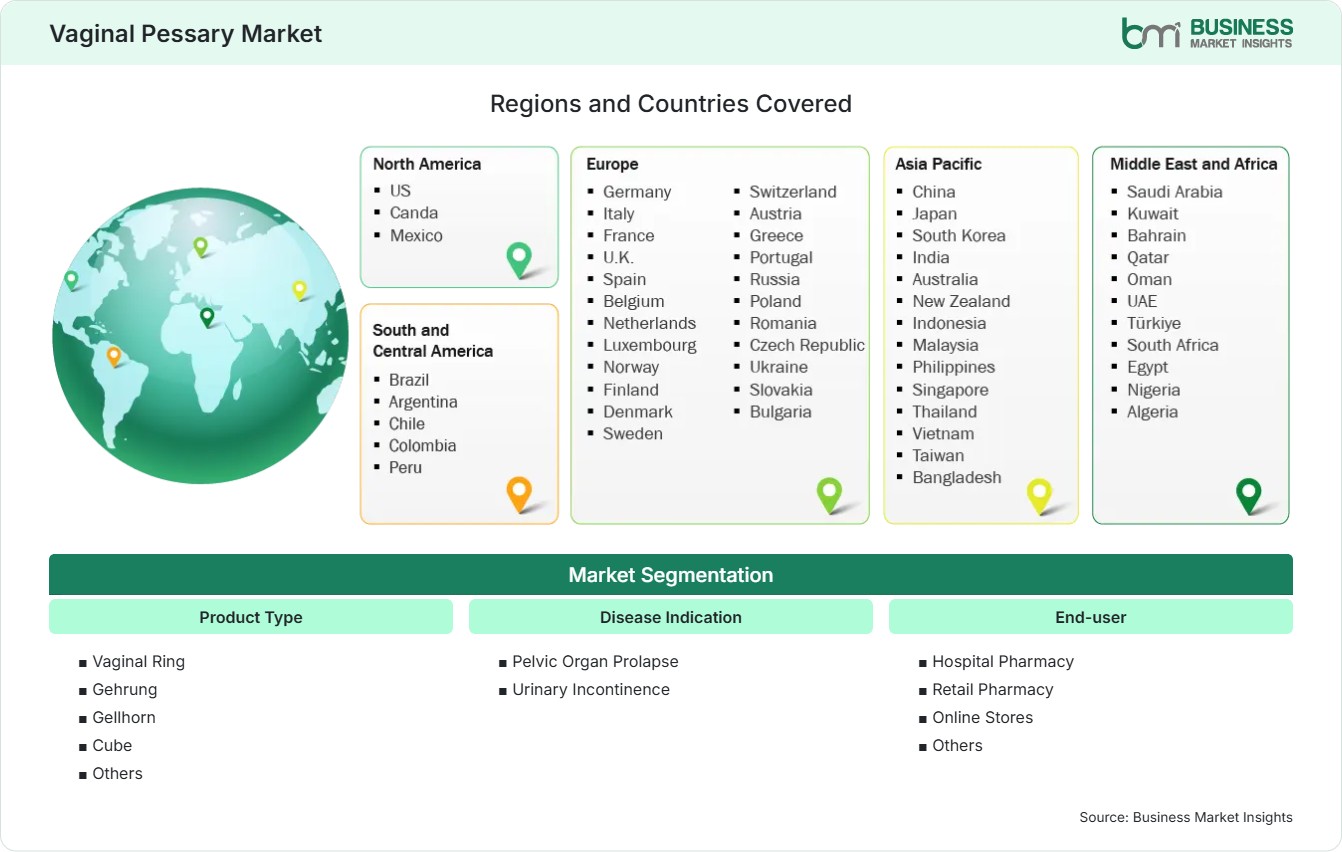
North America accounted for a 36%–39% share in 2025 and is projected to grow at a CAGR of 8.90%–9.40% during 2026–2033. The region benefits from advanced healthcare systems, higher diagnosis rates of pelvic disorders, established reimbursement frameworks, and strong physician awareness. The Vaginal Pessary Market share remains supported by the US and Canada due to increasing adoption of non-surgical therapies among elderly women. Growing clinical acceptance and improved device availability continue strengthening regional expansion.
- The US remains the largest contributor due to advanced gynecological care infrastructure, increasing pelvic organ prolapse diagnosis, and growing physician preference for conservative treatment approaches.
- Canada is witnessing adoption through improved women’s healthcare services, expanding specialist availability, and increasing awareness regarding non-invasive management options for pelvic floor disorders.
- Healthcare providers are increasingly recommending pessaries as first-line conservative solutions due to lower procedural risks, cost advantages, and suitability for patients requiring long-term symptom management.
- Manufacturers are strengthening regional presence through physician education programs, improved fitting technologies, and partnerships with healthcare institutions to enhance patient outcomes.
US Vaginal Pessary Market
The US accounted for a 31%–34% share in 2025 and is expected to expand at a CAGR of 9.00%–9.50% between 2026–2033. Strong healthcare infrastructure, rising elderly female demographics, and increasing awareness of pelvic health conditions are supporting adoption. The Vaginal Pessary Market in the country is influenced by improved diagnosis rates, physician familiarity, and growing preference for non-surgical interventions. Healthcare providers are increasingly integrating pessary therapy into routine gynecological care pathways.
- Rising prevalence of pelvic organ prolapse among aging women is increasing demand for effective conservative treatment methods and long-term symptom management solutions.
- Physician training initiatives and improved fitting techniques are enhancing confidence among healthcare professionals, leading to greater adoption of vaginal pessaries in clinical settings.
- Digital healthcare platforms and online medical device access are improving patient convenience while supporting broader availability of specialized gynecological products.
Europe Vaginal Pessary Market
Europe represented a 27%–30% share in 2025 and is anticipated to grow at a CAGR of 8.40%–8.90% from 2026–2033. Germany, the UK, France, and Italy are leading markets due to established healthcare systems and increasing focus on women’s health. The region benefits from rising elderly populations, improved pelvic disorder management, and physician awareness of conservative treatment options. Growing healthcare expenditure and supportive medical device frameworks are encouraging vaginal pessary market development across European countries.
- Germany demonstrates steady growth through advanced gynecological services, strong healthcare reimbursement structures, and increasing adoption of non-invasive pelvic disorder management solutions.
- The UK market is supported by expanding women’s health initiatives, increasing clinical awareness, and healthcare efforts focused on improving treatment access for pelvic floor conditions.
- France and Italy are experiencing increased adoption due to aging demographics, improved specialist care availability, and growing acceptance of pessary-based treatment approaches.
- European manufacturers are focusing on ergonomic device development, patient comfort improvements, and customized solutions to address diverse clinical requirements.
- Regulatory emphasis on medical device quality and patient safety continues supporting innovation and commercialization activities across the regional healthcare ecosystem.
Asia Pacific Vaginal Pessary Market
Asia Pacific accounted for a 22%–25% share in 2025 and is forecast to grow at a CAGR of 11.00%–11.50% during 2026–2033. China, Japan, India, South Korea, and Southeast Asian countries represent important markets. As more elderly people are becoming common, as healthcare facilities expand, awareness about pelvic disorders grows, and access to gynecology care improves, more regions are adopting the technology. The factors driving the growth in the market include healthcare investment and demand for non-surgical options.
- China is expanding through improved hospital infrastructure, increasing women’s health awareness, and growing availability of medical devices for pelvic disorder management.
- India represents a high-growth opportunity due to rising healthcare accessibility, increasing elderly female populations, and growing awareness regarding conservative gynecological treatment options.
- Japan benefits from its aging population, advanced healthcare system, and strong focus on improving quality of life for elderly women with pelvic health conditions.
- Southeast Asian countries are gaining momentum through healthcare modernization, increasing specialist availability, and improving access to affordable medical device solutions.
- Local and international manufacturers are exploring regional partnerships to improve distribution coverage and increase adoption in underserved healthcare markets.
Rest of World Vaginal Pessary Market
South and Central America, along with Middle East and Africa markets, accounted for a combined 8%–11% share in 2025 and are expected to grow at a CAGR of 9.50%–10.00% during 2026–2033. Brazil, Mexico, Saudi Arabia, and South Africa are emerging contributors. Increased investment in healthcare, better medical facilities, and increased awareness regarding women’s health concerns have improved the adoption possibilities. The healthcare organizations are concentrating on enhancing the diagnosis and treatment opportunities in developing regions.
- Brazil is developing through increasing gynecological service availability, rising awareness of pelvic disorders, and expanding access to conservative treatment options.
- Mexico benefits from healthcare modernization efforts, increasing medical device availability, and growing demand for affordable treatment approaches among aging female populations.
- Middle Eastern markets are advancing through healthcare infrastructure investments, specialist service expansion, and increasing focus on women’s health management programs.
- South Africa and neighboring markets are improving access through healthcare initiatives, rising medical awareness, and expansion of specialized gynecological services.
- Regional opportunities are supported by partnerships between manufacturers and healthcare providers aimed at increasing education, accessibility, and device adoption.