
Vaccines Market Outlook: Size, Share, Trends, Growth Analysis, Competitive Landscape & Forecast, 2026-2033

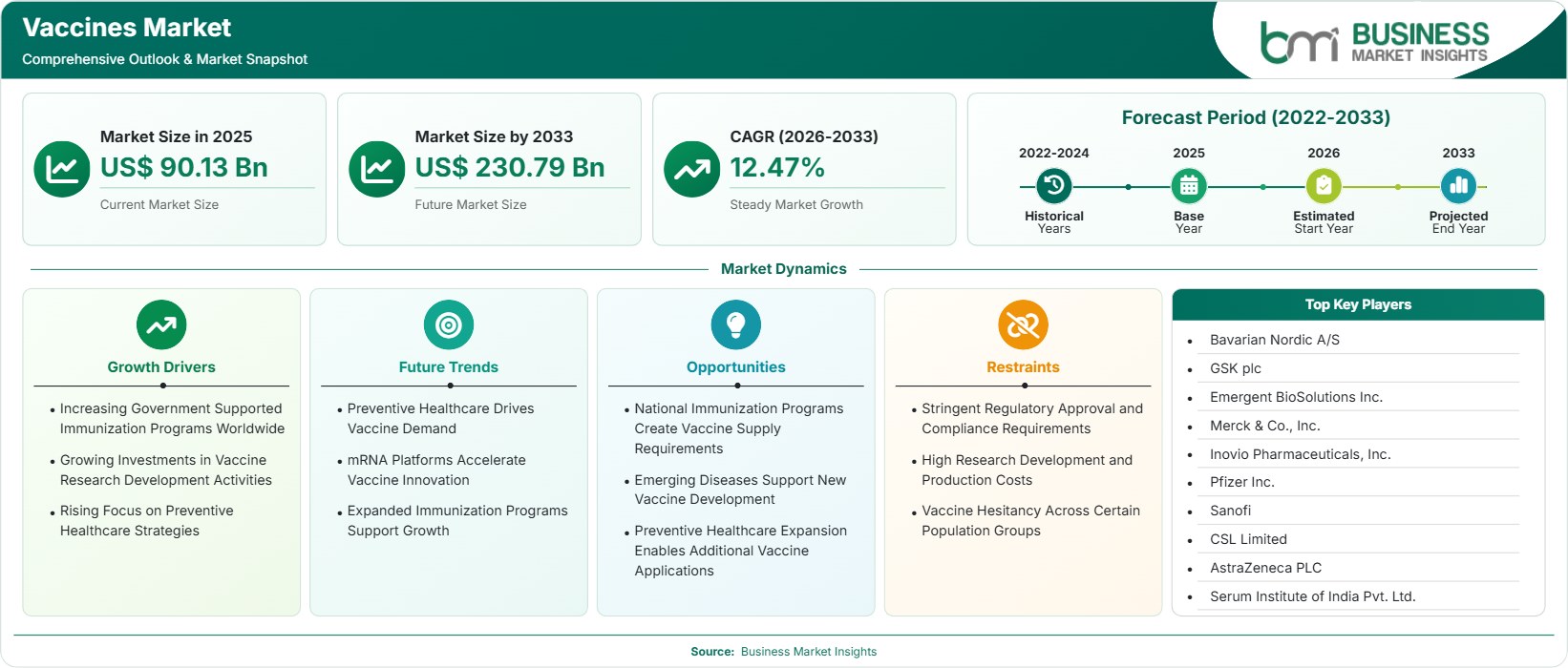
The Vaccines Market size was valued at US$ 90.13 Billion in 2025 and is projected to reach US$ 230.79 Billion by 2033, growing at a CAGR of 12.47% during 2026–2033. Expanding immunization programs, rising adult vaccination uptake, technological advances in mRNA platforms, increasing infectious disease surveillance, and government-supported procurement initiatives are creating substantial long-term opportunities across developed and emerging healthcare systems.

Report Coverage
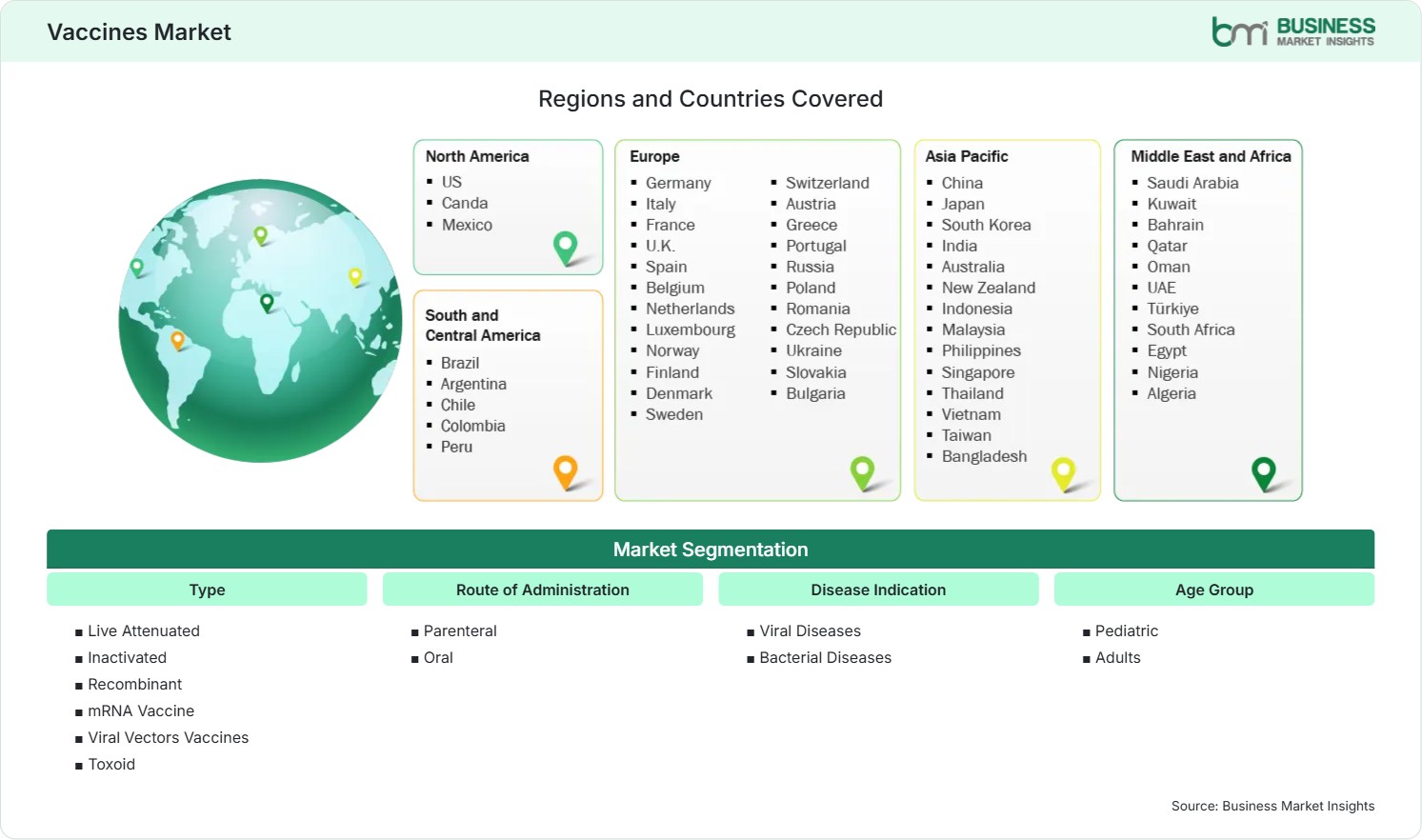
  • Type: Live Attenuated, Inactivated, Recombinant, mRNA Vaccine, Viral Vectors Vaccines, Toxoid
  • Route of Administration: Parenteral, Oral
  • Disease Indication: Viral Diseases, Bacterial Diseases
  • Age Group: Pediatric, Adults
  • Distribution Channel: Hospital, Retail Pharmacies, Government Suppliers
US$ 90.13 Bn Market size in 2025
US$ 230.79 Bn Market Size by 2033
12.47% CAGR, 2026 - 2033
2026-2033 Forecast Period

AI Overview

Vaccines Market Summary

  • North America Region: North America holds a market share of 37%–40% in 2025, growing with a CAGR of 11.5%–12.0% during 2026–2033. Strong immunization infrastructure, advanced vaccine research, favorable reimbursement systems, expanding adult vaccination campaigns, and continuous product innovation support sustained market expansion and commercialization opportunities across healthcare networks. Brief U.S. analysis: The U.S. remains the regional growth engine, supported by robust vaccine development pipelines and an estimated CAGR of 11.8%–12.3% through 2033.
  • Fastest Growing Region: Asia Pacific accounts for 24%–27% of the market in 2025 and is projected to grow at a CAGR of 14.5%–15.2% during 2026–2033. Expanding healthcare access, rising birth cohorts, growing government immunization budgets, local manufacturing investments, and increasing awareness of preventive healthcare accelerate vaccine adoption across developing economies.
  • Leading Segment: Viral Diseases holds a market share of 50%–54% in 2025 and advances at a CAGR of 12.8%–13.5% during 2026–2033. Strong demand for influenza, HPV, hepatitis, RSV, shingles, and pediatric immunization programs supports consistent product utilization across public and private healthcare systems globally.
  • High Growth Segment: mRNA Vaccine accounts for 15%–18% of the market in 2025 and is expected to register a CAGR of 18.0%–19.5% during 2026–2033. Expanding research applications, rapid development capabilities, enhanced efficacy profiles, and pipeline diversification continue attracting pharmaceutical investment and regulatory attention worldwide.
  • Key Market Opportunity: Expansion of adult immunization schedules, combination vaccines, next-generation respiratory disease prevention platforms, and localized manufacturing capabilities creates significant commercial opportunities while improving vaccination coverage across underserved populations globally.
  • Major Market Players: Bavarian Nordic A/S, GSK plc, Emergent BioSolutions Inc., Merck & Co., Inc., Inovio Pharmaceuticals, Inc., Pfizer Inc., Sanofi, CSL Limited, AstraZeneca PLC, and Serum Institute of India Pvt. Ltd.
Strategic Insights

Vaccines Market: Strategic Insights

Vaccines Market Strategic Framework
FREE PDF
Request your free sample
Request free sample
Stakeholder View

Key Takeaways

  • The industry value chain is increasingly integrating research organizations, contract development manufacturers, cold-chain logistics providers, healthcare institutions, and government procurement agencies, creating a more resilient and responsive vaccine supply ecosystem.
  • Adult immunization programs and respiratory disease prevention applications represent some of the strongest commercial opportunities, particularly as healthcare systems expand recommendations beyond traditional pediatric vaccination schedules.
  • Innovation is shifting toward mRNA technologies, combination formulations, thermostable products, and platform-based development approaches that reduce time-to-market while improving efficacy and manufacturing efficiency.
  • Asia Pacific presents a compelling investment opportunity due to expanding healthcare budgets, growing domestic manufacturing capabilities, favorable demographics, and increasing immunization coverage targets across large population bases.
  • Strategic partnerships, licensing agreements, and regional manufacturing investments continue shaping competitive positioning as companies seek supply security, geographic diversification, and enhanced market access.
  • Governments are increasingly prioritizing pandemic preparedness and infectious disease prevention strategies, supporting sustained procurement activity and encouraging long-term investments in production capacity.
Geographic Outlook

Vaccines Market Regional Highlights

North America Vaccines Market

North America is considered the leading regional market, contributing 37%–40% of the global market share in 2025 and growing at a CAGR of 11.5%–12.0% through 2033. With strong public health infrastructure, research facilities, and vaccination awareness, demand will remain strong in the region. Demand from the health care industry and government purchases helps drive growth in consumption. The Vaccines Market share remains highest in this region due to extensive immunization coverage and rapid adoption of innovative vaccine technologies.

  • Major pharmaceutical companies continue expanding manufacturing capacity and research programs focused on respiratory infections, oncology-related immunotherapies, and next-generation preventive healthcare solutions, strengthening commercialization potential and supply security.
  • Government agencies support disease surveillance programs and stockpile initiatives, creating stable procurement channels while encouraging development of vaccines targeting emerging infectious threats and public health priorities.
  • Growing adult immunization participation contributes significantly to revenue expansion, particularly across influenza, RSV, shingles, and pneumococcal disease prevention programs within aging population segments.
  • Advanced cold-chain logistics networks improve product accessibility across healthcare facilities, enabling efficient distribution of complex biologics and supporting broader immunization coverage objectives.
  • Increasing partnerships between biotechnology innovators and established manufacturers accelerate clinical development timelines while improving access to specialized technologies and research capabilities.

US Vaccines Market

The United States accounts for approximately 74%–78% of the North American Vaccines Market revenue, which, which will grow at a CAGR of 11.8%- 12.3% up to 2033. Heavy R&D investments, extensive clinical trials, and a regulatory framework create a combination that enables vaccine innovation. Public vaccination programs and healthcare spending by private organizations ensure stable demand in the pediatric and adult markets. Manufacturing readiness and pandemic preparedness contribute to domestic vaccine production and competitiveness.

  • Federal vaccination initiatives support broad access to preventive healthcare solutions while encouraging uptake among vulnerable populations through public funding mechanisms and awareness campaigns.
  • Strong biotechnology ecosystems facilitate development of innovative platforms, including mRNA and recombinant technologies, improving product pipelines and commercial prospects across multiple disease categories.
  • Healthcare providers increasingly recommend adult vaccinations, creating incremental revenue opportunities and strengthening preventive care adoption throughout aging demographic groups.
  • Manufacturing modernization investments improve supply chain resilience, reduce dependency on external production sources, and support rapid response capabilities for emerging disease outbreaks.

Europe Vaccines Market

Europe accounts for 27%–30% of global Vaccines Market revenue in 2025 and is projected to grow at a CAGR of 11.0%–11.8% through 2033. Effective immunization, a stringent regulatory framework, and extensive coverage of the public health care system ensure steady growth of the market. Demand in the region is positively influenced by rising awareness about adult vaccinations and the investment being made towards the prevention of infectious diseases. Germany is at the forefront when it comes to earning revenues in the region. Eastern Europe has relatively higher expansion rates.

  • Germany maintains regional leadership due to advanced healthcare infrastructure, strong pharmaceutical manufacturing capabilities, and broad immunization program implementation across multiple disease categories.
  • The United Kingdom demonstrates sustained innovation activity through biotechnology partnerships, clinical research programs, and investments in advanced vaccine development platforms.
  • Poland and Romania represent higher-growth opportunities, supported by healthcare modernization initiatives, expanded vaccination campaigns, and improving healthcare expenditure profiles.
  • Public procurement programs continue supporting predictable demand patterns while facilitating broad access to recommended immunization products across demographic groups.
  • Regional manufacturers increasingly invest in advanced biologics production technologies, enhancing competitiveness and supporting supply chain resilience.

Asia Pacific Vaccines Market

Asia Pacific holds 24%–27% of global Vaccines Market revenue in 2025 and is anticipated to register the fastest CAGR of 14.5%–15.2% through 2033. Increased spending on healthcare, an increase in immunization rates, and increased investment in the production of vaccines ensure rapid growth in the industry. Large populations and increasing access to healthcare systems have ensured increasing demand. The leading player in terms of revenue generation is China, whereas India shows the best potential for growth in the region.

  • China benefits from extensive manufacturing capabilities, strong government support, and increasing investments in biotechnology innovation, strengthening its position within regional vaccine production and distribution networks.
  • India records one of the highest growth rates due to expanding immunization programs, large birth cohorts, rising healthcare awareness, and increasing export-oriented manufacturing activities.
  • Southeast Asian countries continue expanding vaccination coverage through public health initiatives and investments in healthcare infrastructure development.
  • Regional manufacturers are increasingly participating in global supply chains, improving technology access and strengthening production capabilities across multiple vaccine categories.
  • Growing middle-class populations support higher healthcare spending and increased acceptance of preventive healthcare interventions throughout the region.

Rest of World Vaccines Market

The Rest of World region represents 8%–10% of global Vaccines Market revenue in 2025 and is expected to advance at a CAGR of 12.5%–13.2% through 2033. Expanding vaccinations on a national level and better access to healthcare facilities help South and Central America. The largest regional contributor is still Brazil, with its well-developed system of public vaccination. Healthcare investments and international immunization alliances help increase the demand in the Middle East and Africa regions. Leading healthcare development projects in the Middle East are conducted in Saudi Arabia and the United Arab Emirates.

  • Brazil continues strengthening vaccine procurement and domestic production initiatives, improving supply stability while supporting public health objectives across diverse population groups.
  • Mexico benefits from expanding healthcare infrastructure and increasing government support for immunization coverage, contributing to steady market expansion.
  • Saudi Arabia is investing significantly in biotechnology development, healthcare transformation programs, and disease prevention initiatives to strengthen long-term healthcare resilience.
  • International organizations support vaccination campaigns throughout African countries, improving access and encouraging broader preventive healthcare adoption.
  • Public-private partnerships continue expanding healthcare infrastructure and distribution capabilities, enhancing product availability across underserved regions.
Global Market Geography
FREE PDF
Request your free sample
Request free sample
Segment Analysis

Vaccines Market Segmentation

Type

The type segment continues to be an important factor influencing product development initiatives and business success. The need for protecting against viral diseases, technological advancements, and expanded vaccinations has been continuously impacting the adoption trends among various vaccine types. This segment accounted for a market share of approximately 30%–34% for leading technologies in 2025 and is projected to advance at a CAGR of 13.0%–14.0% through 2033. The Vaccines Market scope continues expanding as manufacturers diversify platform technologies to address emerging and established infectious diseases.

  • Live Attenuated: Live attenuated vaccines maintain strong utilization in pediatric immunization programs due to durable immune responses, broad protection profiles, and established effectiveness across multiple viral disease prevention applications.
  • Inactivated: Inactivated vaccines remain widely adopted where safety considerations and stable storage characteristics are priorities, supporting large-scale public immunization initiatives and routine vaccination schedules.
  • Recombinant: Recombinant vaccines benefit from advances in protein engineering technologies, enabling improved antigen targeting, enhanced manufacturing consistency, and broader applicability across infectious disease prevention programs.
  • mRNA Vaccine: mRNA vaccine adoption is accelerating due to rapid development capabilities, scalable production processes, and growing research investments supporting expansion into multiple therapeutic and preventive applications.
  • Viral Vectors Vaccines: Viral vector vaccines continue attracting interest because of strong immunogenicity, platform adaptability, and potential application across both endemic disease prevention and outbreak response strategies.
  • Toxoid: Toxoid vaccines maintain essential roles in established immunization schedules, supporting protection against bacterial toxin-mediated diseases through proven safety and long-term public health effectiveness.

Route of Administration

Route of administration  affects compliance, efficacy, health care delivery systems, and purchasing methods. The increasing attempts at improving access and streamlining vaccination processes are affecting the development agendas of products. This segment recorded a Vaccines Market share of 72%–76% for the dominant category in 2025 and is anticipated to expand at a CAGR of 12.2%–13.0% through 2033. Manufacturers continue evaluating alternative delivery approaches to improve coverage and healthcare system efficiency.

  • Parenteral: Parenteral administration dominates due to established clinical protocols, broad product availability, reliable immune response generation, and compatibility with most existing immunization infrastructure worldwide.
  • Oral: Oral vaccines are gaining attention because of easier administration, improved patient acceptance, reduced healthcare resource requirements, and suitability for large-scale immunization programs in resource-constrained environments.

Disease Indication

Disease indication represents the most profitable segment in terms of revenue because of the various infectious diseases that need preventive treatment. The widening of public health concerns and constant development of products have led to consistent demand for these two types of products. This segment held a market share of 50%–54% in 2025 and is forecast to register a CAGR of 12.8%–13.5% through 2033. The Vaccines Market trends increasingly favor broader disease coverage and combination immunization approaches.

  • Viral Diseases: Viral disease vaccines account for the largest demand share, supported by extensive immunization programs, increasing adult vaccination uptake, and continuous innovation targeting respiratory and endemic infections.
    • Hepatitis A: Adoption remains supported by travel-related immunization requirements, public health recommendations, and disease prevention efforts in regions with elevated infection risks.
    • Hepatitis B: Hepatitis B vaccines maintain strong utilization due to universal immunization programs, newborn vaccination initiatives, and long-standing public health prevention strategies.
    • Polio: Polio vaccination remains essential within global eradication efforts, supported by international organizations and continued immunization campaigns across priority regions.
    • RSV: RSV vaccines are experiencing rising adoption driven by growing awareness of respiratory disease risks among older adults and vulnerable patient populations.
    • Influenza: Influenza vaccines continue generating substantial demand through annual vaccination programs, employer-sponsored healthcare initiatives, and government-supported disease prevention efforts.
    • HPV: HPV vaccination uptake is increasing as healthcare authorities emphasize cancer prevention benefits and expand eligibility recommendations across broader demographic groups.
    • Measles/Mumps/Rubella: Measles, mumps, and rubella vaccines remain foundational components of pediatric immunization schedules and outbreak prevention programs globally.
    • Rotavirus: Rotavirus vaccines support reductions in childhood hospitalization rates and continue gaining acceptance within national immunization frameworks in developing economies.
    • Shingles (Herpes Zoster): Shingles vaccination demand is expanding among aging populations due to increasing awareness of disease burden and preventive healthcare benefits.
  • Bacterial Diseases: Bacterial disease vaccines remain essential to public health strategies, supported by rising antimicrobial resistance concerns and increasing focus on preventive healthcare interventions.
    • Pneumococcal Disease: Pneumococcal vaccines are widely adopted among pediatric and elderly populations to reduce severe respiratory infections and associated healthcare costs.
    • Diphtheria: Diphtheria vaccines continue to support routine immunization schedules and contribute significantly to maintaining low disease incidence rates globally.
    • Meningococcal Disease: Meningococcal vaccination programs are expanding through school-based immunization initiatives and travel-related disease prevention requirements.

Age Group

Age-specific immunization requirements significantly influence product demand, procurement strategies, and clinical development priorities. Expanding adult vaccination recommendations are reshaping traditional market dynamics while pediatric programs remain foundational. The leading category accounted for 56%–60% of the Vaccines Market revenue in 2025 and is projected to advance at a CAGR of 11.8%–12.5% through 2033. Long-term growth is supported by increasing awareness regarding lifelong disease prevention and preventive healthcare participation.

  • Pediatric: Pediatric vaccination remains the cornerstone of global immunization efforts, supported by government-funded programs, school-entry requirements, and strong public health policy frameworks.
  • Adults: Adult vaccination demand is expanding rapidly due to aging populations, broader healthcare recommendations, employer wellness programs, and increasing awareness of preventable infectious diseases.

Distribution Channel

Distribution channels play a crucial role in ensuring product accessibility, supply continuity, and vaccination coverage expansion. Procurement strategies vary significantly across developed and emerging healthcare systems. This segment recorded Vaccines Market share of 60%–64% for the dominant channel in 2025 and is expected to grow at a CAGR of 12.0%–12.8% through 2033. Evolving healthcare delivery models continue influencing channel development and purchasing behaviors.

  • Hospital & Retail Pharmacies: Hospital and retail pharmacy networks dominate distribution due to extensive patient access, established storage infrastructure, and growing participation in adult immunization delivery.
  • Government Suppliers: Government suppliers remain critical for national immunization programs, large-scale procurement initiatives, public health campaigns, and equitable vaccine access objectives.
Market Forces

Vaccines Market Dynamics

Key Market Drivers

Expansion of National Immunization Programs Worldwide

Global vaccination programs continue to increase demand at a high rate in both developed and developing healthcare systems. As per the global health organizations, child immunization programs save millions of lives each year and represent some of the most cost-effective healthcare programs. The government is increasing its healthcare budget to avoid diseases, and global vaccination programs such as the WHO, Gavi, and UNICEF keep on funding vaccines. Vaccination recommendations for all age groups have increased the addressable demand. The growth of the vaccine market is now more linked to government purchases, increased marketing efforts, and policies that will help improve the vaccination rate among disadvantaged segments around the world.

Technological Advancements in Vaccine Development Platforms

Rapid innovation across mRNA, recombinant protein, and viral vector technologies is transforming development timelines and manufacturing flexibility. Platform technologies help respond to the threats from new pathogens quickly while customizing the products for different uses. Investments in next-generation technologies that make the products more effective and easier to use, in addition to improving their storage qualities, have been growing in research centers and pharmaceutical firms. In addition, digital technologies and AI-driven discovery have been making innovation cycles faster. These trends create new commercial opportunities by reducing development risks and enabling companies to address a wider range of diseases through technology.

Growing Demand for Adult and Elderly Vaccination

Population aging and increasing awareness of infectious disease risks are driving expansion beyond traditional pediatric immunization markets. Healthcare agencies have widened the scope of recommendations on vaccinations against influenza, RSV, shingles, pneumococcal infections, and other adult vaccines. Increasing healthcare costs, along with preventive care programs, are leading to greater participation in routine vaccination among seniors. Vaccination is being encouraged by employers, healthcare agencies, and insurers in order to lower healthcare costs and save on lost work productivity. This will create sustained demand for multiple products while generating additional revenue streams for manufacturers.

Key Market Opportunities

Expansion of Combination and Multivalent Vaccine Development

Combination vaccines have distinct advantages, including reducing the number of hospital visits required for vaccination and enhancing compliance. Companies involved in drug production are venturing into developing vaccines that protect against several diseases using a single vaccine. Such vaccines will help ensure the effective use of healthcare resources and improve health outcomes. There is greater market potential in emerging countries where there is a need for a solution that will effectively boost immunization levels. The Vaccines Market Forecasts indicate increased demand for disease prevention solutions, creating long-term opportunities for manufacturers.

Localization of Manufacturing in Emerging Economies

Many countries are prioritizing domestic production capabilities to enhance healthcare security and reduce dependence on imported vaccines. The investments that are being made in regional manufacturing capabilities, technology transfers, and public-private partnerships have created many new business opportunities. Localized manufacturing improves supply chain reliability, reduces distribution time, and supports the nation’s preparedness goals. The governments of Asia, the Middle East, and Latin America have been incentivizing investments in the biotech sector through regulatory measures. These companies will definitely benefit from increased purchasing programs and healthcare spending.

Development of Vaccines for Emerging Infectious Diseases

The continued emergence of novel pathogens highlights the importance of rapid-response vaccine platforms and diversified research pipelines. Public health agencies and funding organizations are stepping up their support for initiatives targeting diseases with the potential to cause a pandemic. Drug manufacturers that have developed flexible technology can benefit from shorter product commercialization periods and additional income. Surveillance systems are becoming more advanced, and there are more cooperation initiatives within the global healthcare community, which increases the capacity for detecting disease and implementing prevention tactics.

Market Restraints and Challenges

Complex Regulatory Requirements and Approval Timelines

Factor: Vaccine development is subject to extensive clinical validation, manufacturing inspections, pharmacovigilance requirements, and multi-stage regulatory review processes across major jurisdictions.

Impact: Delays in the approval process raise the costs of development and also postpone commercialization efforts, especially in the case of biotech companies that have limited financial capacity. Differences in regulation between various nations pose further challenges in developing a global launch strategy. Manufacturers need to make significant investments in quality systems and surveillance efforts. Though this ensures product safety and efficacy, it limits innovation efforts in terms of quick responses to new diseases.

Cold-Chain Dependence and Supply Chain Vulnerabilities

Factor: Many vaccine products require temperature-controlled transportation, specialized storage infrastructure, and continuous monitoring throughout distribution networks.

Impact: The failure of the cold chain can reduce the effectiveness of the product, increase wastage, and escalate operating costs. The developing world does not have the necessary infrastructure, thus restricting the availability of more advanced biological products. Furthermore, political instability, logistical challenges, and shortage of basic raw materials could disrupt the process of manufacturing. Logistical skills are vital for ensuring the constant supply of the products.

Company Analysis

Competitive Landscape

The competitive environment is characterized by continuous innovation, platform technology advancement, strategic alliances, and manufacturing expansion initiatives. Vaccines Market analysis indicates that established pharmaceutical companies maintain strong positions through diversified portfolios, while specialized biotechnology firms focus on next-generation vaccine technologies and emerging disease applications.

Company Name

Overview

Products and Services relevant to this market

Bavarian Nordic A/S

Specialized biotechnology company focused on immunotherapy and vaccine development with strong expertise in infectious disease prevention and public health preparedness.

Smallpox, mpox, travel vaccines, infectious disease vaccines, research partnerships, manufacturing support, and commercialization services.

GSK plc

Global pharmaceutical leader with extensive vaccine research capabilities, broad commercial reach, and strong public health partnerships.

Respiratory vaccines, shingles vaccines, pediatric vaccines, meningococcal products, development programs, and immunization solutions.

Emergent BioSolutions Inc.

Biopharmaceutical company specializing in preparedness solutions and medical countermeasures for public health protection.

Anthrax vaccines, biodefense products, contract development, manufacturing services, and infectious disease prevention technologies.

Merck & Co., Inc.

Major healthcare company with diversified vaccine portfolio and substantial global research investments.

HPV vaccines, pediatric vaccines, infectious disease prevention products, clinical development, and manufacturing capabilities.

Inovio Pharmaceuticals, Inc.

Biotechnology company focused on DNA-based medicines and innovative vaccine technologies targeting infectious diseases.

DNA vaccine platforms, immunotherapy research, clinical development programs, and next-generation vaccine technologies.

Pfizer Inc.

Global pharmaceutical organization with advanced biologics capabilities and extensive vaccine commercialization infrastructure.

mRNA vaccines, pneumococcal vaccines, RSV vaccines, clinical development services, and global distribution networks.

Sanofi

International healthcare company with broad vaccine manufacturing operations and strong global market presence.

Influenza vaccines, pediatric vaccines, travel vaccines, manufacturing solutions, and public health partnerships.

CSL Limited

Biotechnology company with significant expertise in plasma therapies and vaccine development.

Influenza vaccines, specialty biologics, manufacturing services, research programs, and immunization products.

AstraZeneca PLC

Global biopharmaceutical company investing in advanced biologics and infectious disease prevention initiatives.

Viral vector technologies, respiratory disease programs, vaccine partnerships, and research collaborations.

Trust & Transparency

Research Methodology

The market analysis combines proprietary research with secondary data from government agencies, company disclosures, regulatory filings, industry databases and expert interviews. Market estimates are validated through data triangulation, cross-market benchmarking and analyst review.

View Full Research Methodology

Questions Answered

Frequently Asked Questions

What are the major challenges facing manufacturers?

Key challenges include stringent regulatory requirements, complex clinical development processes, cold-chain infrastructure dependence, supply chain risks, and the need for continuous investments in manufacturing and quality systems.

How does the Vaccines Market Report help strategic decision-makers?

The Vaccines Market Report provides insights into competitive positioning, growth opportunities, regional demand patterns, technology trends, regulatory developments, and investment priorities that support informed business planning.

Which technology segment is showing the strongest innovation activity?

mRNA vaccine technologies are attracting substantial investment because of rapid development capabilities, scalable manufacturing potential, and applicability across infectious disease and therapeutic research programs.

Which region is expected to record the fastest growth through 2033?

Asia Pacific is projected to register the highest growth due to expanding healthcare expenditure, increasing vaccine manufacturing investments, larger target populations, and supportive government immunization programs.

What factors are driving demand across the global vaccine industry?

Growing immunization coverage, adult vaccination programs, technological innovation, government procurement initiatives, pandemic preparedness investments, and rising awareness of preventive healthcare are the primary drivers supporting long-term industry expansion.

Access the Full Vaccines Market Report

Get segment-level forecasts, regional estimates, competitive benchmarking, company profiles and downloadable Excel datasets.

Access the full Vaccines Market Report
350 pages PDF & Excel | 2026-09-21
Similar Research

Related Market Reports