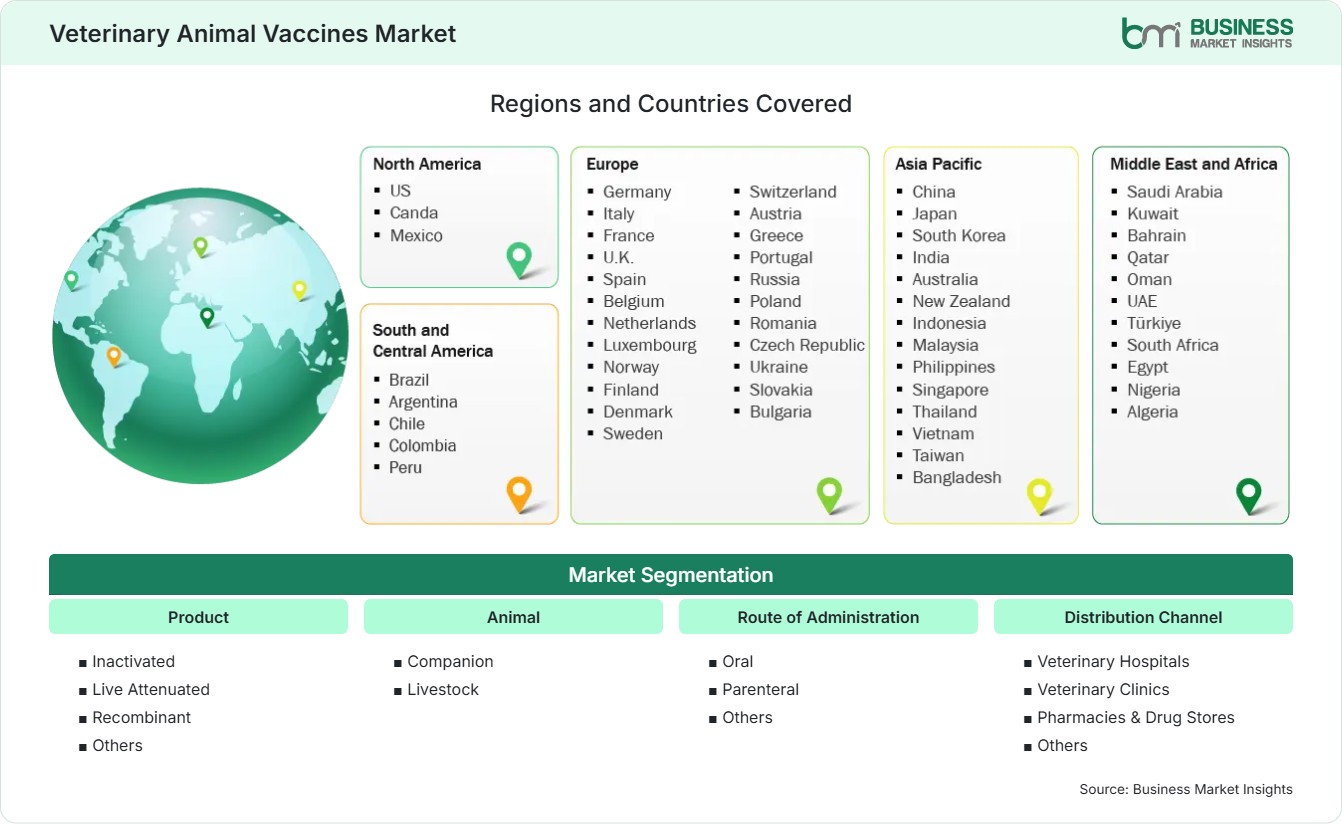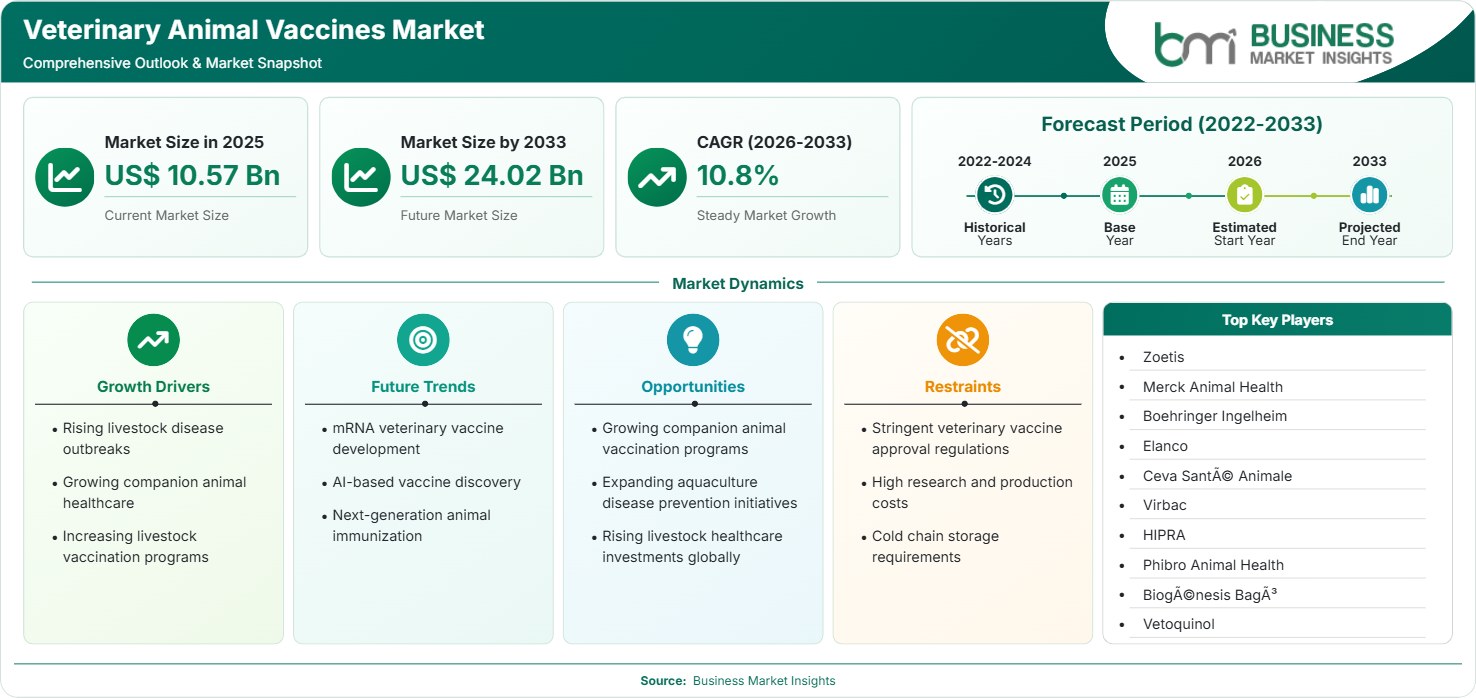
Veterinary Animal Vaccines Market Regional Highlights
North America Veterinary Animal Vaccines Market
North America accounted for a share range of 34%–37% in 2025 and is projected to grow at a CAGR of 9%–11% during 2026–2033. The region maintains a strong position due to developed veterinary healthcare infrastructure, high companion animal ownership, advanced research capabilities, and established livestock vaccination programs. The Veterinary Animal Vaccines Market share in North America is supported by preventive healthcare adoption.
- The United States remains the largest contributor due to strong animal healthcare spending and biotechnology capabilities.
- Companion animal vaccination demand is increasing with rising pet ownership and preventive veterinary care adoption.
- Livestock producers are implementing vaccination programs to improve animal health and productivity.
- Veterinary companies are investing in advanced vaccine research and development activities.
US Veterinary Animal Vaccines Market
The US represented a share range of 29%–32% in 2025 and is expected to expand at a CAGR of 9%–11% between 2026–2033. The country remains a major market due to strong veterinary service networks, high pet healthcare expenditure, and advanced animal pharmaceutical capabilities. Demand is supported by livestock disease prevention programs and companion animal healthcare growth.
- Veterinary clinics are expanding preventive vaccination services for companion animals.
- Livestock producers are adopting vaccines to reduce disease risks and production losses.
- Animal health companies are developing innovative vaccine technologies for emerging diseases.
- Research investments are supporting improved animal immunization strategies.
Europe Veterinary Animal Vaccines Market
Europe held a share range of 26%–29% in 2025, growing at a CAGR of 10%–12% during 2026–2033. The region benefits from strong animal welfare standards, advanced veterinary research, and established livestock production systems. Germany, France, and the United Kingdom represent leading markets, while countries such as Spain and the Netherlands provide growth opportunities through livestock healthcare investments.
- Germany supports market expansion through advanced veterinary research and animal healthcare infrastructure.
- France is increasing adoption through livestock vaccination programs and biotechnology development.
- The United Kingdom is investing in companion animal healthcare and disease prevention initiatives.
- European regulations are encouraging quality improvements in veterinary vaccine development.
Asia Pacific Veterinary Animal Vaccines Market
Asia Pacific accounted for a share range of 27%–30% in 2025 and is expanding at a CAGR of 12%–14% during 2026–2033. The region represents the fastest-growing market due to increasing livestock production, rising animal disease concerns, expanding veterinary infrastructure, and government-supported vaccination initiatives. China, India, Japan, and Southeast Asian countries are driving regional growth through animal health modernization and food security programs.
- China is expanding vaccine adoption through livestock disease control programs and large-scale animal production systems.
- India is increasing veterinary vaccination coverage through livestock health initiatives and rural healthcare expansion.
- Japan is adopting advanced animal vaccines through research-driven veterinary healthcare practices.
- Southeast Asian countries are investing in livestock and aquaculture disease prevention programs.
Rest of World Veterinary Animal Vaccines Market
The rest of the world represented a share range of 8%–11% in 2025, growing at a CAGR of 10%–12% during 2026–2033. Latin America, the Middle East, and Africa are adopting veterinary vaccines through livestock production growth, food security initiatives, and improving veterinary access. Brazil, Argentina, Saudi Arabia, and South Africa represent emerging markets supported by livestock industries and disease prevention programs.
- Brazil is increasing veterinary vaccine adoption through large livestock production and export-oriented agriculture.
- Argentina is expanding animal healthcare investments through livestock disease management initiatives.
- Middle Eastern countries are developing animal health programs supporting food security objectives.
- African markets are improving vaccination access through veterinary infrastructure development and livestock protection programs.