
Transplantation Market Outlook: Size, Share, Trends, Growth Analysis, Competitive Landscape & Forecast, 2026-2033

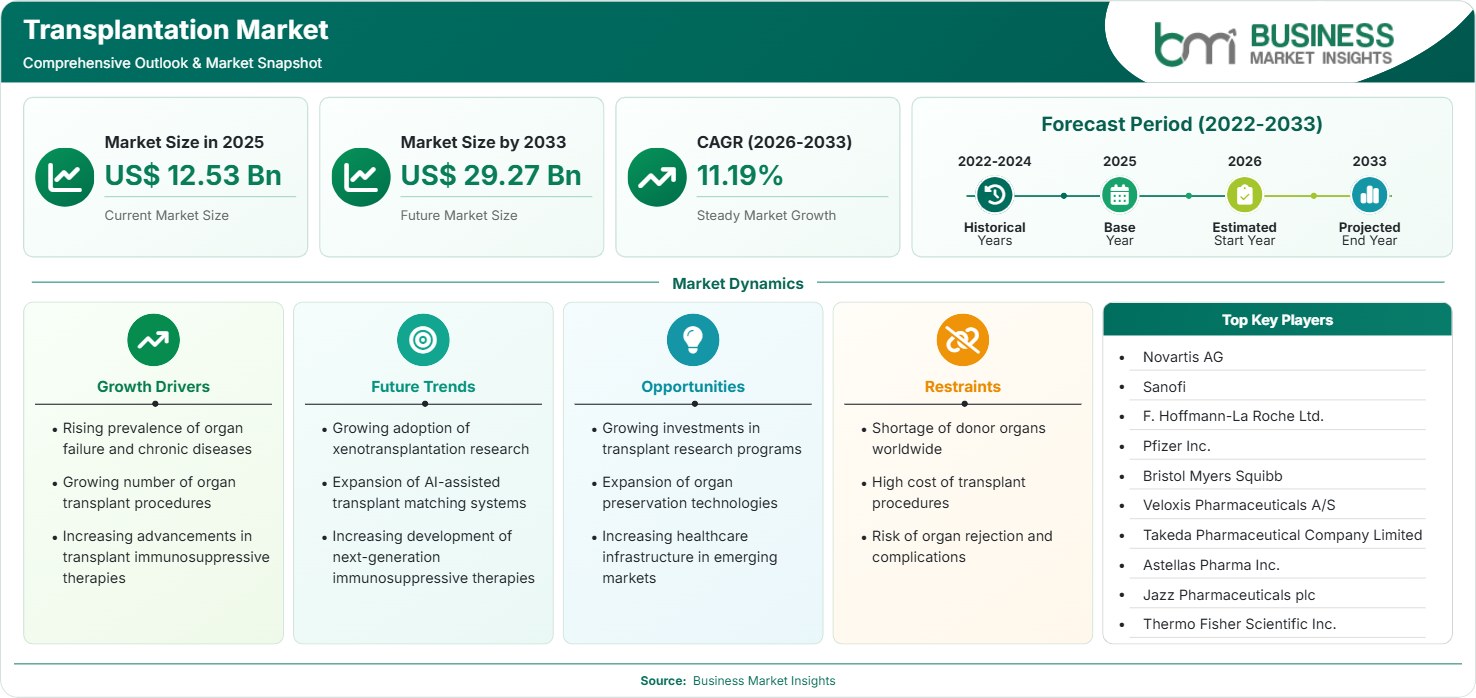
The Transplantation Market size was valued at US$ 12.53 Billion in 2025 and is projected to reach US$ 29.27 Billion by 2033, growing at a CAGR of 11.19% from 2026 to 2033. Rising organ failure cases, increasing transplant procedures, advanced immunosuppressive therapies, preservation innovations, and healthcare infrastructure expansion are driving market development.

Report Coverage
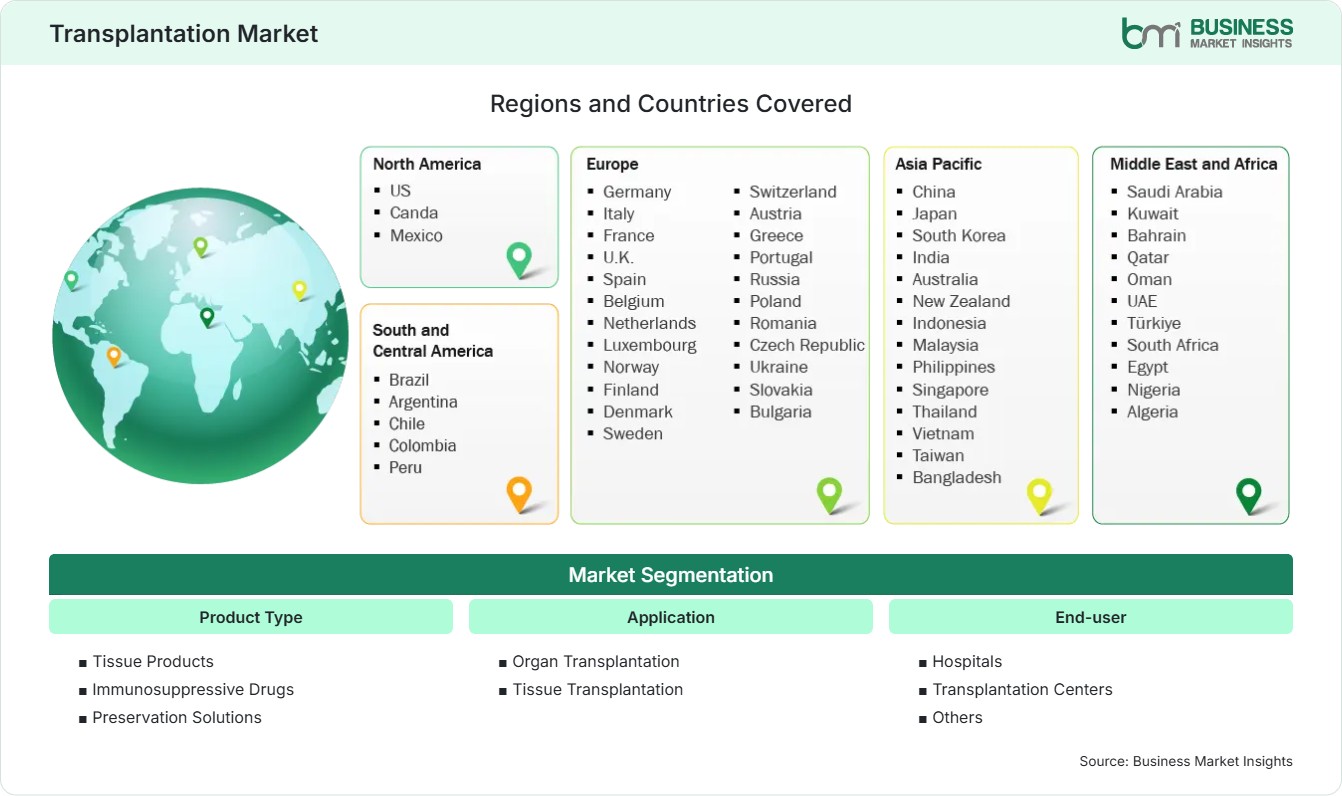
  • Product Type: Tissue Products, Immunosuppressive Drugs, Preservation Solutions
  • Application: Organ Transplantation, Tissue Transplantation
  • End-user: Hospitals, Transplantation Centers, Others
US$ 12.53 Bn Market size in 2025
US$ 29.27 Bn Market Size by 2033
11.19% CAGR, 2026 - 2033
2026-2033 Forecast Period

AI Overview

Transplantation Market Summary

  • North America Region: North America holds a 40%–43% market share in 2025, expanding at a 10.5%–11.0% CAGR during 2026–2033, supported by advanced transplant facilities, rising chronic disease burden, improved healthcare access, and adoption of advanced immunosuppressive treatments. The U.S. market shows steady expansion through transplant infrastructure development and a 10.6%–11.1% CAGR from 2026 to 2033.
  • Fastest Growing Region: Asia Pacific represents 22%–25% market share in 2025 and grows at a 12.8%–13.4% CAGR during 2026–2033, driven by increasing healthcare investments, rising transplantation awareness, expanding medical facilities, and improved access to advanced transplant procedures.
  • Leading Segment: Immunosuppressive Drugs account for 45%–48% market share in 2025 with a 11.5%–12.0% CAGR during 2026–2033, supported by lifelong medication requirements, transplant success improvement, drug innovation, and demand for reduced rejection risks.
  • High Growth Segment: Preservation Solutions represent 18%–21% market share in 2025 and expand at a 12.5%–13.0% CAGR during 2026–2033 due to increasing focus on organ viability, preservation technologies, and improved transplantation outcomes.
  • Key Market Opportunity: Expansion of transplant programs in emerging economies, development of advanced preservation methods, and investment in regenerative medicine are creating opportunities for healthcare companies and technology providers.
  • Major Market Players: Novartis AG, Sanofi, F. Hoffmann-La Roche Ltd., Pfizer Inc., Bristol Myers Squibb, Veloxis Pharmaceuticals A/S, Takeda Pharmaceutical Company Limited, Astellas Pharma Inc., Jazz Pharmaceuticals plc, and Thermo Fisher Scientific Inc.
Strategic Insights

Transplantation Market: Strategic Insights

Transplantation Market Strategic Framework
FREE PDF
Request your free sample
Request free sample
Stakeholder View

Key Takeaways

  • The transplantation value chain includes pharmaceutical manufacturers, medical technology providers, transplant centers, hospitals, research organizations, and healthcare systems. Collaboration across these stakeholders is improving treatment availability, procedure efficiency, and patient management.
  • Immunosuppressive drugs remain a critical opportunity area due to continuous medication requirements after transplantation. Innovation focused on reducing rejection risks, improving safety profiles, and enhancing patient adherence is shaping future product development.
  • Advances in organ preservation technologies, biomarker research, and personalized immunosuppressive approaches are transforming transplantation practices by improving donor organ utilization and supporting better clinical outcomes.
  • Asia Pacific offers strong expansion potential due to increasing healthcare investments, rising transplant awareness, growing specialized medical facilities, and improving access to advanced procedures in emerging economies.
  • Strategic investments and collaborations are increasing as pharmaceutical companies and healthcare technology providers seek opportunities in transplant medicine, immunotherapy research, and organ preservation solutions.
  • Healthcare systems are increasingly focusing on improving transplant accessibility, reducing procedure limitations, and strengthening post-transplant care infrastructure to address growing demand for replacement therapies.
Geographic Outlook

Transplantation Market Regional Highlights

North America Transplantation Market

North America accounts for 40%–43% of the global market in 2025 and is projected to expand at a 10.5%–11.0% CAGR during 2026–2033. The region maintains leadership due to advanced transplantation infrastructure, established healthcare systems, high procedure volumes, and strong availability of immunosuppressive therapies. The Transplantation Market share remains significant as hospitals and specialized transplant centers continue investing in advanced surgical capabilities, preservation technologies, and patient monitoring systems.

  • The United States represents the largest regional contributor due to advanced transplant centers, higher procedure availability, and strong adoption of innovative immunosuppressive treatments.
  • Increasing prevalence of chronic diseases such as kidney failure, liver disorders, and cardiovascular conditions is supporting demand for transplantation procedures.
  • Advanced research programs and collaborations between healthcare institutions are improving transplant outcomes and expanding treatment capabilities.
  • Strong reimbursement frameworks and specialized healthcare infrastructure are supporting broader access to transplant procedures and post-transplant therapies.

US Transplantation Market

The United States represents 83%–86% of the North American market in 2025 and is expected to grow at a 10.6%–11.1% CAGR during 2026–2033. The country benefits from advanced healthcare infrastructure, established transplant networks, strong pharmaceutical presence, and continuous research investment. Increasing demand for kidney, liver, and heart transplantation procedures is encouraging hospitals and biotechnology companies to develop improved therapies and preservation technologies.

  • Leading transplant centers are adopting advanced surgical methods, improved donor matching systems, and enhanced patient monitoring approaches.
  • Increasing research funding is supporting innovation in immunosuppressive therapies, transplantation outcomes, and organ preservation techniques.
  • Pharmaceutical companies are focusing on improving long-term transplant success through safer and more effective medication options.
  • Growing healthcare expenditure is supporting expansion of specialized transplantation services across the country.

Europe Transplantation Market

Europe represents 28%–31% of the market in 2025 and is forecast to grow at a 10.7%–11.2% CAGR during 2026–2033. The region benefits from developed healthcare systems, strong transplantation networks, and government-supported medical research initiatives. Germany remains a leading Transplantation market, while the United Kingdom and France demonstrate growth through improved transplant programs, advanced healthcare infrastructure, and increasing investment in transplantation technologies.

  • Germany supports regional growth through established transplant centers, medical innovation capabilities, and strong healthcare investment.
  • The United Kingdom is expanding adoption through improved transplant coordination programs, research initiatives, and advanced patient care systems.
  • France demonstrates growth due to increasing healthcare modernization, transplantation awareness, and development of specialized medical facilities.
  • European research organizations are supporting innovation in preservation technologies and personalized transplant medicine approaches.

Asia Pacific Transplantation Market

Asia Pacific accounts for 22%–25% of the global market in 2025 and is expected to grow at a 12.8%–13.4% CAGR during 2026–2033. The region represents the fastest-growing Transplantation market due to healthcare infrastructure expansion, increasing disease prevalence, improving transplant awareness, and rising medical investments. China remains a major contributor, while India demonstrates rapid growth through healthcare modernization and increasing availability of specialized transplantation services.

  • China is expanding through healthcare investments, increasing transplant capabilities, and adoption of advanced medical technologies.
  • India demonstrates strong growth potential due to rising healthcare infrastructure, increasing transplant awareness, and development of specialized transplant centers.
  • Japan continues adopting advanced transplantation solutions due to technological capabilities and demand for improved patient outcomes.
  • Southeast Asian countries are increasing healthcare investments to improve access to advanced transplantation procedures.

Rest of World Transplantation Market

The Rest of World region contributes 7%–9% market share in 2025 and is projected to grow at a 11.5%–12.0% CAGR during 2026–2033. South America, the Middle East, and Africa are experiencing increasing demand due to healthcare infrastructure improvements, rising chronic disease prevalence, and expanding medical capabilities in Transplantation market. Brazil leads South America, while Saudi Arabia and the UAE are developing advanced healthcare systems supporting transplantation services.

  • Brazil represents a major regional market due to increasing healthcare investment and expanding availability of transplant procedures.
  • Middle Eastern countries are investing in specialized healthcare facilities and advanced transplantation infrastructure.
  • African markets are gradually improving transplant accessibility through healthcare development initiatives and international collaborations.
  • Rising awareness of organ donation and transplantation is supporting future market opportunities across developing regions.
  • Partnerships between global healthcare companies and regional institutions are improving technology access and clinical capabilities.
Global Market Geography
FREE PDF
Request your free sample
Request free sample
Segment Analysis

Transplantation Market Segmentation

Product Type

The product type segment includes tissue products, immunosuppressive drugs, and preservation solutions, representing essential components of transplantation procedures and post-transplant care. The segment is projected to expand at a 11.19%–11.8% CAGR during 2026–2033. The Transplantation Market scope is increasing due to rising transplant volumes, continuous pharmaceutical innovation, and demand for improved graft survival. Immunosuppressive drugs maintain a leading position, while preservation solutions gain importance through organ viability improvements.

  • Tissue Products: Support transplantation procedures through biological materials used in reconstructive and therapeutic applications, with demand driven by increasing tissue transplantation requirements and medical advancements.
  • Immunosuppressive Drugs: Represent the leading product category due to lifelong treatment needs, improved rejection management, and continuous innovation in transplant medication therapies.
  • Preservation Solutions: Gain adoption through improved organ storage capabilities, extended preservation periods, and technologies designed to increase transplantation success rates.

Application

The application segment covers organ transplantation and tissue transplantation, with growth supported by increasing disease burden, advancements in surgical techniques, and improved healthcare access. The segment is expected to grow at a 11.19%–11.9% CAGR during 2026–2033. Rising demand for replacement therapies and improved transplantation infrastructure are supporting market expansion. The Transplantation Market trends indicate increasing focus on improving procedure outcomes, donor organ utilization, and post-transplant patient management.

  • Organ Transplantation: Dominates adoption due to rising cases of kidney, liver, heart, and lung failure requiring advanced replacement therapies and specialized medical procedures.
  • Tissue Transplantation: Expands through increasing demand for reconstructive procedures, wound care applications, and advanced tissue-based therapeutic solutions across healthcare settings.

End-user

The end-user segment is expanding as healthcare facilities strengthen transplantation capabilities and improve access to specialized treatment services. The segment is forecast to grow at a 11.19%–12.0% CAGR during 2026–2033. Hospitals and transplantation centers represent major users due to complex procedures requiring specialized infrastructure, trained professionals, and advanced post-operative care in Transplantation market. Increasing healthcare investments are supporting adoption across different healthcare environments.

  • Hospitals: Remain major end-users due to availability of surgical infrastructure, multidisciplinary teams, intensive care facilities, and post-transplant monitoring capabilities.
  • Transplantation Centers: Drive specialized adoption through advanced expertise, dedicated transplantation programs, research activities, and comprehensive patient management services.
Market Forces

Transplantation Market Dynamics

Key Market Drivers

Rising prevalence of organ failure and chronic diseases

The increasing burden of chronic diseases such as kidney failure, liver disorders, cardiovascular conditions, and respiratory diseases is driving demand for transplantation procedures globally. Aging populations, lifestyle-related health issues, and rising incidence of conditions requiring organ replacement are increasing the need for advanced transplantation solutions. Healthcare systems are investing in specialized transplant facilities and improving patient access to procedures. Pharmaceutical companies are developing improved immunosuppressive therapies to enhance transplant success and reduce complications. These factors are supporting the Transplantation Market growth by increasing demand for organ replacement procedures, post-transplant medications, and supportive technologies. Growing healthcare awareness and improved diagnostic capabilities are also contributing to earlier disease identification and treatment planning.

Growing number of organ transplant procedures

A higher volume of transplant procedures is leading to an increased need for advanced products, technologies, and services for transplantation, preservation, and postoperative care. Advancements in surgical techniques, donor-recipient matching, and healthcare infrastructure have contributed significantly to the success of transplantation. Kidney transplantation is a major contribution to the field, as it addresses renal failure prevalent in today’s world, while liver, heart, and lung transplantation have gained much importance through medical developments. Transplantation programs have been supported by governments and healthcare organizations through awareness programs and better coordination systems.

Increasing advancements in transplant immunosuppressive therapies

Innovation in immunosuppressive therapies is improving transplantation outcomes by reducing rejection risks and enhancing long-term patient management. Pharmaceutical companies are focusing on developing safer medications, improved formulations, and personalized treatment approaches based on patient-specific requirements. Advances in drug delivery systems, combination therapies, and monitoring technologies are helping healthcare providers optimize treatment strategies. These developments are shaping Transplantation Market forecasts by encouraging the adoption of advanced therapeutic options that improve patient quality of life. Continued research into immune tolerance, biomarkers, and precision medicine approaches is expected to further transform transplant care and support future innovation.

Key Market Opportunities

Growing investments in transplant research programs

The growing investments in research activities related to transplantation are opening up prospects for the pharmaceutical industry, biotechnology organizations, and healthcare institutions. Research activities in areas such as immune tolerance, regenerative medicine, organ matching, and enhanced transplantation outcomes have led to rapid innovation. Funds from the public and private sectors are being used to conduct clinical trials to develop safe treatment methods and technologies. Cooperation between research organizations and healthcare institutions is leading to the development of future-oriented solutions for transplantation.

Expansion of organ preservation technologies

Technological progress in organ preservation is providing a number of new opportunities through increased donor organ viability and transplant success rates. Innovative preservation techniques such as new methods of storing and monitoring are assisting in prolonging the useable time for donor organs. These innovations will contribute to better utilization of organs and eliminate certain limitations caused by transportation and timing issues. The healthcare professionals are beginning to utilize advanced techniques of preserving organs to achieve better surgical results. Companies developing efficient, reliable, and clinically validated preservation technologies are positioned to benefit from growing demand across transplant centers and healthcare systems.

Increasing healthcare infrastructure in emerging markets

Expansion of healthcare infrastructure in emerging markets is opening new opportunities for transplantation service providers and medical technology companies. Developing economies are investing in hospitals, specialized transplant centers, surgical capabilities, and healthcare workforce development. Improved access to advanced medical procedures is increasing transplantation awareness and adoption. International partnerships and government healthcare initiatives are supporting the establishment of transplantation programs in regions with previously limited availability. Companies offering affordable solutions, training support, and accessible technologies can benefit from increasing demand in emerging healthcare markets.

Market Restraints and Challenges

Shortage of donor organs worldwide

Factor: Limited availability of donor organs remains a major challenge due to insufficient donation rates, complex donor matching requirements, and increasing demand for transplantation procedures. Impact: The shortage restricts the number of patients receiving timely transplants and limits overall market expansion despite growing medical capabilities. Healthcare organizations are focusing on donor awareness programs, improved allocation systems, and research into alternative solutions to address this challenge. Increasing public participation and technological advancements may help improve organ availability, but donor scarcity remains a significant barrier affecting transplantation accessibility globally.

High cost of transplant procedures

Factor: Transplant procedures require expensive surgical interventions, specialized healthcare infrastructure, lifelong medication, and continuous patient monitoring. Impact: High treatment costs can limit access to transplantation, particularly in regions with limited healthcare funding and inadequate reimbursement systems. The financial burden associated with surgery, hospitalization, and long-term immunosuppressive therapy creates challenges for patients and healthcare providers. Governments and healthcare organizations are working to improve affordability through insurance coverage, healthcare programs, and infrastructure investments. However, cost remains an important factor influencing transplantation adoption and accessibility worldwide.

Company Analysis

Competitive Landscape

The Transplantation Market analysis highlights a competitive landscape driven by pharmaceutical innovation, immunosuppressive therapy development, organ preservation advancements, and increasing investment in transplantation technologies. Leading companies are focusing on improving transplant outcomes through advanced drug formulations, clinical research, preservation solutions, and healthcare collaborations. Competitive positioning is influenced by therapeutic effectiveness, research capabilities, regulatory approvals, product portfolios, and partnerships with hospitals and transplantation centers.

Company Name

Overview

Products and Services relevant to this market

Novartis AG

Global healthcare company focused on innovative medicines and advanced therapeutic solutions across multiple disease areas.

Provides immunosuppressive therapies and transplant-related medicines supporting organ rejection management and patient care.

Sanofi

Global pharmaceutical company developing innovative healthcare solutions across immunology, specialty care, and chronic diseases.

Offers immunology-focused therapies and pharmaceutical solutions supporting transplantation-related treatment requirements.

F. Hoffmann-La Roche Ltd.

Healthcare company specializing in pharmaceuticals, biotechnology, and diagnostic solutions worldwide.

Develops advanced medicines and diagnostic technologies supporting personalized transplant care and patient monitoring.

Pfizer Inc.

Global biopharmaceutical company offering medicines across specialty care and chronic disease categories.

Provides pharmaceutical solutions and research capabilities relevant to transplantation and immune-related therapies.

Bristol Myers Squibb

Biotechnology and pharmaceutical company focused on innovative medicines and complex disease treatments.

Develops immunology and specialty medicines supporting transplant patient management and therapeutic advancement.

Veloxis Pharmaceuticals A/S

Specialty pharmaceutical company focused on improving transplant medicine through innovative therapies.

Provides transplant-focused immunosuppressive treatments designed to support improved patient outcomes.

Takeda Pharmaceutical Company Limited

Global biopharmaceutical company developing therapies across multiple therapeutic areas.

Offers specialty medicines and research programs supporting immune system management and transplant care.

Astellas Pharma Inc.

Pharmaceutical company specializing in innovative treatments and patient-focused healthcare solutions.

Provides immunosuppressive medicines and transplantation therapies for organ rejection prevention.

Jazz Pharmaceuticals plc

Global biopharmaceutical company developing specialty medicines across complex healthcare areas.

Supports healthcare innovation through specialty pharmaceutical development and therapeutic solutions.

Thermo Fisher Scientific Inc.

Global life sciences company providing technologies supporting healthcare research and clinical applications.

Offers laboratory technologies, diagnostics, and solutions supporting transplantation research and clinical workflows.

Trust & Transparency

Research Methodology

The market analysis combines proprietary research with secondary data from government agencies, company disclosures, regulatory filings, industry databases and expert interviews. Market estimates are validated through data triangulation, cross-market benchmarking and analyst review.

View Full Research Methodology

Questions Answered

Frequently Asked Questions

What is shaping the future of transplantation medicine?

Future growth is influenced by research in immune tolerance, regenerative medicine, personalized therapies, and improved organ preservation technologies.

Which application holds major demand in Transplantation Market report?

Organ transplantation represents major demand due to increasing cases of kidney, liver, heart, and lung failure requiring replacement therapies.

How are preservation technologies improving transplantation market outcomes?

Advanced preservation solutions help maintain organ quality, extend storage duration, and improve the success rate of transplantation procedures.

Why are immunosuppressive drugs important in transplantation?

Immunosuppressive drugs help prevent organ rejection after transplantation by controlling immune responses and improving long-term graft survival for patients.

1. What factors are increasing demand for transplantation procedures?

Rising chronic diseases, increasing organ failure cases, improved surgical techniques, and expanding healthcare infrastructure are driving demand for transplantation procedures worldwide.

Access the Full Transplantation Market Report

Get segment-level forecasts, regional estimates, competitive benchmarking, company profiles and downloadable Excel datasets.

Access the full Transplantation Market Report
350 pages PDF & Excel | 2026-08-31
Similar Research

Related Market Reports