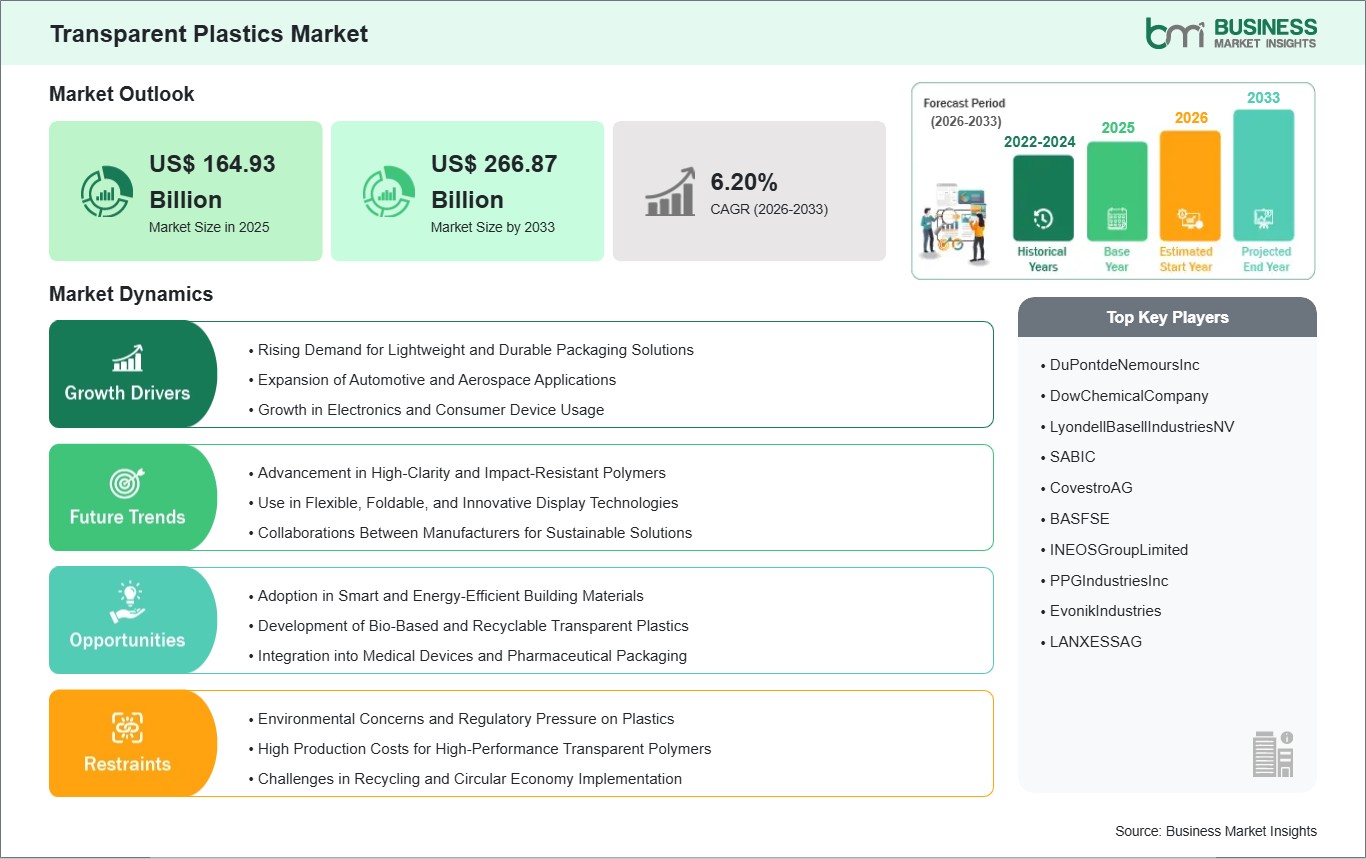
The Transparent Plastics Market size is expected to reach US$ 266.87 billion by 2033 from US$ 164.93 billion in 2025. The market is estimated to record a CAGR of 6.20% from 2026 to 2033.
The global transparent plastics market is expanding as demand grows for materials that combine clarity, durability, and versatility across multiple industries, which include packaging, automotive, electronics, construction and healthcare. Transparent plastics, which include polycarbonate and acrylics (PMMA) and PET and other specialty polymers, are highly valued because of their optical clarity, impact resistance, lightweight nature and easy fabrication. The combination of these characteristics makes these materials essential for multiple uses, which include food packaging, medical devices, display covers and automotive glazing. Worldwide industries are increasing their demand for transparent plastics because they want to find sustainable lightweight materials that look good as alternatives to traditional materials such as glass and metal.
North America has the top share of the global transparent plastics market because of its industrial base and manufacturing excellence, and the adoption rate in the main industries supports its growth.
The United States and Canada serve as major centers for developing new packaging solutions, automotive engineering and advanced electronics because transparent plastics enable better product functionality while maintaining visual appeal and operational effectiveness. The automotive industry is replacing glass with lightweight polycarbonate components because they help drivers save fuel and allow for more flexible design options. Transparent plastics have become the preferred packaging material because they allow customers to see products while keeping items fresh and helping companies build their unique brand identities.
The market operates under specific limitations. The industry needs to create recyclable and bio-based transparent polymers because customers and environmental groups show rising concerns about plastic waste and environmental sustainability. The industry conducts material research and recycling technology development because regulations on single-use plastics have intensified, and consumers now prefer environmentally friendly packaging. The industry needs to find a solution between two competing demands, which require premium performance polymers and lower production costs for price-sensitive market segments. Transparent plastics serve as fundamental materials that drive market expansion across three sectors: medical devices, renewable energy components and smart consumer electronics. The transparent plastics market will develop its future path through advancements in polymer chemistry, recycling technologies and new processing methods.

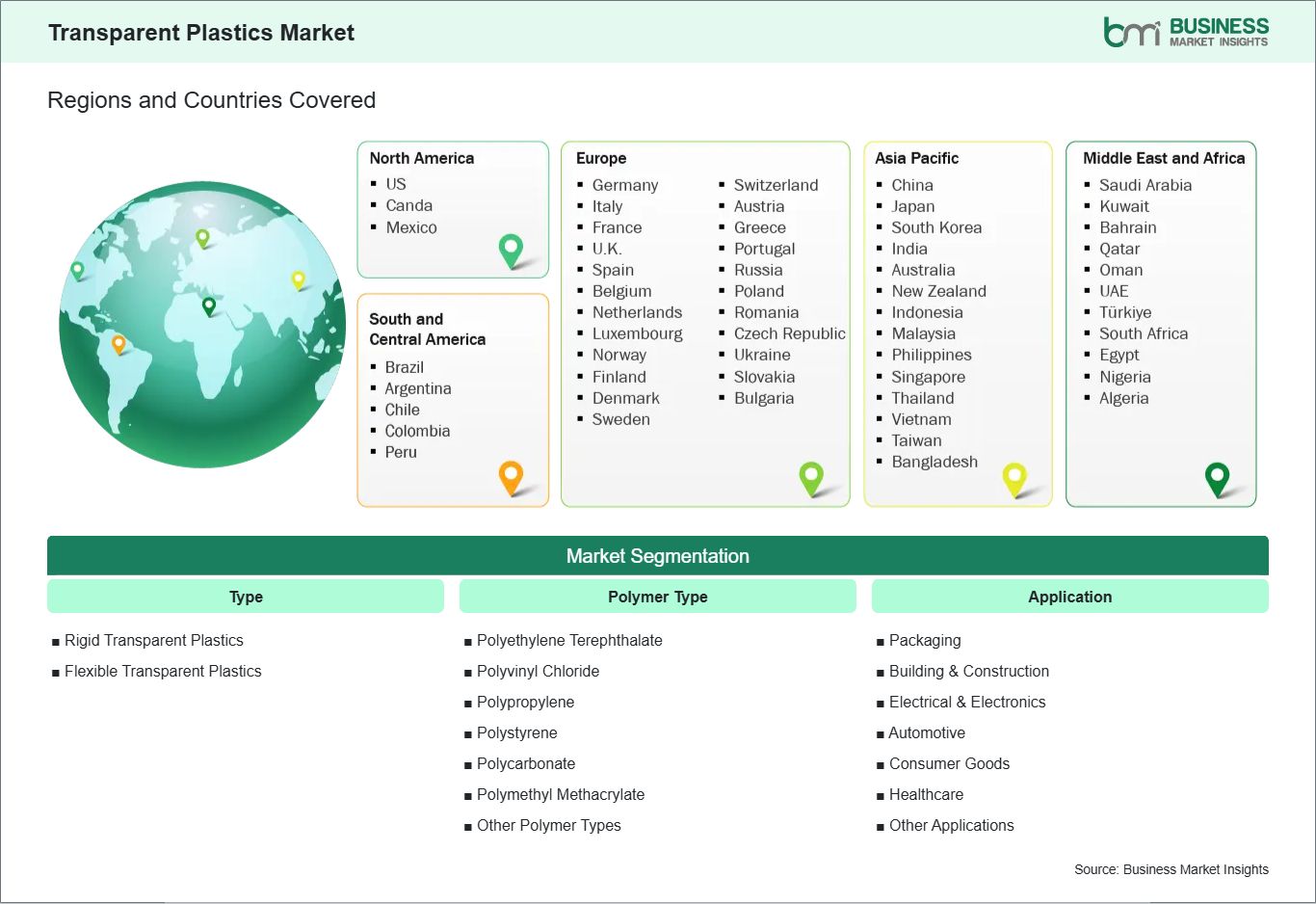
Key segments that contributed to the derivation of the transparent plastics market analysis are type, polymer type and application.
The transparent plastics market experiences growth because customers demand packaging solutions that weigh less and maintain their strength. Transparent plastics, which include PET, acrylic and polycarbonate materials, now serve as packaging alternatives because they provide greater transparency and impact protection and lighter weight than glass and metal. The consumer goods, food and beverage and pharmaceutical sectors use these materials to display their products better while reducing shipping expenses and increasing product safety during transportation. The North American and European markets continue to be important markets because brands focus on sustainable and recyclable transparent polymers to meet both regulatory standards and customer needs.
Lightweight packaging solutions have become more common because of the rise of e-commerce and online retail. Manufacturers use transparent plastics to design products that appeal to customers visually while ensuring that products stay intact, which helps them keep customer trust. The cosmetics and electronics industries now prefer high-performance transparent films and containers because they need products to look good and stay protected.
The development of plastic materials through polymer processing and co-extrusion technology improves transparent plastic performance. These innovations enable packaging solutions that use thinner materials to deliver stronger packaging performance, which results in reduced material needs without any decrease in packaging quality. The environmental impact of packaging materials prompts companies to search for bio-based and recyclable packaging solutions, which creates a new opportunity for lightweight and durable packaging to become a permanent market segment for transparent plastics throughout the world.
Transparent plastics are increasingly integrated into smart and energy-efficient building materials worldwide. Polycarbonate, acrylic, and advanced polymer laminates are used in façades, skylights, windows, and partitions, providing natural light transmission while offering thermal insulation and impact resistance. In Europe and North America, regulations on energy efficiency and sustainable construction practices encourage the adoption of transparent plastics in commercial and residential buildings, as they reduce reliance on artificial lighting and improve building energy performance.
Smart building technologies, such as electrochromic glazing and sensor-integrated panels, are leveraging transparent plastics to create adaptive environments. These materials combine clarity, flexibility, and conductivity to support innovations in shading, lighting control, and HVAC efficiency. Asia Pacific is emerging as a fast-growing market, with urbanization and rising construction activity driving demand for lightweight, durable, and transparent building materials that meet both functional and aesthetic requirements.
Furthermore, transparent plastics facilitate architectural freedom, allowing designers to achieve innovative shapes, large panels, and complex geometries while maintaining safety and durability. Sustainable material development, including recyclable and bio-based transparent polymers, further supports adoption in modern buildings. The combination of energy efficiency, adaptability, and design flexibility positions transparent plastics as a critical solution in the global shift toward smarter, greener, and more efficient building practices.

The transparent plastics market demonstrates steady growth, with size and share analysis highlighting evolving trends and competitive dynamics among key players. The report examines subsegments categorized within type, polymer type and application, offering insights into their contribution to overall market performance.
By type, the rigid transparent plastics subsegment dominated the market in 2025, driven by its superior strength, durability, and wide use in various industrial and consumer applications.
Based on polymer type, the polyethylene terephthalate subsegment dominated the market in 2025, driven by its excellent clarity, chemical resistance, and extensive use in packaging applications.
In terms of application, the packaging subsegment dominated the market in 2025, driven by the high demand for transparent plastics in food, beverage, and consumer goods packaging.
| Report Attribute | Details |
|---|---|
| Market size in 2025 | US$ 164.93 Billion |
| Market Size by 2033 | US$ 266.87 Billion |
| Global CAGR (2026 - 2033) | 6.20% |
| Historical Data | 2022-2024 |
| Forecast period | 2026-2033 |
| Segments Covered | By Type
|
|
Regions and Countries Covered
| |
| North America | US, Canada, Mexico |
| Europe | Belgium, Austria, Finland, Denmark, Greece, Poland, Romania, Russia, Ukraine, Czech Republic, Slovakia, Bulgaria, Italy, Luxembourg, Germany, Switzerland, France, Netherlands, Norway, Portugal, Spain, Sweden, United Kingdom |
| Asia-Pacific | Australia, China, India, Japan, South Korea, Indonesia, Malaysia, Philippines, Singapore, Thailand, Vietnam, Bangladesh, New Zealand, Taiwan |
| South and Central America | Brazil, Argentina, Peru, Chile, Colombia |
| Middle East and Africa | Bahrain, Kuwait, Oman, Qatar, Saudi Arabia, United Arab Emirates, Turkiye, South Africa, Egypt, Algeria, Nigeria |
| Market leaders and key company profiles |
|
The "Transparent Plastics Market Size and Forecast (2022 - 2033)" report provides a detailed analysis of the market covering below areas:
The geographical scope of the Transparent Plastics Market report is divided into North America, Asia Pacific, Europe, Middle East & Africa, and South & Central America. North America held the largest share in 2025.
The transparent plastics market worldwide sees North America as its leading region because the area possesses developed industrial systems, advanced technology use and multiple industry sectors. The United States and Canada drive market activity because their customers demand products used in automotive, electronics, packaging, healthcare and construction sectors. Automotive manufacturers use lightweight polycarbonate and acrylic materials to substitute glass in headlamps, glazing and interior components, which leads to better fuel efficiency and design flexibility. Packaging uses PET, PP and acrylic materials to improve product visibility while maintaining quality standards, but recyclable and bio-based polymers see higher adoption rates because of sustainability goals.
The European market has reached maturity because environmental regulations create strict requirements that are met by the German, French and UK automotive and packaging industries. The region needs to create recyclable and sustainable transparent plastics that can deliver high performance for industrial, medical and architectural uses.
The market in Asia Pacific experiences rapid growth because China, India, Japan and South Korea expand their consumer electronics production and packaging needs and automotive manufacturing capabilities. The rise of middle-class consumption, combined with industrial growth and urbanization, drives increased use of transparent plastics in consumer products and medical technologies.
The Middle East and Africa market is developing because vehicle, building, and packaging needs drive demand in countries such as the UAE, Saudi Arabia and South Africa. The region experiences growth because organizations invest in modern infrastructure and use high-quality plastics for their façade, window and protective element needs. The region of South and Central America, which Brazil and Mexico lead, is moving toward using transparent plastics for automotive parts, packaging and consumer electronic devices. The adoption of these technologies develops at a slower pace than in established countries because growing industrial activities and rising foreign investments create new use cases for the technologies.
North America maintains its position as the leading region because of its technological advancements and various applications and its programs for sustainable material development while other areas drive global demand through their industrial growth and urban development and their needs for strong lightweight and attractive transparent plastics.

The Transparent Plastics Market is evaluated by gathering qualitative and quantitative data post primary and secondary research, which includes important corporate publications, association data, and databases. A few of the key developments in the transparent plastics market are:
The Transparent Plastics Market is valued at US$ 164.93 Billion in 2025, it is projected to reach US$ 266.87 Billion by 2033.
As per our report Transparent Plastics Market, the market size is valued at US$ 164.93 Billion in 2025, projecting it to reach US$ 266.87 Billion by 2033. This translates to a CAGR of approximately 6.20% during the forecast period.
The Transparent Plastics Market report typically cover these key segments-
The historic period, base year, and forecast period can vary slightly depending on the specific market research report. However, for the Transparent Plastics Market report:
The Transparent Plastics Market is populated by several key players, each contributing to its growth and innovation. Some of the major players include:
The Transparent Plastics Market report is valuable for diverse stakeholders, including:
Essentially, anyone involved in or considering involvement in the Transparent Plastics Market value chain can benefit from the information contained in a comprehensive market report.
Please tell us your area of interest
(Market Segments/ Regions and Countries/ Companies)