Traffic Signal Controller Market Regional Highlights
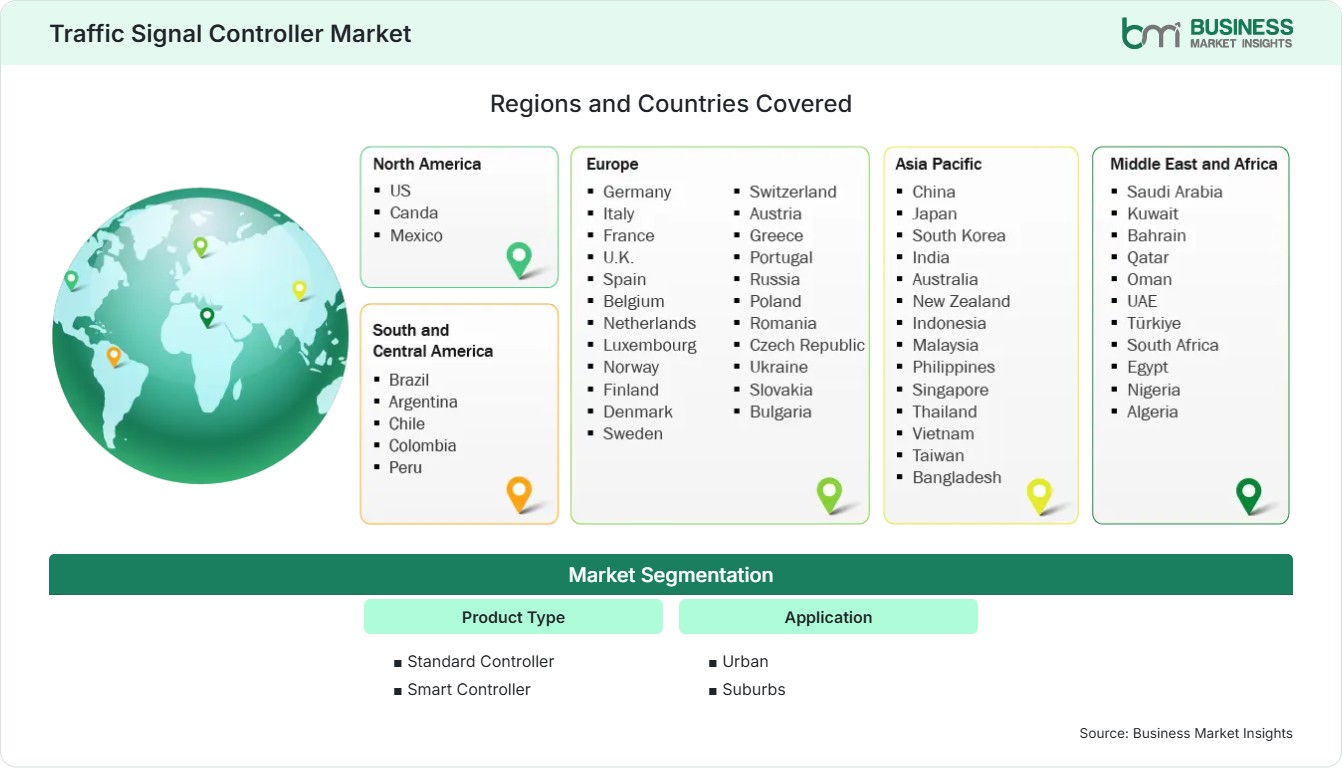
North America Traffic Signal Controller Market
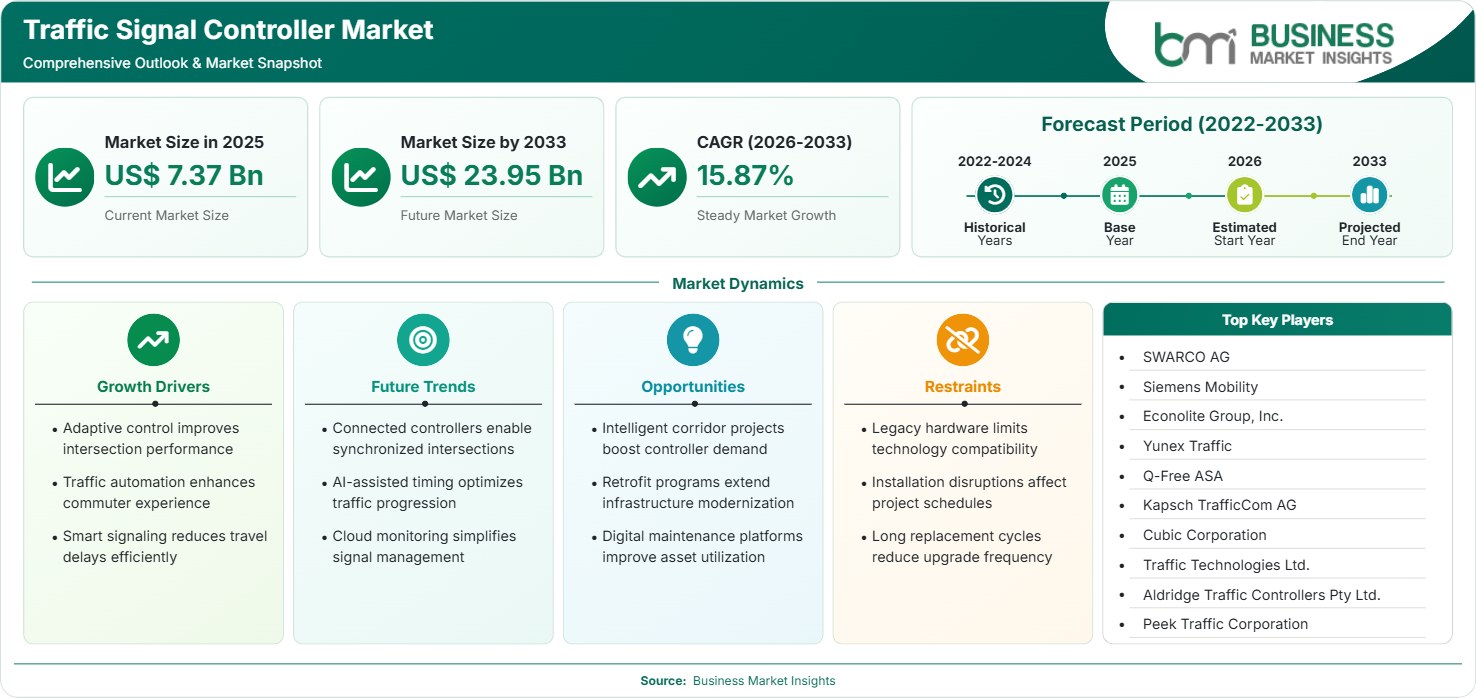
North America accounts for 34%–37% Traffic Signal Controller Market share in 2025 and is projected to register a CAGR of 15.1%–15.6% during 2026–2033. Strong public investment in intelligent transportation systems, smart intersections, and digital traffic infrastructure continues supporting regional expansion. Transportation agencies are increasingly deploying adaptive controllers that improve traffic efficiency while supporting connected vehicle communication and integrated urban mobility platforms.
- Smart intersection modernization projects continue replacing aging controller infrastructure across major metropolitan areas.
- Cloud-based traffic management platforms improve operational visibility and support real-time traffic optimization.
- Connected vehicle infrastructure encourages deployment of advanced adaptive traffic signal controllers.
- Public transportation prioritization systems increase demand for intelligent intersection control technologies.
US Traffic Signal Controller Market
The United States contributes 82%–85% of North American revenue and is expected to expand at a CAGR of 15.2%–15.8% throughout the forecast period. Continuous infrastructure funding, digital transportation initiatives, and widespread deployment of intelligent transportation systems continue strengthening long-term market expansion.
- Federal transportation modernization programs accelerate replacement of legacy traffic controller infrastructure.
- Smart city projects encourage deployment of AI-enabled traffic management technologies.
- Growing connected vehicle trials increase demand for interoperable signal control platforms.
- Municipal agencies continue investing in predictive traffic monitoring and adaptive signaling solutions.
Europe Traffic Signal Controller Market
Europe represents 26%–29% market share in 2025 and is anticipated to register a CAGR of 14.8%–15.4% through 2026–2033. Regional growth is supported by sustainable mobility strategies, intelligent transport policies, and modernization of urban traffic infrastructure. Germany leads regional deployment, while Poland records the fastest expansion due to increasing transportation infrastructure investment and urban development.
- Intelligent mobility programs continue supporting adaptive signal controller deployment.
- Road safety initiatives strengthen investment in digital traffic management infrastructure.
- Connected transport networks encourage interoperable controller technologies.
- Municipal authorities increasingly prioritize low-emission traffic optimization systems.
Asia Pacific Traffic Signal Controller Market
Asia Pacific holds 30%–33% market share in 2025 and is expected to register the fastest 17.2%–17.8% CAGR through 2026–2033. Rapid urbanization, expanding metropolitan populations, and increasing government investment in smart transportation infrastructure continue supporting strong regional demand. China remains the largest market, while India records the fastest growth through expanding smart city and road modernization initiatives.
- Urban traffic congestion accelerates deployment of adaptive traffic signal control systems.
- Smart city investments support installation of connected traffic management infrastructure.
- Highway expansion projects strengthen demand for intelligent intersection control technologies.
- AI-enabled traffic analytics improve operational efficiency across metropolitan road networks.
Rest of World Traffic Signal Controller Market
The Rest of World region accounts for 7%–10% market share in 2025 and is projected to grow at a CAGR of 15.3%–15.9% during 2026–2033. Transportation modernization, urban infrastructure investment, and increasing adoption of intelligent mobility solutions continue creating opportunities across Latin America, the Middle East, and Africa.
- Brazil leads regional adoption through expanding urban transportation modernization initiatives.
- GCC countries invest significantly in intelligent transportation infrastructure supporting smart city development.
- Growing metropolitan populations increase demand for advanced traffic control technologies.
- Digital infrastructure programs continue improving traffic monitoring and intersection management capabilities.