
Synthetic Biology Market Outlook: Size, Share, Trends, Growth Analysis, Competitive Landscape & Forecast, 2026–2033

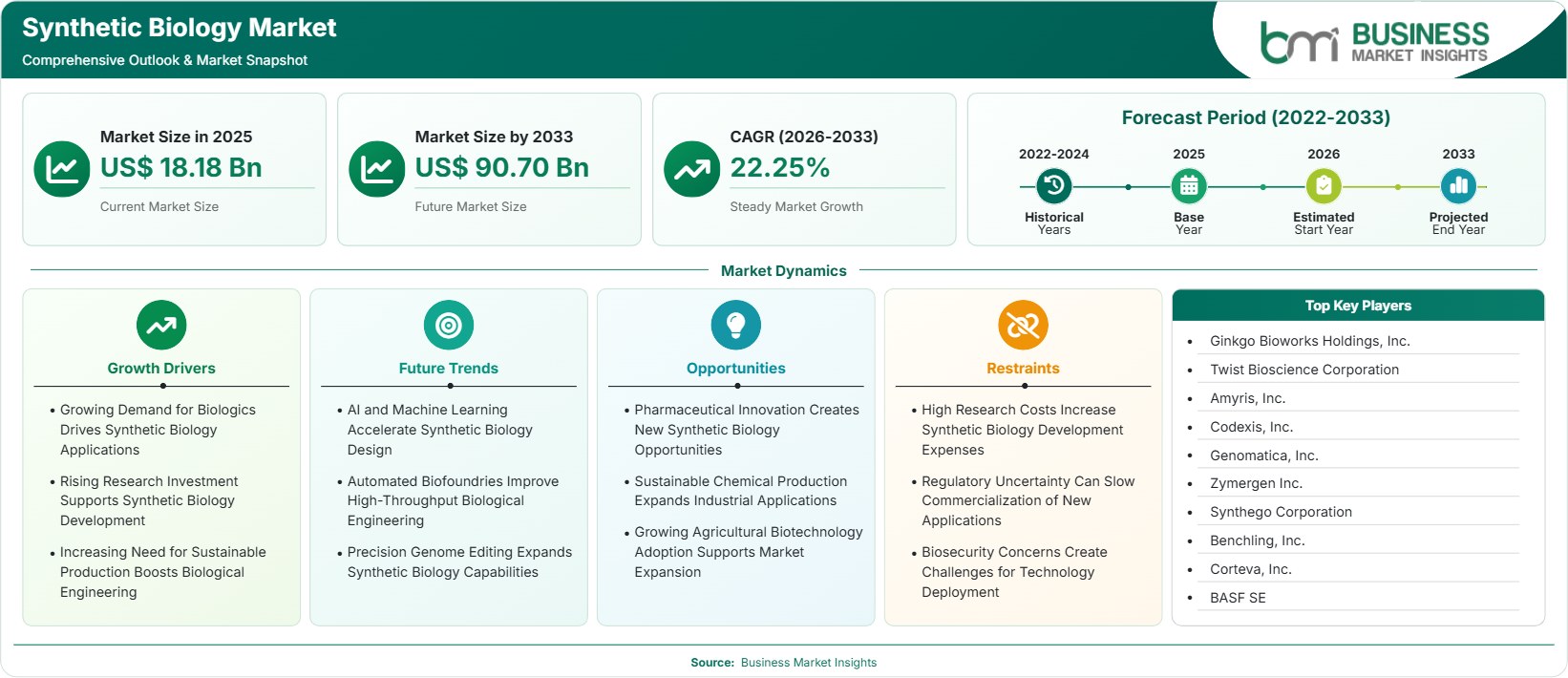
The Synthetic Biology Market size was valued at US$ 18.18 Billion in 2025 and is projected to reach US$ 90.70 Billion by 2033, growing at a CAGR of 22.25% during 2026–2033, driven by biologics demand, research investment, sustainable production, pharmaceutical innovation, and agricultural biotechnology adoption.

Report Coverage
  • Product Type: DNA Synthesis, Peptide/Protein Synthesis, Cell Mimics
  • Application: Diagnostics, Therapeutics, Research & Development
  • End-user: Pharmaceutical & Biotechnology Companies, Contract Research Organizations, Others
US$ 18.18 Bn Market size in 2025
US$ 90.70 Bn Market Size by 2033
22.25% CAGR, 2026 - 2033
2026-2033 Forecast Period

AI Overview

Synthetic Biology Market Summary

  • North America: holds 41%–44% Synthetic Biology Market share in 2025, growing at a CAGR of 20.8%–21.6% during 2026–2033, supported by strong biotechnology investment, advanced genomic infrastructure, pharmaceutical R&D, synthetic DNA capacity, and expanding industrial biotechnology applications. The US represents 87%–91% of regional demand and is projected to expand at 21.0%–21.8% CAGR through 2033, supported by biotechnology funding, biologics development, and commercial biomanufacturing.
  • Fastest Growing Region: Asia Pacific holds 27%–30% share in 2025, growing at a CAGR of 24.8%–25.7% during 2026–2033, supported by expanding biotechnology infrastructure, pharmaceutical manufacturing, genomic research, government funding, agricultural biotechnology, and growing demand for engineered biological production systems.
  • Leading Segment: DNA Synthesis holds 43%–47% share in 2025, expanding at a CAGR of 22.9%–23.7% through 2033, supported by falling synthesis barriers, expanding genetic engineering, high-throughput screening, synthetic genomics, research applications, and increasing demand for customized biological sequences.
  • High Growth Segment: Therapeutics holds 37%–41% share in 2025, growing at a CAGR of 23.4%–24.2% during 2026–2033, driven by engineered biologics, cell and gene therapies, precision medicine, drug discovery, metabolic engineering, and increasing pharmaceutical investment in biological platforms.
  • Key Market Opportunity: Synthetic biology can expand beyond life sciences into chemicals, materials, food, agriculture, and industrial manufacturing as engineered microorganisms and biological pathways become increasingly commercially viable.
  • Major Market Players: Ginkgo Bioworks Holdings, Inc., Twist Bioscience Corporation, Amyris, Inc., Codexis, Inc., Genomatica, Inc., Zymergen Inc., Synthego Corporation, Benchling, Inc., Corteva, Inc., BASF SE.
Strategic Insights

Synthetic Biology Market: Strategic Insights

Synthetic Biology Market Strategic Framework
FREE PDF
Request your free sample
Request free sample
Stakeholder View

Key Takeaways

  • The value chain is increasingly integrating DNA design, synthesis, genome engineering, and downstream manufacturing, creating opportunities for vertically connected technology providers.
  • Therapeutic applications offer strong commercial upside because synthetic biology can support engineered cells, and increasingly complex biological development programs.
  • DNA synthesis is becoming a foundational capability for research and commercial applications, with demand linked to customized sequences, and synthetic genome development.
  • Asia Pacific provides an attractive expansion base as pharmaceutical manufacturing, genomics research, biotechnology infrastructure, and agricultural technology investment increase across major economies.
  • Strategic investment is increasingly focused on scalable technology platforms, automation, computational biology, and biomanufacturing capabilities that can serve several end markets rather than a single application.
  • Industrial biotechnology represents a longer-term diversification pathway as companies seek biological routes for chemicals, and other products traditionally manufactured through resource-intensive processes.
Geographic Outlook

Synthetic Biology Market Regional Highlights

North America Synthetic Biology Market

North America holds 41%–44% share in 2025 and North America Synthetic Biology Market forecast to grow at 20.8%–21.6% CAGR through 2033. The region benefits from established biotechnology infrastructure, deep pharmaceutical R&D capabilities, advanced DNA synthesis, venture investment, academic research, and strong commercialization networks. The US represents 87%–91% of regional demand and remains the dominant market.

  • Biotechnology investment supports development of engineering platforms, laboratory automation, synthetic DNA, computational design, and biological manufacturing capabilities across pharmaceutical and industrial applications.
  • Pharmaceutical R&D remains a major demand source as companies explore engineered biological systems for therapeutics, drug discovery, biologics optimization, and complex cellular functions.
  • The concentration of biotechnology companies, research institutions, and technology providers creates a strong ecosystem for collaboration, commercialization, licensing, and technology transfer.
  • Industrial biotechnology is gaining attention as manufacturers evaluate biological routes for chemicals, materials, ingredients, and other products requiring alternative production pathways.

US Synthetic Biology Market

The US represents 87%–91% of North American demand in 2025 and is projected to grow at 21.0%–21.8% CAGR through 2033. The US Synthetic Biology Market growth supported by pharmaceutical research, biotechnology investment, academic infrastructure, advanced genomic technologies, and established commercialization networks. Demand extends from DNA synthesis and research platforms to therapeutic development and industrial biotechnology.

  • Pharmaceutical and biotechnology companies remain central users because synthetic biology platforms can accelerate biological design, screening, therapeutic development, and manufacturing process innovation.
  • Research institutions provide sustained demand for DNA synthesis, genome engineering, laboratory automation, biological libraries, and computational tools supporting experimental workflows.
  • Industrial biotechnology offers diversification opportunities as companies explore engineered biological systems for chemicals, materials, specialty ingredients, and alternative production processes.

Europe Synthetic Biology Market

Europe Synthetic Biology Market holds 20%–23% share in 2025 and is projected to grow at 18.9%–19.8% CAGR through 2033. Germany, the UK, France, the Netherlands, and Switzerland represent leading markets, while the UK is projected to grow at 20.1%–20.9% CAGR. European demand is supported by pharmaceutical research, industrial biotechnology, sustainability objectives, and established academic capabilities.

  • Germany benefits from pharmaceutical manufacturing, chemical industry capabilities, biotechnology research, and increasing interest in biological production routes for industrial applications.
  • The UK maintains a strong biotechnology ecosystem supported by research institutions, pharmaceutical R&D, synthetic biology capabilities, and commercial technology development.
  • France and the Netherlands provide opportunities across agricultural biotechnology, industrial biotechnology, pharmaceutical research, and engineered biological production systems.
  • Switzerland remains important for pharmaceutical and biotechnology research, supporting demand for advanced biological engineering, molecular design, and therapeutic development platforms.

Asia Pacific Synthetic Biology Market

Asia Pacific Synthetic Biology Market holds 27%–30% share in 2025 and is projected to grow at 24.8%–25.7% CAGR through 2033. China, Japan, South Korea, India, Singapore, and Australia are major markets, while India is projected to grow at 26.0%–26.9% CAGR. Pharmaceutical manufacturing, genomics research, agricultural biotechnology, industrial production, and government-backed biotechnology programs support regional expansion.

  • China provides a substantial opportunity through pharmaceutical manufacturing, genomics research, biotechnology investment, and increasing development of domestic biological engineering capabilities.
  • India is expanding rapidly through pharmaceutical R&D, biotechnology research, agricultural applications, and increasing investment in domestic synthetic biology infrastructure.
  • Japan and South Korea provide established demand through advanced pharmaceutical research, precision biology, electronics-related biotechnology research, and industrial technology development.
  • Singapore and Australia offer specialized opportunities through research-intensive biotechnology ecosystems, academic capabilities, biomanufacturing development, and international collaboration.

Rest of World Synthetic Biology Market

Latin America is developing synthetic biology capabilities through agricultural biotechnology, food production, pharmaceuticals, and bio-based chemicals. Brazil and Mexico represent leading markets, supported by agricultural research, biotechnology development, and large manufacturing bases. Brazil provides particularly strong potential where biological engineering can support crop productivity, specialty ingredients, and industrial biotechnology.

Middle East and Africa Synthetic Biology Market remain smaller markets but provide emerging opportunities through agricultural innovation, pharmaceutical manufacturing, research infrastructure, and sustainable production initiatives. Rest of World holds 10%–13% share in 2025 and is projected to grow at 17.2%–18.1% CAGR through 2033.

  • Brazil provides an attractive opportunity through agricultural biotechnology, and established research capabilities supporting biological production.
  • Mexico offers expansion potential through pharmaceutical manufacturing, and increasing adoption of advanced biological technologies.
  • Gulf countries are developing biotechnology capabilities through research investment, and diversification into knowledge-based industries.
  • South Africa remains an important regional market through biotechnology research, agricultural science, pharmaceutical activities, and emerging industrial biotechnology applications.
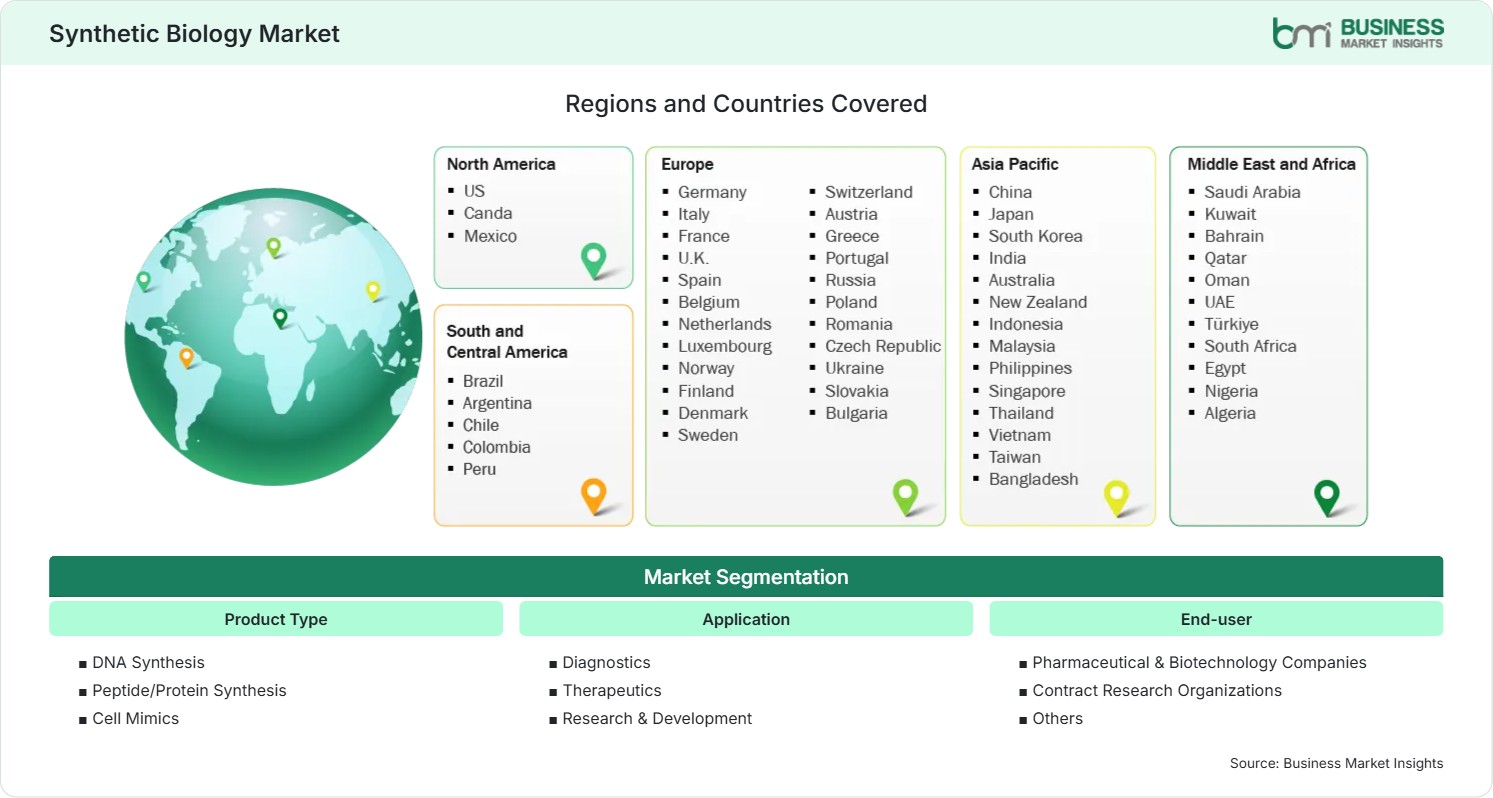
Global Market Geography
FREE PDF
Request your free sample
Request free sample
Segment Analysis

Synthetic Biology Market Segmentation

Product Type

DNA Synthesis represents 43%–47% Synthetic Biology Market share in 2025 and is projected to grow at 22.9%–23.7% CAGR through 2033. It remains fundamental to synthetic biology workflows because engineered systems require customized genetic sequences. Peptide/Protein Synthesis supports functional molecule development, while Cell Mimics serve advanced research into biological processes, disease mechanisms, and cellular behavior.

  • DNA Synthesis: Customized genetic sequences support genome engineering, molecular research, screening, diagnostics, therapeutic development, and biological pathway construction across synthetic biology workflows.
  • Peptide/Protein Synthesis: Engineered peptides and proteins support therapeutic research, functional biology, protein engineering, assay development, and discovery programs requiring customized biological molecules.
  • Cell Mimics: Cell-based models replicate selected biological functions, supporting disease research, drug screening, biological testing, and investigation of complex cellular processes.

Application

Therapeutics represents 37%–41% share in 2025 and is projected to grow at 23.4%–24.2% CAGR through 2033. Synthetic biology is increasingly used to design biological systems for therapeutic discovery and development.

  • Diagnostics: Engineered biological components can improve detection systems, molecular assays, biosensing platforms, and development of faster and more targeted diagnostic technologies.
  • Therapeutics: Biological engineering supports drug discovery, engineered cells, biologics development, therapeutic proteins, and increasingly complex approaches to precision medicine.
  • Research & Development: Synthetic biology platforms support genetic design, screening, pathway engineering, molecular experimentation, and development of new biological production systems.

End-user

Pharmaceutical & Biotechnology Companies represent 55%–59% share in 2025 and are projected to grow at 21.8%–22.6% CAGR through 2033. These organizations use synthetic biology across drug discovery, therapeutics, biologics, and biological manufacturing. CROs & CDMOs provide outsourced development and manufacturing capacity.

  • Pharmaceutical & Biotechnology Companies: These organizations use biological engineering for therapeutics, biologics, discovery programs, production optimization, and development of new biological platforms.
  • Contract Research Organizations (CROs): Outsourced providers support biological design, experimentation, process development, testing, scale-up, and manufacturing for biotechnology programs.
Market Forces

Synthetic Biology Market Dynamics

Key Market Drivers

Growing Demand for Biologics Drives Synthetic Biology Applications

Biologics require sophisticated biological systems for discovery, development, optimization, and manufacturing, creating a strong application base for synthetic biology. Engineered cells can be designed to produce therapeutic proteins, enzymes, metabolites, and other biological molecules with controlled characteristics. Synthetic DNA, genome engineering, pathway optimization, and high-throughput screening allow researchers to modify biological systems more systematically than conventional trial-and-error approaches. The Synthetic Biology Market trend is therefore closely linked to expansion in biologics and advanced therapeutic research.

Rising Research Investment Supports Synthetic Biology Development

Research investment is expanding the technical foundation required for synthetic biology through genomic tools, DNA synthesis, automation, computational biology, and biological engineering. Public research institutions, pharmaceutical companies, biotechnology firms, and industrial organizations are increasing efforts to improve the speed and predictability of biological experimentation. Automated laboratory systems are particularly important because they allow larger numbers of genetic designs and experimental conditions to be evaluated efficiently. Computational tools can further narrow experimental candidates before physical testing, improving resource utilization.

Increasing Need for Sustainable Production Boosts Biological Engineering

Manufacturers are evaluating biological production methods as alternatives to resource-intensive chemical processes, particularly for specialty chemicals, ingredients, materials, and other complex products. Engineered microorganisms can be designed to convert renewable feedstocks into targeted molecules under controlled conditions, creating potential advantages in feedstock flexibility and process efficiency. Synthetic biology enables optimization of metabolic pathways so organisms can produce higher-value compounds with improved consistency.

Key Market Opportunities

Pharmaceutical Innovation Creates New Synthetic Biology Opportunities

Pharmaceutical innovation is creating opportunities for synthetic biology across therapeutic discovery, engineered cells, biologics, and precision medicine. Biological systems can be programmed to perform functions that are difficult to achieve through conventional chemistry, supporting development of increasingly complex therapeutic approaches. The ability to design and test genetic constructs rapidly can shorten iteration cycles during early research and enable more systematic optimization. Pharmaceutical companies can also use synthetic biology to improve production organisms, increase biological yields, and develop more consistent manufacturing processes.

Sustainable Chemical Production Expands Industrial Applications

Synthetic biology offers industrial manufacturers an alternative route for producing chemicals and materials through engineered microorganisms and optimized biological pathways. Interest is strongest where conventional manufacturing requires complex synthesis, high energy consumption, petroleum-derived feedstocks, or multiple processing stages. Biological systems can potentially convert renewable feedstocks into targeted molecules while reducing dependence on traditional production routes. Commercial viability depends on organism performance, fermentation productivity, downstream purification, feedstock economics, and manufacturing scale.

Growing Agricultural Biotechnology Adoption Supports Market Expansion

Agricultural biotechnology provides another expansion pathway as producers seek improved crop traits, biological inputs, and more efficient production systems. Synthetic biology can support development of engineered biological components, microbial products, crop-related research tools, and pathways for producing agricultural inputs. The technology can also assist researchers in understanding plant-microbe interactions and designing biological systems with specific functions. Demand is strengthened by pressures to improve agricultural productivity while managing resource consumption and environmental constraints.

Market Restraints and Challenges

High Research Costs Increase Synthetic Biology Development Expenses

Factor: Synthetic biology programs require specialized equipment, high-quality biological inputs, computational infrastructure, skilled researchers, automated experimentation, and extensive validation. Impact: High development costs can limit participation among smaller organizations and lengthen commercialization timelines when repeated experimentation is required. Pharmaceutical applications can require extensive validation and development before technologies reach clinical or manufacturing stages.

Regulatory Uncertainty Can Slow Commercialization of New Applications

Factor: Synthetic biology applications can involve engineered organisms, therapeutic products, agricultural technologies, biological manufacturing systems, and products subject to different regulatory requirements. Impact: Uncertainty over approval pathways can delay commercialization, increase development costs, and make investment decisions more difficult. Therapeutic applications face extensive safety and efficacy requirements, while agricultural and environmental applications can involve additional assessment of biological effects.

Company Analysis

Competitive Landscape

The Synthetic Biology Market analysis indicates a diverse competitive structure spanning DNA synthesis, biological engineering, computational platforms, agricultural biotechnology, industrial biotechnology, and life sciences services. Competitive positioning depends on biological design capabilities, synthesis capacity, engineering expertise, automation, data infrastructure, manufacturing scale, and access to pharmaceutical or industrial customers.

Company Name

Overview

Products and Services relevant to this market

Ginkgo Bioworks Holdings, Inc.

Biotechnology company focused on cell programming and biological engineering across multiple commercial applications.

Cell programming, organism engineering, biological design, automation, screening, and platform-based synthetic biology services.

Twist Bioscience Corporation

Synthetic biology company specializing in high-quality DNA synthesis and biological production technologies.

DNA synthesis, synthetic genes, oligonucleotides, gene fragments, libraries, and biological research solutions.

Amyris, Inc.

Biotechnology company associated with engineered biological production and fermentation-based technology development.

Metabolic engineering, engineered microorganisms, fermentation platforms, and bio-based molecule development.

Codexis, Inc.

Enzyme engineering company developing biological catalysts and engineered enzymes for industrial and pharmaceutical applications.

Enzyme engineering, biocatalysis, protein engineering, biological process development, and manufacturing technologies.

Genomatica, Inc.

Industrial biotechnology company focused on biological production of chemicals and materials.

Metabolic engineering, engineered microorganisms, bio-based chemicals, fermentation development, and sustainable manufacturing technologies.

Zymergen Inc.

Biotechnology company focused on computational and biological engineering approaches to improve microbial production.

Genome engineering, computational biology, microbial optimization, biological design, and industrial biotechnology technologies.

Synthego Corporation

Genome engineering company providing CRISPR-based tools and engineered biological components.

CRISPR engineering, synthetic RNA, genome editing reagents, cell engineering, and research solutions.

Benchling, Inc.

Life sciences technology company providing software infrastructure for biological research and development workflows.

Research data management, biological design, laboratory workflows, molecular biology tools, and collaboration software.

Corteva, Inc.

Agricultural technology company applying biotechnology and advanced biological research to crop development.

Agricultural biotechnology, crop genetics, biological research, trait development, and plant science technologies.

BASF SE

Global chemical company with biotechnology activities spanning agriculture, chemicals, and sustainable production.

Industrial biotechnology, biological crop solutions, engineered production technologies, enzymes, and bio-based development capabilities.

Trust & Transparency

Research Methodology

The market analysis combines proprietary research with secondary data from government agencies, company disclosures, regulatory filings, industry databases and expert interviews. Market estimates are validated through data triangulation, cross-market benchmarking and analyst review.

View Full Research Methodology

Questions Answered

Frequently Asked Questions

What factors will determine commercial adoption in Synthetic Biology Market report?

Commercial adoption will depend on biological performance, production economics, scalability, and the ability to translate laboratory results into reliable large-scale processes.

How can automation influence synthetic biology development?

Automation increases experimental throughput by allowing larger numbers of genetic designs and biological conditions to be constructed and tested consistently.

Why is DNA synthesis important to synthetic biology?

DNA synthesis provides the genetic building blocks required to design and test engineered biological systems. Faster and more scalable synthesis allows researchers to evaluate more genetic configurations and accelerate biological engineering cycles.

Which industries can benefit beyond pharmaceuticals?

Chemicals, agriculture, food, materials, specialty ingredients, and industrial manufacturing can use biological engineering to develop alternative production pathways, and create products that are difficult or resource-intensive to manufacture conventionally.

What makes synthetic biology different from conventional biotechnology?

Synthetic biology applies engineering principles to biological systems, allowing genetic components, pathways, and organisms to be designed and optimized for specific functions.

Access the Full Synthetic Biology Market Report

Get segment-level forecasts, regional estimates, competitive benchmarking, company profiles and downloadable Excel datasets.

Access the full Synthetic Biology Market Report
350 pages PDF & Excel | 2026-08-24