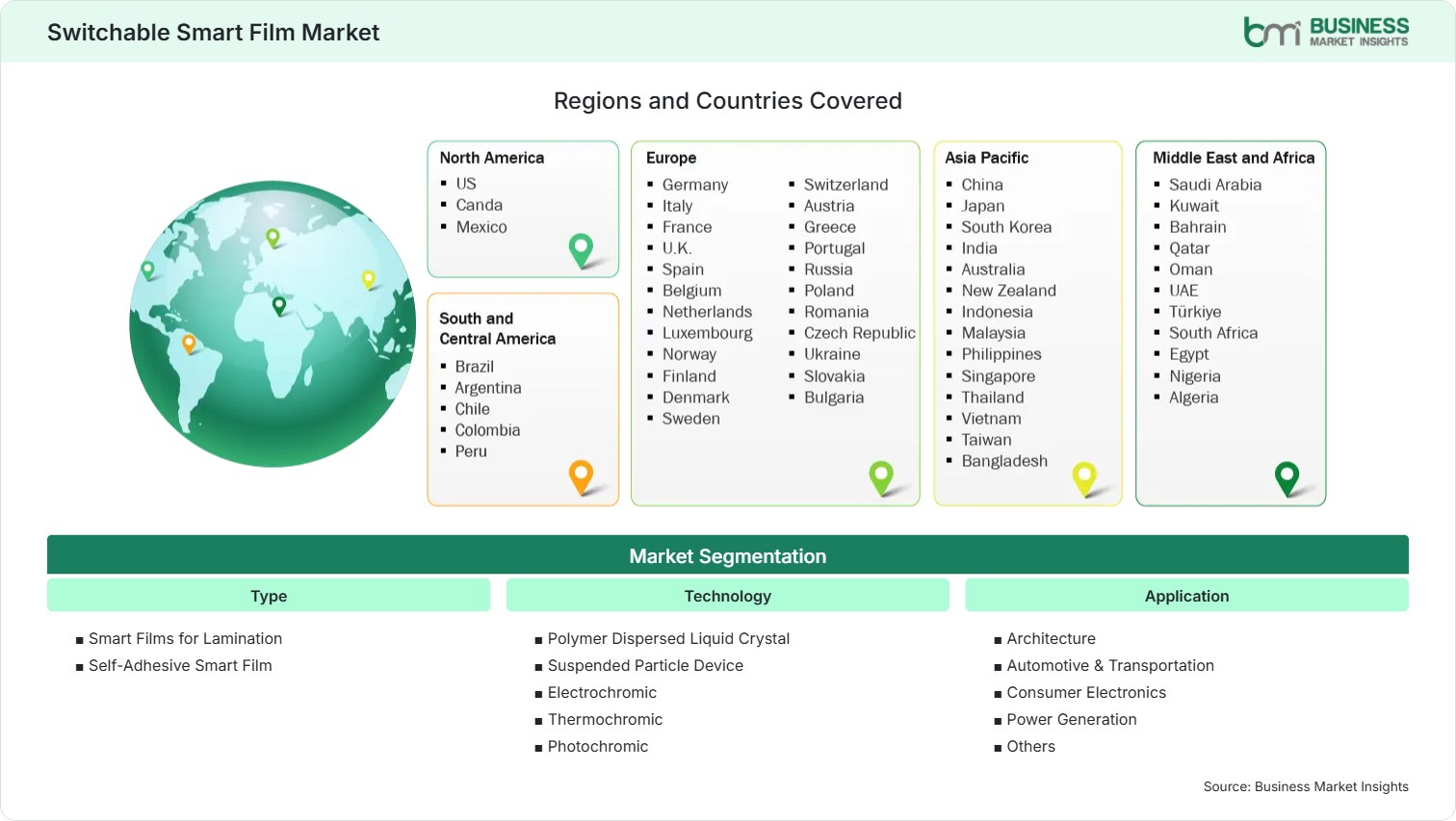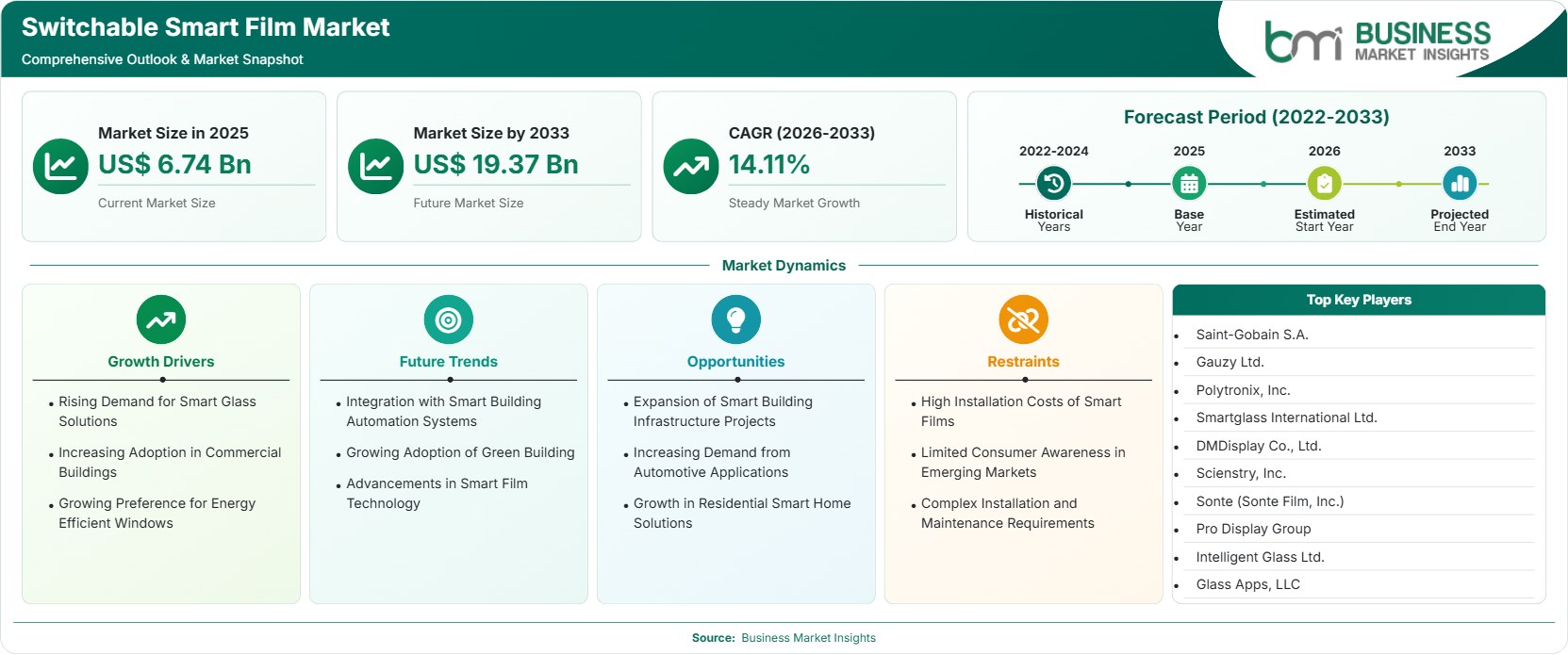
Switchable Smart Film Market Regional Highlights
North America Switchable Smart Film Market
North America represents a 32%–35% share of the market in 2025 and is projected to expand at a CAGR of 13.50%–14.20% during 2026–2033. The region benefits from advanced commercial infrastructure, automotive technology adoption, and strong demand for energy-efficient building solutions. The Switchable Smart Film Market share remains supported by premium applications across offices, healthcare facilities, luxury vehicles, and smart residential developments.
- The United States remains the primary contributor, supported by commercial building modernization, increasing adoption of intelligent glazing, and demand for privacy-focused architectural solutions in corporate and institutional facilities.
- Government initiatives promoting energy-efficient buildings are encouraging investments in advanced window technologies, enabling smart film adoption across green construction projects and reducing dependence on traditional shading systems.
- Automotive manufacturers are integrating switchable films into premium vehicle interiors, panoramic roofs, and display applications, creating additional demand from luxury mobility segments focused on passenger comfort.
- Technology providers are improving film durability, optical performance, and integration capabilities, helping regional companies address installation challenges and expand applications beyond conventional architectural uses.
US Switchable Smart Film Market
The US accounts for a 27%–30% share of the Switchable Smart Film Market in 2025, growing at a CAGR of 13.80%–14.30% between 2026–2033. Strong commercial construction activity, smart workplace development, and automotive innovation are supporting adoption. The country’s advanced technology ecosystem enables faster deployment of switchable glazing solutions across corporate offices, healthcare facilities, hospitality properties, and premium vehicles.
- Increasing investments in smart office infrastructure are driving demand for privacy-controlled meeting spaces, adaptable interiors, and automated glass solutions across commercial buildings.
- Automotive manufacturers are exploring switchable film integration for premium vehicles, supporting applications including sunroofs, windows, displays, and enhanced passenger experience technologies.
- Residential smart home adoption is creating opportunities for retrofit-friendly films that improve privacy control, energy management, and connected home functionality.
- The presence of specialized technology developers and glass solution providers strengthens innovation pipelines and accelerates commercialization across multiple end-use industries.
Europe Switchable Smart Film Market
Europe holds a 25%–28% share of the Switchable Smart Film Market in 2025 and is expected to register a CAGR of 13.70%–14.50% through 2026–2033. Germany, the United Kingdom, and France are leading markets, while Italy and the Netherlands show increasing adoption. The region benefits from sustainability regulations, smart building standards, and demand for advanced energy-saving materials.
- Germany demonstrates strong potential due to advanced construction technologies, automotive manufacturing expertise, and growing adoption of intelligent building materials in commercial developments.
- The United Kingdom is experiencing increased demand from hospitality, office renovation, and healthcare sectors requiring flexible privacy and energy management solutions.
- France is supporting adoption through sustainable architecture initiatives and investments in modern building designs incorporating dynamic glass technologies.
- European manufacturers are focusing on recyclable materials, improved product lifespan, and integration with automated building systems to meet environmental objectives.
Asia Pacific Switchable Smart Film Market
Asia Pacific accounts for a 28%–31% share of the market in 2025, expanding at the highest CAGR of 15.20%–16.00% during 2026–2033. China, Japan, South Korea, and India are major growth contributors due to rapid urbanization, smart city investments, and expanding construction activities. The Switchable Smart Film Market growth is supported by increasing adoption across commercial buildings, automotive applications, and consumer electronics.
- China leads regional demand through large-scale infrastructure development, smart city projects, and domestic manufacturing capabilities supporting wider smart film deployment.
- Japan and South Korea are advancing adoption through automotive innovation, electronics expertise, and demand for compact, technologically advanced privacy solutions.
- India presents significant potential due to urban expansion, commercial real estate development, and increasing investments in energy-efficient building technologies.
- Regional manufacturers are increasing production capacity while improving affordability, enabling broader adoption among commercial and residential users.
Rest of World Switchable Smart Film Market
The Rest of World region represents a 10%–13% share of the Switchable Smart Film Market in 2025 and is projected to grow at a CAGR of 12.80%–13.60% during 2026–2033. South and Central America are adopting smart films in premium buildings and transportation projects, while Middle East and Africa markets are driven by luxury construction, hospitality developments, and modern infrastructure investments.
Countries including Brazil, the United Arab Emirates, and Saudi Arabia are creating opportunities through commercial expansion, tourism infrastructure, and high-end architectural projects requiring advanced glazing solutions.
- Brazil is witnessing gradual adoption through commercial construction projects, hospitality developments, and demand for modern interior technologies.
- The United Arab Emirates supports Switchable Smart Film market expansion through luxury real estate projects, smart buildings, and innovative architectural designs.
- Saudi Arabia is increasing adoption through large-scale infrastructure developments and advanced construction initiatives linked with economic diversification programs.
- African markets show emerging potential as urban development projects and premium commercial facilities introduce intelligent glass technologies.
- Regional suppliers are focusing on cost optimization and customized solutions to overcome adoption barriers across developing markets.