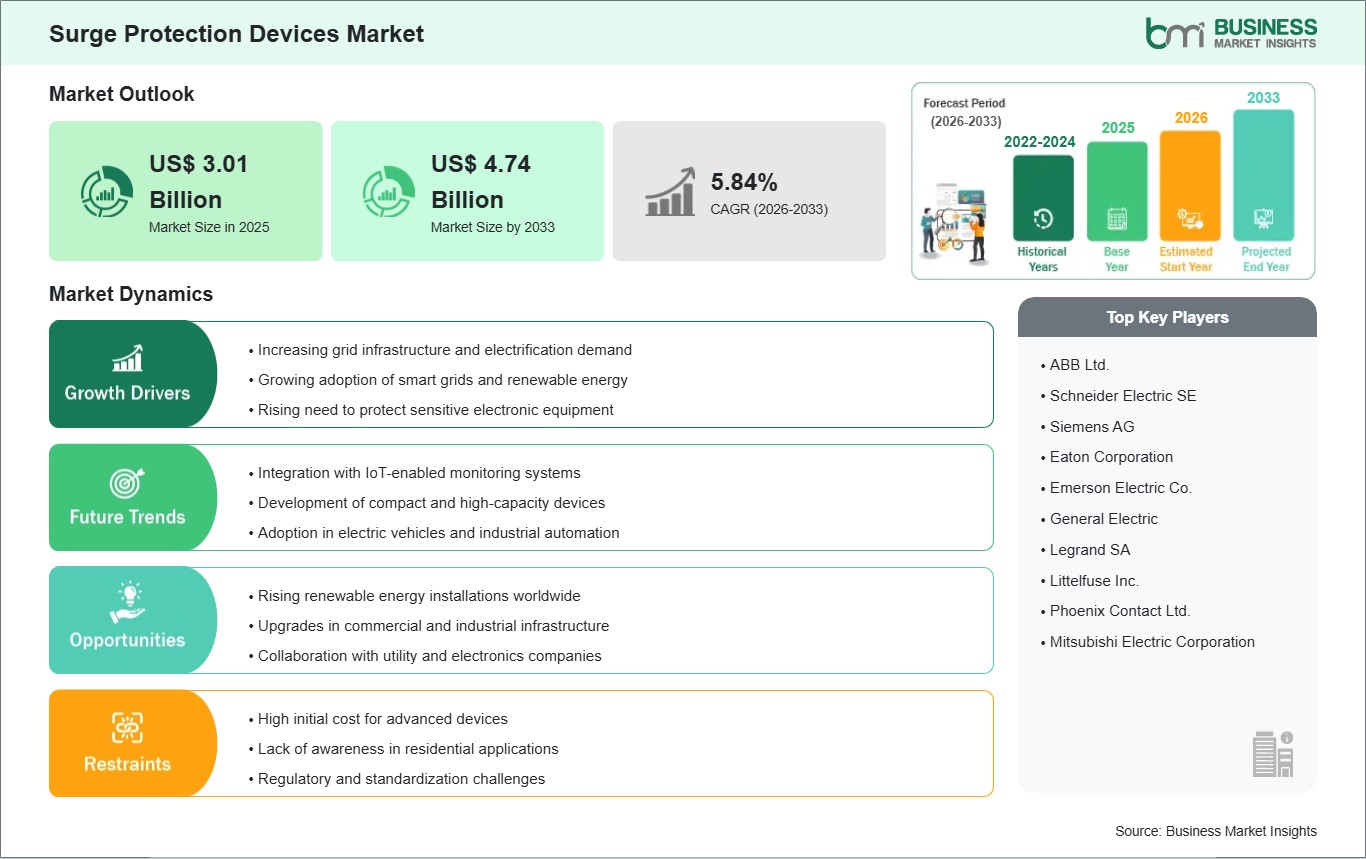
Increasing grid infrastructure and electrification demand
The expansion of power grid infrastructure and the global push toward electrification are key drivers for the surge protection devices market. Governments and utilities are investing in upgrading transmission and distribution networks to meet rising electricity consumption and improve power reliability. These upgrades involve the installation of advanced electrical equipment, digital monitoring systems, and smart grid technologies that are sensitive to voltage fluctuations. Surge protection devices help protect these systems from transient overvoltages caused by lightning strikes, switching operations, and sudden load variations. Electrification across industries is also increasing the number of connected electrical assets that require protection. Industrial automation systems, data centers, electric vehicle charging infrastructure, and smart building technologies depend on stable power supply to function efficiently. Voltage surges can damage critical components such as control panels, power converters, and communication devices, leading to downtime and financial losses. Integrating surge protection devices into electrical infrastructure helps ensure operational continuity and reduces the risk of equipment failure.
Furthermore, the digital transformation of power systems has increased reliance on sensitive electronic equipment throughout the grid. Smart meters, sensors, and automated control systems are now widely deployed to monitor and manage electricity flow. These devices are particularly vulnerable to transient surges that can disrupt communication networks and compromise grid stability. Installing surge protection devices at key points in electrical networks safeguards these assets and enhances system resilience. As grid modernization and electrification initiatives continue worldwide, the demand for reliable surge protection solutions is expected to grow steadily.
Rising renewable energy installations worldwide
The rapid growth of renewable energy installations worldwide is creating significant opportunities for surge protection devices. Renewable energy systems such as solar photovoltaic and wind power installations rely heavily on sensitive electronic components including inverters, converters, and monitoring equipment. These components are vulnerable to voltage surges caused by lightning strikes, grid switching operations, and environmental disturbances. Surge protection devices play an essential role in safeguarding renewable energy infrastructure by preventing electrical damage and ensuring stable energy generation. Renewable power systems involve extensive electrical networks connecting generation units, energy storage systems, and grid interfaces. Both direct current and alternating current circuits within these networks require dedicated protection against transient overvoltages. Without proper surge protection, voltage spikes can damage inverters and power electronics, leading to operational disruptions and costly equipment replacement. As renewable projects increase in scale and complexity, developers are integrating surge protection devices as a standard component of system design.
In addition, the growing adoption of distributed energy systems is strengthening the need for surge protection. Rooftop solar installations, battery storage systems, and microgrids create multiple connection points with the electrical grid, increasing exposure to transient surges. Installing surge protection devices across these systems helps maintain equipment reliability, extend operational lifespan, and reduce maintenance costs. As global renewable energy capacity continues expanding, the importance of surge protection solutions is expected to rise steadily.