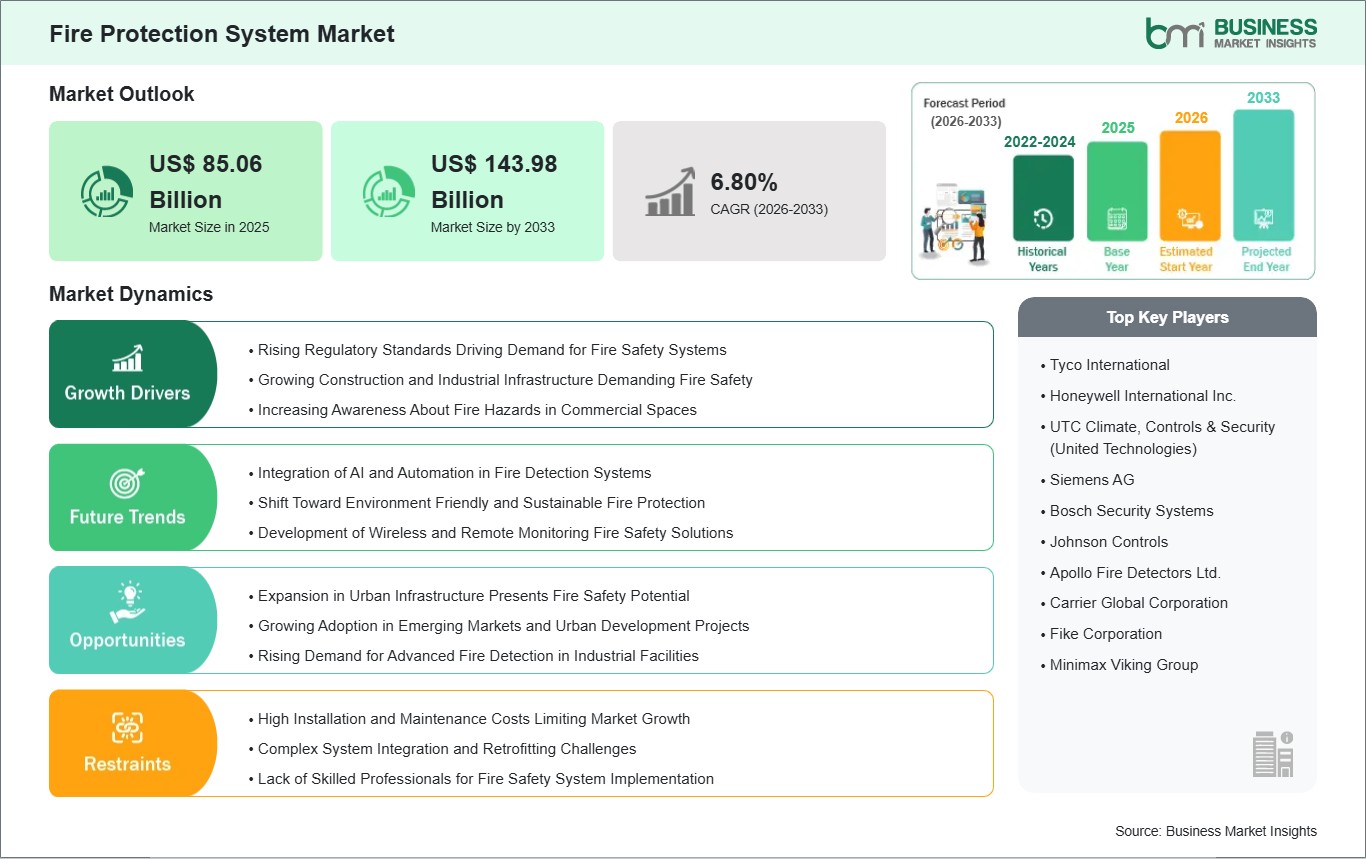
Rising Regulatory Standards Driving Demand for Fire Safety Systems
The global Fire Protection System market is being shaped significantly by stringent regulations aimed at safeguarding people, property, and industrial operations. In North America and Europe, comprehensive building codes and fire safety standards mandate the use of certified fire detection and suppression solutions in residential, commercial, and industrial facilities. These regulations drive consistent investment in modern fire protection technologies, including automated sprinklers, advanced fire alarms, and gas-based suppression systems, helping organizations meet compliance requirements while mitigating potential risks. Critical sectors such as healthcare, education, and manufacturing face additional scrutiny, with hospitals, laboratories, and data centers relying on real-time monitoring and automated suppression to ensure safety and uninterrupted operations.
Government inspections and certification processes reinforce the adoption of reliable, standards-compliant systems, prompting manufacturers to continually innovate and improve their offerings. Emerging economies are following suit as urbanization and industrial growth accelerate. Countries across Asia Pacific and the Middle East are updating fire safety codes and enforcing compliance in new infrastructure projects, creating fresh opportunities for global players. Overall, regulatory oversight continues to be a key driver, making fire protection systems an essential component of modern infrastructure and risk management worldwide.
Expansion in Urban Infrastructure Presents Fire Safety Potential
Rapid urbanization and infrastructure development are creating significant opportunities for the global Fire Protection System market. High-rise residential towers, commercial centers, and industrial complexes increasingly rely on advanced fire detection and suppression solutions to protect lives and assets. In regions like Asia Pacific and the Middle East, large-scale urban projects, industrial hubs, and smart city initiatives are fueling demand for fire protection systems with automation, real-time monitoring, and efficient suppression capabilities. The integration of fire safety systems with smart building technologies enhances their value. IoT-enabled sensors, cloud-based monitoring, and intelligent building management platforms allow for faster detection, proactive risk management, and coordinated emergency response.
Retrofitting older structures in North America and Europe also supports market growth, aligning with sustainability goals, energy efficiency requirements, and stringent safety standards. Additionally, public infrastructure such as airports, transport hubs, and stadiums is increasingly adopting advanced fire protection systems. With urbanization accelerating worldwide and a growing focus on green and resilient buildings, fire protection technology has become a vital element of construction planning. These systems not only meet regulatory demands but are essential for ensuring safe, technologically advanced, and sustainable urban environments globally.