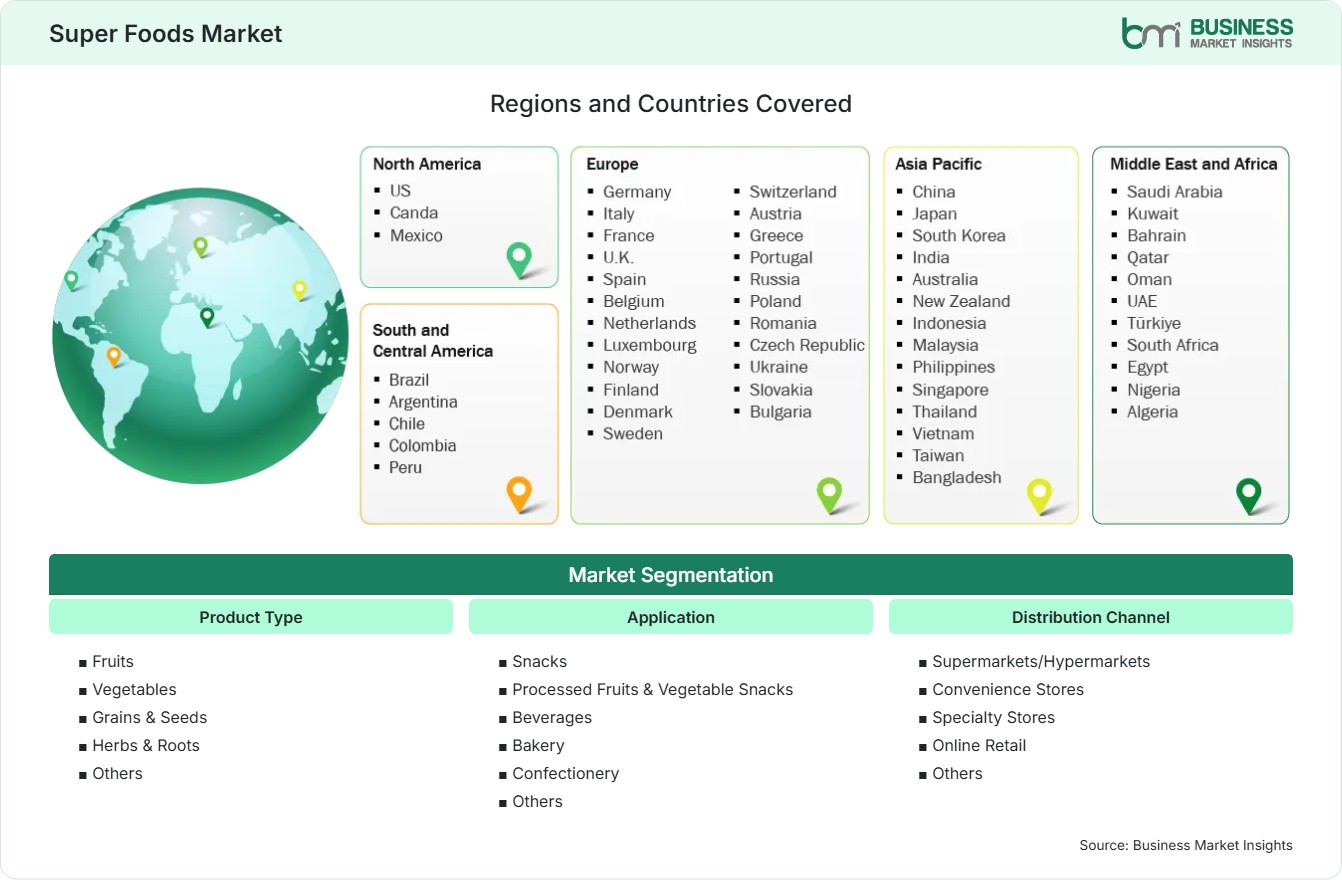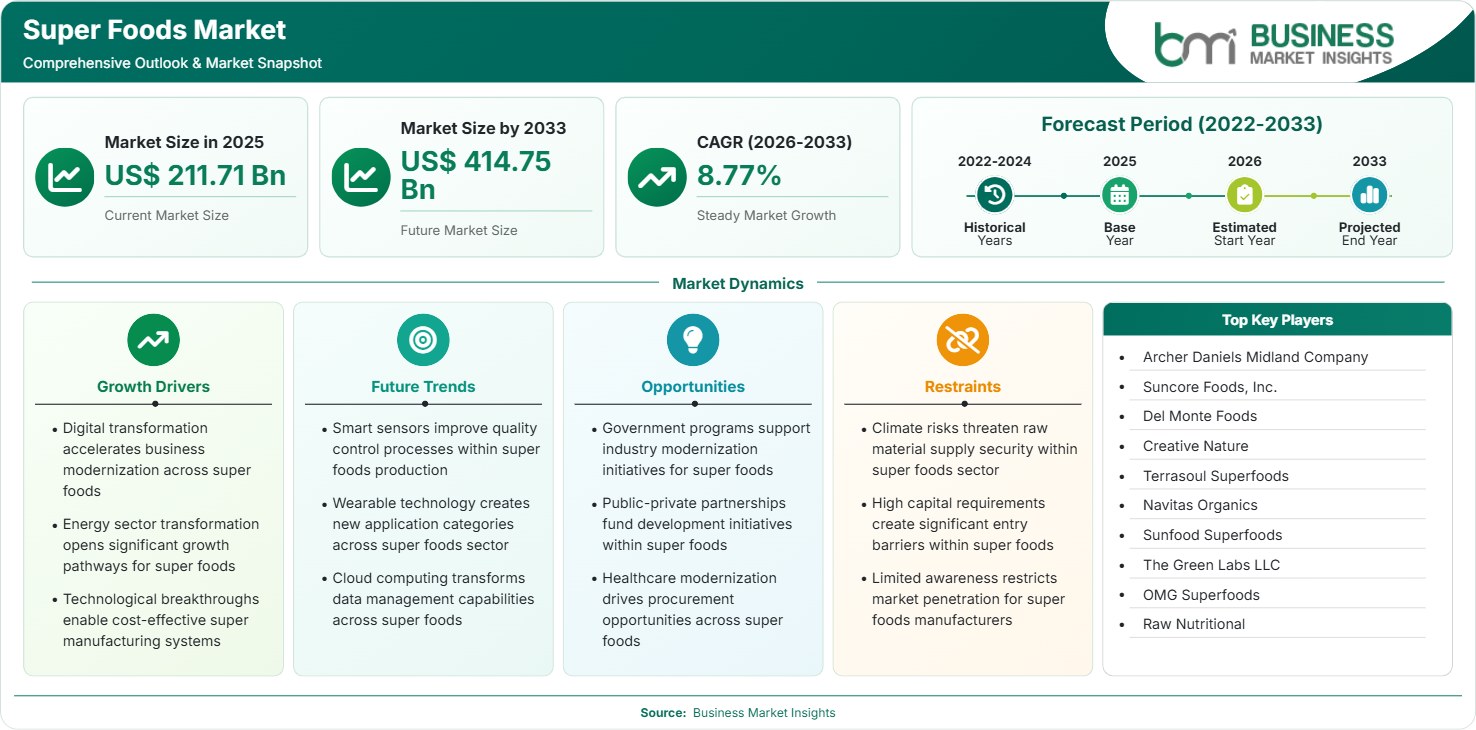
Super Foods Market Regional Highlights
North America Super Foods Market
North America accounted for 34%–37% of global Super Foods Market share in 2025 and is projected to expand at a 7.9%–8.4% CAGR during 2026–2033. Strong consumer awareness regarding preventive healthcare, widespread availability of premium functional foods, and advanced retail infrastructure continue supporting regional leadership. The United States and Canada remain major innovation centers for plant-based nutrition, organic foods, and clean-label product development. Investments in sustainable agriculture, personalized nutrition platforms, and ingredient traceability further strengthen long-term market competitiveness across the regional value chain.
- Functional food manufacturers continue introducing products enriched with chia seeds, quinoa, blueberries, spirulina, turmeric, and other nutrient-rich ingredients as consumers increasingly seek scientifically supported health benefits and convenient everyday nutrition solutions.
- Major supermarket chains and warehouse retailers continue expanding premium organic assortments while private-label functional food offerings improve affordability and increase consumer accessibility across urban and suburban markets throughout North America.
- Growing demand for plant-based proteins encourages investments in innovative grain and seed processing technologies that improve nutritional quality, ingredient functionality, and manufacturing efficiency for food producers serving diverse consumer preferences.
- Regulatory oversight supporting food labeling transparency, organic certification, and ingredient traceability strengthens consumer confidence while encouraging manufacturers to maintain higher sourcing standards across domestic and imported product portfolios.
- Rising investments in digital grocery platforms, subscription nutrition services, and direct-to-consumer distribution channels continue improving product availability while enhancing customer engagement through personalized purchasing experiences.
US Super Foods Market
The United States represented approximately 79%–82% of North American revenue in 2025 while advancing at a 8.0%–8.5% CAGR during 2026–2033. High consumer spending on wellness products, expanding functional beverage consumption, and robust innovation across organic food categories continue reinforcing national leadership. Strong investment in nutrition research, food technology, and premium retail formats enables manufacturers to introduce differentiated products addressing immunity, digestive health, sports nutrition, and healthy aging.
- Consumer preference for clean-label foods continues encouraging manufacturers to eliminate artificial additives while incorporating nutrient-rich fruits, seeds, vegetables, and botanical ingredients into mainstream packaged food categories.
- Leading retailers increasingly collaborate with ingredient suppliers and emerging nutrition brands to introduce premium product lines that strengthen category growth while improving nationwide product accessibility.
- Expansion of e-commerce and subscription-based nutrition platforms enables manufacturers to reach health-conscious consumers directly while supporting personalized product recommendations and long-term customer retention.
- Rising investment in regenerative agriculture and domestic sourcing initiatives improves ingredient security while helping manufacturers respond to sustainability expectations from environmentally conscious consumers.
Europe Super Foods Market
Europe held approximately 27%–30% market share in 2025 and is forecast to register a 7.5%–8.0% CAGR through 2033. Strong consumer demand for organic products, stringent food quality regulations, and increasing adoption of plant-based diets continue supporting regional expansion. Germany remains the leading national market, while Poland demonstrates one of the fastest growth trajectories owing to increasing health awareness, modern retail expansion, and rising household expenditure on premium nutritional products.
- Germany continues leading regional consumption through advanced organic food manufacturing capabilities, extensive retail distribution networks, and growing investment in functional nutrition innovation supporting premium product development.
- Poland records one of the strongest regional growth rates as expanding middle-income households increasingly prioritize healthy dietary choices and modern retail channels improve product availability nationwide.
- European manufacturers continue emphasizing sustainable packaging, locally sourced ingredients, and transparent supply chains to satisfy evolving regulatory requirements and environmentally conscious consumer purchasing preferences.
- Functional bakery products, fortified cereals, and nutrient-rich snack innovations continue expanding as manufacturers diversify premium offerings to address changing dietary habits throughout the region.
- Research collaborations between universities and food manufacturers support development of scientifically validated functional ingredients that improve product differentiation and strengthen long-term competitiveness.
Asia Pacific Super Foods Market
Asia Pacific accounted for 26%–29% of global revenue in 2025 and is anticipated to expand at a 10.1%–10.8% CAGR through 2033. China leads regional consumption owing to its large population and expanding health food industry, while India represents the fastest-growing national market driven by urbanization, rising disposable income, and increasing preventive healthcare awareness. Expanding domestic production and digital grocery ecosystems continue strengthening regional competitiveness.
- China maintains regional leadership through significant investments in functional food manufacturing, premium retail expansion, and growing demand for plant-based nutritional products among urban consumers.
- India demonstrates one of the fastest regional growth rates as expanding e-commerce, rising nutrition awareness, and government initiatives encouraging healthier food consumption accelerate premium category adoption.
- Regional manufacturers increasingly commercialize indigenous ingredients including moringa, turmeric, millet, and botanical extracts that align with consumer demand for natural wellness solutions.
- International food companies continue establishing manufacturing facilities and strategic partnerships throughout Asia Pacific to improve supply chain efficiency and meet rising regional demand.
- Rapid smartphone adoption and digital commerce expansion continue improving consumer access to premium nutrition products while supporting personalized marketing and subscription-based purchasing models.
Rest of World Super Foods Market
The Rest of World region represented approximately 8%–10% of global revenue in 2025 and is projected to expand at a 8.6%–9.2% CAGR during the forecast period. South & Central America benefits from abundant agricultural production and increasing exports of nutrient-rich ingredients, while the Middle East & Africa experiences rising consumer awareness regarding preventive nutrition, premium retail expansion, and improving healthcare education supporting healthier dietary habits.
Growing investments in food processing infrastructure, modern retail channels, and cross-border trade continue improving product accessibility throughout emerging economies. Brazil remains the leading South & Central American Super Foods Market, whereas the United Arab Emirates demonstrates one of the fastest growth rates across the Middle East & Africa through increasing premium food imports and wellness-focused consumer spending.
- Brazil continues strengthening regional competitiveness through extensive cultivation of nutrient-rich fruits, seeds, and botanical ingredients supporting domestic manufacturing and international ingredient exports.
- The United Arab Emirates records strong demand growth driven by premium retail expansion, higher disposable incomes, and increasing consumer preference for imported health-focused food products.
- International food manufacturers continue expanding regional partnerships with distributors and retailers to strengthen market penetration while improving supply chain efficiency across developing economies.
- Government initiatives encouraging healthier lifestyles and nutrition awareness continue supporting long-term demand for premium functional food products throughout several emerging markets.
- Investments in cold-chain logistics, digital commerce infrastructure, and food safety certification programs improve distribution capabilities while enhancing consumer confidence in premium nutrition brands.