
Sterilization Wraps Market Outlook: Size, Share, Trends, Growth Analysis, Competitive Landscape & Forecast, 2026-2033

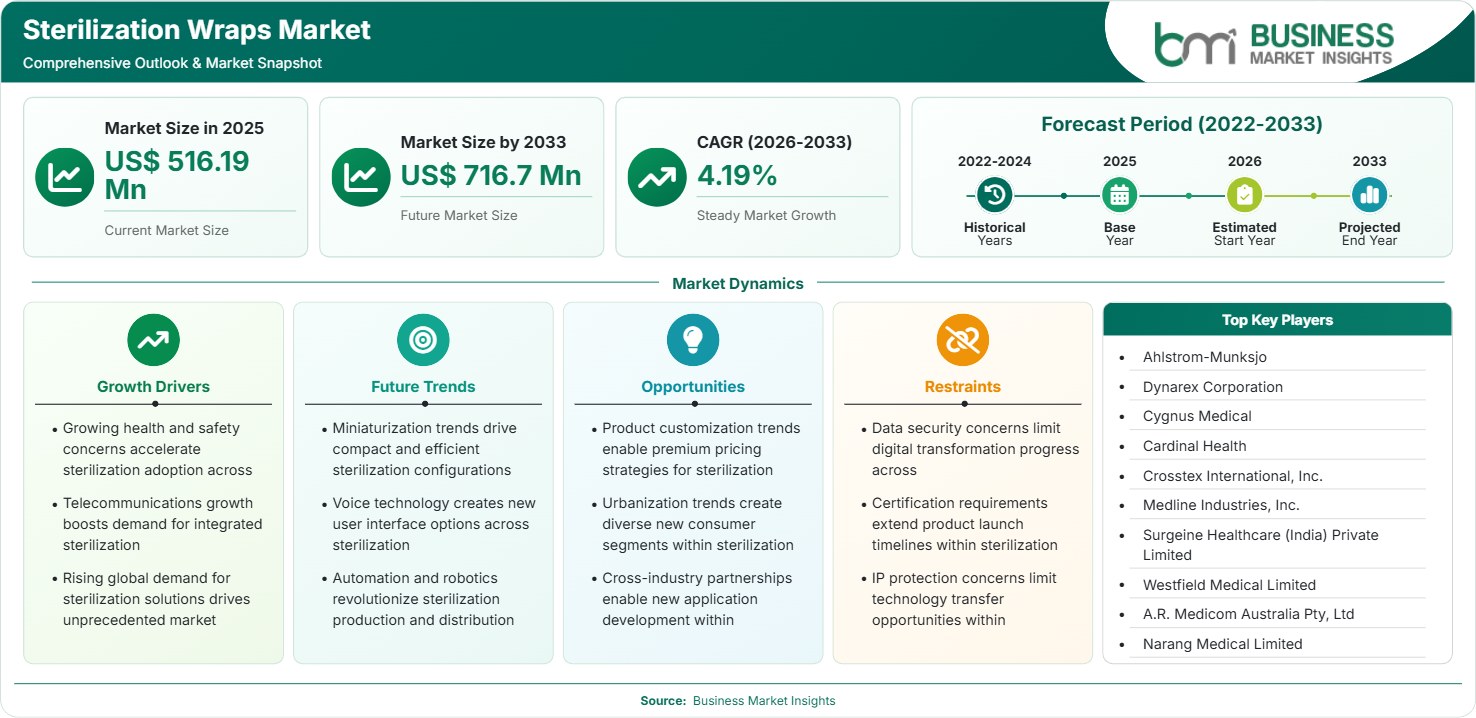
The Sterilization Wraps Market size was valued at US$ 516.19 Million in 2025 and is projected to reach US$ 716.7 Million by 2033, growing at a CAGR of 4.19% during 2026–2033. Rising surgical procedure volumes, increasing emphasis on infection prevention, expansion of healthcare infrastructure, and growing adoption of advanced sterilization packaging solutions are creating sustained opportunities for manufacturers across hospitals, ambulatory surgery centers, and specialized healthcare facilities.

Report Coverage
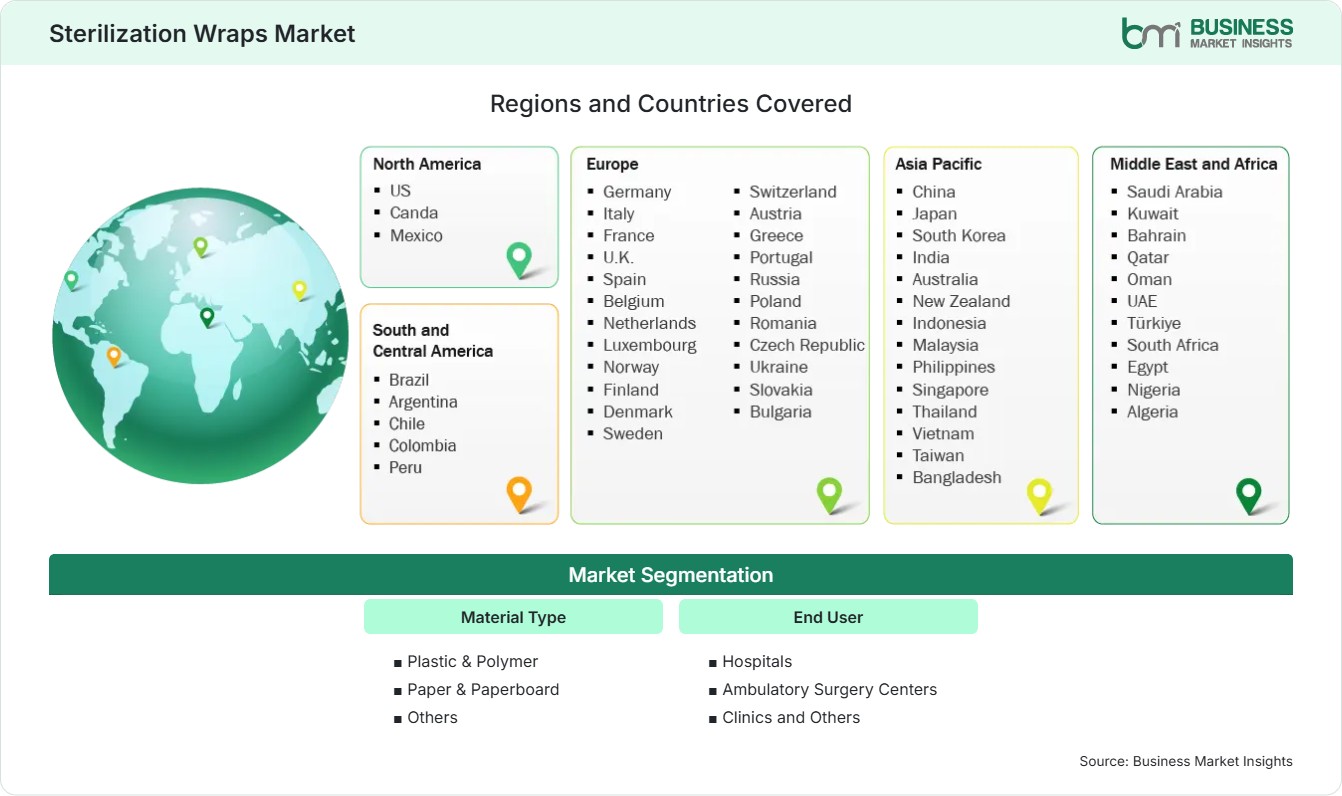
  • Material Type: Plastic & Polymer, Paper & Paperboard, Others
  • End User: Hospitals, Ambulatory Surgery Centers, Clinics and Others
US$ 516.19 Mn Market size in 2025
US$ 716.7 Mn Market Size by 2033
4.19% CAGR, 2026 - 2033
2026-2033 Forecast Period

01 AI Overview

Sterilization Wraps Market Summary

  • North America Region: North America holds 36%–39% market share in 2025 and is projected to grow at a CAGR of 3.8%–4.2% during 2026–2033, driven by stringent sterilization regulations, high surgical volumes, advanced healthcare infrastructure, increasing healthcare expenditure, and continuous replacement demand for premium sterilization consumables across hospitals and surgical facilities. The U.S. represents the largest regional market, supported by advanced infection prevention standards and expanding outpatient surgical procedures, growing at approximately 3.9%–4.3% CAGR.
  • Fastest Growing Region: Asia Pacific accounts for 26%–29% market share in 2025 and is expected to expand at a CAGR of 5.3%–5.8% through 2033, supported by expanding healthcare investments, rising hospital construction, increasing surgical interventions, stronger infection prevention initiatives, and improving sterilization infrastructure across emerging economies.
  • Leading Segment: Plastic & Polymer holds 60%–64% market share in 2025 and is forecast to grow at a CAGR of 4.2%–4.6% during 2026–2033 due to superior microbial barrier properties, durability, compatibility with steam sterilization methods, and widespread hospital preference for reliable sterile barrier systems.
  • High Growth Segment: Hospitals account for 66%–70% market share in 2025 while expanding at a CAGR of 4.3%–4.7% through 2033, supported by increasing surgical procedures, higher instrument reprocessing volumes, infection control initiatives, and continuous procurement of sterilization consumables.
  • Key Market Opportunity: Growing adoption of environmentally sustainable sterilization packaging, recyclable materials, high-performance nonwoven technologies, and digital sterile processing workflows is creating attractive opportunities for manufacturers targeting hospitals seeking operational efficiency and regulatory compliance.
  • Major Market Players: Ahlstrom-Munksjö Oyj, Dynarex Corporation, Cygnus Medical LLC, Cardinal Health, Inc., Crosstex International, Inc., Medline Industries, LP, Surgeine Healthcare (India) Private Limited, Westfield Medical Limited, Owens & Minor, Inc., and STERIS plc.
02 Strategic Insights

Sterilization Wraps Market: Strategic Insights

Sterilization Wraps Market Strategic Framework
FREE PDF
Request your free sample
Request free sample
03 Stakeholder View

Key Takeaways

  • The industry continues shifting toward integrated sterile barrier solutions supported by vertically connected supply chains involving raw material suppliers, nonwoven manufacturers, medical packaging companies, and healthcare providers focused on infection prevention.
  • Hospitals remain the most attractive investment segment because increasing surgical procedures and instrument reprocessing requirements generate recurring demand for high-quality sterilization consumables with reliable microbial protection.
  • Innovation is increasingly centered on multilayer nonwoven materials, recyclable sterilization wraps, enhanced tear resistance, improved breathability, and compatibility with multiple sterilization technologies to improve clinical performance.
  • Asia Pacific presents one of the strongest long-term investment opportunities due to expanding healthcare infrastructure, increasing hospital capacity, growing medical tourism, and rising healthcare expenditure across China, India, and Southeast Asia.
  • Strategic partnerships, product portfolio expansion, manufacturing capacity enhancement, and acquisitions continue strengthening competitive positioning as healthcare providers prioritize dependable sterile processing solutions and regulatory compliance.
  • Sustainability initiatives, including recyclable materials and reduced packaging waste, are becoming important procurement considerations, encouraging manufacturers to develop environmentally responsible sterilization wrap solutions while maintaining stringent sterile barrier performance.
04 Geographic Outlook

Sterilization Wraps Market Regional Highlights

North America Sterilization Wraps Market

North America accounted for 36%–39% of the global market in 2025 and is anticipated to expand at a CAGR of 3.8%–4.2% through 2033. The region benefits from advanced healthcare infrastructure, stringent infection prevention regulations, and high adoption of sterile processing standards. Continuous replacement demand from hospitals, increasing outpatient surgical procedures, and investments in healthcare modernization continue supporting steady demand. The Sterilization Wraps Market share remains strongest across the United States and Canada due to mature healthcare systems and regulatory compliance requirements.

  • Hospitals continue replacing conventional packaging materials with advanced multilayer nonwoven sterilization wraps that provide enhanced microbial barrier protection, tear resistance, and compatibility with multiple sterilization methods, supporting improved patient safety and operational efficiency.
  • Regulatory organizations emphasize strict sterile processing standards, encouraging healthcare providers to adopt premium sterilization consumables while maintaining compliance with infection prevention guidelines and accreditation requirements across healthcare facilities.
  • Increasing numbers of outpatient surgeries and minimally invasive procedures generate recurring demand for sterile packaging products, strengthening procurement activity among hospitals, ambulatory surgery centers, and specialty clinics throughout the region.
  • Manufacturers continue investing in recyclable sterilization materials and sustainable production technologies, addressing healthcare providers' environmental objectives while maintaining high-performance sterile barrier characteristics and supply reliability.
  • Strategic collaborations between healthcare institutions and medical packaging manufacturers accelerate product innovation, strengthen regional distribution networks, and improve availability of advanced sterilization solutions across North America.

US Sterilization Wraps Market

The United States represents approximately 82%–85% of the North American Sterilization Wraps Market and is projected to grow at a CAGR of 3.9%–4.3% during 2026–2033. High healthcare expenditure, rising surgical procedure volumes, advanced central sterile services departments, and strict infection control protocols continue driving sustained procurement of premium sterilization wrap products across hospitals and ambulatory healthcare facilities.

  • Large integrated healthcare systems continue adopting advanced sterilization wraps that reduce contamination risks, improve sterile storage reliability, and support compliance with evolving healthcare quality standards across surgical departments.
  • Continuous investment in hospital modernization, digital sterile processing workflows, and infection prevention initiatives strengthens long-term procurement of high-quality sterile barrier systems throughout the country.
  • Growth in outpatient care facilities increases demand for efficient sterilization consumables capable of supporting rapid instrument turnaround while maintaining validated sterile barrier performance.
  • Domestic manufacturers continue expanding product portfolios emphasizing sustainability, operational efficiency, and compatibility with evolving sterilization technologies adopted by healthcare providers.

Europe Sterilization Wraps Market

Europe captured 28%–31% of the Sterilization Wraps Market in 2025 and is forecast to register a CAGR of 3.9%–4.3% through 2033. Strong regulatory oversight, expanding healthcare investments, and increasing emphasis on infection prevention continue supporting stable market demand. Germany remains the leading national market, while Eastern European countries demonstrate relatively faster adoption as healthcare infrastructure modernization accelerates across public and private healthcare systems.

  • Germany leads regional demand through advanced hospital infrastructure, high surgical procedure volumes, and strong adoption of premium sterile barrier products across healthcare facilities.
  • The United Kingdom and France continue investing in healthcare modernization programs that encourage replacement of conventional sterilization consumables with technologically advanced packaging solutions.
  • Italy and Spain experience increasing demand from expanding ambulatory surgery centers, supporting broader utilization of sterilization wraps across decentralized healthcare environments.
  • Central and Eastern European countries record stronger growth as governments increase healthcare expenditure and improve infection prevention capabilities within public healthcare systems.
  • Sustainability initiatives encourage manufacturers to develop recyclable and environmentally responsible sterilization wrap materials without compromising microbial barrier performance or product reliability.

Asia Pacific Sterilization Wraps Market

Asia Pacific represented 26%–29% of global Sterilization Wraps Market revenue in 2025 and is expected to record the fastest expansion with a CAGR of 5.3%–5.8% through 2033. Expanding healthcare infrastructure, rising surgical volumes, increasing government healthcare spending, and improving infection prevention awareness continue supporting regional adoption. China remains the largest regional market, while India demonstrates the fastest expansion because of rapid healthcare infrastructure development and increasing medical procedures.

  • China continues strengthening hospital infrastructure investments, increasing procurement of advanced sterilization consumables across tertiary healthcare institutions and expanding surgical capacity nationwide.
  • India benefits from expanding multispecialty hospitals, medical tourism, and government healthcare initiatives that accelerate adoption of modern sterile processing products.
  • Japan maintains consistent demand through advanced healthcare facilities emphasizing high-quality infection prevention practices and standardized sterile processing protocols.
  • Southeast Asian countries continue investing in healthcare capacity expansion, creating new opportunities for international sterilization wrap manufacturers seeking regional market penetration.
  • Local production expansion and strategic distribution partnerships improve product accessibility while reducing supply chain dependence on imported sterilization packaging materials.

Rest of World Sterilization Wraps Market

Rest of World accounted for 8%–10% of total Sterilization Wraps Market revenue during 2025 and is projected to expand at a CAGR of 4.5%–4.9% through 2033. South & Central America continue benefiting from improving healthcare investments and hospital modernization initiatives. Meanwhile, Middle East & Africa demonstrate increasing adoption supported by healthcare infrastructure expansion, medical tourism, and government investment programs focused on improving infection prevention capabilities.

  • Brazil remains the largest South American market, supported by expanding hospital infrastructure, increasing surgical procedures, and improved adoption of standardized sterilization practices.
  • Mexico continues strengthening healthcare investments while expanding private hospital networks that increase demand for reliable sterile barrier packaging products.
  • Saudi Arabia leads Middle East demand through healthcare transformation initiatives and significant investments in advanced medical infrastructure and hospital expansion.
  • The United Arab Emirates records robust adoption driven by medical tourism growth, premium healthcare facilities, and increasing emphasis on international infection prevention standards.
  • South Africa remains a key African market as healthcare modernization programs gradually improve access to advanced sterilization technologies and infection control products.
Global Market Geography
FREE PDF
Request your free sample
Request free sample
05 Segment Analysis

Sterilization Wraps Market Segmentation

Material Type

The Material Type segment accounted for the largest proportion of industry demand, supported by continuous advancements in sterile barrier technologies and increasing regulatory requirements for infection prevention. The segment represented approximately 60%–64% market share in 2025 and is expected to expand at a CAGR of 4.2%–4.6% during 2026–2033. The Sterilization Wraps Market scope continues to broaden as manufacturers develop high-performance materials offering superior durability, microbial barrier protection, and compatibility with multiple sterilization techniques.

  • Plastic & Polymer: This sub-segment dominates healthcare applications because of exceptional microbial barrier performance, superior tear resistance, lightweight construction, and compatibility with steam, ethylene oxide, and low-temperature sterilization processes across hospitals.
  • Paper & Paperboard: Paper-based sterilization wraps continue serving healthcare facilities requiring cost-effective sterile barrier solutions, offering reliable breathability, easy disposal, and compatibility with selected sterilization applications while supporting sustainability objectives.

End User

The End User segment is primarily driven by expanding healthcare infrastructure and increasing instrument sterilization requirements across medical facilities. This segment accounted for approximately 66%–70% Sterilization Wraps Market share during 2025 and is projected to register a CAGR of 4.3%–4.7% throughout the forecast period. Growing surgical volumes, infection prevention initiatives, and healthcare quality standards continue supporting procurement of advanced sterilization wraps across diverse clinical environments.

  • Hospitals: Hospitals remain the largest consumers due to extensive surgical activities, centralized sterile processing departments, stringent infection control protocols, and continuous procurement of premium sterilization consumables for reusable medical instruments.
  • Ambulatory Surgery Centers: Growing outpatient surgical procedures and shorter patient stays continue increasing adoption of efficient sterilization wrap solutions that support rapid instrument turnover while maintaining validated sterile barrier performance.
  • Clinics: Specialty clinics increasingly utilize sterilization wraps to maintain infection prevention standards for reusable instruments, driven by expanding procedural services, regulatory compliance requirements, and greater awareness regarding patient safety.
06 Market Forces

Sterilization Wraps Market Dynamics

Key Market Drivers

Rising Surgical Procedures and Infection Prevention Requirements

The increasing number of surgical procedures performed globally remains one of the strongest demand drivers for sterilization wraps. According to international healthcare organizations, millions of surgical interventions are performed annually, creating continuous demand for sterile packaging solutions that preserve instrument sterility throughout storage and transportation. Healthcare facilities are strengthening infection prevention strategies to reduce hospital-acquired infections (HAIs), which affect millions of patients worldwide each year. These initiatives encourage procurement of advanced nonwoven sterilization wraps offering superior microbial barrier performance, tear resistance, and compatibility with multiple sterilization methods. Consequently, the Sterilization Wraps Market growth continues to benefit from expanding healthcare infrastructure, higher surgical instrument reprocessing volumes, and increasingly stringent sterilization standards implemented by healthcare providers.

Expansion of Hospital Infrastructure Worldwide

Healthcare investments across developed and emerging economies continue supporting the establishment of new hospitals, specialty clinics, and ambulatory surgery centers. Governments and private healthcare providers are expanding healthcare capacity to address growing patient populations and increasing demand for complex surgical procedures. Every newly established sterile processing department requires dependable sterilization consumables to maintain patient safety and regulatory compliance. Growing investments in centralized sterile services departments, modern sterilization equipment, and quality management systems further accelerate demand for high-performance sterilization wraps. Healthcare accreditation requirements also encourage hospitals to replace lower-performance packaging materials with validated sterile barrier products capable of maintaining sterility during storage and distribution across healthcare environments.

Advancements in Nonwoven Material Technologies

Material science innovations continue improving sterilization wrap performance through enhanced fiber structures, multilayer construction, improved tensile strength, and optimized breathability. Modern product design efforts concentrate on developing products that are able to maintain microbial barrier efficacy while at the same time becoming lighter in weight and more environmentally friendly. Better compatibility with such sterilization methods as steam sterilization, ethylene oxide sterilization, hydrogen peroxide plasma sterilization, etc. allows medical facilities to standardize their purchases when different types of instruments undergo the process of sterilization. The product design is also oriented towards using recycled materials and having less environmental impact without undermining the sterility barrier efficacy.

Key Market Opportunities

Sustainable Sterilization Packaging Solutions

Environmental sustainability is becoming an increasing part of the purchasing policies of healthcare companies across the globe while sustaining very high standards of infection prevention practices. Companies that make an investment in recyclable non-woven materials and carbon reduction systems would be able to enhance their competitiveness in the future. Increasing environmental regulations lead to the use of sustainable sterilization consumables that reduce waste production without degrading performance. Sterilization Wraps Market Forecasts indicate that environmentally responsible product portfolios will become an important purchasing criterion among hospitals seeking to balance clinical performance with corporate sustainability objectives. This transition creates opportunities for manufacturers capable of delivering certified, high-performance, and environmentally responsible sterile barrier solutions.

Healthcare Expansion Across Emerging Economies

Rapid healthcare infrastructure development across Asia Pacific, Latin America, the Middle East, and parts of Africa presents significant commercial opportunities for sterilization wrap manufacturers. Expenditure on healthcare is steadily increasing by governments with an aim to make hospitals more accessible, modernize the healthcare system infrastructure and enhance the infection control system. The growing number of surgeries, medical tourism, and coverage of health insurance are some factors that increase the usage of reusable surgical instruments which need to be packed under a validated process. Setting up manufacturing plants, regional distribution alliances and technical support centers can help in achieving market penetration.

Digital Sterile Processing and Smart Supply Chain Integration

Emerging Sterilization Wraps Market Trends, including Healthcare facilities increasingly adopting digital sterile processing management systems to improve inventory visibility, traceability, and instrument lifecycle management. The integration of the use of sterilization consumables in digitally enabled workflow processes presents opportunities to suppliers who can provide quality-certified products that can be easily integrated into automated inventory systems. The use of innovative labeling methods and process validations can increase the efficiency of operations in central sterile service departments. Through continuous improvement of hospital supply chain operations, suppliers who can integrate innovations in their product lines and digital processes can enhance customer relations.

Market Restraints and Challenges

Competition from Reusable Sterilization Container Systems

Factor: Increasing adoption of reusable rigid sterilization container systems across large healthcare institutions.

Impact: Although disposable sterilization wrapping is extensively used, many health care institutions keep on purchasing reusable sterilization packaging to cut down their total consumables cost and avoid packaging wastage. The repeated use of such packaging systems for long periods helps in decreasing the volume of disposables required for purchasing wrap materials. Cost benefit analysis is commonly conducted by health care institutions prior to adopting any sterilization packaging system, which makes competition hard for the companies producing wraps. Therefore, it becomes essential for such companies to concentrate on providing better performance, versatility, sustainability, and cost efficiency.

Volatility in Raw Material Costs and Supply Chains

Factor: Fluctuating prices of polypropylene, specialty nonwoven materials, and medical-grade packaging inputs.

Impact: Pricing fluctuation and logistics will keep on impacting the costs of production and profitability in the case of sterilization wrap manufacturers. Disruptions along supply chains, logistical limitations, and geopolitical instabilities might result in delays in the delivery of products or higher costs when it comes to sourcing raw materials for health care providers. Manufacturing firms have been working hard to diversify their supplier bases and build up regional production capacities as a means to cut down operational risks. Nonetheless, continued fluctuation in the cost of raw materials is a big obstacle in stabilizing pricing.

07 Company Analysis

Competitive Landscape

The competitive environment is characterized by continuous product innovation, investments in sustainable sterile barrier technologies, manufacturing capacity expansion, and strategic partnerships with healthcare providers. The Sterilization Wraps Market analysis indicates that leading manufacturers are focusing on multilayer nonwoven materials, enhanced microbial barrier performance, regulatory compliance, and global distribution capabilities to strengthen their competitive position.

Company Name

Overview

Products and Services Relevant to this Market

Ahlstrom-Munksjö Oyj

Global manufacturer of fiber-based specialty materials serving healthcare, filtration, and industrial applications with strong expertise in medical packaging solutions.

Sterilization wrap materials, medical-grade papers, nonwoven barrier materials, sterile packaging components, and sustainable fiber-based healthcare products.

Dynarex Corporation

Medical products manufacturer and distributor supplying hospitals, clinics, and healthcare facilities across numerous clinical categories.

Sterilization wraps, surgical consumables, infection prevention products, disposable medical supplies, and sterile processing accessories.

Cygnus Medical LLC

Healthcare manufacturer specializing in sterile processing products and infection prevention solutions for hospitals and surgical facilities.

Sterilization wraps, sterilization packaging systems, tray liners, sterile processing accessories, and medical packaging products.

Cardinal Health, Inc.

Global healthcare company providing medical products, distribution services, and supply chain solutions to healthcare organizations worldwide.

Sterilization wraps, surgical supplies, infection prevention products, sterile packaging, and hospital consumables.

Crosstex International, Inc.

Infection prevention specialist offering sterilization monitoring and sterile barrier solutions for healthcare and dental markets.

Sterilization wraps, sterilization pouches, biological indicators, chemical indicators, and infection control products.

Medline Industries, LP

One of the world's largest privately held medical supply manufacturers serving hospitals, surgery centers, and healthcare providers globally.

Sterilization wraps, surgical drapes, medical disposables, sterile packaging products, and infection prevention solutions.

Surgeine Healthcare (India) Private Limited

Indian manufacturer focused on sterilization packaging, disposable medical products, and healthcare consumables for domestic and export markets.

Sterilization wraps, CSR wraps, medical packaging materials, surgical disposables, and hospital consumables.

Westfield Medical Limited

UK-based company specializing in sterile services equipment and infection prevention products for healthcare institutions.

Sterilization wraps, sterile processing equipment, container systems, sterilization accessories, and healthcare packaging products.

Other Prominent Players

Regional manufacturers and specialized medical packaging suppliers supporting local healthcare markets through customized sterile barrier solutions.

Medical-grade sterilization wraps, packaging materials, infection prevention products, and contract manufacturing services.

10 Trust & Transparency

Research Methodology

The market analysis combines proprietary research with secondary data from government agencies, company disclosures, regulatory filings, industry databases and expert interviews. Market estimates are validated through data triangulation, cross-market benchmarking and analyst review.

View Full Research Methodology

11 Questions Answered

Frequently Asked Questions

What does this Sterilization Wraps Market Report cover?

The report provides comprehensive insights into market size, segmentation, competitive landscape, regional outlook, technology trends, growth opportunities, industry dynamics, strategic developments, and future outlook through 2033.

Which end-user contributes the largest revenue?

Hospitals account for the largest revenue contribution because of high surgical instrument reprocessing volumes, centralized sterile services departments, and continuous procurement of infection prevention consumables.

Which region offers the highest growth opportunities?

Asia Pacific presents the strongest long-term opportunity owing to expanding healthcare infrastructure, increasing hospital investments, rising surgical volumes, and greater adoption of modern sterilization practices.

Which material segment dominates the market?

Plastic & Polymer remains the leading material segment due to its superior microbial barrier performance, durability, tear resistance, and compatibility with multiple sterilization methods used by healthcare facilities.

What is driving demand in the Sterilization Wraps Market?

Growing surgical procedures, stricter infection prevention regulations, expansion of healthcare infrastructure, and increasing awareness regarding hospital-acquired infections are the primary factors driving demand for sterilization wraps worldwide.

Access the Full Sterilization Wraps Market Report

Get segment-level forecasts, regional estimates, competitive benchmarking, company profiles and downloadable Excel datasets.

Access the full Sterilization Wraps Market Report
350 pages PDF & Excel | 2026-08-17