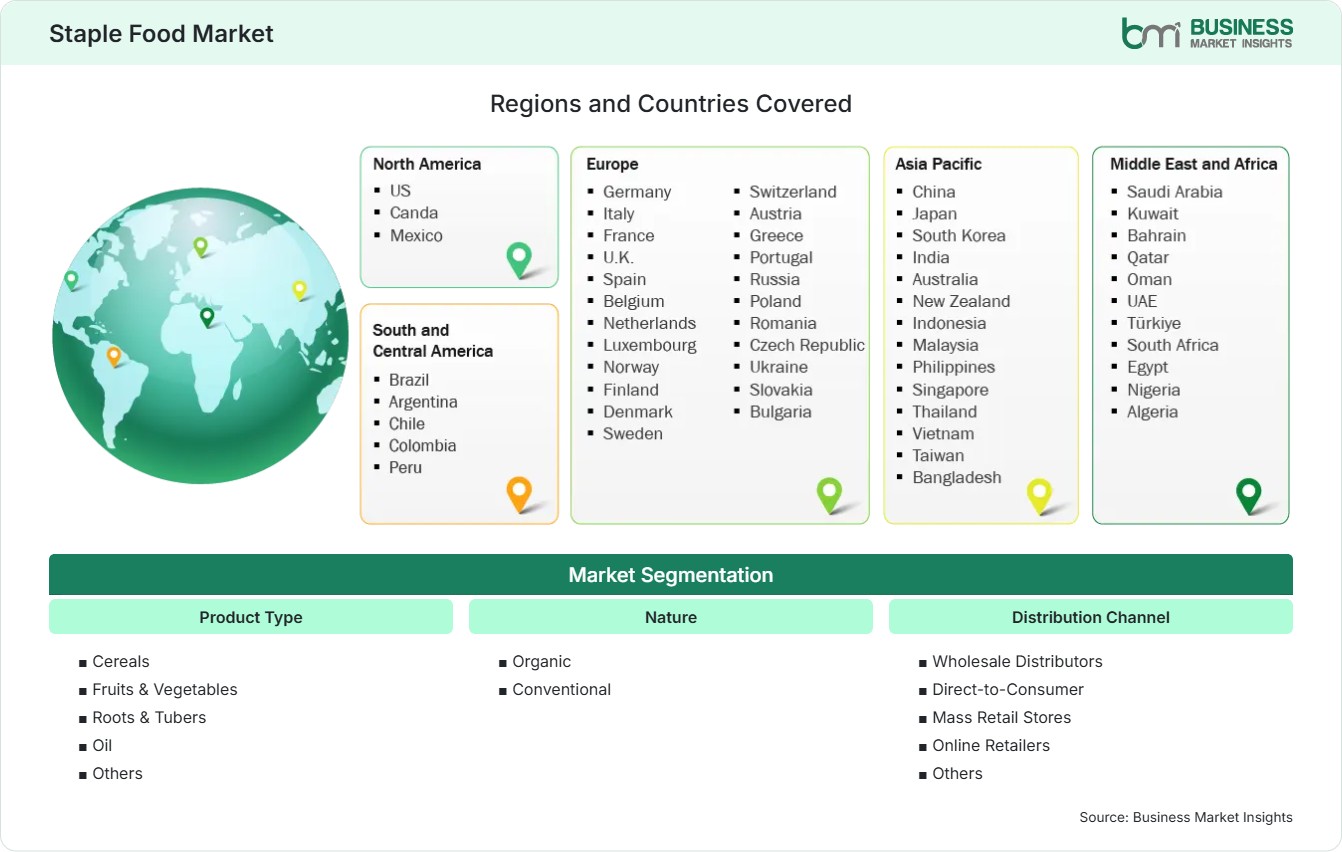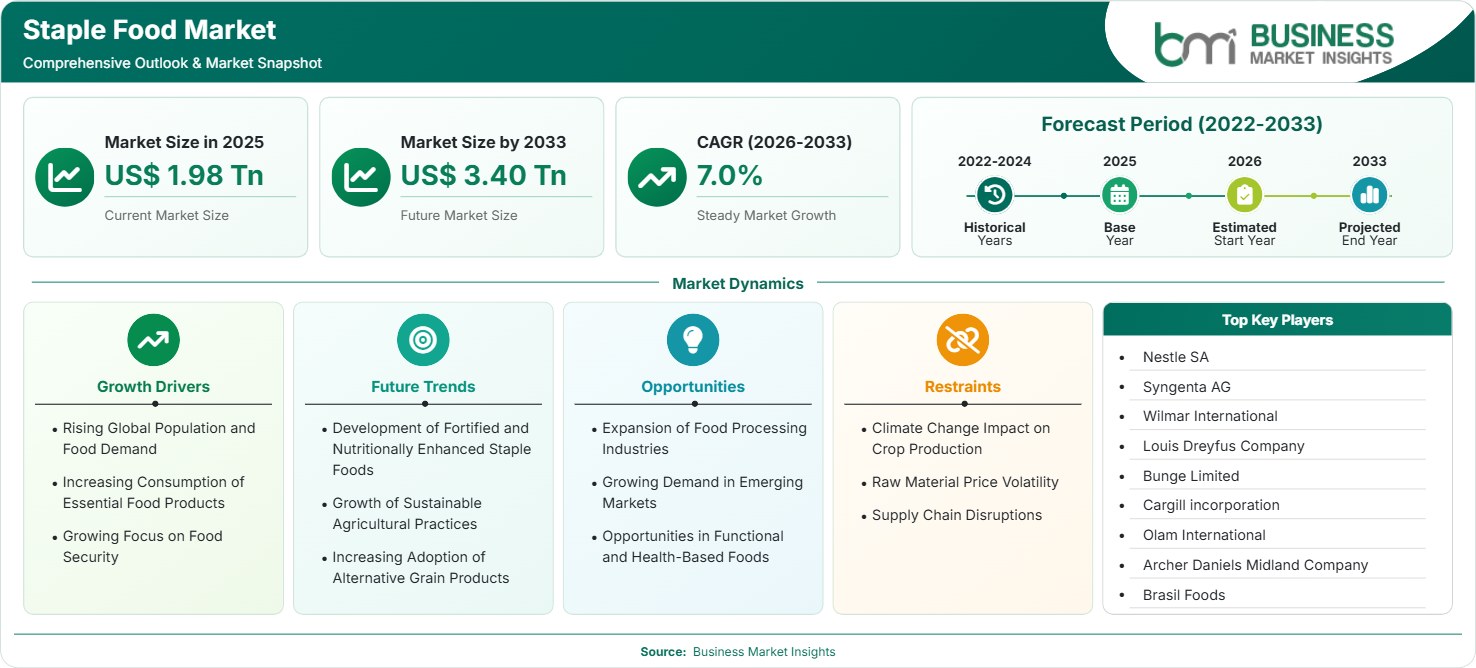
Staple Food Market Regional Highlights
North America Staple Food Market
North America represents a mature regional market with an 18%–22% share in 2025 and a CAGR of 5%–7% during 2026–2033. The region benefits from advanced agricultural infrastructure, established food processing industries, and efficient supply networks. Staple Food Market share remains supported by consistent cereal consumption, technological farming adoption, and strong retail distribution systems across the United States and Canada.
- Advanced farming technologies, including precision agriculture and automated crop monitoring, improve productivity while supporting sustainable cultivation practices across large-scale agricultural operations in the region.
- The United States maintains strong demand for processed cereals, grains, and packaged staple products due to established consumption patterns and extensive food manufacturing capabilities.
- Canada contributes through grain production strength, export-oriented agricultural systems, and investments in sustainable farming methods that improve supply chain efficiency.
- Retail modernization and digital grocery platforms are enhancing consumer access to staple products while enabling producers to expand direct engagement with households.
US Staple Food Market
The US market accounts for an 15%–18% share in 2025 and expands at a CAGR of 5%–7% through 2026–2033. Strong agricultural output, advanced processing facilities, and consumer demand stability support market development. The market share in the country is influenced by cereal production, packaged food consumption, and efficient wholesale and retail networks.
- Large-scale grain cultivation and advanced agricultural technologies support consistent production of wheat, corn, and other essential food commodities.
- Food manufacturers are increasing product diversification through fortified, convenient, and value-added staple products targeting evolving consumer preferences.
- Growing interest in sustainable sourcing encourages companies to invest in regenerative agriculture practices and transparent supply chain management.
Europe Staple Food Market
Europe holds a 20%–23% share in 2025 with a CAGR of 5%–7% during 2026–2033. Germany, France, Italy, and the United Kingdom remain key contributors, while Nordic countries demonstrate increasing demand for sustainable food systems. Market share is strengthened by food quality regulations, organic agriculture adoption, and advanced processing capabilities.
- Germany supports market development through efficient agricultural systems, strong food processing industries, and demand for high-quality grain-based products.
- France remains a major contributor due to extensive cereal production, established agricultural infrastructure, and increasing sustainable farming initiatives.
- The United Kingdom experiences growth through modern retail channels, packaged staple product innovation, and rising consumer interest in healthier food choices.
- Nordic countries demonstrate higher adoption of organic staple products due to environmental awareness and sustainable consumption priorities.
Asia Pacific Staple Food Market
Asia Pacific represents a 42%–46% share in 2025 and records the fastest CAGR of 8%–10% from 2026–2033. China, India, Japan, and Southeast Asian countries are major markets supported by population growth, agricultural investments, and expanding food distribution networks. Staple Food Market growth in the region is driven by rising consumption and food security initiatives.
- China benefits from large-scale agricultural production, government food security programs, and investments in modern farming technologies.
- India demonstrates strong potential through expanding population requirements, improved agricultural infrastructure, and increasing food processing capacity.
- Japan focuses on efficient production systems, advanced food technologies, and premium staple product innovation to address changing consumer needs.
- Southeast Asian economies experience increased demand through urbanization, income growth, and modernization of retail distribution channels.
Rest of World Staple Food Market
Rest of World accounts for a 10%–13% share in 2025 and grows at a CAGR of 6%–8% during 2026–2033. Latin America, Middle East, and Africa markets are developing through agricultural expansion, food security investments, and improved distribution infrastructure. Regional market share is influenced by local production capabilities, import dependence, and economic development conditions.
- Brazil and Argentina support regional growth through strong agricultural production, grain exports, and investments in farming efficiency improvements.
- Mexico is expanding through increasing food processing activities, modern retail development, and rising demand for packaged staple products.
- Middle Eastern countries are investing in agricultural technology, controlled farming systems, and supply diversification strategies to improve food availability.
- Saudi Arabia and the United Arab Emirates are adopting advanced agricultural solutions to reduce import dependency and strengthen food resilience.
- African markets are gradually improving through agricultural development programs, infrastructure investments, and increasing access to affordable staple food products.