Market Summary
Executive Summary and Global Market Analysis
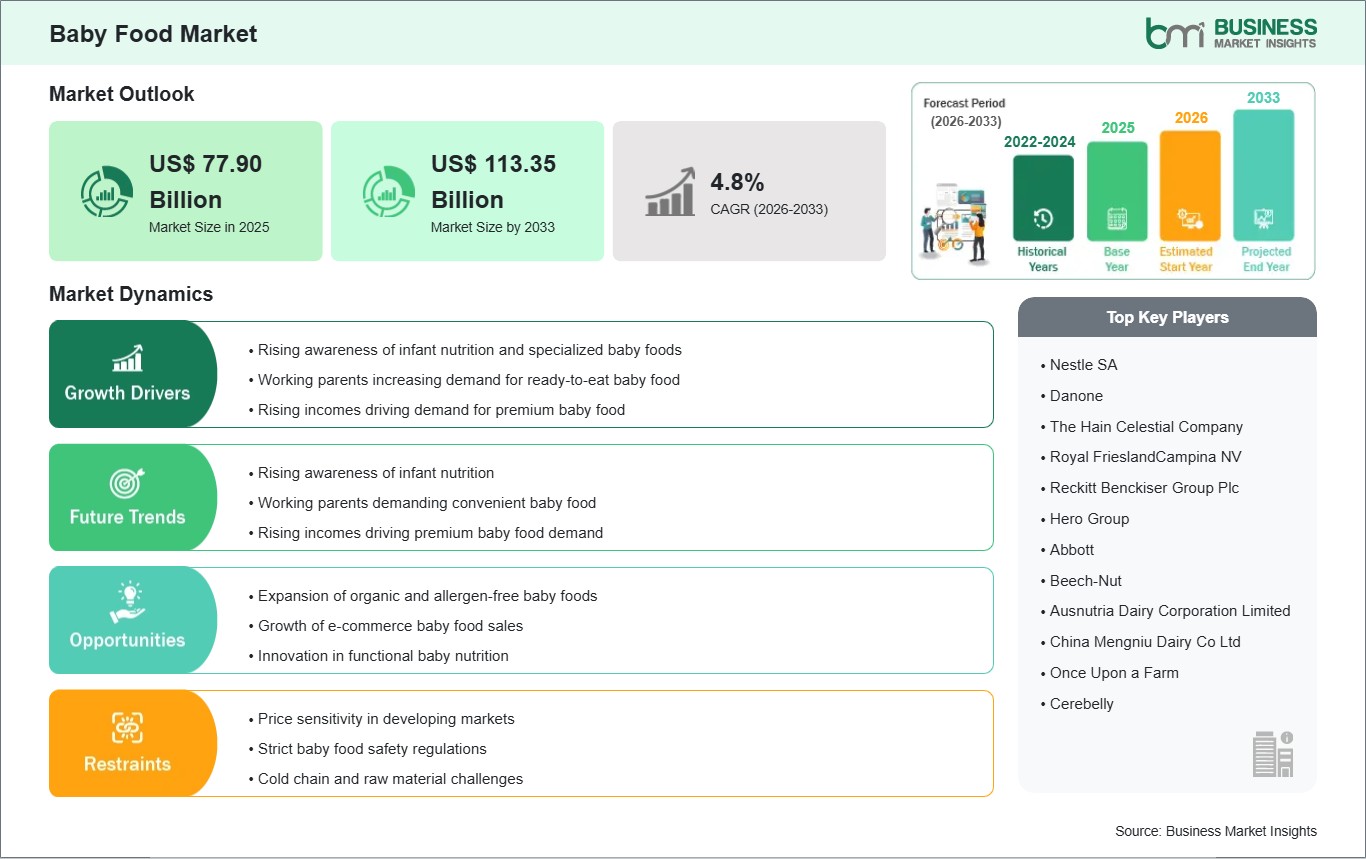
The global baby food market includes specially formulated foods that meet the dietary needs of infants and toddlers during key growth stages. These products aim to provide essential nutrients, promote healthy development, and offer easy feeding options for caregivers. Baby foods cover a variety of categories, including infant formulas, cereals, purees, snacks, and fortified nutritionals. Each category is tailored to different age groups, dietary needs, and preferences. The market has grown strongly due to increased awareness of infant nutrition, higher disposable incomes, and expanded retail distribution. As urbanization rises and more women join the workforce, the demand for ready-to-eat and easy-to-prepare baby food has surged. A greater emphasis on hygiene, food safety, and product quality has led manufacturers to innovate in packaging, fortification, and ingredient transparency to meet consumer expectations. Demographic trends, such as higher birth rates in emerging economies, changing family structures, and evolving lifestyles, are influencing market dynamics. In many developing areas, better healthcare and increased parental knowledge about early childhood nutrition have raised consumption levels.
Meanwhile, in mature markets, there is strong demand for premium and organic products, as health-conscious parents prefer items without artificial additives, allergens, or pesticides. Innovation is key to market growth. Manufacturers are putting money into new formulas that include probiotics, prebiotics, DHA/ARA fatty acids, plant-based proteins, and other nutrients that aid cognitive development, immunity, and digestive health. There is also a rising trend toward organic, non-GMO, and sustainable baby food choices, spurred by growing environmental awareness and strict regulations around infant nutrition. E-commerce platforms have become important channels for distribution, making branded and specialized baby food more accessible. Digital marketing, subscription services, and direct-to-consumer sales are improving consumer connections while broadening market reach. New packaging designs that enhance shelf stability, usability, and portion control further boost market appeal.
However, the global baby food industry faces hurdles like changing raw material costs, strict food safety rules, and intense competition among well-established global companies and local players. Compliance with regulations, obtaining quality certifications, and adapting to local nutritional guidelines complicate product development and market entry. Price sensitivity in some regions may also affect the acceptance of premium products. Despite these challenges, the long-term outlook for the baby food market is bright. Ongoing product innovation, the expansion of distribution networks, and a growing focus on health among parents should continue to drive growth. The combined impact of rising global birth rates, increased attention to early childhood nutrition, and the growth of modern retail and online sales suggests the market will remain resilient. As caregivers prioritize convenience, safety, and nutritional effectiveness, the global baby food market is set for steady growth, supported by changing consumer preferences and advancements in formulation.
Segment Analysis
Baby Food Market Segmentation
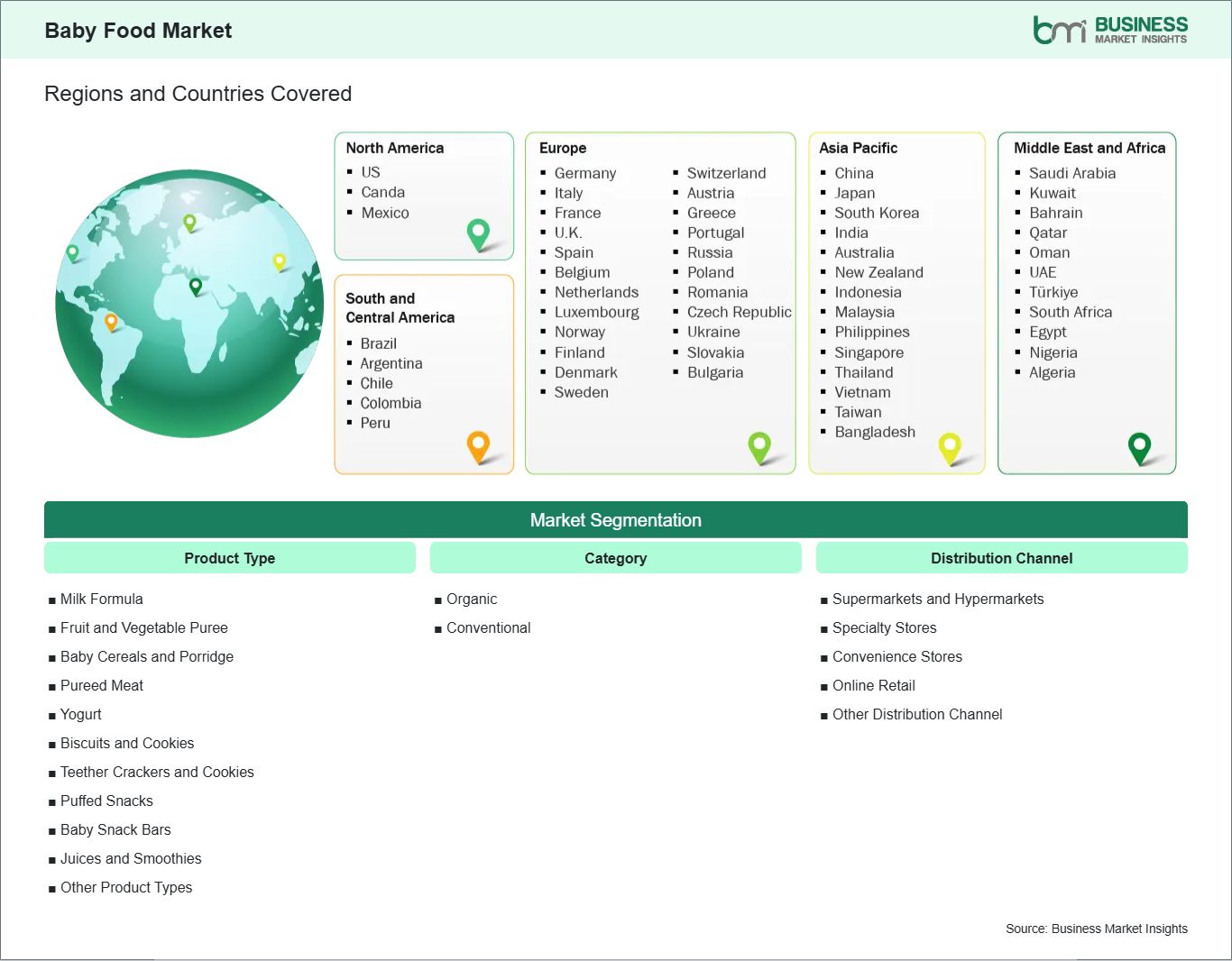
Key segments that contributed to the derivation of the Baby Food market analysis are product type, category, and distribution channel.
- By product type, the Baby Food market is segmented into milk formula, fruit and vegetable puree, baby cereals and porridge, pureed meat, yogurt, biscuits and cookies, teether crackers and cookies, puffed snacks, baby snack bars, juices and smoothies, and others. The milk formula segment dominated the market in 2025.
- By category, the Baby Food market is segmented into organic and conventional. The conventional segment dominated the market in 2025.
- By distribution channel, the Baby Food market is segmented into supermarkets and hypermarkets, specialty stores, convenience stores, online retail, and others. The supermarkets and hypermarkets segment dominated the market in 2025.
Market Forces
Baby Food Market Drivers and Opportunities
Rising Birth Rates, Urbanization, and Expanding Consumer Base
The global baby food market is growing due to rising birth rates in developing countries, rapid urbanization, and changing family structures. More parents in cities want convenient and nutritious feeding options. This increases the demand for ready-to-eat cereals, purees, and fortified infant formulas. Busy lifestyles and dual-income households push caregivers to choose packaged and easy-to-prepare products. At the same time, greater awareness about infant nutrition and early childhood development promotes the consumption of high-quality and age-specific offerings. Additionally, the growth of modern retail and online shopping makes branded baby food more accessible, contributing to steady market growth. As parents focus on health, safety, and convenience, the need for reliable, nutritionally balanced baby food products is rising globally.
Innovation in Nutrition and Focus on Health, Safety, and Sustainability
Another major factor in the baby food market is the increased focus on better nutrition, product safety, and sustainable practices. Manufacturers are creating formulations that include probiotics, DHA/ARA fatty acids, plant-based proteins, and other functional ingredients that help cognitive development, immunity, and digestion. There is also a strong shift toward organic, non-GMO, allergen-free, and eco-friendly baby food products, reflecting rising consumer awareness and strict regulatory standards. Companies are emphasizing hygienic packaging, longer shelf life, and convenient portion sizes to ensure safety and ease of use. As parents become more health-conscious and environmentally aware, the demand for premium and sustainable baby food products is likely to boost long-term growth in the global market.
Size and Share Analysis
Baby Food Market Size and Share Analysis
The milk formula segment leads the market. This is due to growing awareness among parents about the importance of balanced nutrition for infants and the need for easy feeding solutions. More working mothers, urban lifestyles, and healthcare guidelines for fortified formulas are driving steady demand. The widespread use of specialized formulas for different age groups and health needs also supports market growth.
Conventional baby food ranks at the top because it is widely available, affordable, and comes from trusted brands. Parents often rely on these products for their consistent quality and nutritional value. The wide variety of conventional options across different price ranges makes it the first choice for many families.
Supermarkets and hypermarkets dominate the market thanks to their large selection, convenience, and competitive prices. Big retail chains also offer promotions and bulk buying options that appeal to parents. Their strong distribution networks and visibility in stores make these channels the primary choice for baby food purchases around the world.
Report Coverage
Baby Food Market Report Coverage and Deliverables
The "Baby Food Market Size and Forecast (2022–2033)" report provides a detailed analysis of the market covering below areas:
- Baby Food market size and forecast at global, regional, and country levels for all the key market segments covered under the scope
- Baby Food market trends, as well as market dynamics such as drivers, restraints, and key opportunities
- Baby Food market analysis covering key market trends, global and regional framework, major players, regulations, and recent market developments
- Industry landscape and competition analysis covering market concentration, heat map analysis, prominent players, and recent developments for the Baby Food market
- Detailed company profiles, including SWOT analysis
Geographic Insights
Baby Food Market Geographic Insights
The geographical scope of the Baby Food market report is divided into five regions: North America, Asia Pacific, Europe, Middle East & Africa, and South & Central America. The Baby Food market in the Asia Pacific is expected to grow significantly during the forecast period.
The Asia-Pacific Baby Food market is segmented into China, Japan, South Korea, India, Australia, New Zealand, Indonesia, Malaysia, the Philippines, Singapore, Thailand, Vietnam, Taiwan, Bangladesh, and the Rest of Asia.
The Asia-Pacific region is one of the fastest-growing markets for baby food in the world. This growth is fueled by rising birth rates in several countries, increasing urbanization, and a larger middle-income population. Countries like China, India, Indonesia, and Vietnam are seeing a strong demand for infant formulas, cereals, purees, and fortified nutrition as parents focus more on balanced nutrition and convenient feeding options. The rapid growth of modern retail, wider distribution through e-commerce, and better cold-chain infrastructure are improving product availability in urban and semi-urban areas. Also, greater awareness of early childhood nutrition and improvements in healthcare are prompting caregivers to choose branded and fortified baby food products, which supports ongoing market growth in the region. North America and Europe still hold significant shares of the global baby food market. This is due to high consumer spending power, well-established retail networks, and strong regulations that prioritize food safety and quality. In North America, the United States leads with a large number of health-conscious parents driving demand for organic, specialty, and functional baby food products. Premium formulations, clean-label options, and innovative packaging are commonly used, backed by strong marketing and digital sales strategies. In Europe, countries like Germany, the United Kingdom, and France play a major role, with strict food standards and increasing demand for sustainable, allergen-free, and organic products. Both regions benefit from a high presence of organized retail and online sales, encouraging product innovation and diverse offerings.
Industry Activity
Recent Developments
The Baby Food market is evaluated by gathering qualitative and quantitative data post primary and secondary research, which includes important corporate publications, association data, and databases. A few of the key developments in the Baby Food market are:
- In February 2025, Bébé Foodie, the first fully customizable and adaptive app supporting diverse food preferences at every stage of the baby's food journey, announced its launch to help parents start the New Year with clarity and confidence in their feeding decisions. By making feeding a holistic and guilt-free experience, the app is bringing joy and flexibility back to the baby-weaning process.
- In September 2025, Little Spoon made its retail debut, after seven years building the largest direct-to-consumer kids' food brand in the U.S. with more than $150M in net revenue and growing. Now available exclusively in Target stores nationwide and online at Target.com.
Trust & Transparency
Research Methodology
The market analysis combines proprietary research with secondary data from government agencies, company disclosures, regulatory filings, industry databases and expert interviews. Market estimates are validated through data triangulation, cross-market benchmarking and analyst
review.
View Full Research Methodology
Key Sources Referred:
World Bank – Global Trade Indicators World Trade Organization (WTO) International Trade Administration (ITA) Company website Company annual reports Company investor presentations