
Sports Nutrition Market Outlook: Size, Share, Trends, Growth Analysis, Competitive Landscape & Forecast, 2026-2033

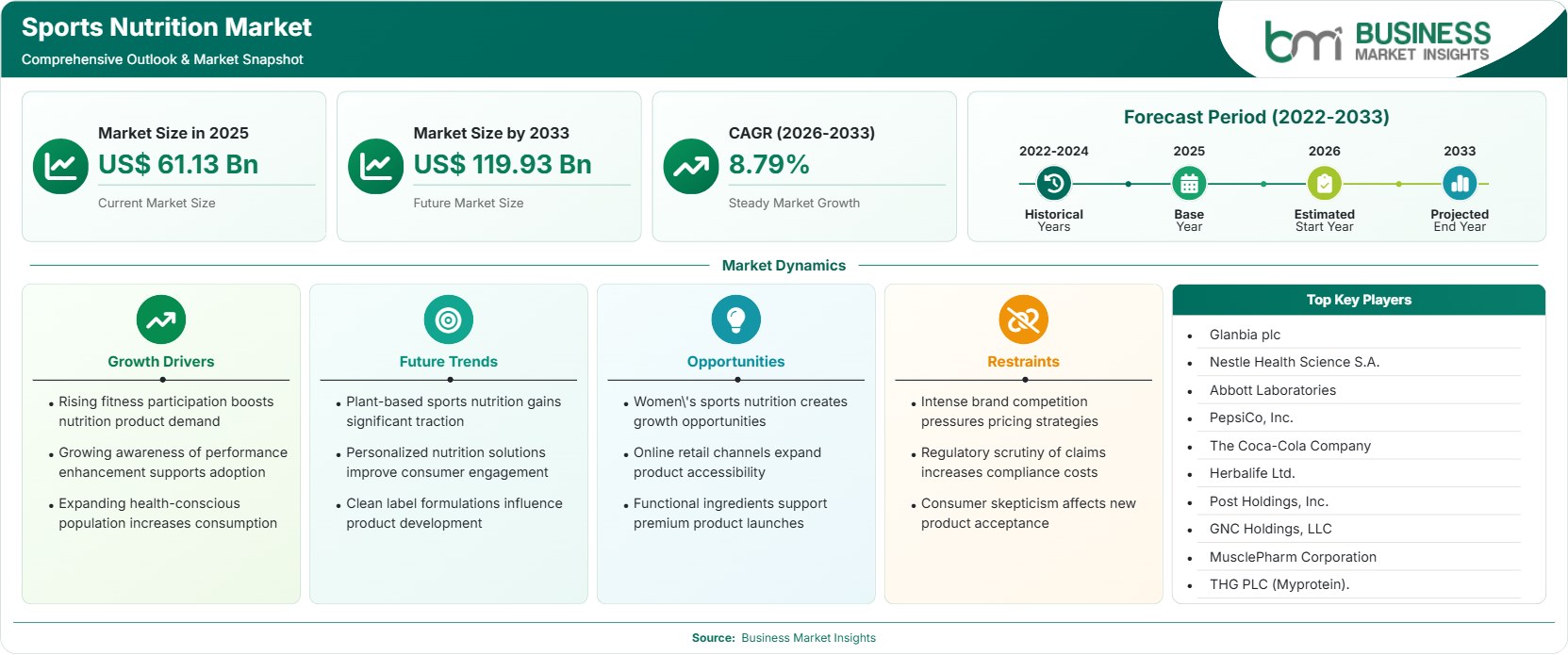
The Sports Nutrition Market size was valued at US$ 61.13 Billion in 2025 and is projected to reach US$ 119.93 Billion by 2033, growing at a CAGR of 8.79% during 2026–2033, driven by expanding fitness participation, rising protein consumption, personalized nutrition adoption, e-commerce growth, and innovation in clean-label, functional, and performance-enhancing formulations.

Report Coverage
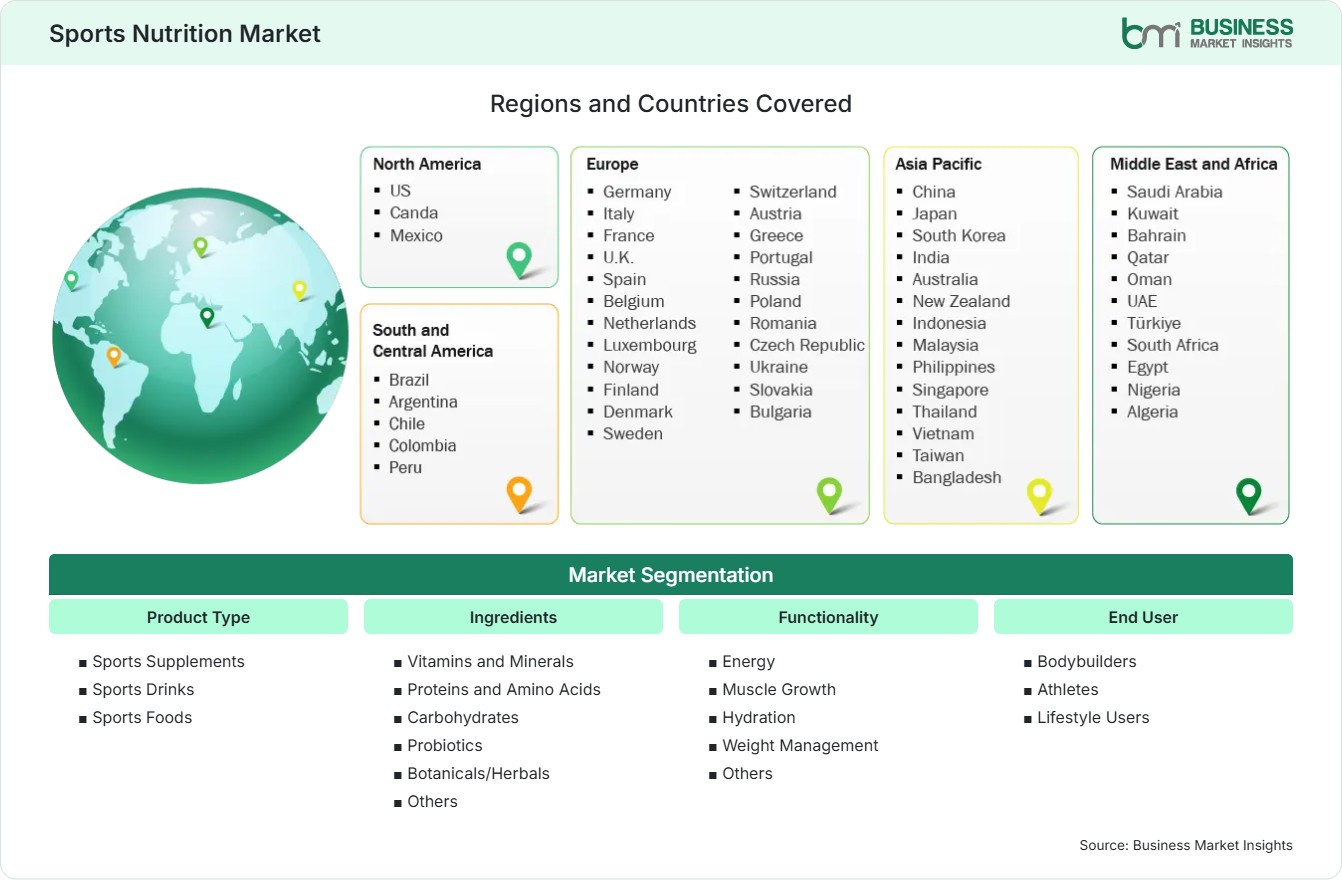
  • Product Type: Sports Supplements, Sports Drinks, Sports Foods
  • Ingredients: Vitamins and Minerals, Proteins and Amino Acids, Carbohydrates, Probiotics, Botanicals/Herbals, Others
  • Functionality: Energy, Muscle Growth, Hydration, Weight Management, Others
  • End User: Bodybuilders, Athletes, Lifestyle Users
  • Distribution Channel: Hypermarkets/Supermarkets, Convenience Stores, Drug Stores/Pharmacy, Specialty Stores/Fitness Centers, Online Retail
US$ 61.13 Bn Market size in 2025
US$ 119.93 Bn Market Size by 2033
8.79% CAGR, 2026 - 2033
2026-2033 Forecast Period

AI Overview

Sports Nutrition Market Summary

  • North America Region: Holds a market share of 34%–37% in 2025, growing with a CAGR of 7.5%–8.2% during 2026–2033. Growth is supported by high gym penetration, established supplement ecosystems, sports participation, premium product demand, direct-to-consumer channels, scientific ingredient adoption, performance nutrition awareness, and functional beverage innovation. The U.S. remains the regional anchor, supported by strong retail penetration and a CAGR of 7.8%–8.4%.
  • Fastest Growing Region: Asia Pacific holds 28%–31% share in 2025 and advances at 10.2%–11.0% CAGR. Urban fitness culture, rising disposable incomes, digital commerce expansion, growing sports participation, and increasing awareness of preventive health continue stimulating broad-based demand.
  • Leading Segment: Sports Supplements account for 44%–47% share in 2025 and expand at 8.8%–9.5% CAGR. Demand is driven by protein supplementation, recovery support, convenient formats, evidence-based ingredients, expanding female consumer adoption, and mainstream wellness integration.
  • High Growth Segment: Online Retail represents 22%–25% share in 2025 and records 11.5%–12.5% CAGR. Digital marketplaces, subscription nutrition models, influencer marketing, personalized recommendations, wider brand accessibility, and cross-border product availability support accelerated channel expansion.
  • Key Market Opportunity: Personalized nutrition platforms integrating biomarker assessment, wearable data, AI-enabled recommendations, and customized formulations create higher consumer engagement, premium pricing potential, product differentiation, and recurring revenue opportunities.
  • Major Market Players: Glanbia plc, Nestlé Health Science S.A., Abbott Laboratories, PepsiCo, Inc., The Coca-Cola Company, Herbalife Ltd., Post Holdings, Inc., GNC Holdings, LLC, MusclePharm Corporation, THG PLC (Myprotein).
Strategic Insights

Sports Nutrition Market: Strategic Insights

Sports Nutrition Market Strategic Framework
FREE PDF
Request your free sample
Request free sample
Stakeholder View

Key Takeaways

  • The value chain is increasingly integrated, linking ingredient suppliers, contract manufacturers, digital retailers, sports organizations, and wellness platforms into a broader performance-nutrition ecosystem.
  • Online retail, plant-based performance products, and lifestyle-user segments offer some of the strongest long-term expansion opportunities beyond traditional athlete-focused demand.
  • Innovation is moving toward personalized formulations, microbiome-focused products, recovery optimization, hydration science, and data-driven supplementation recommendations.
  • Asia Pacific presents the most compelling regional opportunity due to consumer base expansion, rising sports participation, and rapid e-commerce penetration.
  • Strategic acquisitions continue to reshape competition as large food, beverage, and healthcare companies expand nutrition portfolios through specialist brands.
  • Scientific substantiation, regulatory compliance, and premium ingredient sourcing increasingly influence purchasing decisions and brand differentiation.
Geographic Outlook

Sports Nutrition Market Regional Highlights

North America Sports Nutrition Market

North America accounts for 34%–37% Sports Nutrition Market share in 2025 and is expected to expand at 7.5%–8.2% CAGR through 2033. Strong sports culture, widespread fitness participation, mature retail infrastructure, and premium supplement spending support leadership. Product innovation remains concentrated in protein powders, hydration beverages, and recovery-focused formulations. High consumer awareness of performance nutrition and widespread digital distribution continue reinforcing regional competitiveness.

  • Protein-enriched foods increasingly complement traditional supplements among health-conscious consumers.
  • Functional beverages emphasizing hydration, electrolyte replacement, and recovery continue gaining retail visibility.
  • Sports league partnerships strengthen brand awareness and product credibility.
  • Scientific ingredient validation supports premium pricing strategies.
  • Subscription-based digital nutrition platforms improve retention and recurring sales.

US Sports Nutrition Market

The U.S. represents 78%–82% of North American revenue and advances at 7.8%–8.4% CAGR. Consumer preference for convenient nutrition formats, strength-training participation, and expanding wellness-oriented purchasing behavior sustain growth. Brand competition remains intense across supplements, beverages, and functional foods.

  • Direct-to-consumer sales channels improve customer acquisition efficiency.
  • Women's sports participation expands demand for targeted nutrition solutions.
  • Ready-to-drink protein products experience increasing mainstream penetration.
  • Professional athlete endorsements continue influencing consumer adoption.

Europe Sports Nutrition Market

Europe maintains 25%–28% share in 2025 and grows at 7.9%–8.7% CAGR. Regulatory transparency, health-conscious consumers, and premium wellness positioning support market development. Germany leads regional demand while the United Kingdom remains a major innovation hub. Poland and Spain demonstrate relatively faster expansion due to growing fitness participation and online retail adoption.

  • Clean-label formulations gain preference across major Western European markets.
  • Plant-based proteins expand rapidly among flexitarian consumers.
  • Regulatory compliance enhances trust in ingredient claims.
  • Fitness center partnerships improve brand visibility.
  • Functional foods increasingly complement supplement consumption patterns.

Asia Pacific Sports Nutrition Market

Asia Pacific holds 28%–31% share in 2025 and records the fastest regional growth at 10.2%–11.0% CAGR. China leads consumption volumes while India shows among the strongest expansion rates. Urbanization, rising disposable incomes, health awareness, and expanding digital commerce support demand acceleration. The region's contribution to overall Sports Nutrition Market growth is increasing steadily.

  • Domestic brands increasingly compete with multinational companies.
  • E-commerce platforms broaden access to international products.
  • Growing youth populations strengthen fitness-driven demand.
  • Sports event participation expands product awareness.
  • Localized flavors improve consumer acceptance and repeat purchases.

Rest of World Sports Nutrition Market

Rest of World accounts for 10%–13% share and expands at 8.8%–9.8% CAGR. South & Central America benefit from expanding gym networks and sports participation. Middle East & Africa markets gain momentum from rising disposable incomes, youth demographics, and health-focused government initiatives. Brazil leads Latin America while the UAE and Saudi Arabia rank among high-growth markets.

  • Premium supplements increasingly enter organized retail channels.
  • Sports infrastructure investments expand consumer engagement.
  • Import-oriented distribution supports product availability.
  • Social media marketing accelerates category awareness.
  • Functional hydration products show strong adoption potential.
Global Market Geography
FREE PDF
Request your free sample
Request free sample
Segment Analysis

Sports Nutrition Market Segmentation

Product Type

Sports supplements represent the leading category with 44%–47% share in 2025 and CAGR of 8.8%–9.5%. Product launches increasingly target performance, recovery, wellness, and convenient nutrition requirements. The Sports Nutrition Market scope continues widening beyond professional athletes toward everyday fitness and health-conscious consumers.

  • Sports Supplements: Protein powders, recovery formulas, creatine products, and amino acid blends benefit from broad adoption among athletes and active consumers seeking measurable performance outcomes.
  • Sports Drinks: Hydration-focused offerings attract endurance athletes and recreational users through electrolyte replenishment, convenience, portability, and expanding availability across retail channels.
  • Sports Foods: Protein bars and functional snacks gain traction through convenience, satiety benefits, and integration into active lifestyle consumption habits.

Ingredients

Proteins and amino acids dominate ingredient demand, benefiting from muscle recovery and performance applications. The segment records 38%–41% share and 9.0%–9.8% CAGR, supported by both sports and wellness consumers.

  • Vitamins and Minerals: Widely incorporated to support recovery, immunity, endurance, and balanced nutritional intake.
  • Proteins and Amino Acids: Core performance ingredients associated with muscle synthesis, recovery optimization, and strength enhancement.
  • Carbohydrates: Essential energy sources supporting endurance performance and replenishment requirements.
  • Probiotics: Emerging ingredients gaining interest for digestive health and nutrient absorption support.
  • Botanicals/Herbals: Adaptogenic and natural-performance ingredients attract consumers preferring naturally positioned formulations.

Functionality

Energy-focused products account for 31%–34% share and grow at 8.3%–9.1% CAGR due to broad consumer applicability across sports and active lifestyles.

  • Energy: Supports pre-workout performance, endurance, and daily activity enhancement.
  • Muscle Growth: Driven by protein supplementation and strength-training participation.
  • Hydration: Benefits from rising demand for electrolyte and recovery beverages.
  • Weight Management: Appeals to consumers combining fitness goals with nutritional planning.

End User

Athletes remain the largest consumer group with 39%–42% share and 8.5%–9.2% CAGR, though lifestyle users are rapidly expanding.

  • Bodybuilders: Continue driving demand for high-protein and muscle-building formulations.
  • Athletes: Require performance, endurance, recovery, and hydration-focused nutritional solutions.
  • Lifestyle Users: Increasingly adopt products for wellness, convenience, and preventive health objectives.

Distribution Channel

Hypermarkets and supermarkets hold 30%–33% share in 2025, while online retail demonstrates the strongest momentum.

  • Hypermarkets/Supermarkets: Offer broad accessibility and extensive product visibility.
  • Convenience Stores: Benefit from impulse purchasing and ready-to-consume product demand.
  • Drug Stores/Pharmacy: Leverage consumer trust and health-oriented purchasing behavior.
  • Specialty Stores/Fitness Centers: Provide expert guidance and premium product positioning.
  • Online Retail: Supported by personalization tools, wider product selection, and direct-to-consumer strategies.
Market Forces

Sports Nutrition Market Dynamics

Key Market Drivers

Increasing Global Fitness Participation

The increasing number of fitness users around the world continues to be a key driver for growth. Increased numbers of gym memberships, endurance sports participants, and fitness consciousness continue to expand the consumer base. The World Health Organization continues to emphasize physical exercise as a key health objective, ensuring ongoing demand for recovery and hydration products. Current Sports Nutrition Market trends indicate increasing demand from women, aging populations, and recreational fitness participants rather than only elite athletes. This diversification improves category resilience and supports sustained volume and value expansion across developed and emerging markets.

Mainstream Adoption of High-Protein Diets

Protein consumption has moved beyond sports applications into everyday wellness routines. Consumers are increasingly recognizing the relationship between protein consumption and satiety, healthy aging, muscle health, and weight management. Manufacturers are responding with ready-to-drink formats, protein-fortified snacks, and easy-to-eat meals. Plant-based protein developments help to increase the addressable market for consumers. Research on proteins' function in maintaining muscles and recovery further increases category credibility. In light of consumers' need for functional nutrition, protein-focused formulas are key to development and demand creation strategies.

Growth of Digital Commerce and Direct Channels

E-commerce platforms have transformed product accessibility and consumer engagement. Digital platforms enable customized suggestions, subscription services, detailed ingredient information, and broader geographic reach. Social media activism, sports personalities' backing, and creators' marketing make people buy faster. Data-driven knowledge of customers makes it possible to create products that cater to their needs. Online sales also help companies avoid being reliant on the conventional retail network.

Key Market Opportunities

Personalized Performance Nutrition

Wearables, biomarker testing, and artificial intelligence enable highly personalized supplementation methods. Individuals want their supplements personalized to their level of physical activity, fitness objectives, recovery rate, and taste preferences. This gives rise to premium pricing strategies and increased loyalty among customers. Companies with personalized ecosystems will be able to create a difference from the commoditized products in the market. Long-term Sports Nutrition Market Forecasts increasingly incorporate personalization as a major value-creation mechanism supporting recurring revenue streams and digital engagement.

Expansion in Emerging Economies

Rapid urbanization, rising disposable incomes, and growing fitness awareness create attractive opportunities across Asia, Latin America, and selected Middle Eastern markets. Young consumer demographic trends and increasing online commerce make it easier to generate awareness. In-country production and regional distribution arrangements boost availability and lower supply chain costs. Those firms that can localize their flavors, packaging, pricing approaches, and messaging can gain a foothold in emerging markets with low market penetration rates.

Functional and Clean-Label Innovation

Consumers increasingly evaluate ingredient transparency, sustainability, and scientifically supported benefits. Clean-label ingredients like natural sweeteners, plant-based proteins, adaptogens, probiotics, and traceable sources aid in premiumization. Wellness, performance, and prevention intersect to create a multipurpose product that addresses energy, recovery, hydration, immunity, and gut health in a single formulation.

Market Restraints and Challenges

Regulatory Complexity and Product Commercialization Delays

Factor: The sports nutrition industry faces significant regulatory challenges due to varying requirements across countries and regions. Differences in ingredient approval, labeling regulations, health claims, and quality certification requirements make it difficult for manufacturers to comply with all regulations.

Impact: This means there will be high operational costs and delays in product introduction. Small brands have difficulty growing their market internationally due to a lack of regulatory capabilities. Moreover, the growing trend of verifying the efficacy of products makes it necessary to carry out extensive studies on them.

Premium Pricing and Consumer Affordability Constraints

Factor: Sports nutrition products often carry premium price points because of high-quality ingredients, clinical validation, specialized manufacturing processes, and substantial marketing investments.

Impact: In times of economic insecurity and inflation, consumers often cut discretionary expenses, which could reduce demand for superior supplements. Price-sensitive consumers always end up opting for less expensive substitutes or buying products less often. This problem is especially prevalent in developing countries, where price is a major determining factor in the purchase decision process.

Company Analysis

Competitive Landscape

The competitive environment reflects ongoing consolidation, innovation, and brand diversification. This Sports Nutrition Market analysis highlights leading participants.

Company Name

Overview

Products and Services relevant to this market

Glanbia plc

Global nutrition leader with strong presence across performance and lifestyle nutrition segments.

Optimum Nutrition, BSN, protein powders, amino acids, sports beverages and recovery products.

Nestlé Health Science S.A.

Healthcare nutrition specialist focused on science-based nutritional solutions.

Protein supplements, active lifestyle nutrition, medical nutrition and wellness products.

Abbott Laboratories

Diversified healthcare company with extensive nutrition portfolio.

Performance nutrition drinks, protein formulations and functional nutrition solutions.

PepsiCo, Inc.

Major beverage and nutrition company leveraging global distribution.

Gatorade, Muscle Milk, hydration products, sports beverages and protein offerings.

The Coca-Cola Company

Global beverage company active in sports hydration categories.

BODYARMOR, hydration beverages, electrolyte drinks and performance hydration solutions.

Herbalife Ltd.

Direct-selling nutrition company serving active lifestyle consumers.

Protein shakes, nutrition supplements, sports performance and wellness products.

Post Holdings, Inc.

Consumer packaged goods company with sports nutrition assets.

Protein supplements, ready-to-drink nutrition products and performance-focused offerings.

GNC Holdings, LLC

Specialized nutrition retailer with broad product portfolio.

Sports supplements, vitamins, proteins and fitness nutrition products.

MusclePharm Corporation

Performance nutrition specialist serving athletes and fitness users.

Protein powders, pre-workouts, amino acids and recovery formulations.

THG PLC (Myprotein)

Digital-first nutrition brand with strong international reach.

Protein products, vitamins, sports foods and active nutrition solutions.

Trust & Transparency

Research Methodology

The market analysis combines proprietary research with secondary data from government agencies, company disclosures, regulatory filings, industry databases and expert interviews. Market estimates are validated through data triangulation, cross-market benchmarking and analyst review.

View Full Research Methodology

Questions Answered

Frequently Asked Questions

What does a Sports Nutrition Market Report typically evaluate?

A Sports Nutrition Market Report generally assesses market size, segmentation, competitive positioning, regional performance, technology trends, regulatory factors, and future strategic opportunities influencing industry development.

How are online channels changing competitive dynamics?

Digital channels reduce entry barriers for emerging brands, enable direct consumer relationships, improve data collection, and facilitate global product accessibility without extensive physical retail investments.

What role does personalization play in future industry development?

Personalization enables companies to align products with individual performance goals, dietary preferences, recovery profiles, and health metrics, supporting stronger consumer engagement and premium pricing.

Why is Asia Pacific considered the fastest-growing region?

Rapid urbanization, fitness awareness, rising disposable income, digital retail expansion, and increasing sports participation create favorable conditions for faster adoption compared with mature regions.

Which product category generates the highest revenue within the market?

Sports supplements generate the largest revenue contribution due to strong consumer demand for proteins, amino acids, recovery products, and performance-enhancing formulations across athlete and lifestyle-user segments.

Access the Full Sports Nutrition Market Report

Get segment-level forecasts, regional estimates, competitive benchmarking, company profiles and downloadable Excel datasets.

Access the full Sports Nutrition Market Report
350 pages PDF & Excel | 2026-08-28