
Sludge Treatment & Handling Equipment Market Outlook: Size, Share, Trends, Growth Analysis, Competitive Landscape & Forecast, 2026-2033

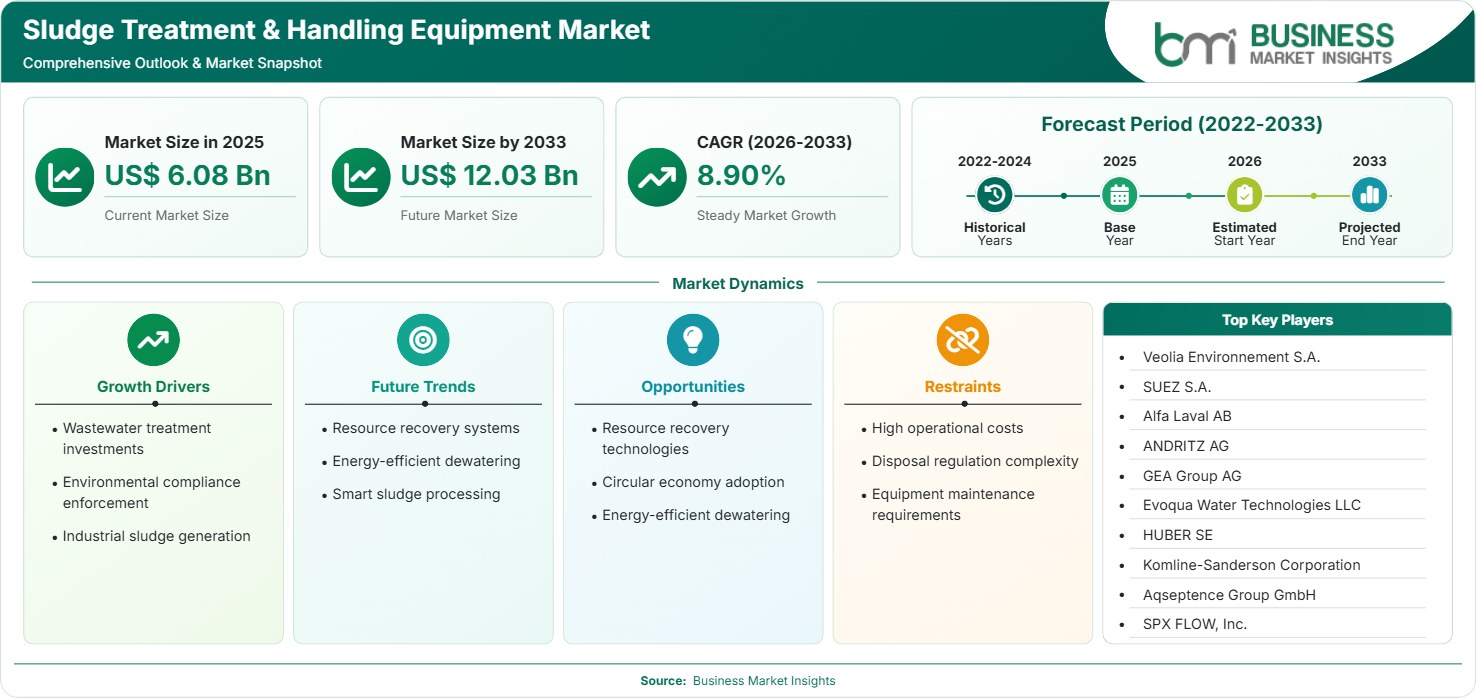
The Sludge Treatment & Handling Equipment Market size was valued at US$ 6.08 billion in 2025 and is projected to reach US$ 12.03 billion by 2033, growing at a CAGR of 8.90% during 2026–2033. Growth is driven by wastewater treatment investments, environmental compliance enforcement, and increasing industrial sludge generation, while opportunities are emerging through resource recovery technologies, circular economy adoption, and energy-efficient dewatering solutions.

Report Coverage
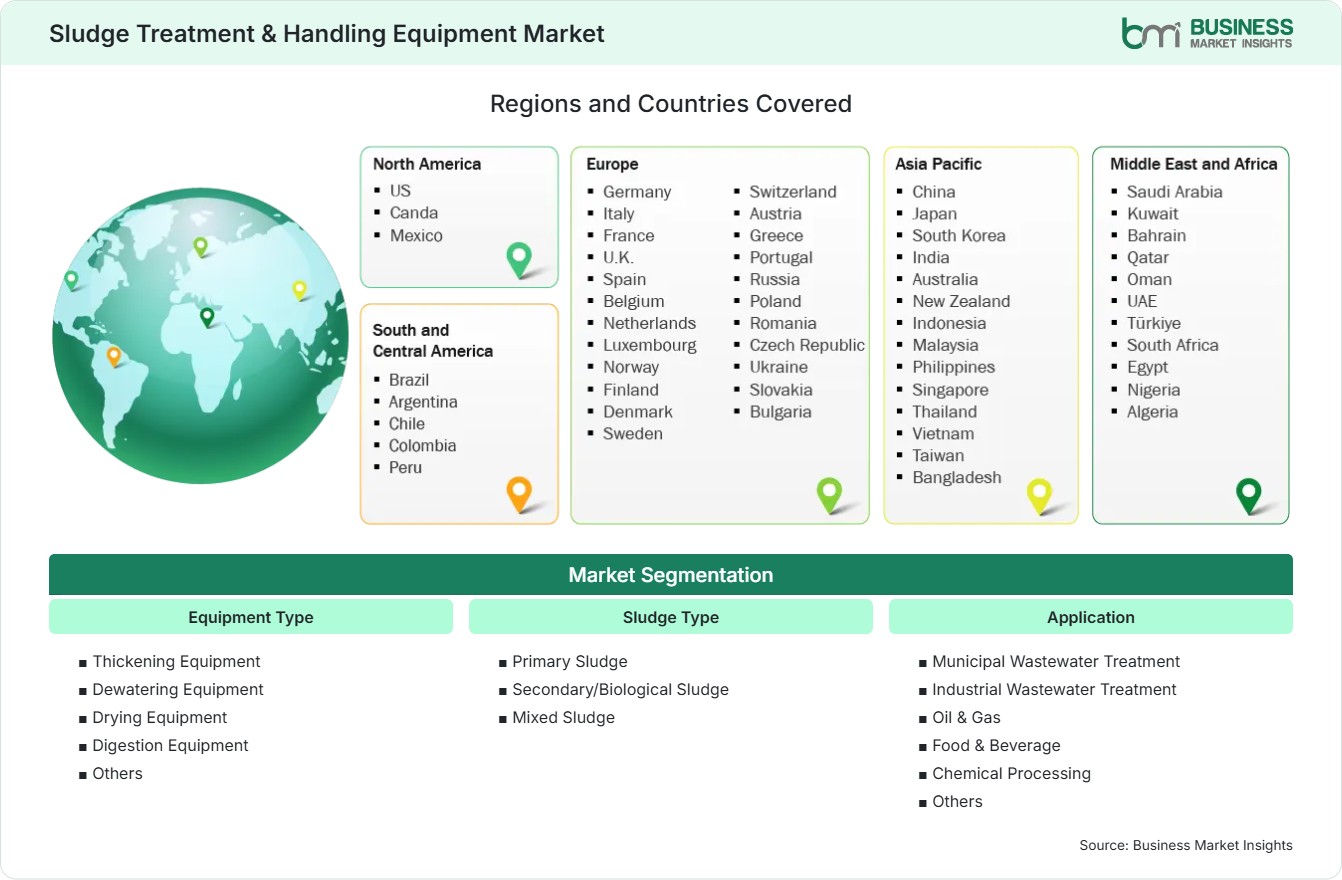
  • Equipment Type: Thickening Equipment, Dewatering Equipment, Drying Equipment, Digestion Equipment, Others
  • Sludge Type: Primary Sludge, Secondary/Biological Sludge, Mixed Sludge
  • Application: Municipal Wastewater Treatment, Industrial Wastewater Treatment, Oil & Gas, Food & Beverage, Chemical Processing, Others
US$ 6.08 Bn Market size in 2025
US$ 12.03 Bn Market Size by 2033
8.90% CAGR, 2026 - 2033
2026-2033 Forecast Period

AI Overview

Sludge Treatment & Handling Equipment Market Summary

  • North America Region: North America accounts for approximately 27%–31% market share in 2025 and is projected to grow at a 8.0%–9.0% CAGR during 2026–2033. The region benefits from aging wastewater infrastructure upgrades and municipal investments in advanced sludge processing systems. The U.S. market is supported by wastewater modernization programs and is estimated to grow at approximately 8.2%–9.2% CAGR.
  • Fastest Growing Region: Asia Pacific represents around 33%–37% of the global market in 2025 and is expected to expand at 9.5%–10.5% CAGR through 2033. Rapid urbanization and increasing environmental compliance requirements are accelerating the adoption of sludge treatment and handling technologies.
  • Leading Segment: Dewatering Equipment holds approximately 34%–38% market share in 2025 and is expected to grow at a 8.8%–9.5% CAGR. Rising demand for efficient sludge volume reduction and improved disposal management is supporting equipment adoption across municipal and industrial applications.
  • High Growth Segment: Drying Equipment represents approximately 12%–16% market share in 2025 and is projected to grow at 10.0%–11.0% CAGR. Increasing focus on sludge-to-energy conversion, resource recovery, and reduction of disposal dependency is driving demand for advanced drying solutions.
  • Key Market Opportunity: Resource recovery from sludge, including biogas generation, nutrient extraction, and energy-efficient processing technologies, is creating new opportunities for equipment manufacturers supporting sustainable wastewater management.
  • Major Market Players: Veolia Environnement S.A., SUEZ S.A., Alfa Laval AB, ANDRITZ AG, GEA Group AG, Evoqua Water Technologies LLC, HUBER SE, Komline-Sanderson Corporation, Aqseptence Group GmbH, and SPX FLOW, Inc.
Strategic Insights

Sludge Treatment & Handling Equipment Market: Strategic Insights

Sludge Treatment & Handling Equipment Market Strategic Framework
FREE PDF
Request your free sample
Request free sample
Stakeholder View

Key Takeaways

  • Sludge management is becoming a critical component of wastewater infrastructure development as municipalities and industries seek efficient treatment, reduction, and disposal solutions.
  • Dewatering and drying technologies provide strong growth opportunities due to their ability to reduce sludge volume, lower transportation expenses, and support sustainable disposal methods.
  • Resource recovery technologies, including biogas generation and nutrient extraction, are transforming sludge from a waste stream into a valuable resource.
  • Asia Pacific presents significant investment opportunities due to rapid urbanization, expanding industrial activity, and increasing wastewater treatment infrastructure requirements.
  • Market participants are strengthening competitive positions through technology innovation, strategic acquisitions, and the development of energy-efficient treatment systems.
  • Regulatory pressure on wastewater discharge and waste disposal practices is increasing demand for advanced sludge handling equipment across industrial and municipal applications.
Geographic Outlook

Sludge Treatment & Handling Equipment Market Regional Highlights

North America Sludge Treatment & Handling Equipment Market

North America accounted for approximately 27%–31% of the global market in 2025 and is projected to grow at a 8.0%–9.0% CAGR during 2026–2033. The region maintains a strong position due to wastewater infrastructure modernization, stringent environmental regulations, and investments in advanced sludge processing technologies. The Sludge Treatment & Handling Equipment Market share is supported by municipal upgrades, industrial compliance requirements, and increasing adoption of sustainable sludge management practices across treatment facilities.

  • The United States represents the largest regional contributor due to aging wastewater infrastructure, regulatory enforcement, and investments in treatment facility modernization.
  • Municipal authorities are upgrading sludge processing systems to improve efficiency, reduce disposal volumes, and comply with increasingly stringent environmental standards.
  • Industrial facilities are adopting advanced dewatering and drying equipment to manage increasing sludge generation and improve operational sustainability.
  • Resource recovery initiatives are encouraging the adoption of anaerobic digestion and energy-efficient sludge treatment technologies across wastewater facilities.

US Sludge Treatment & Handling Equipment Market

The United States represented approximately 23%–27% of the global market revenue in 2025 and is expected to expand at a 8.2%–9.2% CAGR through 2033. The market is supported by wastewater infrastructure investments, environmental compliance requirements, and increasing demand for efficient sludge processing solutions. Federal and state-level water management programs are encouraging utilities to adopt advanced equipment for sludge reduction, treatment optimization, and resource recovery applications across municipal and industrial facilities.

  • Aging wastewater infrastructure is driving replacement demand for modern sludge thickening, dewatering, and digestion systems.
  • Industrial operators are investing in advanced treatment equipment to improve compliance with wastewater discharge regulations and sustainability objectives.
  • Municipal utilities are exploring sludge-to-energy solutions to reduce disposal costs and improve resource utilization.

Europe Sludge Treatment & Handling Equipment Market

Europe accounted for approximately 25%–29% of the global market in 2025 and is expected to grow at a 7.8%–8.8% CAGR between 2026 and 2033. Germany, France, the United Kingdom, and the Netherlands are major contributors due to advanced wastewater infrastructure and environmental sustainability initiatives. Germany is estimated to grow at 8.0%–9.0% CAGR, while the United Kingdom is expected to expand at 7.8%–8.8% CAGR due to increasing investments in wastewater treatment modernization.

  • European countries are emphasizing circular economy approaches by converting sludge into energy, nutrients, and reusable resources.
  • Germany continues leading technology adoption due to advanced wastewater management infrastructure and strict environmental standards.
  • Municipal utilities are investing in energy-efficient dewatering and drying equipment to reduce operational expenses.
  • Regulatory focus on sustainable waste management is encouraging the adoption of innovative sludge processing technologies.

Asia Pacific Sludge Treatment & Handling Equipment Market

Asia Pacific accounted for approximately 33%–37% of the global market in 2025 and represents the fastest-growing region with a projected 9.5%–10.5% CAGR during 2026–2033. China, India, Japan, South Korea, and Southeast Asian countries are driving expansion through wastewater infrastructure development, industrial growth, and environmental compliance initiatives. China is projected to grow at 9.8%–10.8% CAGR, while India is expected to expand at 10.2%–11.2% CAGR due to rapid urbanization and water treatment investments.

  • China remains a major market due to large-scale wastewater treatment expansion and increasing industrial sludge management requirements.
  • India is accelerating wastewater infrastructure development through urban sanitation programs and industrial environmental compliance initiatives.
  • Southeast Asian countries are increasing investments in municipal treatment facilities due to population growth and urban development.
  • Industrial sectors are adopting sludge handling equipment to address regulatory requirements and improve wastewater management efficiency.
  • Growing interest in resource recovery is supporting the adoption of digestion and drying technologies across regional facilities.

Rest of World Sludge Treatment & Handling Equipment Market

Latin America, the Middle East, and Africa collectively represented approximately 7%–10% of global revenue in 2025 and are forecast to grow at a 8.5%–9.5% CAGR between 2026 and 2033. Brazil, Mexico, Saudi Arabia, the UAE, and South Africa are emerging markets due to increasing wastewater investments, industrial expansion, and environmental sustainability initiatives. The Sludge Treatment & Handling Equipment Market trends in these regions are influenced by water scarcity concerns, infrastructure development, and demand for efficient waste management systems.

  • Latin American countries are expanding wastewater treatment capacity to address urban growth and improve environmental protection standards.
  • Brazil and Mexico are increasing investments in municipal wastewater infrastructure and industrial sludge processing solutions.
  • Middle Eastern countries are adopting advanced treatment technologies to improve water management and support sustainability objectives.
  • Saudi Arabia and the UAE are investing in wastewater reuse and resource recovery projects as part of environmental strategies.
  • African markets are gradually adopting sludge treatment solutions through infrastructure development programs and international water management initiatives.
Global Market Geography
FREE PDF
Request your free sample
Request free sample
Segment Analysis

Sludge Treatment & Handling Equipment Market Segmentation

Equipment Type

Equipment Type represents the largest segmentation category, accounting for approximately 78%–82% of the global market share in 2025 and expanding at a 8.5%–9.2% CAGR between 2026 and 2033. Growing wastewater volumes, stricter disposal regulations, and increasing demand for efficient sludge processing are driving the adoption of thickening, dewatering, drying, and digestion equipment. Municipal and industrial operators are prioritizing technologies that reduce sludge handling costs, improve treatment efficiency, and enable resource recovery from wastewater by-products.

  • Thickening Equipment: Thickening systems are widely used to increase sludge solids concentration before further processing. Demand is supported by treatment efficiency improvements and reduced downstream processing requirements.
  • Dewatering Equipment: Dewatering equipment represents a major adoption area in the sludge treatment & handling equipment market due to its ability to reduce sludge volume, lower transportation costs, and improve disposal efficiency across treatment facilities.
  • Drying Equipment: Drying technologies are gaining momentum as facilities seek lower moisture content, improved waste handling, and opportunities for sludge-derived fuel and resource recovery applications.
  • Digestion Equipment: Digestion systems are expanding due to growing interest in biogas generation, renewable energy production, and sustainable sludge management practices.
  • Others: Other equipment solutions include screening, conveying, storage, and auxiliary systems supporting integrated sludge treatment and handling operations.

Sludge Type

Sludge Type segmentation accounted for approximately 75%–79% of market demand in 2025 and is projected to grow at a 8.6%–9.3% CAGR through 2033. Increasing wastewater treatment requirements across municipal and industrial facilities are driving demand for specialized processing technologies designed for different sludge characteristics. Treatment operators are adopting customized solutions to improve separation efficiency, reduce disposal challenges, and enhance resource recovery potential from various sludge streams in the sludge treatment & handling equipment market.

  • Primary Sludge: Primary sludge generated during initial wastewater treatment stages requires effective thickening and dewatering solutions to reduce volume and prepare material for further processing.
  • Secondary/Biological Sludge: Biological sludge treatment demand is increasing due to expanded biological wastewater processes and the need for efficient digestion and stabilization technologies.
  • Mixed Sludge: Mixed sludge management is gaining importance as facilities combine treatment streams, requiring flexible equipment capable of handling variable solids content and composition.

Application

Application segmentation accounted for approximately 82%–85% of the global market in 2025 and is expected to grow at a 8.7%–9.4% CAGR between 2026 and 2033. Municipal wastewater treatment remains the largest application area, while industrial sectors are increasing investments due to environmental regulations and sustainability goals. Industries generating large volumes of sludge are adopting advanced equipment to improve compliance, optimize operations, and reduce environmental impact.

  • Municipal Wastewater Treatment: Municipal facilities represent a leading application due to urban population growth, wastewater infrastructure expansion, and increasing investments in sludge processing technologies.
  • Industrial Wastewater Treatment: Industrial wastewater treatment demand is rising as manufacturers require efficient sludge management solutions to meet discharge standards and improve environmental performance.
  • Oil & Gas: Oil and gas facilities are adopting sludge treatment equipment to manage complex waste streams, improve operational compliance, and reduce environmental risks.
  • Food & Beverage: Food and beverage companies are investing in sludge processing technologies due to high organic waste generation and increasing sustainability requirements.
  • Chemical Processing: Chemical industries require specialized sludge treatment solutions to handle complex waste compositions and maintain regulatory compliance.
  • Others: Other applications include mining, pharmaceuticals, agriculture, and commercial facilities requiring efficient sludge handling and wastewater management solutions.
Market Forces

Sludge Treatment & Handling Equipment Market Dynamics

Key Market Drivers

Growing Investments in Wastewater Treatment Infrastructure

Increasing investments in municipal and industrial wastewater treatment infrastructure are accelerating demand for advanced sludge processing equipment. Rapid urbanization, population growth, and industrial expansion are increasing wastewater generation, creating the need for efficient sludge management systems. Governments and utilities are upgrading treatment facilities with modern thickening, dewatering, drying, and digestion technologies to improve operational efficiency. The Sludge Treatment & Handling Equipment Market growth is supported by infrastructure modernization programs, water reuse initiatives, and rising investments in sustainable wastewater management. Organizations are increasingly adopting integrated solutions that reduce sludge volume, optimize processing costs, and improve environmental performance across treatment operations.

Increasing Environmental Compliance Enforcement

Stricter environmental regulations and wastewater discharge standards are encouraging municipalities and industries to adopt advanced sludge treatment technologies. Regulatory authorities are increasing monitoring of waste disposal practices, requiring organizations to implement efficient sludge handling and treatment processes. Compliance requirements related to landfill reduction, water pollution control, and sustainable waste management are driving investments in modern equipment. The Sludge Treatment & Handling Equipment Market forecasts are influenced by growing adoption of technologies that support improved sludge stabilization, resource recovery, and environmentally responsible disposal. Industries are prioritizing advanced treatment systems to minimize environmental impact while maintaining operational compliance with evolving regulatory frameworks.

Rising Industrial Sludge Generation Across Manufacturing Sectors

The increase in the rate of expansion in industries like those dealing with food and beverages, chemicals, oil and gas, and manufacturing industries results in the generation of more sludge and creates a need for equipment that is capable of treating the sludge. The wastewater from industrial activities contains difficult materials that require sophisticated treatment techniques. There is investment in modern technology that is geared towards improving efficiency in dewatering, drying, and digestion processes. The expansion of the industries in developing countries has led to the need for sludge treatment solutions.

Key Market Opportunities

Advancement of Resource Recovery Technologies

Resource recovery technologies present substantial opportunities by converting waste sludge into an asset rather than a disposal problem. Anaerobic digestion, biogas production, and nutrient recovery processes, among other options, are increasingly being utilized by modern facilities to promote sustainability. These technologies allow for reduced dependence on disposal while providing renewable energy and recyclable materials. Municipalities and companies are now embracing circular wastewater treatment approaches, which serve their environmental interests as well as cost savings. Companies producing digesters as well as energy recovery technologies will be in a position to capitalize on increased demand.

Adoption of Circular Economy-Based Sludge Management

Shifting towards circular economy practices is opening up new possibilities for sludge treatment equipment manufacturers. The emphasis on generating minimal waste, utilizing maximum resources, and ensuring an efficient lifecycle for wastewater processes is increasing among entities. Sludge-based items, including energy, fertilizers, and recyclable materials, are gaining prominence as sustainable replacements for traditional disposal techniques. Governments and utility companies are promoting circular thinking through environmentally friendly policies and sustainability programs. Sludge treatment equipment manufacturers in the sludge treatment & handling equipment market, providing products that help achieve material recycling, energy efficiency, and environmentally sound sludge processing, stand to benefit from the shift.

Demand for Energy-Efficient Dewatering Solutions

The importance of energy-efficient dewatering technology is increasing due to the need to reduce operating costs and improve the sustainability of facility operations. Advanced dewatering equipment and filtration systems, together with advanced process control systems, help in achieving higher concentrations of solids in sludge with lower energy consumption. The growing cost of energy and increased emphasis on efficiency encourage the replacement of traditional equipment with better-designed equipment. Users in municipalities and industry are looking for equipment that will reduce sludge transport and disposal costs. Developers of low-energy, high-performance dewatering equipment can profit from the increasing demand for such technology in the sludge treatment & handling equipment market.

Market Restraints and Challenges

High Operational and Maintenance Costs

Factor: Sludge treatment equipment incurs significant operational expenses for energy consumption, maintenance, skilled labor, and replacement of mechanical components.

Impact: Higher lifecycle costs are likely to limit usage, especially under budget constraints. The sophisticated equipment, including thermal drying and digesters, will need to be maintained, which will require considerable financial resources. While there is potential for saving on disposal and recovery of resources, the costs involved will be important factors in decision-making. The companies producing this type of equipment have focused on improving its automation and durability.

Complexity of Sludge Disposal Regulations

Factor: Sludge disposal regulations vary across regions and often involve complex requirements related to treatment standards, transportation, landfill restrictions, and environmental protection.

Impact: Increased regulatory complexity adds uncertainty to operations and necessitates that facilities invest in state-of-the-art processing technology. Organizations need to keep adapting to new environmental regulations, which will make their job even more difficult. Differing disposal regulations between municipalities and different countries add further complications when making decisions on what equipment to use and how to dispose of sludge. Technology vendors need to develop adaptable solutions that satisfy various regulatory standards.

Company Analysis

Competitive Landscape

The Sludge Treatment & Handling Equipment Market analysis indicates a competitive environment driven by global water technology companies, environmental engineering providers, and specialized equipment manufacturers. There is currently increased focus by companies on dewatering, sludge drying, anaerobic digestion, and wastewater treatment systems to gain a competitive advantage in the market. The strategies that are being employed by companies include innovation in technology, geographical expansion, partnerships, and energy-efficient solutions.

Company Name

Overview

Products and Services relevant to this market

Veolia Environnement S.A.

Global environmental services company providing water management and wastewater treatment solutions.

Sludge treatment systems, wastewater management, digestion technologies, resource recovery, and environmental services.

SUEZ S.A.

Water and environmental solutions provider specializing in sustainable wastewater management technologies.

Sludge processing, wastewater treatment equipment, recycling solutions, and resource recovery systems.

Alfa Laval AB

Engineering company offering separation and fluid handling technologies for industrial applications.

Sludge dewatering equipment, centrifuges, heat exchangers, and wastewater treatment solutions.

ANDRITZ AG

Global technology supplier providing environmental and process engineering solutions.

Sludge dewatering presses, drying systems, thermal treatment technologies, and wastewater equipment.

GEA Group AG

Engineering company specializing in processing technologies for industrial sectors.

Sludge treatment systems, separation equipment, drying solutions, and process optimization technologies.

Evoqua Water Technologies LLC

Water treatment company providing advanced wastewater and environmental management solutions.

Sludge handling equipment, water treatment systems, filtration technologies, and process solutions.

HUBER SE

Environmental technology company focused on wastewater treatment and sludge processing equipment.

Sludge screens, dewatering systems, drying technologies, and wastewater management solutions.

Komline-Sanderson Corporation

Industrial equipment manufacturer specializing in wastewater and sludge processing technologies.

Belt presses, rotary drum dryers, filtration systems, and sludge treatment equipment.

Aqseptence Group GmbH

Water technology company providing filtration and separation solutions globally.

Screening systems, filtration equipment, sludge handling solutions, and wastewater technologies.

SPX FLOW, Inc.

Industrial technology provider offering engineered process solutions and equipment.

Pumps, separation technologies, mixing systems, and wastewater processing equipment.

Industry Activity

Recent Developments

June 2026

SPIRAC completed and dispatched three 10 m³ SPIROTAINER units for the Porirua Wastewater Treatment Plant in New Zealand. The enclosed sludge containment systems enhance sludge storage and transportation efficiency while minimizing odor and spillage, supporting municipal wastewater treatment infrastructure upgrades.

June 2026

VA Tech Wabag secured a major Design & Build contract from Ajman Sewerage Company for Phase 3 of the Ajman Sewage Biorefinery Plant in the UAE. The project includes advanced sludge treatment and management facilities, strengthening sustainable wastewater processing and resource recovery capabilities.

March 2026

Cambi ASA signed a major contract with Kier Integrated Services Limited to supply two Thermal Hydrolysis Process (THP) systems for the Blackburn BIO Treatment Centre in the UK. The project will modernize sludge treatment, increase biogas production, improve sludge dewatering efficiency, and support sustainable wastewater resource recovery.

November 2025

CDE announced first global installation of X5 ProPress. CDE's ProPress represents a new generation of filter press technology, which delivers exceptional operational efficiency and maximum water recovery.

Trust & Transparency

Research Methodology

The market analysis combines proprietary research with secondary data from government agencies, company disclosures, regulatory filings, industry databases and expert interviews. Market estimates are validated through data triangulation, cross-market benchmarking and analyst review.

View Full Research Methodology

Questions Answered

Frequently Asked Questions

What challenges affect sludge treatment equipment adoption?

High operational costs, maintenance requirements, regulatory complexity, and investment limitations can affect adoption, especially among smaller wastewater operators and industrial facilities.

Which industries require sludge treatment equipment?

Municipal wastewater facilities, food and beverage companies, chemical processors, oil and gas operators, and manufacturing industries are major users of sludge treatment technologies.

How are resource recovery technologies impacting sludge management?

Resource recovery technologies enable the conversion of sludge into valuable outputs such as biogas, energy, and recovered nutrients, supporting circular economy-based wastewater management approaches.

Which equipment segment has strong growth potential?

In the sludge treatment & handling equipment market report, Dewatering and drying equipment have strong growth potential due to their ability to reduce sludge volume, lower disposal costs, and support sustainable waste management practices.

What factors are driving demand for sludge treatment equipment?

Increasing wastewater generation, stricter environmental regulations, infrastructure modernization, and industrial sludge management requirements are driving the adoption of advanced sludge treatment and handling technologies.

Access the Full Sludge Treatment & Handling Equipment Market Report

Get segment-level forecasts, regional estimates, competitive benchmarking, company profiles and downloadable Excel datasets.

Access the full Sludge Treatment & Handling Equipment Market Report
350 pages PDF & Excel | 2026-07-31