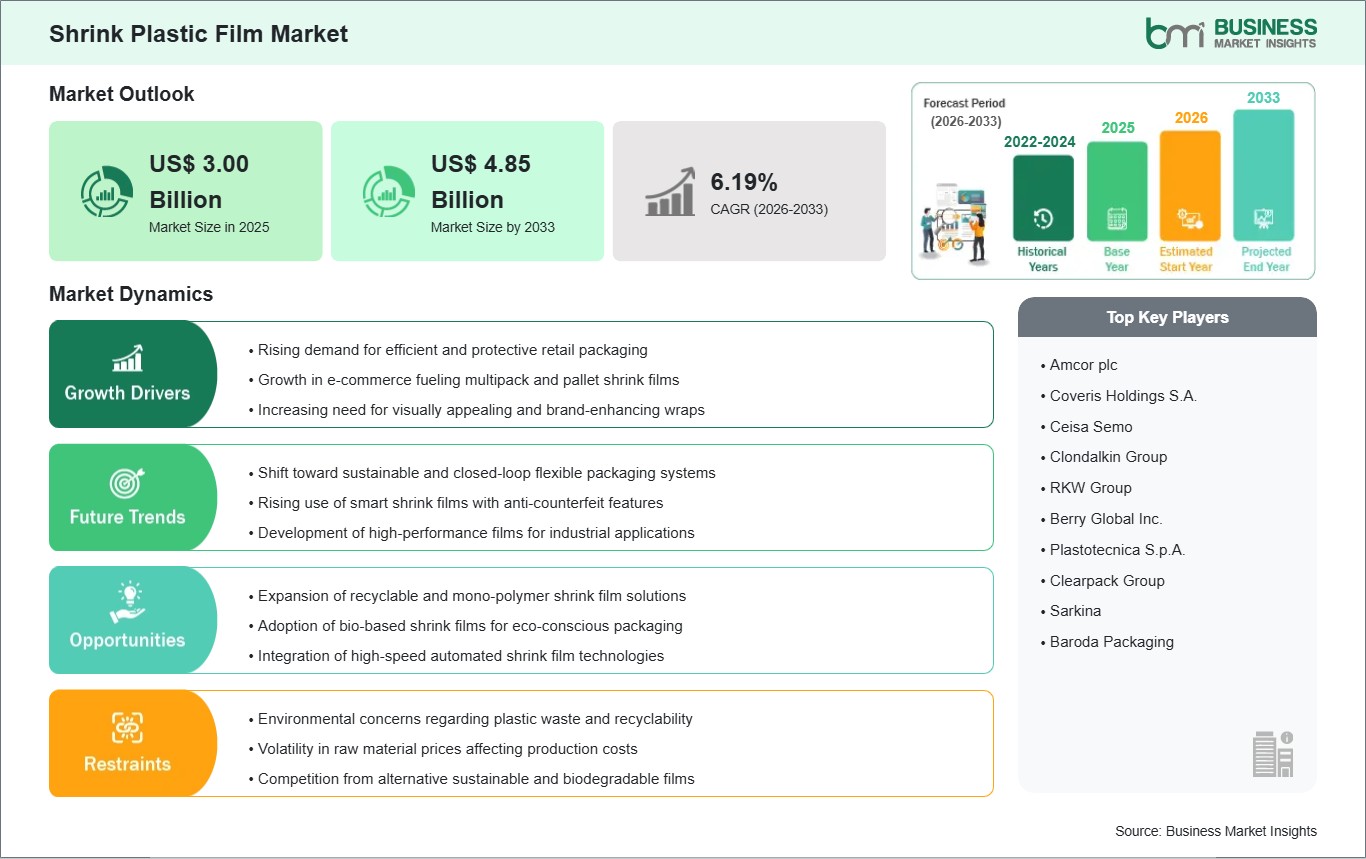
The Shrink Plastic Film Market size is expected to reach US$ 4.85 billion by 2033 from US$ 3. billion in 2025. The market is estimated to record a CAGR of 6.19% from 2026 to 2033.
The global shrink plastic film market revolves around flexible packaging films designed to shrink tightly over products when heat is applied. These films find applications in food and beverage industries, consumer goods markets, pharmaceutical sectors, electronic businesses and industrial packaging companies because they enable products to maintain their original shape while offering visible proof of tampering, increased visual attractiveness and complete protection during distribution and storage. Manufacturers produce shrink plastic films through the use of three polymer materials, which include polyolefin (POF), PVC (polyvinyl chloride) and polyethylene (PE), because these polymers show different material properties, which include transparency, material strength and protection against punctures and shrinking behavior. Among them, polyolefin films are frequently selected by consumers because these films display safe characteristics and can be recycled.
The global shrink plastic film market aims to meet rising consumer demand for packaging solutions that achieve two objectives by delivering aesthetic packaging and extending product shelf life while enhancing supply chain operations. E-commerce and modern retail formats have expanded throughout the world, which leads to an increased need for packaging solutions that protect products while improving brand presentation and consumer experience. Shrink films help optimize packaging through their ability to decrease empty spaces, decrease packaging weight and decrease total material requirements, which brand owners and manufacturers use to achieve their performance goals without exceeding their budget limits. The demand for shrink film applications, which include multipacks and bundling and pallet wrapping, has increased because consumers prefer to use ready-to-display packaging products that retailers display on their shelves and vending machines.
The market encounters substantial restrictions, together with various difficulties. Stakeholders facing the environmental plastic waste management issue need to implement sustainable solutions. Packaging materials that create recycling difficulties or lead to plastic waste problems face increasing regulation in areas with strict environmental protection laws. Film producers, together with converters, need to develop environmentally friendly materials that include recyclable film systems and programs for collecting post-consumer materials. The supply chain faces operational challenges, together with cost difficulties, because raw material prices vary according to changes in crude oil prices and feedstock availability. The demand for traditional shrink films will experience long-term changes because of competition, which comes from alternative packaging solutions that include biodegradable films, reusable wraps and rigid packaging options. Material science research continues to innovate despite existing challenges through the creation of high-performance recyclable shrink films and mono-polymer structures and bio-based alternatives, which strengthen market stability.
The value chain needs converters and brand owners together with recyclers to work together in order to establish circularity while developing improved solutions for product disposal after their useful life. The global shrink plastic film market will undergo changes through adaptation to emerging consumer requirements and new regulatory frameworks based on three key factors, which include performance attributes, cost efficiency and sustainable practices.

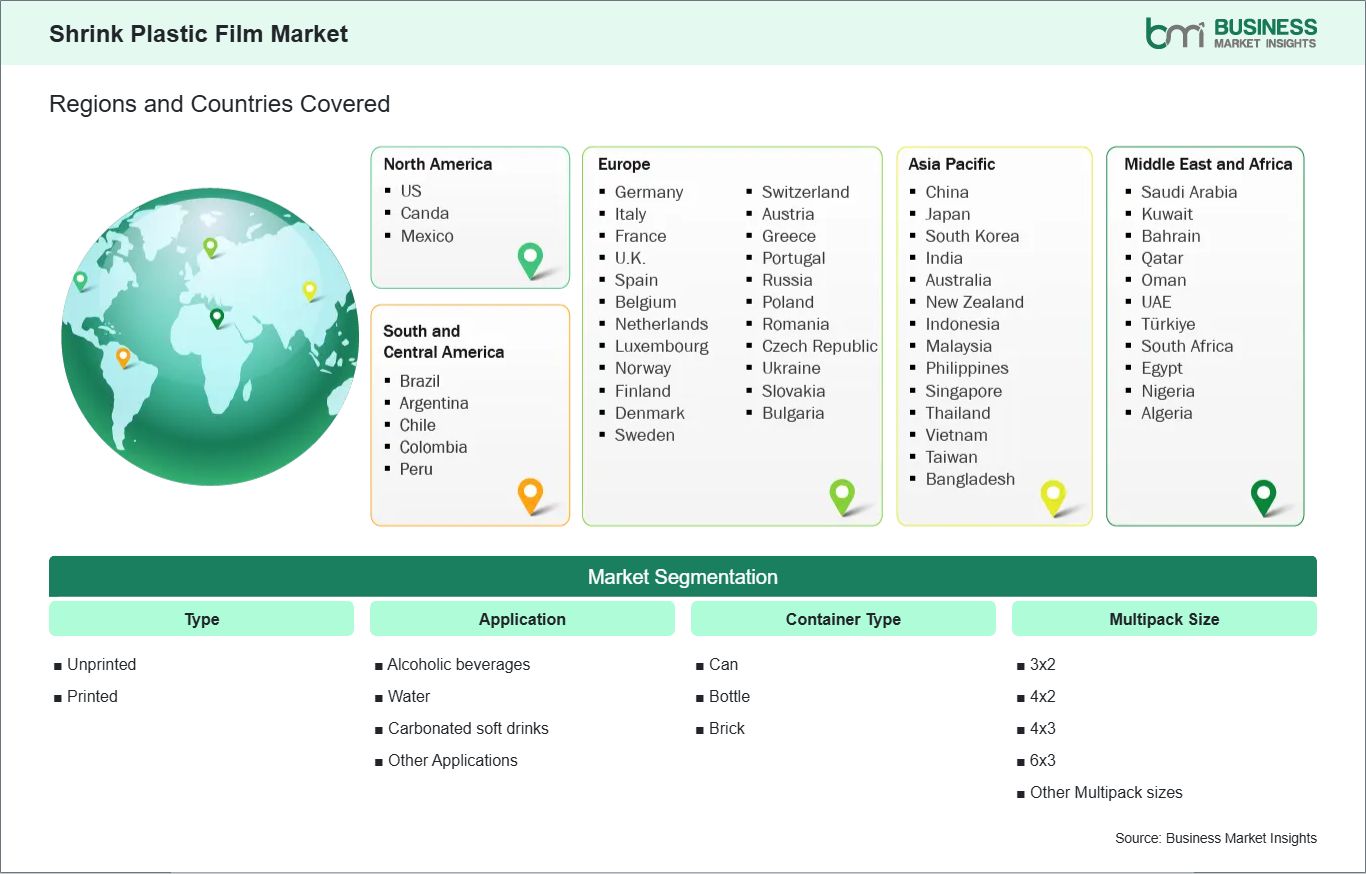
Key segments that contributed to the derivation of the shrink plastic film market analysis are type, application, container type and multipack size.
The global shrink plastic film market is significantly propelled by the rising demand for efficient and protective retail packaging across diverse industries. Retailers and brand owners increasingly prefer shrink films because they enable products to display their full shape while providing complete protection against moisture and dust and against unauthorized access. The retail industry in North America and Europe uses shrink films for multipack bundling and promotional packs and tamper‑evident seals because organized retail and supermarket formats make up their primary business operations. These films not only enhance product visual appeal but also improve transportation security by protecting goods during shipping and decreasing expenses related to product damage. Retail packaging solutions used by the consumer packaged goods industry include shrink films, which help maintain brand image while delivering essential operational functionality.
The Asia Pacific region experiences increased demand for packaged foods and consumer goods because of its ongoing urban development and growing disposable income levels, which also drive up shrink film usage for product protection and other purposes. Local manufacturers are optimizing production lines to integrate high‑clarity shrink films that meet evolving retail standards. The retail sectors in South America and the Middle East are expanding their packaging standards because they want to compete with imported brands that use high-quality materials.
The e‑commerce industry has increased demands for packaging solutions that need to protect products throughout last‑mile delivery while improving customer unboxing experiences. The demand for shrink plastic film, which provides dependable protection at an economical price, will remain essential to market expansion because global retail channels are transforming through digital marketplaces, and customers demand high-quality product presentation.
A compelling opportunity within the global shrink plastic film market lies in the expansion of recyclable and mono‑polymer shrink film solutions that align with evolving sustainability priorities. Traditional multi‑layer films, while effective in performance, often pose recycling challenges due to mixed polymer structures. In response, major producers and converters are innovating mono‑polymer shrink films that retain mechanical strength and clarity while enabling easier recycling within existing infrastructure. North America and Europe are at the forefront of this shift, supported by regulatory pressure and consumer demand for sustainable packaging that can be recovered through established recycling streams. Mono‑polymer solutions help brand owners achieve circularity goals and contribute to extended producer responsibility (EPR) strategies, encouraging broader adoption.
Emerging markets in Asia Pacific are also exploring recyclable film options as urbanization and environmental awareness increase. Countries like China, Japan, and South Korea have introduced voluntary industry initiatives and policy frameworks that incentivize recyclable packaging, prompting local film manufacturers to develop eco‑optimized shrink films for food and consumer goods. These markets view recyclable shrink films not only as a performance upgrade but also as a strategic response to growing sustainability expectations among both retailers and consumers.
In South & Central America and the Middle East & Africa, the opportunity lies in adopting recyclable shrink films as part of broader packaging modernization efforts. As logistics networks and retail ecosystems mature, demand for recyclable packaging that minimizes environmental impact while maintaining product protection is growing. Partnerships between global film suppliers and regional converters are facilitating technology transfer and capacity building, enabling recyclable shrink film solutions to penetrate new markets effectively. Overall, expanding recyclable and mono‑polymer shrink film applications presents a significant global opportunity, balancing performance with environmental responsibility and supporting long‑term market resilience.
The shrink plastic film market demonstrates steady growth, with size and share analysis highlighting evolving trends and competitive dynamics among key players. The report examines subsegments categorized within type, application, container type and multipack size, offering insights into their contribution to overall market performance.
By type, the unprinted subsegment dominated the market in 2025, driven by its cost-effectiveness and versatility for standard beverage packaging requirements.
Based on application, the water subsegment dominated the market in 2025, driven by high global consumption and extensive use of shrink film for bottled water multipacks.
In terms of container type, the bottle subsegment dominated the market in 2025, driven by being the most common container type requiring shrink film for multipack formation.
On the basis of multipack size, the 4x2 subsegment dominated the market in 2025, driven by its popularity as the standard multipack size for efficient handling, storage, and retail display.
| Report Attribute | Details |
|---|---|
| Market size in 2025 | US$ 3.00 Billion |
| Market Size by 2033 | US$ 4.85 Billion |
| Global CAGR (2026 - 2033) | 6.19% |
| Historical Data | 2022-2024 |
| Forecast period | 2026-2033 |
| Segments Covered | By Type
|
|
Regions and Countries Covered
| |
| North America | US, Canada, Mexico |
| Europe | Belgium, Austria, Finland, Denmark, Greece, Poland, Romania, Russia, Ukraine, Czech Republic, Slovakia, Bulgaria, Italy, Luxembourg, Germany, Switzerland, France, Netherlands, Norway, Portugal, Spain, Sweden, United Kingdom |
| Asia-Pacific | Australia, China, India, Japan, South Korea, Indonesia, Malaysia, Philippines, Singapore, Thailand, Vietnam, Bangladesh, New Zealand, Taiwan |
| South and Central America | Brazil, Argentina, Peru, Chile, Colombia |
| Middle East and Africa | Bahrain, Kuwait, Oman, Qatar, Saudi Arabia, United Arab Emirates, Turkiye, South Africa, Egypt, Algeria, Nigeria |
| Market leaders and key company profiles |
|
The "Shrink Plastic Film Market Size and Forecast (2022 - 2033)" report provides a detailed analysis of the market covering below areas:
The geographical scope of the Shrink Plastic Film Market report is divided into North America, Asia Pacific, Europe, Middle East & Africa, and South & Central America. North America held the largest share in 2025.
The Shrink Plastic Film Market exhibits different patterns across various regions, with North America emerging as the leading market because of its established packaging sector, sophisticated manufacturing methods and its widespread use of new film technologies. The United States and Canada use shrink films for food and beverage multipacks and retail packaging, pallet stabilization and tamper-evident solutions, which seek to maintain the transparent, safe and recyclable properties of polyolefin films. The region requires packaging solutions that boost product display and secure packages during shipping, and minimize packaging material use because e-commerce and retail operations are expanding while businesses emphasize sustainability through mono-polymer and recyclable film systems.
Europe serves as an essential market because environmental regulations are strict and consumers possess high knowledge about sustainable packaging solutions. The three countries of Germany, France, and the UK maintain a strong focus on recyclable shrink films, which they use for both food and non-food products, while the market sees a growing demand for bio-based films and innovative laminates that meet environmental standards without compromising product performance. European retail environments use automated packaging systems together with their entire supply chain operations to increase their demand for shrink films, which they use in multipacks, bundling and sleeve packaging.
The Asia Pacific region sees rapid growth because urbanization, retail chain expansion and rising consumption are happening in emerging markets such as China, India and Japan. The food and beverage industry, which includes ready-to-eat products and processed goods, depends on shrink films to protect their products and extend shelf life and demonstrate their brand identity while manufacturers work on creating advanced films that work with high-speed production processes.
The Middle East and Africa region uses shrink films for industrial packaging, pallet wrapping and food packaging because logistics infrastructure development and retail modernization efforts in countries such as the UAE and South Africa drive demand.
The South and Central American region has been developing its shrink film market, with Brazil, Mexico and Argentina leading the adoption of shrink film in food and beverage and pharmaceuticals and beverage multipack products. The regions experience growth because of industrial development, the establishment of new retail stores, and the increasing use of environmentally friendly and high-quality shrink film products.
The North American market leads because of its technological advancements, regulatory requirements and consumer demands, while all markets experience unique development based on local consumption patterns, industrial growth and sustainability efforts and changing packaging requirements, which create an international market for shrink plastic film.

The Shrink Plastic Film Market is evaluated by gathering qualitative and quantitative data post primary and secondary research, which includes important corporate publications, association data, and databases. A few of the key developments in the shrink plastic film market are:
The Shrink Plastic Film Market is valued at US$ 3.00 Billion in 2025, it is projected to reach US$ 4.85 Billion by 2033.
As per our report Shrink Plastic Film Market, the market size is valued at US$ 3.00 Billion in 2025, projecting it to reach US$ 4.85 Billion by 2033. This translates to a CAGR of approximately 6.19% during the forecast period.
The Shrink Plastic Film Market report typically cover these key segments-
The historic period, base year, and forecast period can vary slightly depending on the specific market research report. However, for the Shrink Plastic Film Market report:
The Shrink Plastic Film Market is populated by several key players, each contributing to its growth and innovation. Some of the major players include:
The Shrink Plastic Film Market report is valuable for diverse stakeholders, including:
Essentially, anyone involved in or considering involvement in the Shrink Plastic Film Market value chain can benefit from the information contained in a comprehensive market report.
Please tell us your area of interest
(Market Segments/ Regions and Countries/ Companies)