Market Summary
Executive Summary and Global Market Analysis
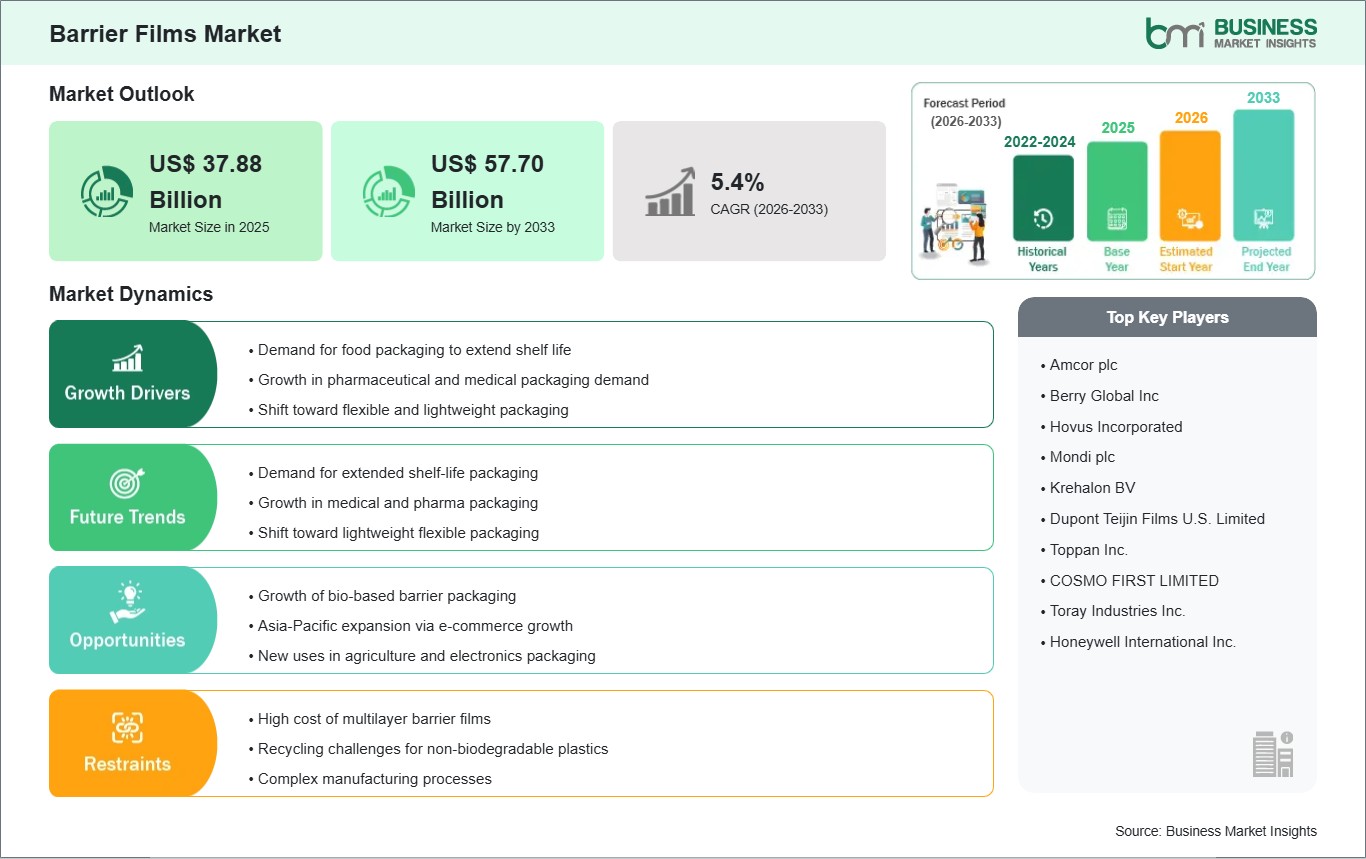
Barrier films are high-quality packaging materials that protect products from external factors like moisture, oxygen, light, and contaminants. You commonly find these films in food and beverage packaging, pharmaceuticals, personal care products, agriculture, and industrial uses where keeping products fresh and safe is essential. They feature specialized polymer structures and multilayer designs that help maintain product quality, prevent spoilage, and cut down on waste. These films are made to withstand different storage and transportation conditions, such as temperature changes and humidity, ensuring reliable protection throughout the supply chain. Typically, barrier films are made from materials like polyethylene (PE), polypropylene (PP), polyethylene terephthalate (PET), polyamide (PA), ethylene vinyl alcohol (EVOH), and aluminum-based layers. These materials often come together in multilayer laminates to provide specific barrier properties. Improved coating technologies and extrusion methods allow manufacturers to adjust oxygen transmission rates, moisture vapor transmission rates, and puncture resistance to meet application needs. Their lightweight design, flexibility, ability to be printed on, and cost-effectiveness make them essential in today's packaging solutions for both consumer and industrial markets.
The demand for barrier films is steadily increasing due to more packaged and processed food consumption, growing pharmaceutical production, and a greater awareness of product safety and hygiene. Urbanization, lifestyle changes, and the rise of e-commerce have increased the need for long shelf life and secure packaging solutions. As global food supply chains become more complex, manufacturers depend on high-barrier films to reduce food waste and maintain quality during long-distance transport.
Furthermore, the healthcare sector is expanding because of aging populations and improved access to medicines, which drives the need for protective pharmaceutical packaging that ensures stability and meets strict regulations. Technological advancements in polymer science and packaging engineering are significantly impacting the market. Manufacturers are creating high-barrier mono-material structures to improve recyclability while still delivering performance. Innovations like nanotechnology, plasma coatings, and bio-based polymers enable thinner films with better barrier efficiency and mechanical strength. There is also a strong emphasis on sustainable packaging solutions, such as recyclable, compostable, and biodegradable barrier films, to follow changing environmental regulations and meet consumer expectations. Automation, digital printing, and advanced extrusion methods are enhancing production efficiency, customization, and cost management throughout the value chain. Despite challenges like fluctuating raw material prices, strict environmental regulations, and the difficulties of recycling multilayer films, the global barrier films market is expected to grow steadily.
The rising demand from the food, pharmaceutical, and personal care industries, along with ongoing innovation in sustainable and high-performance materials, supports long-term growth. As companies focus on product protection, regulatory compliance, extended shelf life, and environmental responsibility, the global barrier films market is well-positioned for continued progress driven by technological advancements, changing consumer preferences, and the ongoing development of the global packaging industry.
Segment Analysis
Barrier Films Market Segmentation
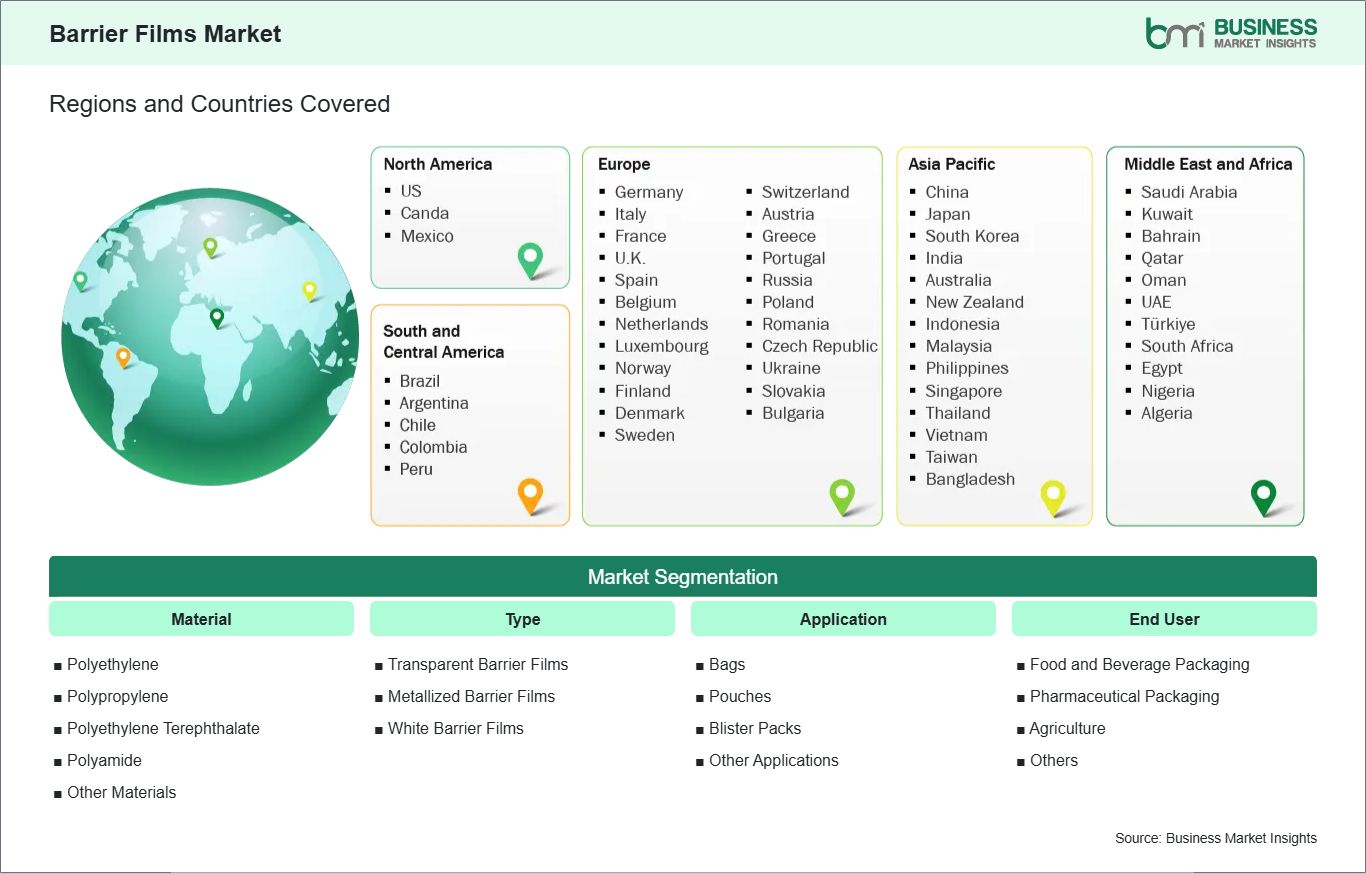
Key segments that contributed to the derivation of the Barrier Films market analysis are material, type, application, and end user.
- By material, the Barrier Films market is segmented into polyethylene, polypropylene, polyethylene terephthalate (PET), polyamide, and others. The polyethylene segment dominated the market in 2025.
- By type, the Barrier Films market is segmented into transparent barrier films, metallized barrier films, and white barrier films. The transparent barrier films segment dominated the market in 2025.
- By application, the Barrier Films market is segmented into bags, pouches, blister packs, and others. The pouches segment dominated the market in 2025.
- By end user, the Barrier Films market is segmented into food and beverage packaging, pharmaceutical packaging, agriculture, and others. The food and beverage packaging segment dominated the market in 2025.
Market Forces
Barrier Films Market Drivers and Opportunities
Growing Demand for Packaged Food, Pharmaceuticals, and Extended Shelf Life Solutions
The global barrier films market is strongly influenced by the increasing demand for packaged food, beverages, and pharmaceutical products that need longer shelf life and strong protection. Rapid urbanization, changing consumer habits, and a growing preference for convenient foods have significantly boosted the consumption of ready-to-eat meals, frozen items, snacks, and dairy products. These items are very sensitive to oxygen, moisture, and light exposure. Therefore, high-performance barrier films are crucial for keeping freshness, flavor, and nutritional value. As global food supply chains expand and cross-border trade in perishable goods rises, manufacturers depend on multilayer barrier films to cut spoilage, reduce food waste, and ensure product safety during transportation and storage. In the pharmaceutical sector, strict regulations and the need to keep drugs stable are driving demand for improved barrier packaging. Medicines, medical devices, and nutraceuticals need protection from humidity and contamination to maintain their effectiveness throughout their shelf life. Also, the rapid growth of e-commerce and direct-to-consumer delivery models has made durable and protective packaging solutions even more important. As consumers and regulatory bodies focus more on hygiene, safety, and quality, the demand for high-barrier films in the food and healthcare industries is expected to rise steadily.
Technological Advancements in Sustainable and High-Performance Film Structures
Another major factor driving the global barrier films market is ongoing innovation in polymer technology and an increasing focus on sustainability. Manufacturers are creating advanced multilayer and coated film structures that offer better oxygen and moisture barrier properties while remaining lightweight and flexible. Innovations like ethylene vinyl alcohol (EVOH) integration, plasma coatings, and nanocomposite layers are enabling thinner films with stronger mechanical strength and improved barrier efficiency. These technological advancements help companies enhance packaging performance while using less material and lowering overall costs. At the same time, rising environmental concerns and strict regulations on plastic waste are pushing the development of recyclable, mono-material, biodegradable, and bio-based barrier films. Companies are investing in research to create sustainable alternatives that meet circular economy goals without sacrificing protective performance. Automation, digital printing, and modern extrusion technologies are also increasing production efficiency, customization, and consistency in film quality. As brands focus on sustainability, regulatory compliance, and performance improvement, developments in high-performance and eco-friendly barrier film solutions are likely to support long-term growth in the global market.
Size and Share Analysis
Barrier Films Market Size and Share Analysis
The polyethylene segment led the barrier films market due to its excellent moisture barrier properties, flexibility, and cost-effectiveness. Its wide availability, ease of processing, and compatibility with multilayer film structures make it a popular choice for food, beverage, and industrial packaging.
Transparent barrier films topped the market because they offer strong protection against oxygen and moisture while keeping products visible. Their increased use in retail food packaging and pharmaceutical applications supports demand, especially where branding and consumer trust matter.
The pouches segment had the largest share of the market due to the growing demand for lightweight, resealable, and convenient packaging formats. Stand-up and flexible pouches use less material, reduce transportation costs, and extend product shelf life, making them very appealing across various industries.
The food and beverage packaging segment dominated the barrier films due to the rising global consumption of packaged and processed foods. Barrier films are vital for preserving freshness, preventing contamination, and extending shelf life, which is important for modern retail and expanding global supply chains.
Report Coverage
Barrier Films Market Report Coverage and Deliverables
The "Barrier Films Market Size and Forecast (2022–2033)" report provides a detailed analysis of the market covering below areas:
- Barrier Films market size and forecast at global, regional, and country levels for all the key market segments covered under the scope
- Barrier Films market trends, as well as market dynamics such as drivers, restraints, and key opportunities
- Barrier Films market analysis covering key market trends, global and regional framework, major players, regulations, and recent market developments
- Industry landscape and competition analysis covering market concentration, heat map analysis, prominent players, and recent developments for the Barrier Films market
- Detailed company profiles, including SWOT analysis
Geographic Insights
Barrier Films Market Geographic Insights
The geographical scope of the Barrier Films market report is divided into five regions: North America, Asia Pacific, Europe, Middle East & Africa, and South & Central America. The Barrier Films market in the Asia Pacific is expected to grow significantly during the forecast period.
The Asia-Pacific Barrier Films market is segmented into China, Japan, South Korea, India, Australia, New Zealand, Indonesia, Malaysia, the Philippines, Singapore, Thailand, Vietnam, Taiwan, Bangladesh, and the Rest of Asia.
The Asia-Pacific region is one of the fastest-growing markets for barrier films. This growth is due to rapid urbanization, a growing middle class, and a higher demand for packaged food and pharmaceutical products. Countries like China, India, Japan, South Korea, and others in Southeast Asia are seeing significant growth in food processing, retail, and e-commerce. This development increases the need for high-performance packaging solutions. More people are consuming convenience foods, dairy, snacks, and ready-to-eat meals, which boosts the demand for films with strong moisture and oxygen barriers. The growth of pharmaceutical manufacturing and better access to healthcare in the region also support the need for protective packaging that maintains product stability and meets regulations. Government programs that support local manufacturing and increase investments in flexible packaging production help strengthen the regional market. As a result, the Asia-Pacific is becoming a key center for producing, innovating, and using barrier films.
Industry Activity
Recent Developments
The Barrier Films market is evaluated by gathering qualitative and quantitative data post-primary and secondary research, which includes important corporate publications, association data, and databases. A few of the key developments in the Barrier Films market are:
- In September 2025, Camvac Ltd, global pioneer in transparent barrier films and laminates, relaunched a range of market-leading AlOx barrier lidding film solutions: Camclear, Extrapet, and Extrapet PCR. Re-engineered with an unrivalled choice of gauges and widths, the trio boasts supreme gas and moisture barrier performance, transparency, and full recyclability.
- In March 2024, TOPPAN Inc. (TOPPAN), a TOPPAN Group company and wholly owned subsidiary of TOPPAN Holdings Inc. (TYO: 7911), and India-based TOPPAN Speciality Films Private Limited (TSF) developed GL-SP, a barrier film that uses biaxially oriented polypropylene (BOPP) as the substrate, and will soon launch production and sales.
Trust & Transparency
Research Methodology
The market analysis combines proprietary research with secondary data from government agencies, company disclosures, regulatory filings, industry databases and expert interviews. Market estimates are validated through data triangulation, cross-market benchmarking and analyst
review.
View Full Research Methodology
Key Sources Referred:
World Bank – Global Trade Indicators World Trade Organization (WTO) International Trade Administration (ITA) Company website Company annual reports Company investor presentations