
Semaglutide Market Outlook: Size, Share, Trends, Growth Analysis, Competitive Landscape & Forecast, 2026-2033

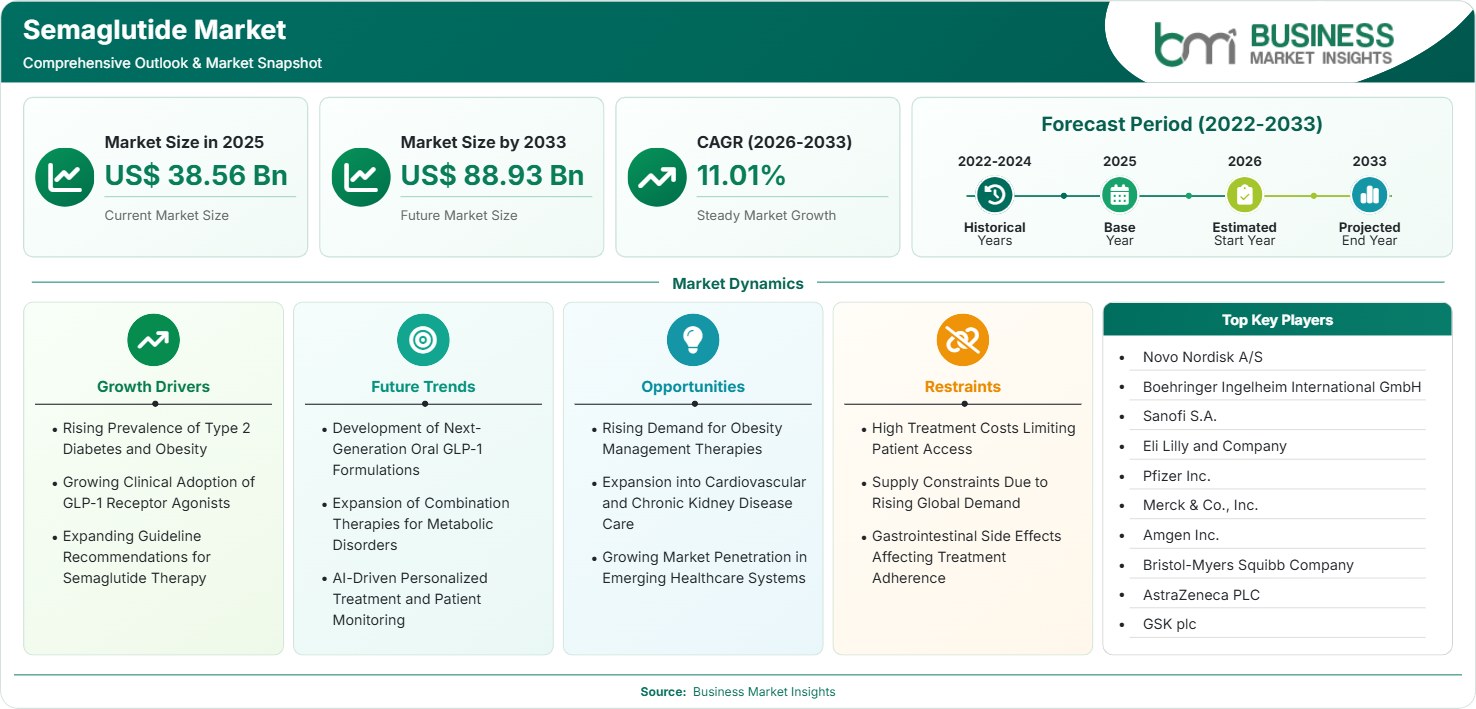
The Semaglutide Market size was valued at US$ 38.56 Billion in 2025 and is projected to reach US$ 88.93 Billion by 2033, growing at a CAGR of 11.01% during 2026–2033. Rising prevalence of type 2 diabetes, increasing obesity rates, growing adoption of GLP-1 receptor agonist therapies, and expanding focus on cardiometabolic health management are supporting market growth across global healthcare systems.

Report Coverage
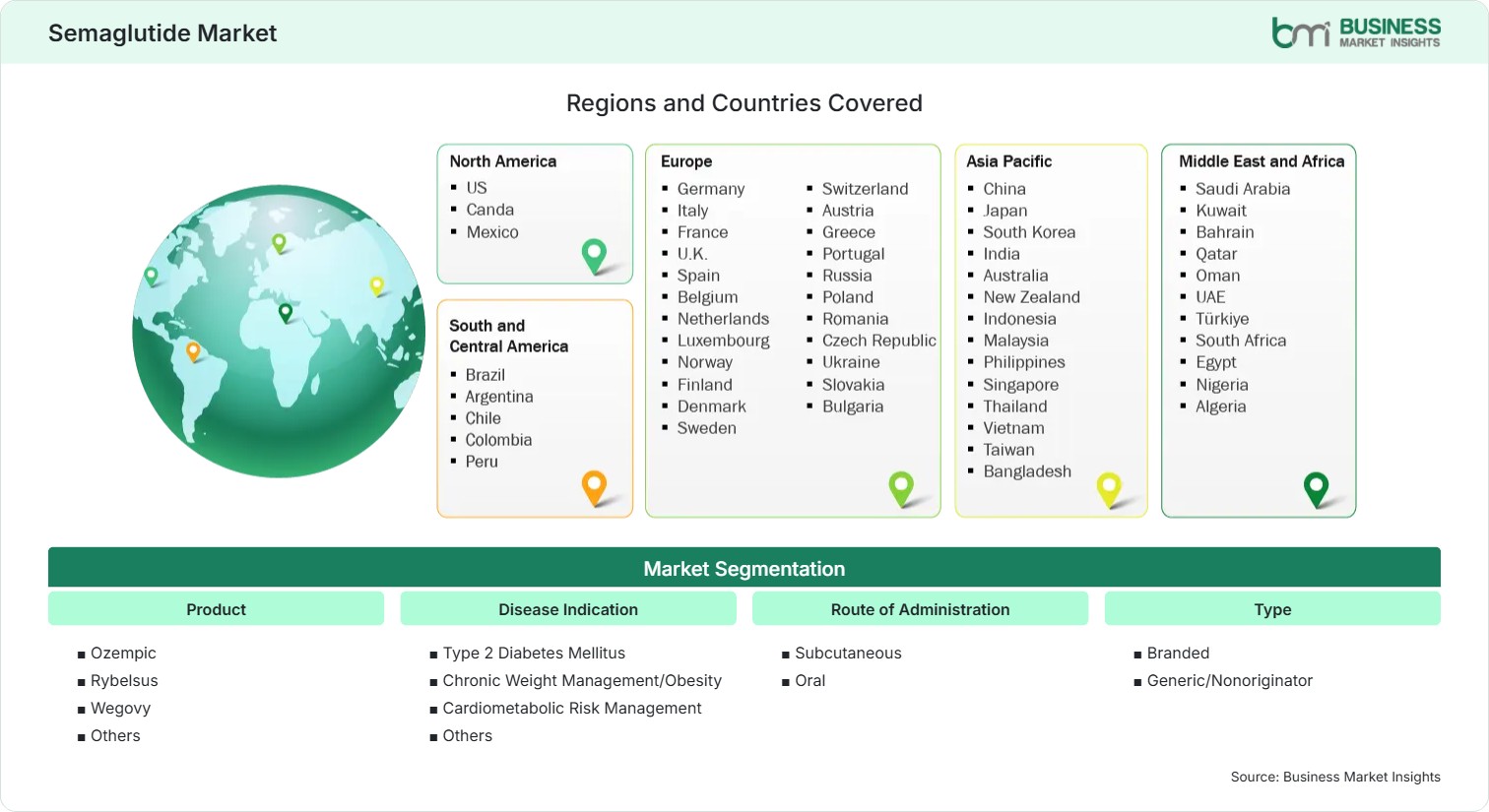
  • Product: Ozempic, Rybelsus, Wegovy, Others
  • Disease Indication: Type 2 Diabetes Mellitus, Chronic Weight Management/Obesity, Cardiometabolic Risk Management, Others
  • Route of Administration: Subcutaneous (Prefilled Multidose Pens and Prefilled Singledose Pens), Oral
  • Type: Branded, Generic/Nonoriginator
  • Age: Pediatric, Adults
US$ 38.56 Bn Market size in 2025
US$ 88.93 Bn Market Size by 2033
11.01% CAGR, 2026 - 2033
2026-2033 Forecast Period

AI Overview

Semaglutide Market Summary

  • North America Region: North America holds a semaglutide market share of 39%–42% in 2025, growing with a CAGR of 10.2%–10.8% during 2026–2033. Strong reimbursement coverage, advanced healthcare infrastructure, increasing obesity management initiatives, and higher physician adoption of semaglutide therapies continue supporting regional leadership. The U.S. market is expected to register a CAGR of 10.4%–11.0%.
  • Fastest Growing Region: Asia Pacific accounts for 20%–23% share in 2025 and is projected to grow at a CAGR of 12.8%–13.5% through 2033. Rising prevalence of obesity and diabetes, increasing healthcare spending, expanding access to innovative therapies, and improving disease awareness are contributing to market expansion.
  • Leading Segment: Ozempic represents 38%–41% share in 2025 and is expected to grow at a CAGR of 10.5%–11.1% through 2033. High prescription volumes, established clinical efficacy, and increasing physician confidence continue supporting segment leadership.
  • High Growth Segment: Chronic Weight Management/Obesity accounts for 24%–27% share in 2025 and is forecast to grow at a CAGR of 13.5%–14.2% during 2026–2033. Increasing obesity prevalence and growing demand for effective long-term weight management solutions are driving segment growth.
  • Key Market Opportunity: Expansion of semaglutide use beyond diabetes management toward obesity treatment and cardiometabolic risk reduction is creating substantial growth opportunities.
  • Major Market Players: Novo Nordisk A/S, Boehringer Ingelheim International GmbH, Sanofi S.A., Eli Lilly and Company, Pfizer Inc., Merck & Co., Inc., Amgen Inc., Bristol-Myers Squibb Company, AstraZeneca PLC, GSK plc.
Strategic Insights

Semaglutide Market: Strategic Insights

Semaglutide Market Strategic Framework
FREE PDF
Request your free sample
Request free sample
Stakeholder View

Key Takeaways

  • Semaglutide is increasingly becoming a cornerstone therapy for both diabetes management and obesity treatment.
  • Ozempic remains the leading product segment due to strong clinical adoption and high prescription volumes.
  • Chronic weight management applications represent the fastest-growing opportunity within the semaglutide market.
  • Asia Pacific offers significant growth potential driven by rising disease prevalence and healthcare modernization.
  • Ongoing clinical research is expanding the therapeutic scope of semaglutide beyond glycemic control.
  • Growing focus on metabolic health and cardiovascular risk reduction is supporting long-term market expansion.
Geographic Outlook

Semaglutide Market Regional Highlights

North America Semaglutide Market

North America accounts for 39%–42% Semaglutide Market share in 2025 and is projected to grow at a CAGR of 10.2%–10.8% through 2033. Strong reimbursement systems, advanced healthcare infrastructure, and increasing obesity management programs continue supporting regional leadership. Healthcare providers are increasingly utilizing semaglutide-based therapies as part of broader metabolic disease management strategies.

  • Healthcare systems are increasingly prioritizing chronic disease management approaches that target diabetes, obesity, and cardiovascular health simultaneously. This trend is supporting stronger adoption of semaglutide therapies among eligible patient populations across the region.
  • Rising awareness regarding obesity-related complications is encouraging earlier intervention and increased demand for therapies capable of delivering sustainable weight reduction and metabolic health improvements.
  • Pharmaceutical companies continue expanding physician education programs and patient support initiatives to improve therapy adoption and treatment adherence rates.
  • Expansion of obesity treatment centers and endocrinology networks is improving access to advanced GLP-1 receptor agonist therapies throughout the region.
  • Growing utilization of digital health platforms and remote patient monitoring technologies is strengthening long-term patient engagement and treatment management.

US Semaglutide Market

The United States contributes approximately 84%–88% of North American revenue and is expected to register a CAGR of 10.4%–11.0% through 2033. High healthcare expenditure, broad physician awareness, and increasing demand for obesity management solutions continue supporting semaglutide market expansion. The country remains a major center for clinical innovation and commercialization of advanced metabolic therapies.

  • Physicians are increasingly prescribing semaglutide therapies due to expanding clinical evidence demonstrating effectiveness in both weight management and glycemic control.
  • Rising obesity prevalence continues generating significant demand for innovative therapies that support long-term health improvement and chronic disease prevention.
  • Patients are showing increasing preference for treatments capable of addressing multiple metabolic health challenges through a single therapeutic approach.
  • Continued investment in chronic disease management initiatives is supporting broader market penetration and improved patient access.

Europe Semaglutide Market

Europe represents 26%–29% of global revenue in 2025 and is anticipated to expand at a CAGR of 10.7%–11.3% through 2033. Increasing obesity prevalence, stronger focus on preventive healthcare, and growing clinical acceptance of advanced metabolic therapies continue supporting semaglutide market growth. Germany remains the leading market while Poland demonstrates stronger growth potential.

  • Germany maintains regional leadership through its robust healthcare infrastructure and increasing adoption of innovative obesity and diabetes treatment solutions.
  • Poland is among the fastest-growing markets, with an estimated CAGR of 11.5%–12.1%, supported by healthcare modernization and growing treatment awareness.
  • Healthcare providers increasingly view obesity as a chronic disease requiring structured and long-term treatment interventions.
  • Demand continues rising for therapies capable of improving weight management outcomes while addressing broader cardiometabolic risk factors.
  • Increasing patient awareness and preventive healthcare initiatives are supporting greater adoption across European markets.

Asia Pacific Semaglutide Market

Asia Pacific accounts for 20%–23% of global revenue in 2025 and is expected to achieve the fastest CAGR of 12.8%–13.5% through 2033. Rapid urbanization, changing dietary habits, growing obesity rates, and increasing diabetes prevalence continue supporting strong regional growth. Healthcare providers are adopting more advanced treatment approaches focused on long-term metabolic health management.

  • China remains the largest regional semaglutide market due to its large diabetic population and growing investments in chronic disease management programs.
  • India is projected to achieve approximately 13.5%–14.3% CAGR, supported by rising healthcare expenditure and improving awareness regarding obesity and diabetes treatment.
  • Increasing healthcare access is expanding availability of innovative therapies across both urban and semi-urban populations.
  • Healthcare professionals are increasingly recommending evidence-based metabolic treatments to improve patient outcomes and disease control.
  • Pharmaceutical companies are strengthening regional distribution capabilities and patient awareness programs to expand therapy adoption.

Rest of World Semaglutide Market

Rest of World accounts for 8%–11% of global revenue in 2025 and is projected to expand at a CAGR of 11.0%–11.7% through 2033. Growing prevalence of obesity and diabetes, improving healthcare infrastructure, and increasing awareness regarding metabolic health are supporting market development across emerging economies.

  • Brazil continues generating demand for advanced obesity and diabetes therapies because of rising disease prevalence and expanding healthcare investments.
  • The UAE is witnessing increasing adoption of innovative metabolic treatments supported by healthcare modernization initiatives and growing patient awareness.
  • Saudi Arabia is expected to achieve approximately 11.8%–12.4% CAGR through 2033, driven by healthcare transformation programs and increasing focus on obesity management.
  • Public health campaigns addressing metabolic disorders are supporting stronger diagnosis rates and earlier treatment adoption.
  • Expanding healthcare accessibility and physician education efforts continue improving semaglutide market penetration across emerging regional markets.
Global Market Geography
FREE PDF
Request your free sample
Request free sample
Segment Analysis

Semaglutide Market Segmentation

Product

The product segment represents the commercial foundation of the semaglutide industry, with manufacturers offering different formulations and brand portfolios targeting diabetes management and obesity treatment. The segment accounts for approximately 38%–41% share in 2025 and is projected to grow at a CAGR of 11.2%–11.8% through 2033. The expanding Semaglutide Market scope is supported by increasing physician adoption, broader therapeutic applications, growing patient awareness, and continuous investment in metabolic disease management solutions.

  • Ozempic: Ozempic remains the leading product category due to strong clinical adoption for type 2 diabetes management, established physician confidence, extensive market penetration, and demonstrated effectiveness in glycemic control.
  • Rybelsus: Rybelsus continues gaining acceptance as an oral semaglutide therapy that offers greater patient convenience and provides an alternative to injectable treatment options.
  • Wegovy: Wegovy is witnessing strong growth driven by increasing obesity prevalence, rising awareness regarding weight management, and expanding utilization in chronic weight management programs.
  • Others: Other semaglutide-based products and pipeline developments continue contributing to market expansion as manufacturers explore additional indications and formulations.

Disease Indication

Disease indication remains a critical determinant of treatment adoption as healthcare providers increasingly focus on integrated metabolic disease management. This segment accounts for approximately 36%–39% share in 2025 and is expected to register a CAGR of 11.6%–12.2% through 2033. Current Semaglutide Market trends indicate expanding clinical utilization beyond glycemic control toward obesity management and cardiometabolic risk reduction.

  • Type 2 Diabetes Mellitus: Type 2 diabetes remains the largest indication segment owing to increasing disease prevalence, growing demand for advanced glucose-lowering therapies, and rising physician preference for GLP-1 receptor agonists.
  • Chronic Weight Management/Obesity: This is the fastest-growing indication due to increasing obesity rates, greater awareness regarding weight-related health risks, and expanding clinical recommendations supporting pharmacological treatment.
  • Cardiometabolic Risk Management: Adoption is increasing as healthcare providers emphasize comprehensive management of cardiovascular and metabolic health outcomes among high-risk patient populations.
  • Others: Additional indications include emerging metabolic health applications supported by ongoing clinical research and treatment innovation.

Route of Administration

Route of administration plays an important role in patient preference, adherence, and treatment outcomes. This segment accounts for approximately 55%–58% share in 2025 and is forecast to grow at a CAGR of 11.0%–11.6% through 2033. Manufacturers continue developing user-friendly delivery formats to improve treatment accessibility and long-term compliance.

  • Subcutaneous - Prefilled Multi-dose Pens: Multi-dose pens dominate adoption because they offer convenience, dosing flexibility, ease of administration, and strong patient familiarity.
  • Subcutaneous - Prefilled Single-dose Pens: Single-dose pens are increasingly utilized where simplicity, accuracy, and ease of use are prioritized in treatment programs.
  • Oral: Oral semaglutide products continue gaining traction among patients seeking non-injectable therapeutic options and improved treatment convenience.

Type

Product type classification continues to influence competition, pricing, accessibility, and commercialization strategies. This segment accounts for approximately 62%–65% share in 2025 and is expected to grow at a CAGR of 10.8%–11.4% through 2033. Expanding healthcare access and increasing demand for innovative therapies continue shaping market dynamics.

  • Branded: Branded products account for the majority of revenue generation due to established clinical evidence, physician trust, regulatory approvals, and strong market presence.
  • Generic/Non-originator: Generic and non-originator opportunities are expected to emerge gradually as market maturity increases and healthcare systems seek cost-effective therapeutic alternatives.

Age

Age-based adoption patterns are influenced by disease prevalence, treatment eligibility, and clinical practice guidelines. This segment accounts for approximately 34%–37% share in 2025 and is projected to expand at a CAGR of 11.3%–11.9% through 2033. Increasing awareness regarding long-term metabolic health is encouraging broader utilization across age groups.

  • Pediatric: Pediatric adoption is gradually expanding as healthcare providers evaluate treatment benefits for eligible younger patient populations dealing with obesity and metabolic disorders.
  • Adults: Adults remain the dominant segment due to higher prevalence of type 2 diabetes, obesity, cardiovascular risk factors, and broader treatment eligibility.

Distribution Channel

Distribution channels are evolving as healthcare providers seek efficient methods of delivering advanced metabolic therapies to patients. This segment accounts for approximately 35%–38% share in 2025 and is expected to grow at a CAGR of 11.4%–12.0% through 2033. Improvements in healthcare accessibility and digital pharmacy networks continue strengthening market reach.

  • Retail Pharmacies: Retail pharmacies remain the leading distribution channel because of widespread accessibility, patient convenience, and established prescription fulfillment infrastructure.
  • Hospital Pharmacies: Hospital pharmacies support therapy initiation, specialist treatment programs, and management of patients requiring clinical supervision.
  • Online Pharmacies: Online pharmacy platforms are witnessing strong growth due to increasing digital healthcare adoption, home delivery services, and patient convenience.
  • Specialty Pharmacies: Specialty pharmacies play an important role in managing advanced metabolic therapies, patient support services, and treatment adherence programs.
  • Others: Additional channels include healthcare clinics, institutional procurement networks, and integrated disease management programs.
Market Forces

Semaglutide Market Dynamics

Key Market Drivers

Rising Prevalence of Type 2 Diabetes and Obesity

Globally, the prevalence of type 2 diabetes mellitus and obesity still constitutes a key driver of demand for sophisticated metabolic therapies. An active urban lifestyle, physical inactivity, altered dietary patterns, and an aging population have led to the emergence of chronic metabolic diseases. The healthcare industry is focusing on interventions that will manage diseases from an early stage and also control its effects on patients. Semaglutide therapy has gained popularity since it satisfies the objective of managing glycemic level and weight at once. The rising prevalence rate of diseases across the world will create steady demand during the forecast period.

Growing Clinical Adoption of GLP-1 Receptor Agonists

Healthcare professionals have been prescribing more and more GLP-1 receptor agonists due to their proven efficacy in controlling blood glucose levels and aiding in weight loss. The positive clinical evidence showing their long-term effects has increased the confidence of doctors and led to the incorporation of GLP-1 receptor agonists in treatment regimens. Such treatments are becoming more recognized as part of a chronic disease management program. With more experience gained and greater confidence in the therapy, the use of semaglutide treatments will continue growing.

Expanding Guideline Recommendations for Semaglutide Therapy

Medical associations and healthcare organizations are increasingly recognizing the clinical value of semaglutide therapies for managing diabetes and obesity. Updated treatment recommendations emphasizing weight management, cardiovascular risk reduction, and comprehensive metabolic care are supporting broader utilization. Physicians are increasingly following evidence-based treatment pathways that include advanced GLP-1 therapies for eligible patients. The growing alignment between clinical evidence and treatment guidelines is strengthening prescription volumes and improving long-term market growth prospects.

Key Market Opportunities

Rising Demand for Obesity Management Therapies

Growing awareness regarding obesity as a chronic medical condition is creating substantial opportunities for semaglutide manufacturers. Healthcare providers and patients increasingly recognize the importance of structured treatment approaches capable of delivering sustainable weight loss and improved health outcomes. Demand for pharmacological interventions is rising as lifestyle modifications alone often fail to achieve long-term results. Expanding obesity treatment programs and increasing healthcare investment in preventive care continue creating favorable conditions for market expansion.

Expansion into Cardiovascular and Chronic Kidney Disease Care

The therapeutic potential of semaglutide continues expanding beyond diabetes and obesity management into broader cardiometabolic applications. Healthcare providers are increasingly interested in therapies capable of reducing cardiovascular risks and improving outcomes among patients with chronic metabolic conditions. Ongoing clinical research and growing evidence regarding long-term health benefits are encouraging wider adoption. Expansion into additional therapeutic areas offers pharmaceutical companies significant opportunities to strengthen market penetration and diversify revenue streams.

Growing Market Penetration in Emerging Healthcare Systems

Emerging economies are presenting substantial growth opportunities due to rising healthcare investments, increasing disease awareness, and expanding access to advanced therapies. Governments and healthcare organizations are focusing on improving management of chronic diseases that place growing burdens on healthcare systems. Pharmaceutical companies are increasing investments in physician education, patient outreach programs, and distribution infrastructure to improve accessibility. Long-term Semaglutide Market Forecasts remain favorable as emerging markets continue adopting innovative metabolic health solutions.

Market Restraints and Challenges

High Treatment Costs Limiting Patient Access

Factor: Semaglutide therapies often involve relatively high treatment costs compared with conventional treatment approaches. Costs associated with long-term therapy, prescription coverage limitations, and reimbursement inconsistencies can create financial challenges for patients. Impact: Higher treatment expenses may reduce access among uninsured or cost-sensitive populations, limiting overall market penetration. Healthcare providers and manufacturers must address affordability concerns to support broader adoption and improve treatment accessibility across diverse patient groups.

Supply Constraints Due to Rising Global Demand

Factor: Increasing demand for semaglutide therapies across both diabetes and obesity indications has placed pressure on manufacturing capacity and supply chains. Rapid growth in prescription volumes can create temporary supply imbalances and distribution challenges. Impact: Product shortages may delay treatment initiation, reduce patient access, and affect prescribing patterns in certain markets. Manufacturers continue investing in production expansion and supply chain optimization to address growing global demand while maintaining consistent product availability.

Company Analysis

Competitive Landscape

The Semaglutide Market analysis highlights a highly competitive pharmaceutical landscape characterized by innovation in GLP-1 receptor agonists, obesity management therapies, metabolic disease treatments, cardiovascular risk reduction solutions, and chronic disease management platforms. Market participants are focusing on clinical research, indication expansion, production scale-up, strategic collaborations, and commercialization initiatives to strengthen their competitive positioning within the growing metabolic healthcare sector.

Company Name

Overview

Products and Services relevant to this market

Novo Nordisk A/S

Global pharmaceutical company and pioneer in semaglutide development with a strong focus on diabetes and obesity care.

Ozempic, Rybelsus, Wegovy, GLP-1 receptor agonist therapies, obesity management solutions, and diabetes care products.

Boehringer Ingelheim International GmbH

Research-driven pharmaceutical company focused on cardiometabolic, respiratory, and chronic disease therapies.

Diabetes treatments, cardiometabolic therapies, chronic disease management solutions, and specialty pharmaceutical products.

Sanofi S.A.

Global healthcare company with a broad portfolio in diabetes care, specialty medicines, and chronic disease treatment.

Diabetes management products, metabolic disease therapies, insulin solutions, and chronic condition treatment portfolios.

Eli Lilly and Company

Pharmaceutical company actively involved in metabolic disease management and obesity treatment innovation.

GLP-1 therapies, obesity management solutions, diabetes treatments, endocrine care products, and metabolic disease therapies.

Pfizer Inc.

Global pharmaceutical company engaged in innovative therapies across multiple therapeutic categories.

Metabolic disease treatments, chronic disease therapies, specialty pharmaceuticals, and research-driven healthcare solutions.

Merck & Co., Inc.

Global healthcare company with expertise in cardiovascular, metabolic, and chronic disease treatment solutions.

Diabetes therapies, cardiometabolic treatments, specialty pharmaceuticals, and healthcare innovation programs.

Amgen Inc.

Biotechnology company focused on advanced therapies targeting chronic diseases and unmet medical needs.

Metabolic health solutions, chronic disease therapies, biologic medicines, and specialty treatment platforms.

Bristol-Myers Squibb Company

Biopharmaceutical company engaged in research and commercialization of innovative healthcare products.

Specialty pharmaceuticals, chronic disease treatments, cardiometabolic therapies, and research-based healthcare solutions.

AstraZeneca PLC

Global pharmaceutical company with a significant presence in metabolic disease and cardiovascular care.

Diabetes therapies, cardiovascular medicines, chronic disease management products, and metabolic healthcare solutions.

GSK plc

Research-based biopharmaceutical company serving multiple therapeutic areas worldwide.

Chronic disease therapies, specialty healthcare products, metabolic health solutions, and pharmaceutical innovation initiatives.

Trust & Transparency

Research Methodology

The market analysis combines proprietary research with secondary data from government agencies, company disclosures, regulatory filings, industry databases and expert interviews. Market estimates are validated through data triangulation, cross-market benchmarking and analyst review.

View Full Research Methodology

Questions Answered

Frequently Asked Questions

How is semaglutide being utilized beyond diabetes management?

Healthcare providers are increasingly utilizing semaglutide therapies for obesity treatment, chronic weight management, cardiometabolic risk reduction, and broader metabolic health improvement initiatives.

What does this Semaglutide Market Report cover?

This report covers product analysis, disease indication trends, route of administration assessment, type segmentation, age-group evaluation, distribution channel analysis, regional opportunities, competitive landscape assessment, and market dynamics through 2033.

Why is chronic weight management emerging as the fastest-growing indication?

Increasing obesity prevalence, higher awareness regarding obesity-related health complications, and growing demand for effective pharmacological weight management therapies are driving rapid segment expansion.

Which product segment holds the largest market share?

Ozempic represents the leading product segment due to its broad clinical adoption, established efficacy profile, strong prescription volume, and widespread physician confidence in diabetes management applications.

What is driving growth in the market?

Rising prevalence of type 2 diabetes, increasing obesity rates, growing physician acceptance of GLP-1 receptor agonists, and expanding guideline recommendations for metabolic disease management are major factors supporting market growth.

Access the Full Semaglutide Market Report

Get segment-level forecasts, regional estimates, competitive benchmarking, company profiles and downloadable Excel datasets.

Access the full Semaglutide Market Report
350 pages PDF & Excel | 2026-08-07
Similar Research

Related Market Reports