
RSV Vaccine Market Outlook: Size, Share, Trends, Growth Analysis, Competitive Landscape & Forecast, 2026-2033

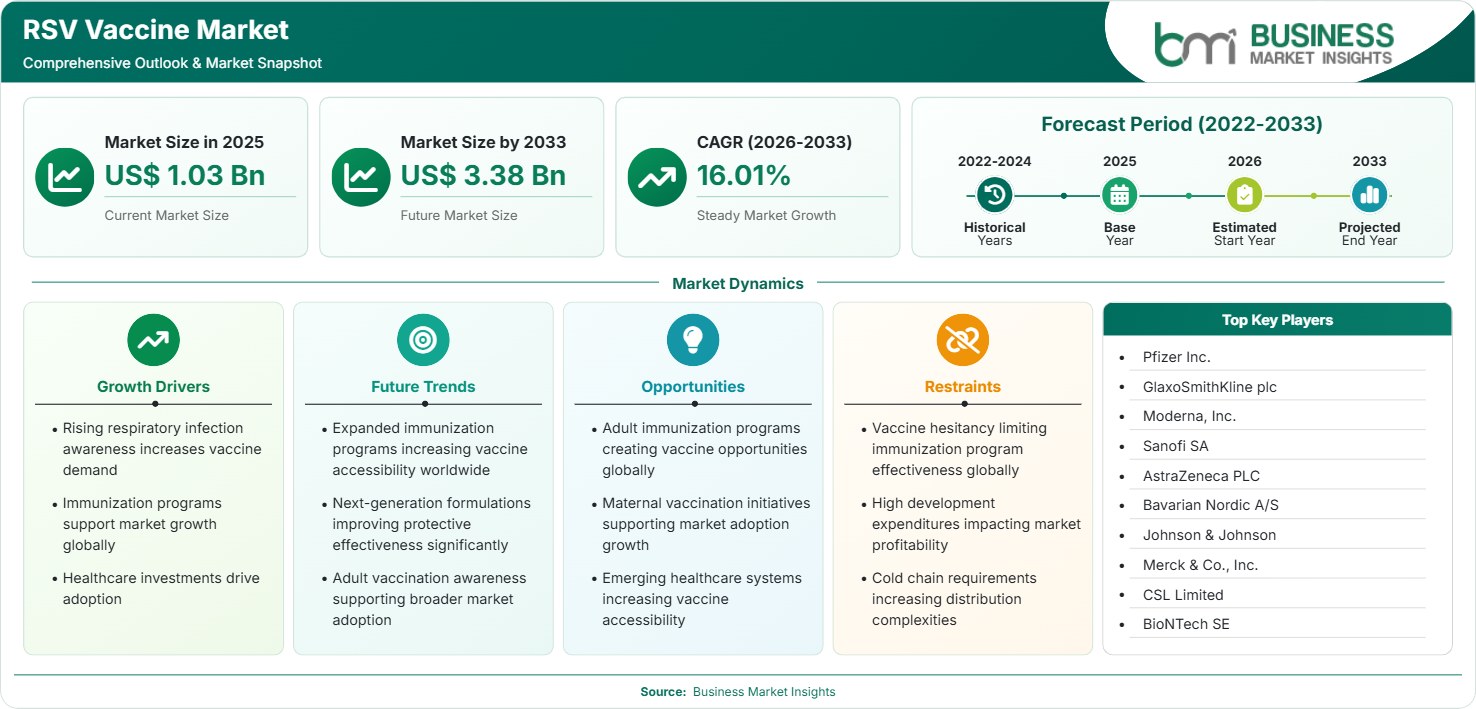
The RSV Vaccine Market size was valued at US$ 1.03 Billion in 2025 and is projected to reach US$ 3.38 Billion by 2033, growing at a CAGR of 16.01% during 2026–2033. Rising immunization coverage among older adults, expanding maternal vaccination programs, increasing RSV disease awareness, supportive regulatory approvals, and continuous vaccine innovation are creating substantial commercialization opportunities globally.

Report Coverage
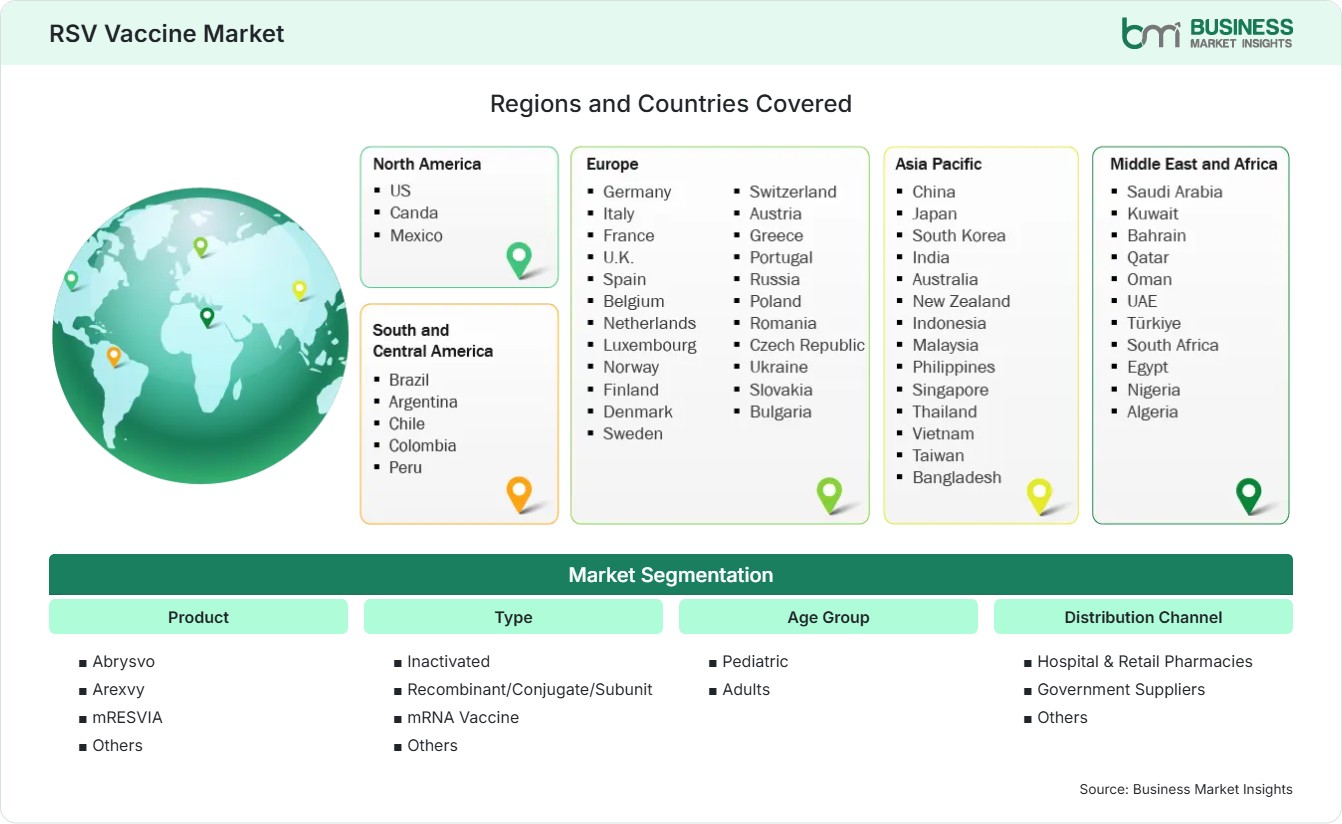
  • Product: Abrysvo, Arexvy, mRESVIA, Others
  • Type: Inactivated, Recombinant/Conjugate/Subunit, mRNA Vaccine, Others
  • Age Group: Pediatric, Adults
  • Distribution Channel: Hospital & Retail Pharmacies, Government Suppliers, Others
US$ 1.03 Bn Market size in 2025
US$ 3.38 Bn Market Size by 2033
16.01% CAGR, 2026 - 2033
2026-2033 Forecast Period

AI Overview

RSV Vaccine Market Summary

  • North America Region: North America holds a market share of 42%–45% in 2025, growing with a CAGR of 14.0%–15.0% during 2026–2033, supported by strong reimbursement systems, adult vaccination campaigns, advanced healthcare infrastructure, expanding pharmacy vaccination networks, and increasing awareness of respiratory disease prevention among vulnerable populations. The U.S. market benefits from broad pharmacy access, favorable recommendations, and adoption growth with a CAGR of 14.5%–15.5%.
  • Fastest Growing Region: Asia Pacific holds a market share of 20%–23% in 2025, growing with a CAGR of 18.5%–20.0% during 2026–2033, supported by expanding immunization infrastructure, growing elderly populations, increasing respiratory disease surveillance, healthcare investments, and gradual inclusion of adult vaccination within national public health strategies.
  • Leading Segment: Recombinant/Conjugate/Subunit vaccines account for 52%–56% RSV Vaccine Market share in 2025, advancing at a CAGR of 15.0%–16.0%, driven by proven efficacy profiles, established manufacturing capabilities, large-scale commercialization success, physician confidence, and growing adoption across elderly and high-risk patient populations.
  • High Growth Segment: mRNA vaccines represent a 12%–16% share in 2025 and are projected to grow at a CAGR of 22.0%–24.0%, supported by platform flexibility, accelerated development timelines, scalable manufacturing, next-generation respiratory vaccine programs, and investments aimed at broader infectious disease protection.
  • Key Market Opportunity: Expansion of vaccination coverage across middle-income countries presents significant opportunity through healthcare modernization, adult immunization initiatives, maternal vaccination programs, strategic procurement partnerships, and strengthened respiratory disease prevention frameworks globally.
  • Major Market Players: Pfizer Inc.; GlaxoSmithKline plc; Moderna, Inc.; Sanofi SA; AstraZeneca PLC; Bavarian Nordic A/S; Johnson & Johnson; Merck & Co., Inc.; CSL Limited; BioNTech SE.
Strategic Insights

RSV Vaccine Market: Strategic Insights

RSV Vaccine Market Strategic Framework
FREE PDF
Request your free sample
Request free sample
Stakeholder View

Key Takeaways

  • The value chain is changing from the traditional method of developing vaccines to one that includes integrated ecosystems comprising antigen developers, contract manufacturers, providers of cold-chain logistics, pharmacy networks, healthcare systems, and public immunization agencies.
  • The chances for profit in the case of maternal immunization and vaccination among the elderly are the greatest, since there is an ever-increasing awareness of the hospitalization burden caused by RSV and higher spending worldwide on preventive healthcare.
  • Innovation is now focusing on next-generation mRNA platforms, better adjuvant technologies, combination respiratory vaccines, and improved immunogenicity solutions that are capable of meeting the needs of a wider patient population and responding to fluctuations in seasonal demand.
  • The investment case put forward by Asia Pacific is very attractive because of its large population, the increasing spending on healthcare, the rising number of elderly people, and the improving vaccination infrastructure in China, Japan, India, South Korea, and Southeast Asia.
  • As companies look to expand geographically, diversify their risks, and speed up the commercialization of new respiratory immunization products, strategic partnerships, licensing agreements, and manufacturing collaborations are becoming more important.
  • In the future, the way companies gain a competitive edge will increasingly be based on clinical efficacy, the length of protection, safety records, acceptance by payers, and their incorporation into national immunization programs rather than just on price advantages.
Geographic Outlook

RSV Vaccine Market Regional Highlights

North America RSV Vaccine Market

North America accounted for approximately 42%–45% RSV Vaccine Market share in 2025 and is projected to expand at a CAGR of 14.0%–15.0% through 2033. Strong reimbursement mechanisms, extensive healthcare infrastructure, and high awareness among healthcare providers support adoption. The region benefits from early commercialization of approved vaccines and extensive pharmacy-based vaccination channels.

  • Nowadays, adult immunization programs place a greater emphasis on preventing respiratory diseases, which, as a result, leads to higher rates of vaccination among people over sixty years of age and those who have chronic underlying conditions.
  • The greater the involvement of retail pharmacies in administering vaccines, the better vaccine accessibility becomes, which in turn leads to efficient vaccine delivery and broader public health outreach in both urban and suburban areas.
  • By making strategic investments in manufacturing capacity and supply-chain resilience, distribution risks can be reduced, and product availability increased during the seasonal cycles of respiratory diseases.
  • The fact that clinical evidence showing a reduction in hospitalizations has grown helps to increase doctors' confidence and leads to wider recommendations being made for vulnerable patient groups.
  • Healthcare spending is still one of the highest in the world, and this has led to a high level of uptake of vaccines as well as to further investment in immunization infrastructure.

US RSV Vaccine Market

The United States represented approximately 78%–82% of North American RSV Vaccine Market revenue in 2025 and is expected to grow at a CAGR of 14.5%–15.5% through 2033. Strong prescribing activity, broad pharmacy participation, favorable reimbursement coverage, and extensive public health awareness campaigns continue supporting vaccine uptake.

  • Large-scale pharmacy chains are still increasing access to vaccines, which helps to improve immunization rates among older adults and people in rural areas by providing convenient places for administration.
  • High spending on healthcare allows for the quick adoption of new respiratory vaccines and helps incorporate the newly approved products into preventive care pathways.
  • The clinical evidence showing a reduction in serious respiratory complications should lead doctors to advise vaccination for people who are in high-risk groups and the elderly.
  • Continued spending on vaccine research, improved manufacturing techniques, and campaigns to raise public awareness enhance the market's long-term competitive position and its supply resilience.

Europe RSV Vaccine Market

Europe held approximately 27%–30% RSV Vaccine Market share in 2025 and is forecast to register a CAGR of 15.0%–16.5% through 2033. Government-funded healthcare systems, growing elderly demographics, and increasing respiratory disease surveillance support commercial expansion.

  • Germany provides the biggest source of regional revenue, due to its well-developed vaccination infrastructure and its high level of healthcare spending.
  • Spain is one of the fastest-growing national markets, with estimated growth reaching 17.0% to 18.0%, due to the expansion of adult immunization programs.
  • Greater awareness of the burden caused by respiratory infections leads to the inclusion of vaccination programs for the elderly in the public healthcare planning frameworks.
  • The ability of the pharmaceutical industry to manufacture drugs throughout Western Europe improves supply security and helps to ensure that vaccines are available in the region.
  • The regulatory pathways that are favorable are still promoting innovation and the commercialization of next-generation respiratory vaccine technologies.

Asia Pacific RSV Vaccine Market

Asia Pacific accounted for approximately 20%–23% RSV Vaccine Market share in 2025 and is expected to achieve the fastest CAGR of 18.5%–20.0% during 2026–2033. Expanding healthcare access, aging populations, and rising investment in infectious disease prevention drive adoption.

  • Japan ranks highest in terms of regional demand due to its well-developed healthcare infrastructure, the large number of elderly people, and its extensive use of innovative preventive healthcare measures.
  • India shows strong potential for growth with projected growth ranging from 20.0% to 21.0%, due to investments in healthcare and increased awareness regarding vaccination.
  • The regional governments are enhancing their ability to carry out disease surveillance, which aids in the identification of specific populations and in supporting the development of preventive healthcare policies.
  • Agreements for local manufacturing and arrangements involving the transfer of technology help to improve affordability and enhance the stability of future vaccine supplies.
  • The growing number of people in the middle class, together with rising healthcare spending, provides sustainable long-term opportunities for the adoption of respiratory immunization.

Rest of World RSV Vaccine Market

The Rest of World region represented approximately 8%–11% of global RSV Vaccine Market revenue in 2025 and is expected to record a CAGR of 16.5%–18.0% through 2033. South and Central America benefit from strengthening healthcare systems and vaccination awareness initiatives. Brazil remains the largest regional market due to healthcare scale and immunization capabilities.

  • Brazil is leading the region in terms of revenue generation, due to its extensive healthcare coverage and a growing focus on infectious disease prevention programs.
  • Saudi Arabia is showing strong growth momentum as a result of its healthcare modernization initiatives and its strategic investments in public health infrastructure.
  • International partnerships and procurement programs help to ensure access to vaccines in a number of emerging healthcare markets.
  • Greater awareness of respiratory diseases among the elderly increases the demand for preventive immunization solutions.
  • In developing economies, healthcare reforms are still advancing the networks for distributing vaccines and improving long-term access.
Global Market Geography
FREE PDF
Request your free sample
Request free sample
Segment Analysis

RSV Vaccine Market Segmentation

Product

The product segment reflects increasing diversification within the industry. Commercially approved vaccines are expanding access across different patient populations while innovation strengthens pipeline development. The RSV Vaccine Market size continues to benefit from growing physician awareness and broader vaccination recommendations globally.

  • Abrysvo: Pfizer's vaccine benefits from maternal immunization indications and elderly population adoption, supporting strong commercial performance through healthcare provider confidence and expanding reimbursement coverage across multiple countries.
  • Arexvy: GSK's product maintains significant adoption among older adults because of established efficacy data, strong commercialization capabilities, and integration into respiratory disease prevention strategies.
  • mRESVIA: Moderna's mRNA-based vaccine attracts growing attention due to platform flexibility, scalable manufacturing potential, and increasing confidence in next-generation vaccine technologies.

Type

Type-based competition is intensifying as manufacturers pursue differentiated technology platforms. Recombinant and subunit approaches remain commercially dominant with an estimated 52%–56% RSV Vaccine Market share in 2025 and a projected 15.0%–16.0% CAGR.

  • Inactivated: Inactivated approaches remain relevant for specific research and development pathways, offering familiar safety profiles and established manufacturing experience within the broader vaccine industry.
  • Recombinant/Conjugate/Subunit: These technologies dominate commercial activity through strong efficacy performance, physician confidence, manufacturing scalability, and widespread adoption among targeted adult populations.
  • mRNA Vaccine: mRNA platforms represent one of the most promising RSV Vaccine Market trends, supported by rapid design flexibility, scalable production capability, and growing industry investment.

Age Group

Age-based demand dynamics are primarily shaped by disease burden and preventive healthcare strategies. Adults represented approximately 68%–72% of the RSV Vaccine Market share during 2025, supported by vaccination recommendations targeting elderly populations.

  • Pediatric: Pediatric protection increasingly benefits from maternal vaccination approaches designed to transfer immunity during pregnancy and reduce infant hospitalization risks.
  • Adults: Adult vaccination drives the majority of current revenue generation, particularly among elderly individuals and patients experiencing elevated respiratory health risks.

Distribution Channel

Distribution channels play a critical role in improving vaccine accessibility and immunization coverage. Hospital and retail pharmacies accounted for approximately 60%–64% of the RSV Vaccine Market share in 2025 and continue expanding through convenient administration services and broad patient reach.

  • Hospital & Retail Pharmacies: These channels support efficient vaccine administration through established healthcare access points, trained professionals, and strong patient engagement capabilities.
  • Government Suppliers: Public procurement agencies facilitate population-level vaccination programs, ensuring equitable access and supporting national disease prevention objectives.
Market Forces

RSV Vaccine Market Dynamics

Key Market Drivers

Increasing Recognition of Severe RSV Outcomes

Respiratory syncytial virus can cause severe lower respiratory tract disease, particularly among infants, older adults, and people with certain underlying conditions. The CDC recommends RSV vaccination for adults aged 75 and older and adults aged 50–74 at increased risk of severe illness, creating a defined clinical demand base in the United States. These recommendations support provider-led identification, preventive consultations, and vaccination through pharmacies and clinics. As healthcare systems focus on preventing avoidable hospitalization, RSV Vaccine Market growth is influenced by awareness of disease burden, clinical eligibility, and the practical availability of licensed products.

Established Prefusion F Protein Vaccine Technology

The principal commercial basis for RSV vaccination is the use of prefusion F protein technology. The vaccines Abrysvo by Pfizer and Arexvy by GSK both employ prefusion F protein antigens, even though their formulations and the indications for which they have been authorized are different. This technology has benefited from previous clinical development experience, well-established manufacturing processes, and a degree of familiarity with regulatory requirements. The capacity to develop vaccines for different eligible groups helps to achieve market differentiation and encourages investment in further indications. Yet the commercial advantage depends on more than just the choice of platform; manufacturers have to show that their vaccines have an acceptable benefit-risk balance, keep to the required quality standards, and produce evidence regarding the duration of protection.

Expansion of Maternal Immunization Programs

By vaccinating mothers, it is possible to protect infants before their first RSV season through placental antibody transfer. The World Health Organization recommends that RSVpreF vaccination should take place during pregnancy, while national authorities are responsible for deciding who is eligible and how the vaccination is administered. This method incorporates RSV prevention into antenatal care rather than needing a separate visit to vaccinate the infant. The success of this approach as a way of delivering the vaccine relies on timely attendance during pregnancy, advice given by clinicians, the availability of the vaccine, and clear instructions regarding the suitable stages of pregnancy. Public health agencies can increase the number of people who take up the offer by including information about RSV in regular pregnancy consultations.

Key Market Opportunities

Expanding Affordable Maternal Vaccine Access

A major investment opportunity lies in adapting maternal immunization to lower-resource settings. In September 2026, WHO prequalified a multidose presentation of Abrysvo, building on its earlier prequalification of the single-dose presentation. WHO stated that the multidose format could improve affordability and delivery in countries supported by Gavi. This creates an opportunity for manufacturers and distribution partners to serve procurement programs that require efficient use of doses, dependable supply, and appropriate packaging. RSV Vaccine Market Forecasts depend partly on whether regulatory authorization, international financing, and national recommendations translate into funded programs.

Developing Markets Through Regional Supply Partnerships

Manufacturing and distribution partnerships at the regional level might help improve access in those countries in which imported vaccines encounter difficulties due to affordability or logistical issues. To meet local regulatory requirements, drug developers can collaborate with existing pharmaceutical distributors, contract manufacturers, and government procurement agencies to align supply with demand. Such partnerships may simplify the distribution process and help ensure more reliable deliveries, although biological production will still have to undergo strict quality controls. Before committing capital, investors should assess the level of access in the local market, the authorization of the product, purchasing power, and the sustainability of public funding.

Generating Evidence for More Targeted Vaccination

Real-world effectiveness studies provide an opportunity to improve clinical positioning and increase the confidence of healthcare professionals. Evidence regarding protection against hospitalization, the length of this protection, safety in the relevant groups, and the outcomes for people who have underlying medical conditions can in turn help to guide evidence-based policy decisions. The CDC states that evaluations after licensing are still being carried out for vaccines approved for use in adults, highlighting the importance of keeping an eye on outcomes following the initial clinical trials. Those companies that invest in strong observational research will be able to better assist healthcare purchasers and clinical guidelines.

Market Restraints and Challenges

Safety Monitoring and Public Confidence

The presence of postmarketing safety signals can make it harder to communicate both the benefits and the risks of vaccination. When observational data were obtained in January 2025, the US FDA mandated that warnings about Guillain-Barré syndrome should be included in the prescribing information for Abrysvo and Arexvy. As a result, further discussions on safety can increase the workload for clinicians, reduce patient confidence, and undermine vaccination campaigns if the communication of risks is not clear. Regulators should keep on assessing the available evidence, and at the same time manufacturers must provide transparent pharmacovigilance and accurate product information.

Affordability and Uneven Immunization Infrastructure

The availability of vaccines can be limited due to high prices, constraints on public budgets, the fragmented nature of the delivery systems, and inconsistent reimbursement, especially in less affluent markets. To prevent RSV, it is necessary to have appropriate storage facilities, trained staff, accurate forecasting, and distribution networks that reach eligible patients. As a result, even if a vaccine is authorized, a limited ability to buy it or a weak health care infrastructure may delay the implementation of the program and lead to a reduction in the number of doses given. Governments need to compare the costs of prevention with the expected healthcare benefits and have to establish sustainable ways of financing it.

Company Analysis

Competitive Landscape

The competitive environment remains highly concentrated among global vaccine innovators. Current RSV Vaccine Market analysis indicates that product efficacy, safety profile, manufacturing scale, regulatory approvals, and distribution capabilities are the primary factors shaping competitive positioning.

Company Name

Overview

Products and Services Relevant to this Market

Pfizer Inc.

Global biopharmaceutical company with extensive vaccine commercialization capabilities and strong presence across adult and maternal immunization markets.

Abrysvo vaccine, vaccine R&D, clinical development, manufacturing, global distribution, and respiratory disease prevention solutions.

GlaxoSmithKline plc

Leading vaccine manufacturer with broad immunization expertise and significant global healthcare market presence.

Arexvy vaccine, adjuvant technologies, vaccine development, manufacturing services, and commercialization activities.

Moderna, Inc.

Biotechnology company specializing in mRNA technology platforms and next-generation vaccine development.

mRESVIA, mRNA vaccine research, manufacturing innovation, and respiratory infectious disease programs.

Sanofi SA

Diversified healthcare company with extensive vaccine experience through global public health partnerships.

Vaccine development, infectious disease prevention programs, research collaborations, and immunization technologies.

AstraZeneca PLC

Major pharmaceutical company with strong respiratory disease expertise and immunization capabilities.

Respiratory disease programs, monoclonal antibody technologies, and preventive healthcare solutions.

Bavarian Nordic A/S

Specialized vaccine company focused on infectious disease prevention and commercial vaccine production.

Vaccine research, manufacturing, commercialization, and infectious disease immunization solutions.

Johnson & Johnson

Global healthcare company with significant biologics and vaccine development expertise.

Vaccine technologies, global healthcare services, and infectious disease research programs.

Merck & Co., Inc.

Research-driven pharmaceutical leader with broad vaccine innovation capabilities and global market reach.

Vaccine discovery, clinical development, manufacturing, and preventative healthcare products.

CSL Limited

International biotechnology company focused on vaccines, plasma therapies, and specialty healthcare solutions.

Vaccine manufacturing capabilities, immunology expertise, and public health support initiatives.

BioNTech SE

Biotechnology innovator advancing mRNA-based infectious disease and immunotherapy technologies.

mRNA vaccine platforms, respiratory disease research, and advanced vaccine development services.

Trust & Transparency

Research Methodology

The market analysis combines proprietary research with secondary data from government agencies, company disclosures, regulatory filings, industry databases and expert interviews. Market estimates are validated through data triangulation, cross-market benchmarking and analyst review.

View Full Research Methodology

Questions Answered

Frequently Asked Questions

What does an RSV Vaccine Market Report typically evaluate?

A comprehensive report examines market size, technology trends, competitive positioning, regional demand patterns, regulatory developments, growth opportunities, distribution structures, and future commercialization prospects.

How are mRNA technologies influencing industry development?

mRNA-based approaches enable flexible vaccine design, faster development cycles, and scalable manufacturing capabilities, supporting innovation and future expansion of respiratory disease prevention strategies.

Which region is expected to expand most rapidly through 2033?

Asia Pacific is projected to record the fastest growth due to healthcare modernization, expanding elderly populations, stronger disease surveillance capabilities, and increasing investments in preventive healthcare infrastructure.

Which age group currently generates the highest revenue?

Adults represent the largest revenue-generating population because vaccination recommendations are primarily focused on older adults and individuals with elevated risk of severe respiratory disease outcomes.

What factors are accelerating demand for RSV vaccines globally?

Growing elderly populations, greater awareness of severe RSV complications, expanding adult immunization recommendations, increasing maternal vaccination acceptance, and strong regulatory support are contributing to wider vaccine adoption across healthcare systems.

Access the Full RSV Vaccine Market Report

Get segment-level forecasts, regional estimates, competitive benchmarking, company profiles and downloadable Excel datasets.

Access the full RSV Vaccine Market Report
350 pages PDF & Excel | 2026-10-28
Similar Research

Related Market Reports