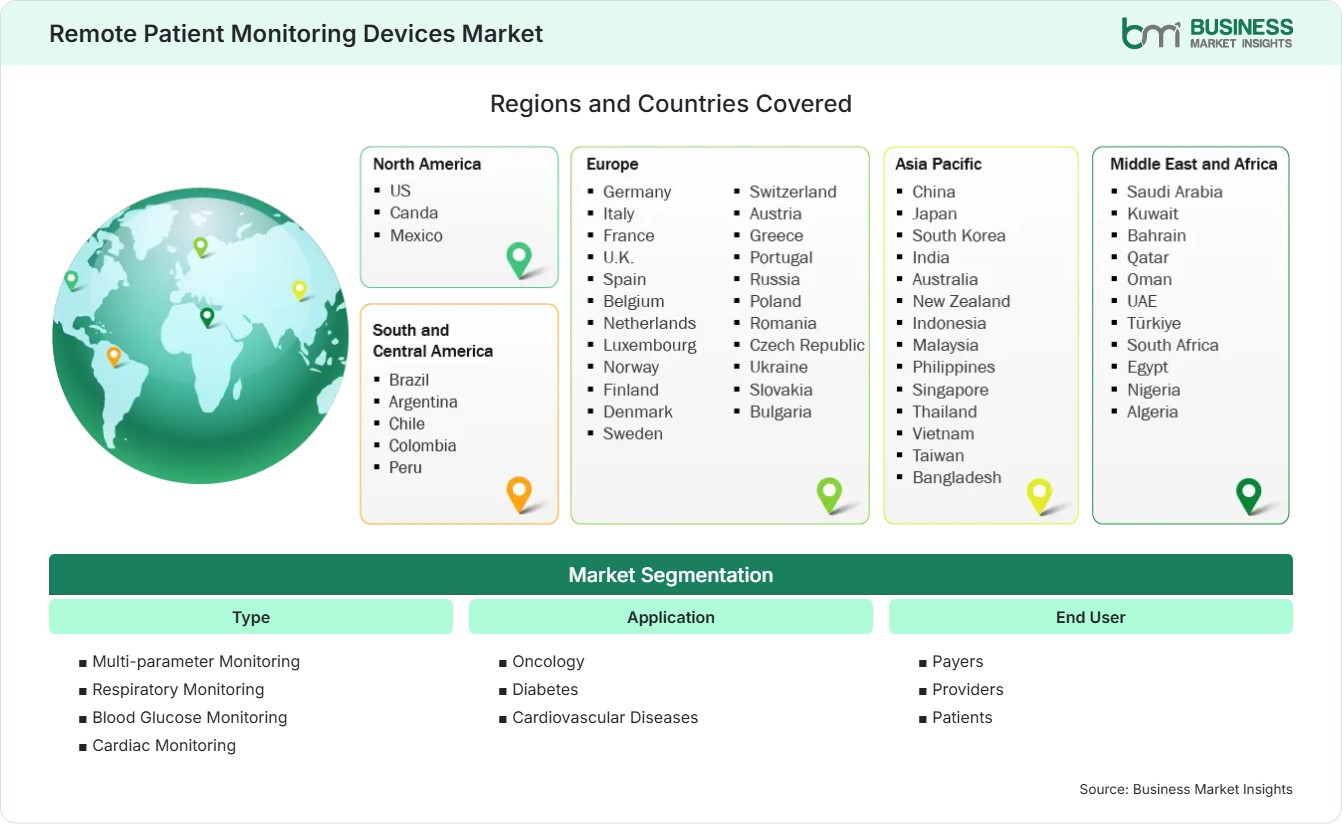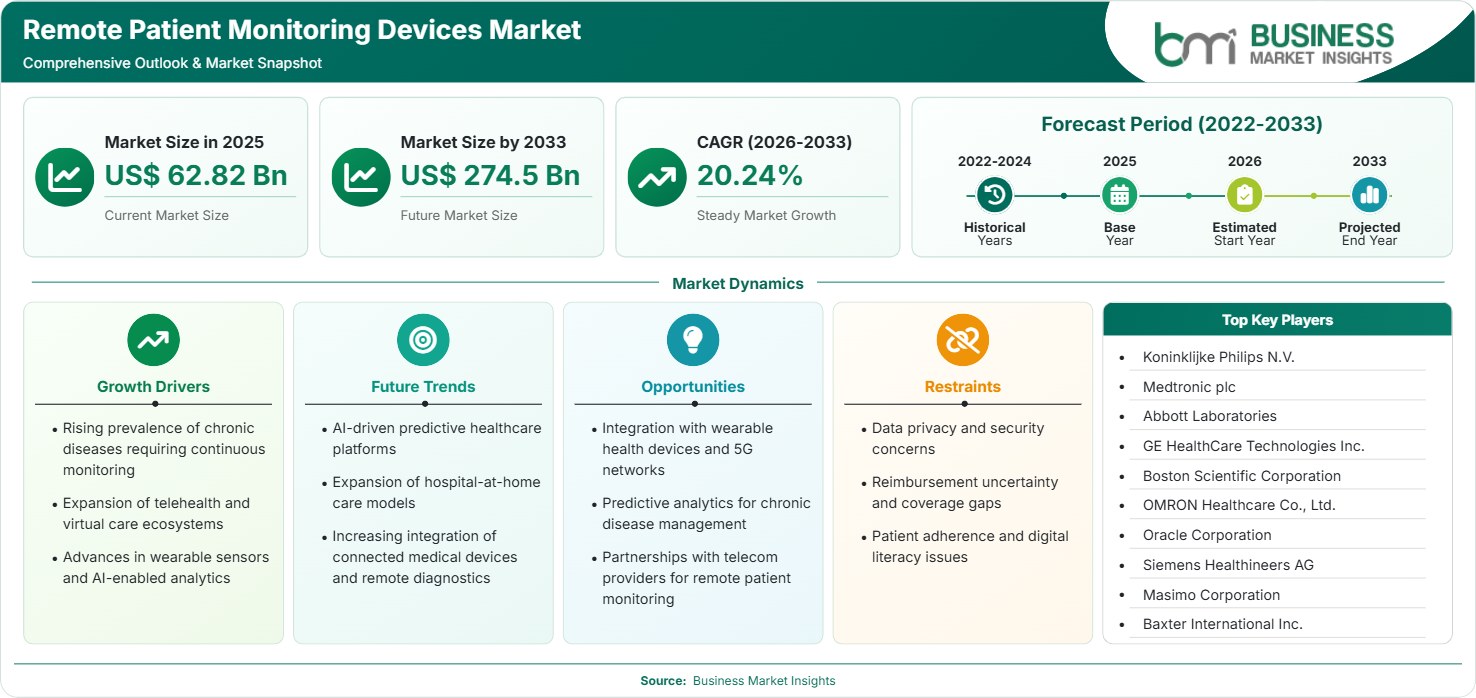
Remote Patient Monitoring Devices Market Regional Highlights
North America Remote Patient Monitoring Devices Market
North America maintained leadership with the Remote Patient Monitoring Devices Market share reaching 38%–41% in 2025. Regional expansion is projected at 18.5%–20.0% CAGR through 2033. Strong digital health maturity, telemedicine utilization, chronic disease prevalence, and reimbursement coverage continue supporting adoption. Healthcare providers increasingly implement hospital-at-home programs and continuous monitoring workflows. Advanced healthcare infrastructure, high connected device penetration, and favorable investment activity reinforce regional competitiveness across inpatient, outpatient, and home-care settings.
- Medicare reimbursement pathways continue encouraging provider participation in remote monitoring programs across chronic disease populations.
- Large healthcare networks increasingly deploy AI-enabled monitoring solutions to reduce readmissions and improve care coordination.
- Device interoperability standards are improving integration across electronic health record ecosystems and virtual care platforms.
- Venture investment activity supports innovation in wearable monitoring technologies, predictive analytics, and digital health infrastructure.
- Aging demographics contribute to sustained demand for continuous monitoring solutions and home-based disease management.
US Remote Patient Monitoring Devices Market
The U.S. accounted for approximately 78%–82% of North American Remote Patient Monitoring Devices Market revenue in 2025 and is expected to expand at 19.0%–20.5% CAGR. Strong adoption among health systems, payer-supported virtual care programs, and growing chronic disease management initiatives sustain momentum. Federal reimbursement support and growing provider acceptance continue strengthening utilization. Increasing consumer familiarity with connected health devices and expanded remote care pathways support long-term deployment across diverse patient populations.
- Large provider networks increasingly incorporate monitoring data into population health management programs.
- Cardiac and diabetes monitoring remain major adoption areas due to high disease prevalence.
- Health insurers continue evaluating outcome-based reimbursement structures supporting connected care services.
- Technology partnerships are accelerating deployment of cloud-integrated monitoring ecosystems.
Europe Remote Patient Monitoring Devices Market
Europe represented 28%–31% share in 2025 and is forecast to grow at 19.0%–21.0% CAGR. National digital health strategies, aging populations, and pressure on healthcare resources encourage broader monitoring adoption. Germany remains the leading market, while Spain demonstrates one of the fastest growth trajectories. Health systems increasingly employ connected monitoring to support chronic disease management and post-acute care pathways. Regulatory emphasis on patient-centered care further strengthens implementation prospects.
- Germany benefits from established digital health reimbursement frameworks and advanced healthcare infrastructure.
- Spain records strong growth driven by telehealth expansion and regional digitization initiatives.
- Cross-border digital health collaborations support greater interoperability and patient access.
- Remote monitoring programs help health systems manage workforce constraints and growing chronic disease burdens.
- Public healthcare modernization efforts continue supporting technology integration.
Asia Pacific Remote Patient Monitoring Devices Market
Asia Pacific held 24%–27% share in 2025 and represents the fastest-growing regional market with 22.0%–24.5% CAGR. Expanding healthcare access, urbanization, chronic disease burdens, and government-led digital health programs accelerate adoption. China leads regional revenue generation, while India exhibits particularly strong growth potential. Healthcare providers increasingly deploy connected monitoring solutions to improve reach across geographically dispersed patient populations and reduce resource pressures on medical facilities.
- China benefits from strong digital healthcare investments and extensive technology ecosystems.
- India demonstrates rapid expansion supported by telehealth penetration and healthcare digitization programs.
- Rising smartphone adoption enhances patient engagement with connected monitoring solutions.
- Public-private partnerships support deployment in underserved and rural healthcare settings.
- Growing middle-class healthcare spending contributes to technology adoption momentum.
Rest of World Remote Patient Monitoring Devices Market
Rest of World contributed 8%–11% share in 2025 and is projected to expand at 20.0%–22.0% CAGR. South and Central America benefit from telehealth expansion and healthcare modernization initiatives. Brazil remains the primary regional revenue contributor.
Middle East and Africa adoption continues advancing through healthcare infrastructure investments and digital transformation strategies. The United Arab Emirates demonstrates notable momentum, while Saudi Arabia supports deployment through healthcare modernization initiatives. Connected care solutions are increasingly utilized to improve healthcare accessibility and chronic disease management outcomes.
- Brazil leads regional adoption through telemedicine investments and healthcare digitization projects.
- The United Arab Emirates records strong implementation of smart healthcare technologies.
- Saudi Arabia supports connected care through national healthcare transformation initiatives.
- Remote monitoring improves specialist access for geographically dispersed populations.
- Increasing chronic disease incidence supports expanding utilization across healthcare systems.