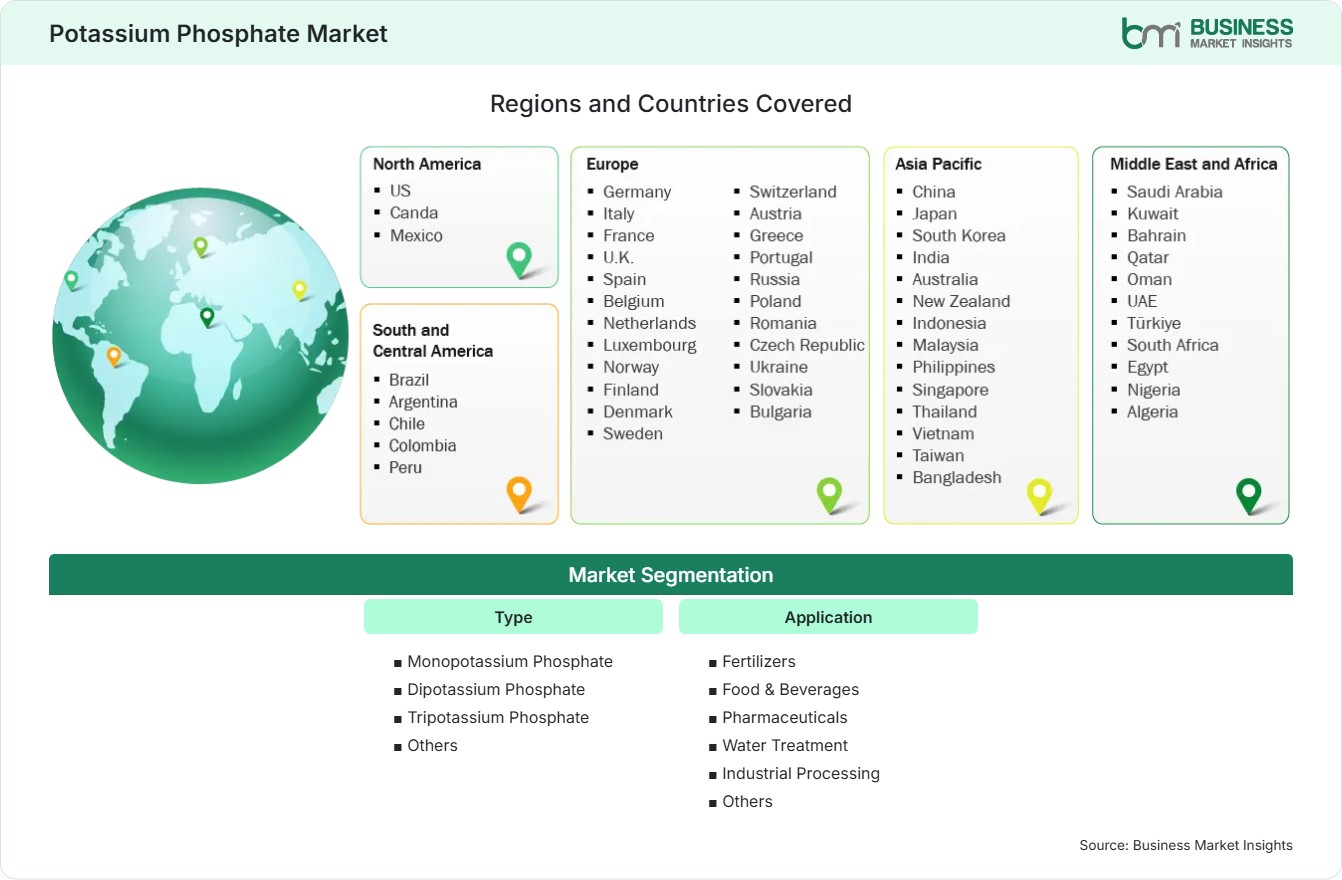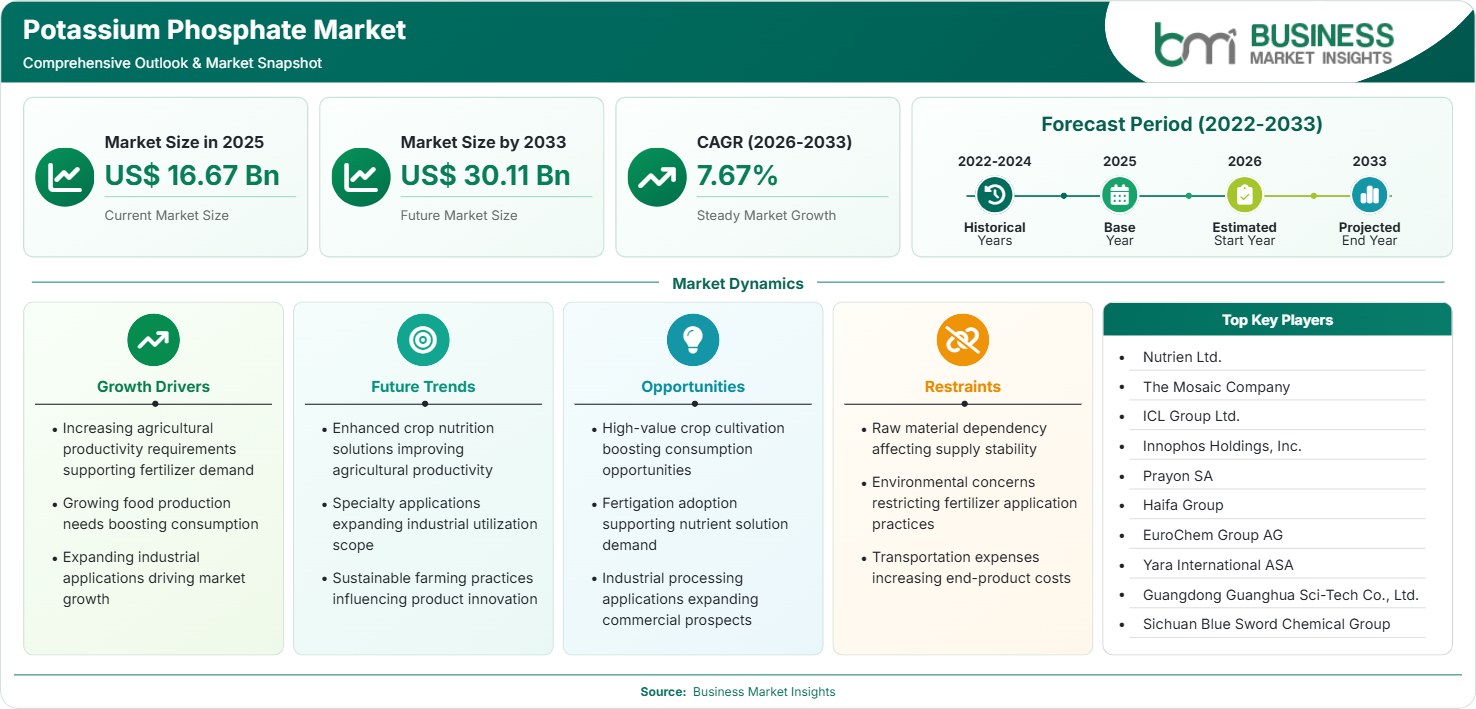
Potassium Phosphate Market Regional Highlights
North America Potassium Phosphate Market
North America accounted for 34%–37% Potassium Phosphate Market share in 2025 and is expected to grow at 6.8%–7.2% CAGR through 2033. Demand is backed by precision farming, specialty farming, water processing facilities, and processed food manufacturing. The area enjoys an advantage through nutrient management techniques that have been proven and distribution networks. Agriculturalists are increasingly favoring water-soluble fertilizers that enhance nutrient utilization and sustainability.
- Precision farming technologies are increasing adoption of premium phosphate fertilizers across commercial agriculture operations.
- Food and beverage manufacturers continue expanding phosphate ingredient use for processing stability and product consistency.
- Water treatment investments support demand from municipal and industrial facilities.
- Established supply chains help maintain stable product availability despite global feedstock fluctuations.
US Potassium Phosphate Market
The United States represents approximately 71%–75% of the North American Potassium Phosphate Market demand and is projected to expand at 6.9%–7.3% CAGR. Agriculture specialized for particular products, mass food processing, manufacturing of medicines and other industrial uses are contributing to consumption. Continued investment in new fertilizer technology and increased focus on nutrient efficiency is further bolstering the market fundamentals.
- High-value fruit and vegetable cultivation supports premium fertilizer demand.
- Pharmaceutical manufacturing growth increases need for high-purity phosphate inputs.
- Water treatment modernization projects contribute additional consumption volumes.
- Sustainability programs encourage efficient nutrient management solutions.
Europe Potassium Phosphate Market
Europe represents 24%–27% of global Potassium Phosphate Market revenue and is forecast to grow at 6.6%–7.0% CAGR. Germany and France still represent the top consumers, but Eastern Europe shows a faster growth rate. An increasing focus on sustainability, effective utilization of fertilizers, quality of food, and environmental regulations increases the demand. The region’s manufacturers also have a good specialty chemicals manufacturing and agricultural base.
- Germany remains a leading market supported by industrial and food processing demand.
- France benefits from extensive agricultural production and crop nutrient requirements.
- Poland and Romania are among higher-growth markets with CAGR ranges above regional averages.
- Environmental regulations encourage efficient phosphate utilization.
- Specialty fertilizer products gain popularity among commercial growers.
Asia Pacific Potassium Phosphate Market
Asia Pacific held 27%–30% Potassium Phosphate Market share in 2025 and exhibits the strongest 8.8%–9.4% CAGR outlook. The regional demand is highest in China, whereas India and Southeast Asia are creating many growth opportunities. Agricultural modernization, increased food production, increased pharmaceutical production, and industrialization aid in regional consumption. Government efforts that are directed towards increasing agricultural productivity are adding to the growth in demand.
- China maintains regional leadership through agricultural and industrial applications.
- India demonstrates rapid adoption of specialty nutrient products.
- Vietnam and Indonesia are among the fastest-growing markets in Southeast Asia.
- Expanding food processing industries support ingredient demand.
- Investments in pharmaceutical production increase high-purity product consumption.
Rest of World Potassium Phosphate Market
The Rest of World region accounts for 11%–14% of Potassium Phosphate Market revenue and is anticipated to grow at 7.4%–8.0% CAGR. The agriculture of South and Central America is export-oriented, whereas the demand in the Middle East and Africa comes from irrigation-supported agricultural production. Brazil and Saudi Arabia continue to be prime target markets owing to rising investment in agricultural productivity.
- Brazil drives regional fertilizer demand through large-scale crop production.
- Argentina benefits from expanding agricultural exports.
- Saudi Arabia supports demand through controlled-environment agriculture investments.
- South Africa remains an important industrial and food processing market.
- Water scarcity challenges encourage efficient nutrient application technologies.