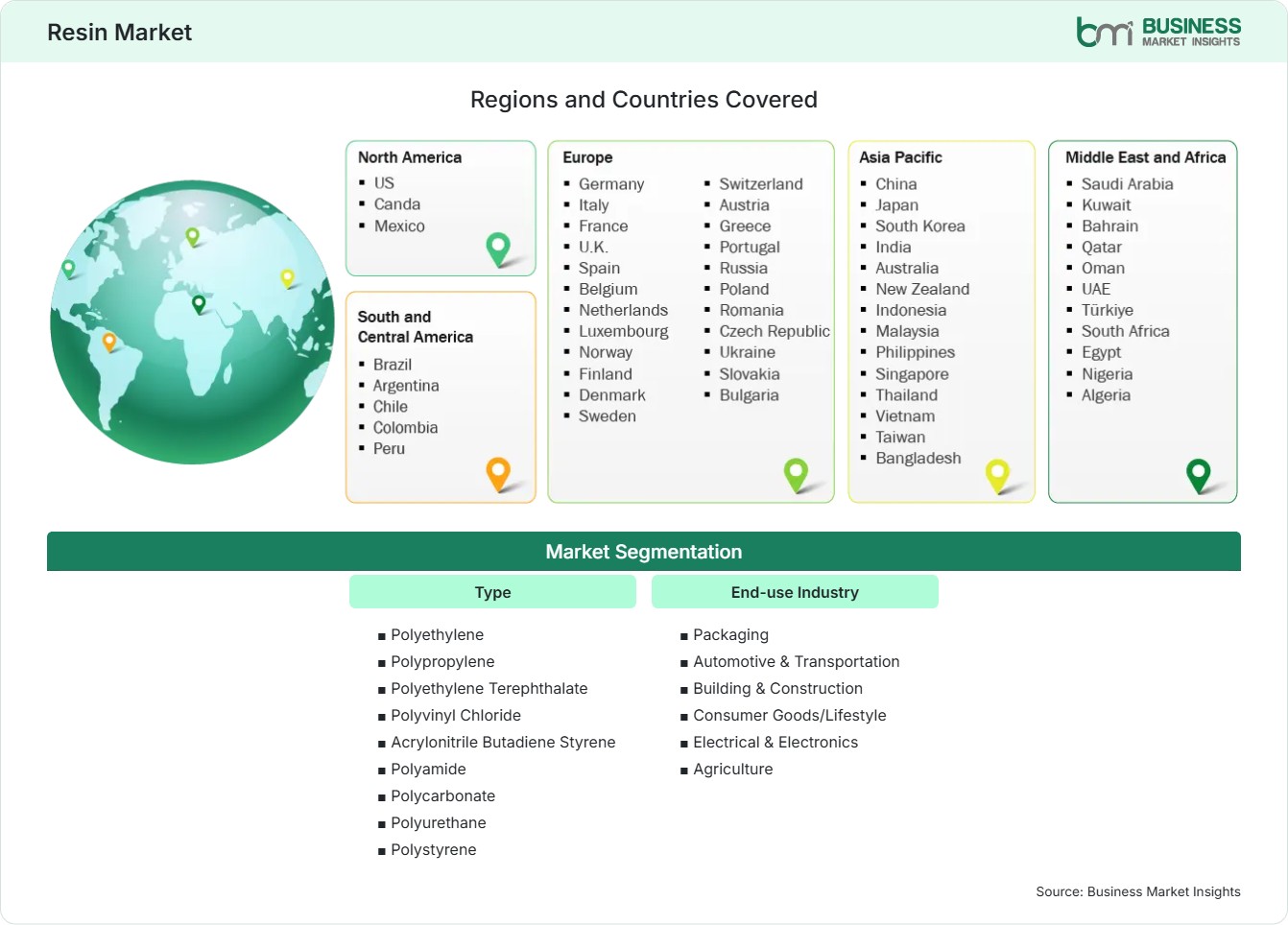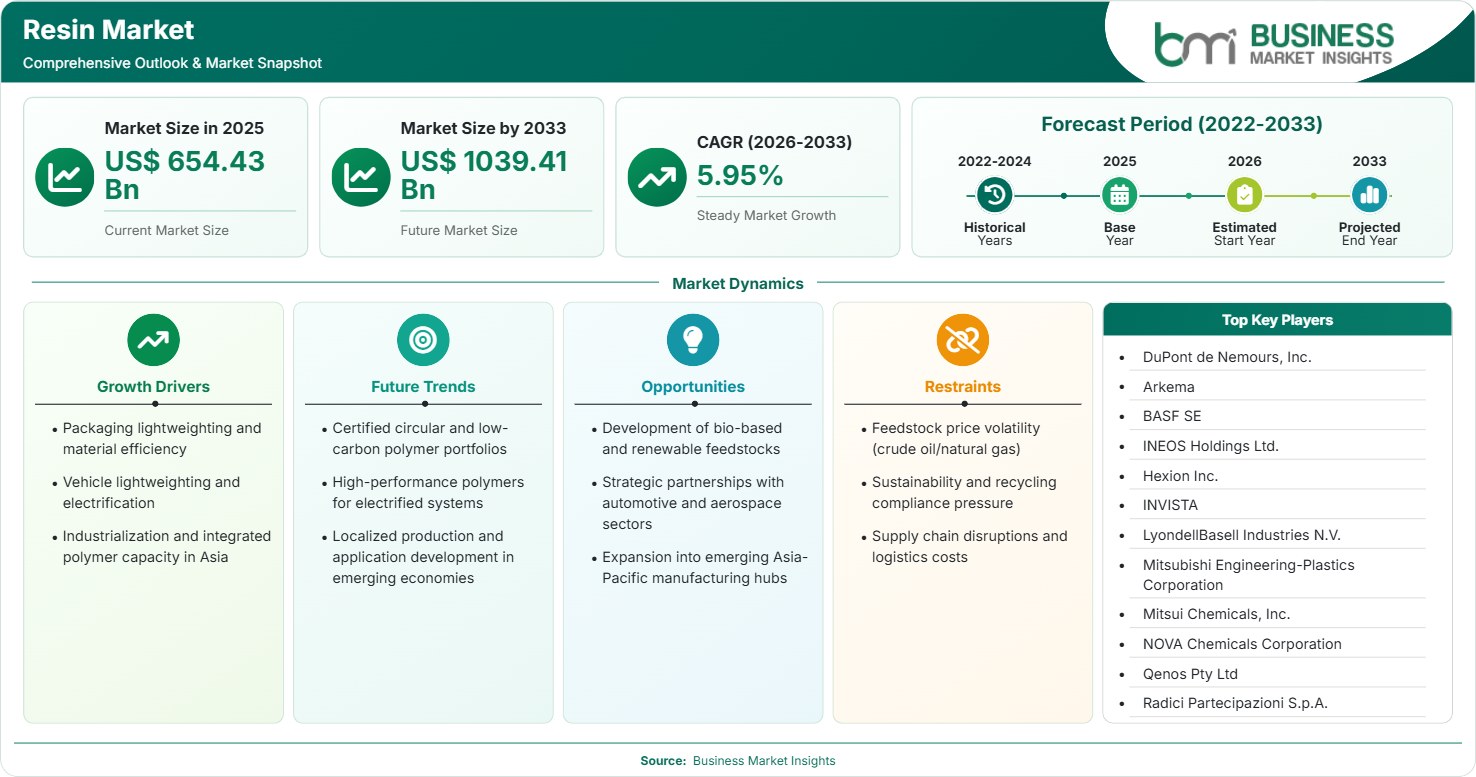
Resin Market Regional Highlights
North America Resin Market
North America represents an estimated 18%–21% Resin Market share in 2025, with a 5.2%–5.8% CAGR during 2026–2033. Demand is supported by packaging, automotive components, construction products, electrical applications, and domestic manufacturing investment. The regional supply structure benefits from established petrochemical infrastructure and access to hydrocarbon feedstocks. Mexico strengthens the manufacturing ecosystem through automotive and appliance production, while the US remains the dominant consumption center. Recycled-content initiatives are increasing demand for traceable secondary materials across packaging and consumer applications.
- Packaging converters are upgrading lightweight films, rigid containers, and multilayer structures while improving compatibility with recycling systems and recycled-content requirements.
- Automotive manufacturers are increasing polymer content in electric vehicles because lightweight materials can support efficiency, thermal management, electrical insulation, and component integration.
- Construction demand remains linked to infrastructure refurbishment, insulation, piping, flooring, sealants, and durable polymer-based products requiring long service lives.
- Recycling investments are creating additional demand for mechanically and chemically recovered feedstocks, although quality consistency remains important for demanding applications.
US Resin Market
The US accounts for approximately 65%–69% of North American Resin Market demand in 2025, with a 5.1%–5.7% CAGR during 2026–2033. Its diversified manufacturing base supports polymer consumption across packaging, transportation, construction, electronics, healthcare, and consumer goods. Domestic feedstock availability provides producers with structural advantages, while demand for recycled materials is increasing as brand owners establish packaging sustainability targets. Engineering-grade consumption is supported by electric mobility, data infrastructure, industrial automation, and advanced electronics requiring thermal and mechanical performance.
- Domestic packaging production supports steady consumption of polyethylene, polypropylene, PET, and specialty barrier materials across food, beverage, healthcare, and e-commerce applications.
- Automotive lightweighting is increasing opportunities for polyamide, polyurethane, polycarbonate, polypropylene compounds, and reinforced materials used in structural and functional vehicle components.
- Data-center and electrical infrastructure investment supports demand for flame-retardant, electrically insulating, dimensionally stable polymers used in connectors, housings, cable systems, and equipment.
Europe Resin Market
Europe represents a 20%–23% Resin Market share in 2025, with a 4.6%–5.2% CAGR during 2026–2033. Germany, Italy, France, and Spain remain leading industrial markets, while Poland and selected Central European economies provide higher-growth manufacturing opportunities. European demand is increasingly shaped by circularity requirements, energy costs, automotive transformation, and packaging regulation. The PPWR is accelerating design-for-recycling and recycled-content planning, while automotive manufacturers are assessing higher recycled-polymer utilization. Germany is expected to expand at approximately 4.7%–5.2%, while Poland can achieve approximately 5.5%–6.2% growth.
- Germany benefits from advanced automotive, electronics, machinery, and chemical industries, sustaining demand for engineering polymers and specialized compounds with high mechanical performance.
- France and Italy provide opportunities in packaging, construction, consumer products, and automotive supply chains, particularly where recycled-content integration can command differentiated value.
- Poland and Central Europe are attractive manufacturing locations because automotive, appliances, packaging conversion, and electronics supply chains continue expanding from established Western European bases.
- Regulatory compliance is becoming a commercial differentiator as recyclability, recycled-content verification, and material traceability increasingly influence polymer purchasing decisions.
Asia Pacific Resin Market
Asia Pacific holds a 43%–47% Resin Market share in 2025, with a 6.3%–6.9% CAGR during 2026–2033, making it the fastest-growing regional market. China remains the largest production and consumption center, while India, Indonesia, Vietnam, and Thailand provide high-growth opportunities. China benefits from integrated petrochemical capacity and extensive conversion industries. India is gaining momentum from packaging, automotive, infrastructure, electronics, and consumer manufacturing. BASF’s Zhanjiang site demonstrates continued investment in integrated production capacity serving China and broader Asia Pacific markets.
- China combines large-scale petrochemical integration with extensive packaging, automotive, electronics, construction, and consumer-goods conversion capacity, supporting broad polymer demand.
- India is expanding resin consumption through food packaging, consumer goods, automotive manufacturing, infrastructure, agriculture, and electronics, creating opportunities for domestic and imported grades.
- Vietnam, Indonesia, and Thailand offer strong downstream potential as manufacturers diversify production networks and develop export-oriented packaging, electronics, automotive, and consumer-product clusters.
- Regional producers are increasingly emphasizing local-for-local production, renewable electricity, certified feedstocks, and shorter supply chains to address customer sustainability and resilience requirements.
Rest of World Resin Market
Rest of World accounts for approximately 10%–14% Resin Market share in 2025, with a 5.5%–6.2% CAGR during 2026–2033. South and Central America benefit from food packaging, agriculture, construction, and automotive applications, with Brazil and Mexico providing the largest opportunities. In the Middle East and Africa, Saudi Arabia, the UAE, and South Africa lead industrial development and polymer conversion. Saudi Arabia combines feedstock advantages with export-oriented petrochemical capabilities, while emerging African markets offer longer-term demand potential from urbanization and infrastructure expansion.
- Brazil benefits from a broad agricultural, food-processing, packaging, construction, and automotive base that supports recurring demand for commodity and performance polymers.
- Mexico provides a strategic manufacturing platform connected to North American automotive, electronics, appliance, packaging, and industrial supply chains, supporting polymer conversion investment.
- Saudi Arabia benefits from integrated petrochemical infrastructure and feedstock availability, while downstream diversification can increase domestic consumption of higher-value polymer grades.
- South Africa and selected African markets offer longer-term potential from construction, consumer packaging, agriculture, water infrastructure, and expanding manufacturing activities.